Korean Spicy Stir-fried Chicken Feet
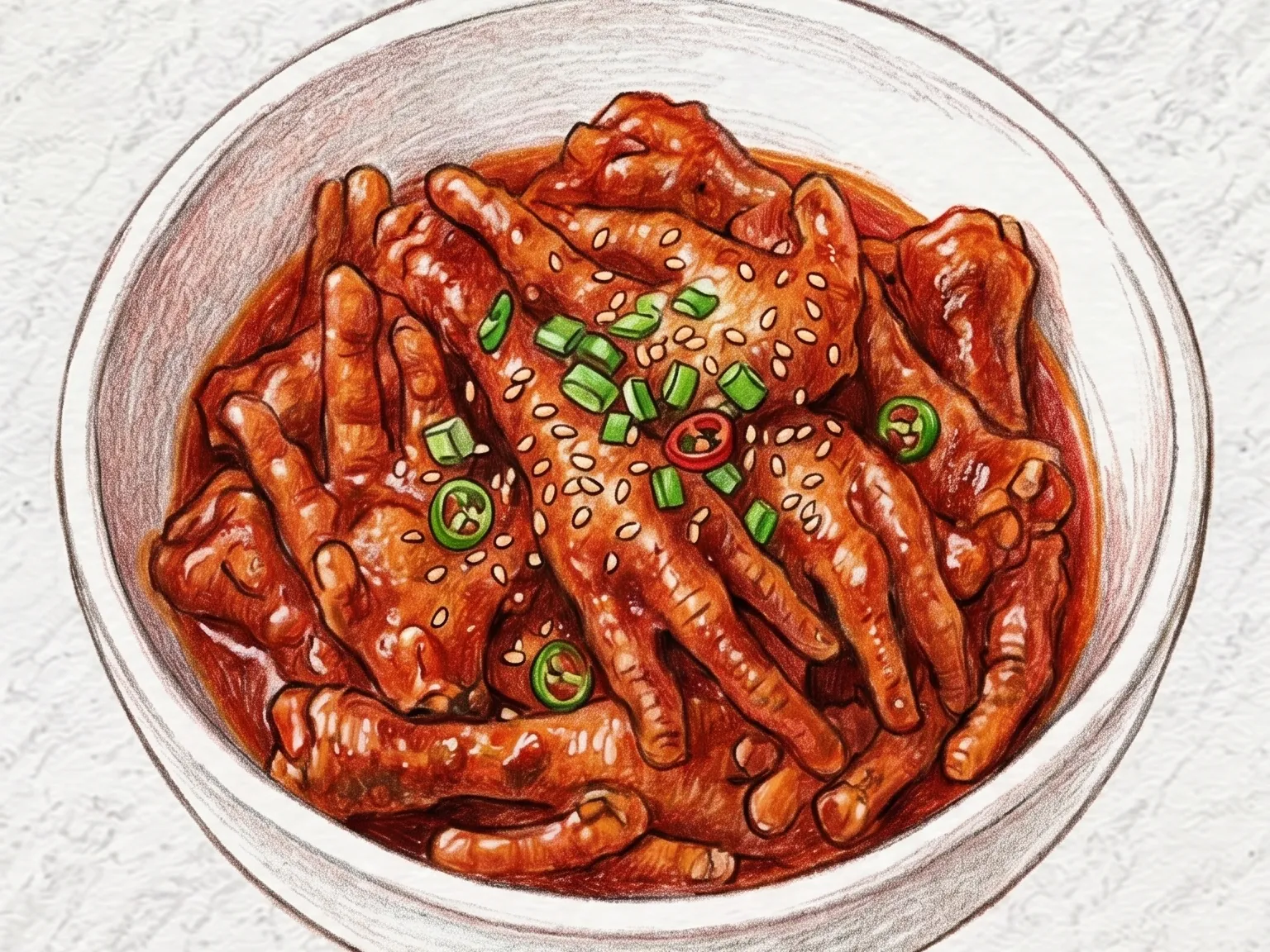
Dakbal-bokkeum stir-fries chicken feet in a sauce built from gochujang, red pepper flakes, and soy sauce. Chicken feet are mostly skin and cartilage, giving them a chewy, gelatinous texture that is central to the dish's appeal. Gochujang and red pepper flakes create a double layer of heat, while sugar trails behind with a sweet lingering note. Adding cheongyang chili peppers intensifies the spice even further. The thin bones require eating by hand and stripping the skin with your teeth, a process that is part of the experience itself.
Adjust Servings
Instructions
- 1
Trim nails, clean chicken feet, boil for 10 minutes, then drain.
- 2
Mix gochujang, gochugaru, soy sauce, garlic, and sugar.
- 3
Stir-fry chicken feet in oil first to firm up the surface.
- 4
Add sauce and stir-fry over medium heat until reduced.
- 5
Add green chili and cook 1 more minute.
As an Amazon Associate, we may earn from qualifying purchases.
Tips
Nutrition (per serving)
More Recipes

Korean Stir-fried Chicken Gizzards
Dak-ttongjip-bokkeum stir-fries chicken gizzards with garlic and cheongyang chili peppers over high heat. The gizzard's distinctly chewy, springy texture is the centerpiece of the dish - the longer you chew, the more a subtle nuttiness emerges. The cheongyang chili's heat cuts through any richness, and garlic lays down a deep aromatic foundation. Soy sauce and cooking wine season the dish with a salty note balanced by a gentle sweetness. It is commonly ordered as a companion to beer or soju, but it also works well as a rice side dish.

Korean Spicy Beef Intestine Stir-fry
Gopchang-bokkeum is a Korean stir-fry of cleaned beef intestines tossed over high heat with onion, cabbage, scallion, gochujang, and gochugaru. The intestines develop a springy chew while releasing their natural fat, which melds with the spicy seasoning to create an intensely savory sauce. Vegetables stay crisp and soak up the bold flavors as the dish cooks quickly. It is one of the most popular late-night dishes in Korea, often served sizzling on a hot plate alongside rice and soju.

Korean Braised Chicken Feet
Dakbal-jjim is chicken feet braised in a bold sauce of gochujang, gochugaru, soy sauce, and sugar. The skin and cartilage of the feet release gelatin as they cook, creating a chewy, sticky texture that is the hallmark of this dish. Gochujang and chili flakes layer their heat in different registers while sugar adds a caramel-like sweetness to balance the spice. Cooking wine takes the edge off any gaminess, and as the sauce reduces it coats each foot in a thick, glossy red glaze that makes this a popular accompaniment to drinks.

Korean Spicy Whelk Stir-fry
Golbaengi bokkeum is a Korean spicy whelk stir-fry that combines canned whelk with a sauce of gochujang, gochugaru, vinegar, and sugar. The whelk's firm, chewy texture is central to the dish, so cooking time is kept to just 2 to 3 minutes to prevent toughness. Vinegar adds a tangy brightness that balances the chili heat. Julienned cucumber, onion, and scallion are tossed in off the heat to maintain their crunch and freshness. Served alongside thin wheat noodles or glass noodles, it transitions easily from a banchan into a popular drinking snack.

Korean Spicy Beef Stir-Fry
Sogogi gochujang-bokkeum marinates thin-sliced beef in a paste of gochujang, soy sauce, sugar, and minced garlic, then stir-fries it over high heat. The chili paste's spiciness and the sugar caramelize together on the meat's surface, building a dark, sticky glaze with layered heat. Onion cooked alongside the beef releases moisture that helps the seasoning distribute evenly across every slice. A finish of sesame oil adds a roasted nuttiness on top of the bold, spicy-sweet profile -- intensely flavored enough that a small portion carries a full bowl of rice.

Korean Spicy Stir-fried Cartilage
Odolppyeo-bokkeum is a fiery Korean stir-fry of chicken cartilage marinated in a sauce of gochujang, gochugaru, soy sauce, garlic, and sugar, then cooked at maximum heat for a short burst. The cartilage delivers a distinctive crunch-then-chew that no other cut can replicate, and thorough drying with paper towels before marinating ensures the sauce clings directly to the surface. After ten minutes of marinating, the cartilage hits a ripping-hot oiled pan to pick up smoky wok char, followed by onion, green onion, and hot green chilies that are tossed until all moisture evaporates and the glaze turns glossy. Keeping the total stir-fry time brief is critical, since prolonged cooking turns the cartilage from pleasantly crunchy to unpleasantly tough.