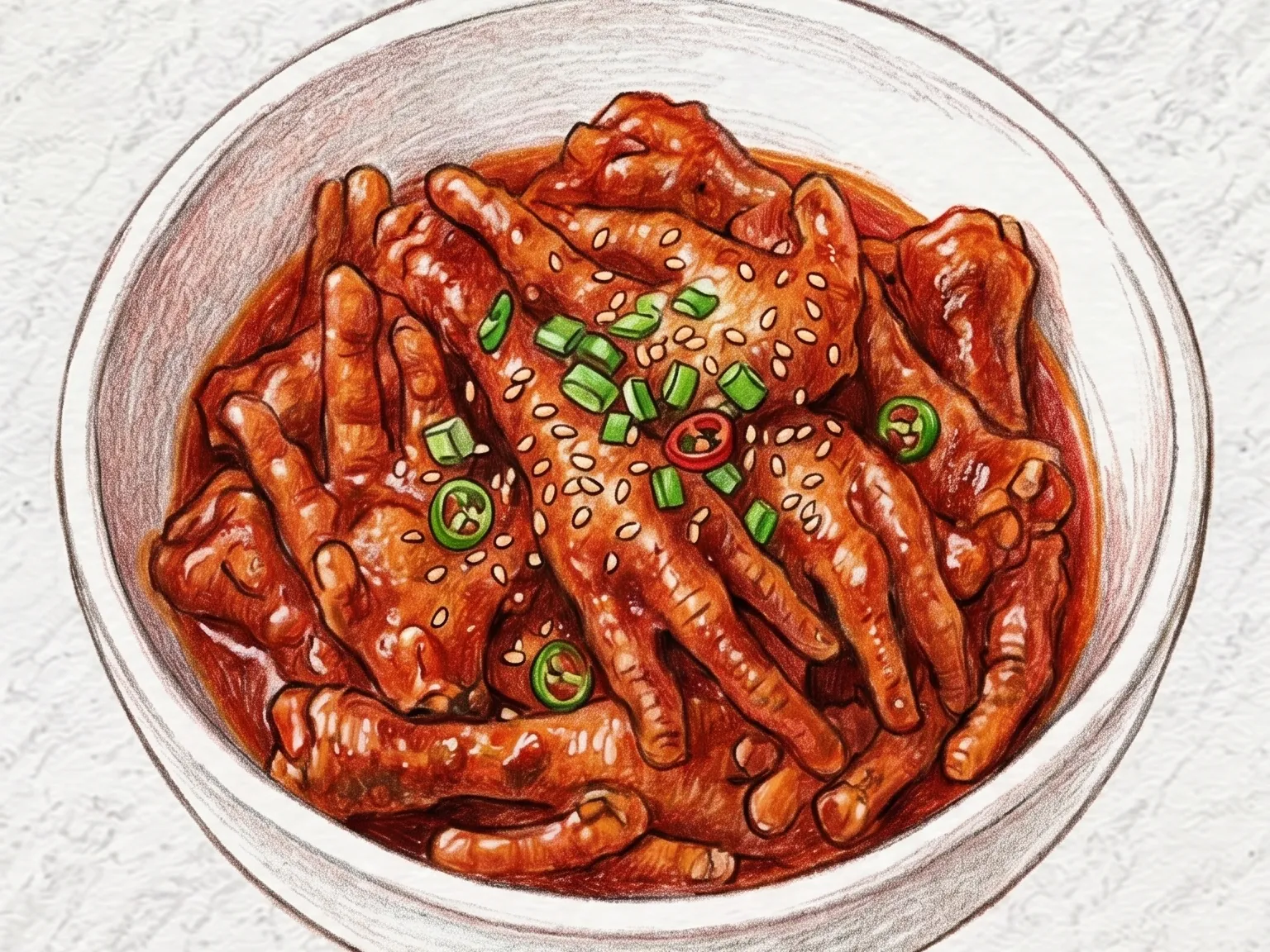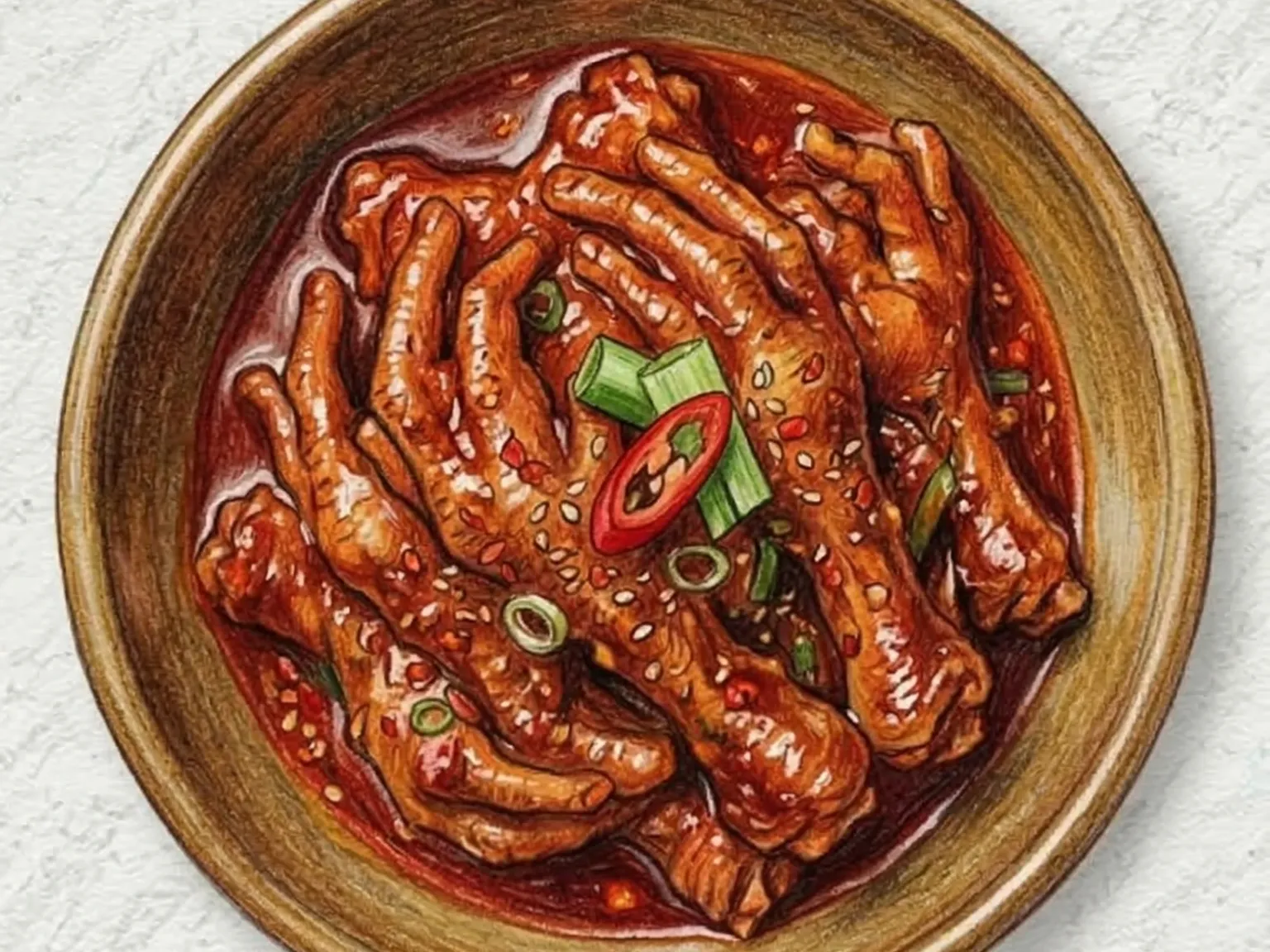
Korean Braised Chicken Feet
Dakbal-jjim is chicken feet braised in a bold sauce of gochujang, gochugaru, soy sauce, and sugar. The skin and cartilage of the feet release gelatin as they cook, creating a chewy, sticky texture that is the hallmark of this dish. Gochujang and chili flakes layer their heat in different registers while sugar adds a caramel-like sweetness to balance the spice. Cooking wine takes the edge off any gaminess, and as the sauce reduces it coats each foot in a thick, glossy red glaze that makes this a popular accompaniment to drinks.
Adjust Servings
Instructions
- 1
Trim chicken feet, blanch for 5 minutes, and rinse clean.
- 2
Boil chicken feet in water for 20 minutes first.
- 3
Mix gochujang, soy sauce, chili flakes, garlic, sugar, and cooking wine.
- 4
Add the sauce and braise over medium heat for 20 minutes.
- 5
Turn off heat once sauce thickens and rest for 5 minutes.
As an Amazon Associate, we may earn from qualifying purchases.
Tips
Nutrition (per serving)
More Recipes

Korean Braised Hairtail Fish
Galchi-jjim is a Korean braised hairtail fish dish simmered with Korean radish in a spicy soy sauce and gochugaru broth. The hairtail's white, flaky flesh absorbs the bold seasoning while remaining tender throughout. Ginger juice is key to keeping the dish clean-tasting by cutting through any fishiness. The radish softens in the braising liquid and the remaining sauce is meant to be spooned over rice, making this a staple fish dish on Korean dinner tables.

Korean Spicy Stir-fried Chicken Feet
Dakbal-bokkeum stir-fries chicken feet in a sauce built from gochujang, red pepper flakes, and soy sauce. Chicken feet are mostly skin and cartilage, giving them a chewy, gelatinous texture that is central to the dish's appeal. Gochujang and red pepper flakes create a double layer of heat, while sugar trails behind with a sweet lingering note. Adding cheongyang chili peppers intensifies the spice even further. The thin bones require eating by hand and stripping the skin with your teeth, a process that is part of the experience itself.

Korean Dakbong Gochujang Jorim (Gochujang-Braised Chicken Drumettes)
Dakbong gochujang-jorim is chicken drumettes braised with potato in a sauce built from gochujang, soy sauce, chili flakes, and oligosaccharide syrup. The meat around the small bones turns dense and chewy as it simmers, holding onto the thick sauce. Potato pieces soften in the braising liquid until they are starchy and tender throughout. The syrup wraps the gochujang heat in a shiny sweetness that keeps you reaching for the next piece, and a stalk of green onion stirred in at the end adds a sharp, aromatic finish.

Korean Braised Pollock (Frozen Pollock with Radish in Spicy Sauce)
Dongtae-jjim is frozen pollock braised with Korean radish and bean sprouts in a sauce of gochugaru, soy sauce, garlic, and ginger. Using frozen rather than fresh pollock is traditional - the freezing-and-thawing process gives the flesh a firm, slightly spongy texture that holds up well in the spicy broth. Radish soaks up the chili-laced liquid and turns sweet against the heat, while bean sprouts contribute crunch and a clean, refreshing aftertaste. The sauce reduces to a shallow pool at the bottom, meant to be spooned over rice as a wintertime staple.

Korean Braised Pork Backbone
Deungppyeo-jjim is pork backbone braised with potato and green onion in a sauce of doenjang, gochugaru, and soy sauce. After a long simmer, the meat and cartilage between the vertebrae pull away from the bone effortlessly. Doenjang lays a deep, fermented base note while chili flakes add a sharp heat on top. The potatoes cook until they are soft enough to break apart with a spoon, melding into the thick broth. Picking the meat from between the bones is part of the appeal, making this a popular dish to share over drinks.

Dakgalbi Cream Rigatoni (Korean Spicy Chicken Gochujang Cream Pasta)
Dakgalbi cream rigatoni marinates boneless chicken thigh in a gochujang-based sauce with soy sauce, gochugaru, and sugar, then stir-fries it with cabbage and sweet potato before finishing with heavy cream. Pre-marinating lets the spicy-sweet seasoning penetrate the meat rather than just coating the surface. High-heat stir-frying drives moisture out of the cabbage, concentrating its natural sweetness, which balances the chili paste's intensity. Adding cream and reducing it on low heat emulsifies the spicy marinade into a pink, thick sauce. Rigatoni's large hollow tubes fill with this dense cream sauce, delivering both the dakgalbi's bold heat and the cream's smoothness in every bite.