Korean Dakbong Gochujang Jorim (Gochujang-Braised Chicken Drumettes)
Steamed Medium

Korean Dakbong Gochujang Jorim (Gochujang-Braised Chicken Drumettes)

Quick answer

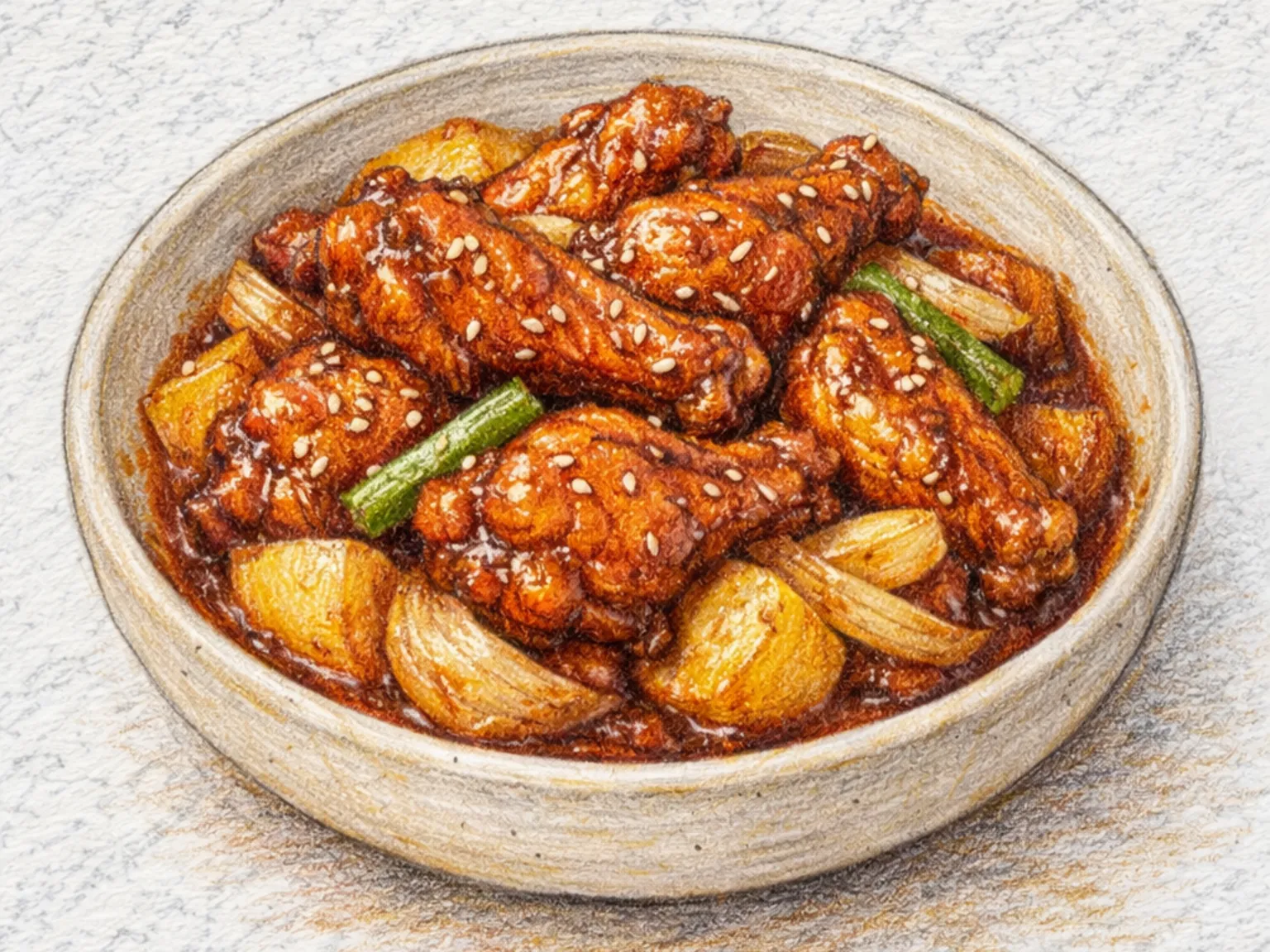
Dakbong gochujang jorim is chicken drumettes braised with potato in a sauce made from gochujang, soy sauce, chili flakes, and oligosaccharide syrup.

What makes this special

  • Dakbong gochujang jorim offers chicken drumettes braised in a thick, spicy chili paste.
  • Drumette meat around the bone turns chewy and deeply absorbs the gochujang sauce
  • Oligosaccharide adds a glossy sweet layer over gochujang's sharp heat
Total time
50 min
Level
Medium
Servings
4 servings
Ingredients
10
Calories
465 kcal
Protein
31 g

Key ingredients

chicken drumettespotatooniongochujangsoy sauce

Core cooking flow

  1. 1 Soak 800 g chicken drumettes in cold water for 10 minutes to remove blood, then drain and pat dry.
  2. 2 Cut 250 g potato into large cubes, slice 150 g onion into thick strips, and...
  3. 3 Mix 2 tbsp gochujang, 2 tbsp soy sauce, 1 tbsp chili flakes, 1 tbsp garlic...

Dakbong gochujang jorim is chicken drumettes braised with potato in a sauce made from gochujang, soy sauce, chili flakes, and oligosaccharide syrup. The meat surrounding the small bones turns dense and pleasantly chewy as it simmers, holding onto the thick, reduced sauce at every surface. Potato pieces soften in the braising liquid until starchy and tender throughout, absorbing the chili-soy base from the outside in. The oligosaccharide syrup wraps the gochujang heat in a shiny glaze that keeps you reaching for another piece. A stalk of green onion stirred in at the very end adds a sharp, pungent aroma that lifts the finished dish.

Prep 15min Cook 35min 4 servings

Instructions

Read the steps as a cooking flow: prep, heat, seasoning, doneness control, and finish.

6 steps
  1. 1
    Step

    Soak 800 g chicken drumettes in cold water for 10 minutes to remove blood, then drain and pat dry.

  2. 2
    Prep

    Cut 250 g potato into large cubes, slice 150 g onion into thick strips, and cut 1 green onion stalk diagonally.

  3. 3
    Season

    Mix 2 tbsp gochujang, 2 tbsp soy sauce, 1 tbsp chili flakes, 1 tbsp garlic, 1.5 tbsp oligosaccharide syrup, and 300 ml water until smooth.

  4. 4
    Control

    Add drumettes, potato, and onion to the pot, pour in the sauce, and bring to a boil over high heat.

    Skim any foam when it first boils.

  5. 5
    Control

    Reduce to medium-low, cover, and braise for 25 minutes.

    Turn the drumettes once halfway through so the seasoning soaks in evenly.

  6. 6
    Season

    Add the diagonally sliced green onion and braise 3 more minutes until the sauce thickens and the drumettes turn glossy.

After the steps

Pick a recipe that fits this dish.

Continue with shared ingredients, meal pairings, or a similar method.

Recipes That Go Well With This

More Steamed →

Based on shared ingredients and meal pairing

Korean Braised Mackerel with Potatoes
Shared ingredient: potatoes Steamed

Korean Braised Mackerel with Potatoes

Godeungeo gamja jorim is a Korean home-cooked side dish where mackerel and potato chunks are braised together in a soy sauce and gochugaru seasoning. The oily mackerel releases its fat into the braising liquid, building a rich, savory depth that plain soy sauce alone cannot achieve. Potato absorbs the spiced liquid as it simmers, cooking down to a fluffy, yielding texture that contrasts with the firmer fish. Onion and green onion contribute natural sweetness and aroma throughout the cooking process, and sugar rounds off the saltiness of the soy base to keep the seasoning balanced rather than sharp. Spooning the dark, glossy braising sauce generously over rice turns this side dish into a satisfying meal on its own. Using fresh mackerel rather than salted gives a softer, more delicate flesh that further enriches the cooking liquid.

Korean Braised Eggplant with Pork
Shared ingredient: onion Steamed

Korean Braised Eggplant with Pork

Gaji dwaejigogi jorim is a Korean braised dish of eggplant and pork shoulder simmered in a soy sauce and gochugaru seasoning base. The pork slowly renders its fat into the eggplant as they cook together, giving the vegetable a rich, meaty depth. Cooking wine mellows the pork and removes any gamey notes, while the soy and garlic combination builds deep, layered flavor throughout the braise. Briefly stir-frying the eggplant in oil before braising coats the surface and helps it hold its shape while drawing the seasoning inward more effectively. A final drizzle of sesame oil finishes the dish with a nutty fragrance, and this recipe is at its best in summer when eggplants are in peak season with thin, tender skins.

Korean Mushroom Japchae (Shiitake Glass Noodle Stir-Fry)
Serve together Side dishes

Korean Mushroom Japchae (Shiitake Glass Noodle Stir-Fry)

Beoseot japchae replaces beef with shiitake mushrooms as the primary source of savory depth, making it a staple of Buddhist temple cuisine and vegetarian tables alike. Sweet potato noodles are soaked and boiled, then rinsed in cold water immediately to lock in a firm, springy texture. Shiitake, spinach, carrot, and onion are each cooked separately - their moisture levels and heat tolerances differ enough that combining them prematurely flattens every component. Soy sauce, sugar, minced garlic, and sesame oil bring the noodles and vegetables together, and the finished dish rests for ten minutes so the seasoning penetrates the noodles evenly. The result is a japchae where the mushroom carries genuine umami weight without any meat.

Korean Soy-Braised Deodeok Root
Similar recipe Steamed

Korean Soy-Braised Deodeok Root

Deodeok-jorim is a Korean braised banchan made from deodeok root simmered in soy sauce, rice syrup, garlic, and sesame oil until each piece takes on a glossy, lacquered coating. The root's pronounced bitter-herbal aroma softens considerably as the sweet-salty glaze penetrates during cooking, while the interior stays dense and pleasantly chewy throughout. A single green chili stirred in near the end contributes a restrained background heat, and toasted sesame seeds with a final drizzle of sesame oil add a nutty dimension on top. Deodeok is a foraged mountain root prized for its earthy, slightly resinous character, and this preparation tames that wild quality just enough to make it approachable as a daily side dish. Paired with other vegetable banchan, it anchors the kind of traditional Korean table that prioritizes vegetables over protein.

Serve with this

Korean Ssamjang Hwe Deopbap
Rice Medium

Korean Ssamjang Hwe Deopbap

This variation on hoe-deopbap replaces the standard cho-gochujang with a dressing of ssamjang mixed with vinegar and sesame oil, shifting the dominant flavor away from sweet heat and toward fermented bean depth. The doenjang component in ssamjang works against the rawness of the fish rather than masking it with chili, producing a rounded, earthy complexity that deepens with each bite. Vinegar cuts through ssamjang's thick, pungent weight and introduces a clean acidity that keeps the overall flavor from feeling heavy. Flounder sashimi is cut into bite-sized pieces and kept refrigerated, while the rice is served at room temperature so the two elements neither clash nor blend into an indistinct warmth. Julienned carrot and perilla leaves provide a crisp, juicy resistance that contrasts directly with the chewy elasticity of the fish. Dressing the vegetables in advance draws out moisture that would soften the rice, so all the components are placed in the bowl separately and tossed together only at the moment of eating to preserve every texture.

🎉 Special Occasion 🏠 Everyday
Prep 20min Cook 5min 2 servings
Korean Salted Pollock Roe Jeotgal
Kimchi Hard

Korean Salted Pollock Roe Jeotgal

Myeongran jeotgal is a Korean salted and fermented pollock roe where fresh roe sacs are meticulously cleaned of blood spots and membranes, brushed with rice wine to suppress fishiness, then packed in a curing blend of coarse sea salt, gochugaru, and minced garlic alongside a piece of kelp. Over three to five days in cold storage, salt draws moisture out of each tiny egg, concentrating their pop-and-burst texture while enzymatic breakdown generates a deep, layered umami that raw roe cannot produce on its own. The chili flakes introduce a gentle warmth that sits behind rather than over the roe's natural salinity. Sliced thin and arranged over hot steamed rice, each piece releases a salty, oceanic intensity with every bite - a condiment that disappears faster than any dish it accompanies.

🎉 Special Occasion 🍱 Lunchbox
Prep 30min 4 servings
Korean Namdo-Style Loach Soup
Soups Hard

Korean Namdo-Style Loach Soup

Namdo-chueotang is the southern Korean take on loach soup, distinguished from other regional versions by grinding the entire loach - bones and all - into a thick, porridge-like broth. The loaches are first boiled until completely soft, then blended and strained to produce a dense, opaque base packed with protein and calcium. Dried radish greens simmer in this liquid, contributing a rustic, earthy backbone. Doenjang and gochujang season the soup with fermented depth and moderate heat, while a generous addition of perilla seed powder lends a nutty richness that rounds out the heavy flavors. A final dusting of sancho pepper tames any lingering fishiness and adds a tingling, aromatic kick. This is restorative cooking at its most direct - a thick, warming bowl meant to rebuild energy during the colder months.

🏠 Everyday 🎉 Special Occasion
Prep 30min Cook 45min 4 servings

Similar recipes

Korean Braised Chicken Feet
Steamed Medium

Korean Braised Chicken Feet

Dakbal-jjim braises chicken feet in a sauce built from gochujang, gochugaru, soy sauce, and sugar until the liquid reduces to a thick, glossy coating around each foot. As the skin and cartilage cook down over time, their collagen converts to gelatin and the feet develop a chewy, sticky texture that is the central appeal of the dish. Gochujang and gochugaru each bring heat from a different angle, one deep and fermented and the other bright and direct, while sugar introduces a caramel-like sweetness that balances the heat load. Cooking wine added early removes the gaminess specific to chicken feet. By the time the sauce has fully reduced it clings to every surface in a deep red glaze, and the finished feet carry both intense seasoning and a pronounced chew that makes them a natural pairing with cold beer or a bowl of rice.

🍺 Bar Snacks 🎉 Special Occasion
Prep 20min Cook 45min 4 servings
Korean Braised Mackerel in Spicy Sauce
Side dishes Medium

Korean Braised Mackerel in Spicy Sauce

Godeungeo-jorim is one of the most frequently cooked fish banchan in Korean homes, pairing mackerel's assertive flavor with a spicy braising sauce that demands steamed rice. Mackerel is cut into steaks and salted for ten minutes to draw out fishy odors, then arranged over thick radish slices that line the pot bottom. The radish serves dual duty: preventing the fish from sticking and releasing its natural sweetness into the braising liquid below. A sauce of gochugaru, gochujang, soy sauce, garlic, ginger, and sugar is spooned over, and the pot simmers covered for twenty minutes. During this time the seasoning penetrates the flesh while the radish absorbs enough sauce to rival the fish itself as the most satisfying component of the dish. Green onion added in the final minutes lifts the heavy spice with a fresh sharpness.

🏠 Everyday 🍱 Lunchbox
Prep 15min Cook 25min 4 servings
Korean Spicy Braised Cod with Radish
Stir-fry Medium

Korean Spicy Braised Cod with Radish

Cod fillets are braised in a seasoning sauce of soy sauce, gochujang, and gochugaru until the liquid reduces and the flavors soak into the flesh. Cod is a lean fish with a clean, neutral character, and the bold seasoning penetrates the meat to add depth without overwhelming it. Daikon radish placed alongside the fish absorbs the braising liquid as it cooks, becoming as flavorful as the fish itself. Onion slowly softens and releases natural sweetness into the sauce during the simmer. The flesh flakes easily and separates cleanly from the bone, making this dish accessible for all ages. Keeping the lid on over medium heat during braising prevents the sauce from reducing too fast and ensures the fish cooks through evenly.

🏠 Everyday 🍱 Lunchbox
Prep 18min Cook 22min 4 servings

Tips

Lightly sear drumettes first for deeper flavor and color.
Avoid cutting potatoes too small or they may break apart while braising.

Nutrition (per serving)

Calories
465
kcal
Protein
31
g
Carbs
19
g
Fat
29
g