Korean Spicy Braised Chicken
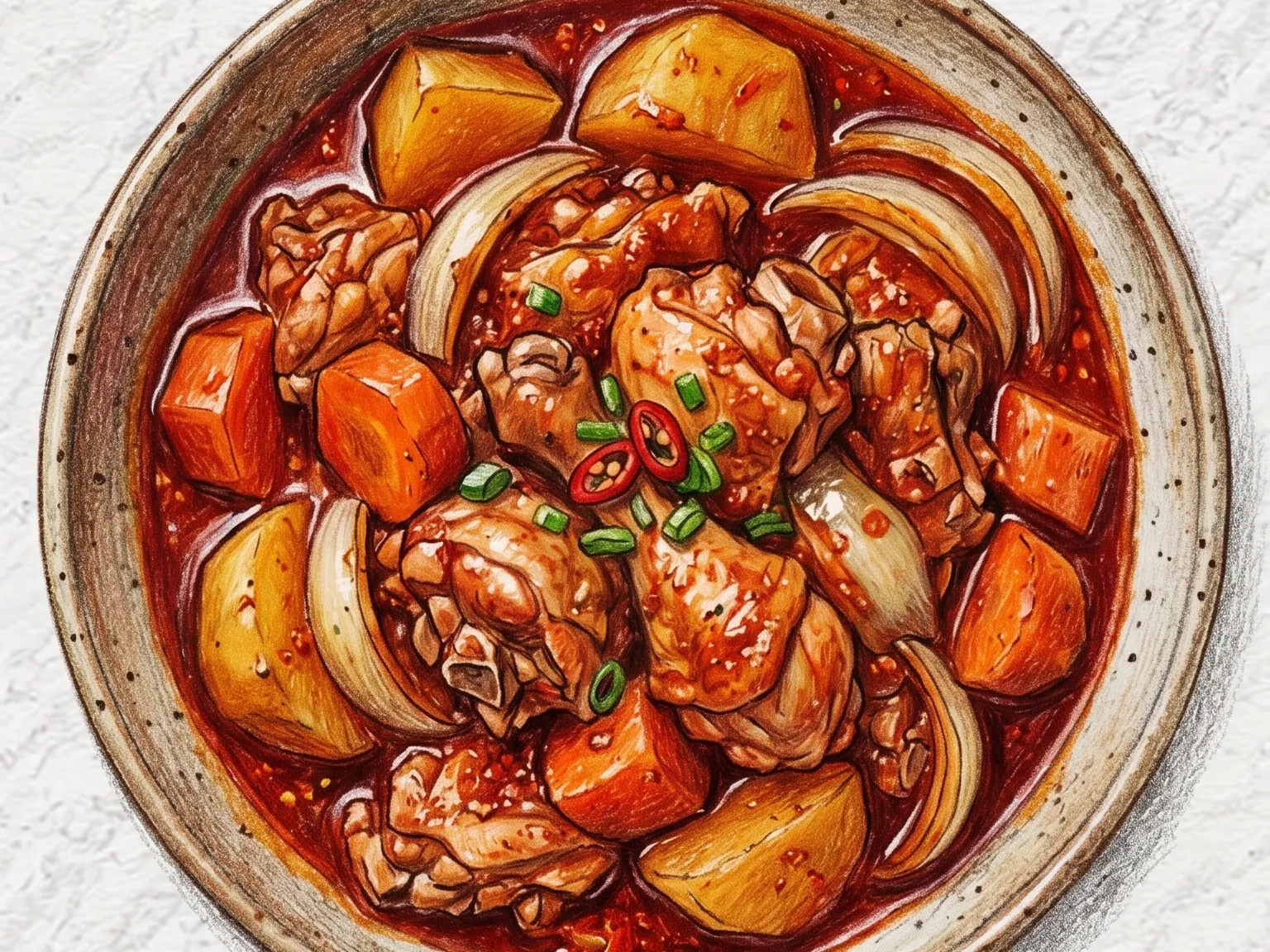
Dakdoritang is a spicy braised chicken dish where bone-in pieces are simmered with potato, carrot, and onion in a thick sauce of gochujang, gochugaru, soy sauce, and sugar. The chicken releases its juices into the sauce as it cooks, creating a glossy, clinging glaze that coats every piece of vegetable. The potatoes break down just enough to thicken the braising liquid, while the sugar tempers the chili heat into a warm, lingering spice.
Adjust Servings
Instructions
- 1
Blanch chicken pieces in boiling water to remove impurities.
- 2
Mix gochujang, soy sauce, chili flakes, sugar, and garlic for the sauce.
- 3
Combine chicken, potatoes, carrots, onion, sauce, and water in a pot.
- 4
Bring to a boil, then reduce heat and simmer 30 minutes until reduced.
- 5
Top with green onion and serve.
As an Amazon Associate, we may earn from qualifying purchases.
Tips
Nutrition (per serving)
More Recipes

Korean Spicy Braised Chicken
Dak-bokkeum-tang starts by stir-frying chicken pieces in a gochujang and soy sauce mixture, then adds water and simmers until the liquid reduces to a thick, clinging sauce. Potato chunks absorb the braising liquid and become flavorful throughout, while onion dissolves into the sauce adding sweetness. Gochujang provides the heat backbone and soy sauce supplies the umami depth, creating a layered flavor profile. The longer it simmers, the deeper the seasoning penetrates into the meat and bones. Spooning the sauce over rice turns it into a quick seasoned rice bowl.

Korean Soy Braised Chicken
Dak-jjim is bone-in chicken braised with potato, carrot, and onion in a sauce of soy sauce, sugar, and garlic. Juices released from the bones meld with the soy seasoning to form a glossy, concentrated gravy, and the vegetables absorb this liquid so they are seasoned all the way through. Sugar tempers the saltiness of the soy into a clear sweet-salty balance that coats every piece. Served in a hot stone pot at the center of the table, it is one of the most familiar home-cooked dishes in Korean cuisine.

Korean Stir-Fried Chicken
Dak-bokkeum is a Korean stir-fried chicken dish in a soy sauce-based seasoning. A mix of soy sauce, sugar, and minced garlic coats the chicken evenly, producing a salty, umami-forward flavor. Onion and carrot cook together with the chicken, and their released moisture blends with the seasoning to form a natural sauce. A final drizzle of sesame oil wraps everything in a nutty aroma. Using breast meat yields a leaner result, while thigh meat produces a more moist, succulent texture.

Korean Spicy Fish Stew (Mackerel in Chili-Radish Broth)
Saengseon jjigae is a spicy Korean fish stew made with mackerel or beltfish cut into chunks, simmered alongside daikon radish and zucchini. Gochujang, gochugaru, soy sauce, and garlic build a bold, peppery broth in an anchovy stock base. The radish neutralizes any fishiness while adding natural sweetness to the soup. Picking the flaky fish off the bone and eating it with spoonfuls of the fiery broth over rice is the traditional way to enjoy it.

Korean Braised Chicken with Radish
This braise combines bone-in chicken pieces with Korean radish and potato in a soy-and-gochugaru sauce. The radish absorbs both the chicken stock and the spiced seasoning, turning amber on the outside while going translucent within. Potato edges break down during the long simmer, thickening the sauce into a sticky glaze. Gochugaru and black pepper build a layered heat that soy sauce and sugar round off, so the dish is assertively spicy without being harsh. Reducing the liquid until it barely coats the bottom concentrates all the flavors onto the surface of each piece.

Korean Braised Hairtail Fish
Galchi-jjim is a Korean braised hairtail fish dish simmered with Korean radish in a spicy soy sauce and gochugaru broth. The hairtail's white, flaky flesh absorbs the bold seasoning while remaining tender throughout. Ginger juice is key to keeping the dish clean-tasting by cutting through any fishiness. The radish softens in the braising liquid and the remaining sauce is meant to be spooned over rice, making this a staple fish dish on Korean dinner tables.