Korean Spicy Chicken Soup Noodles
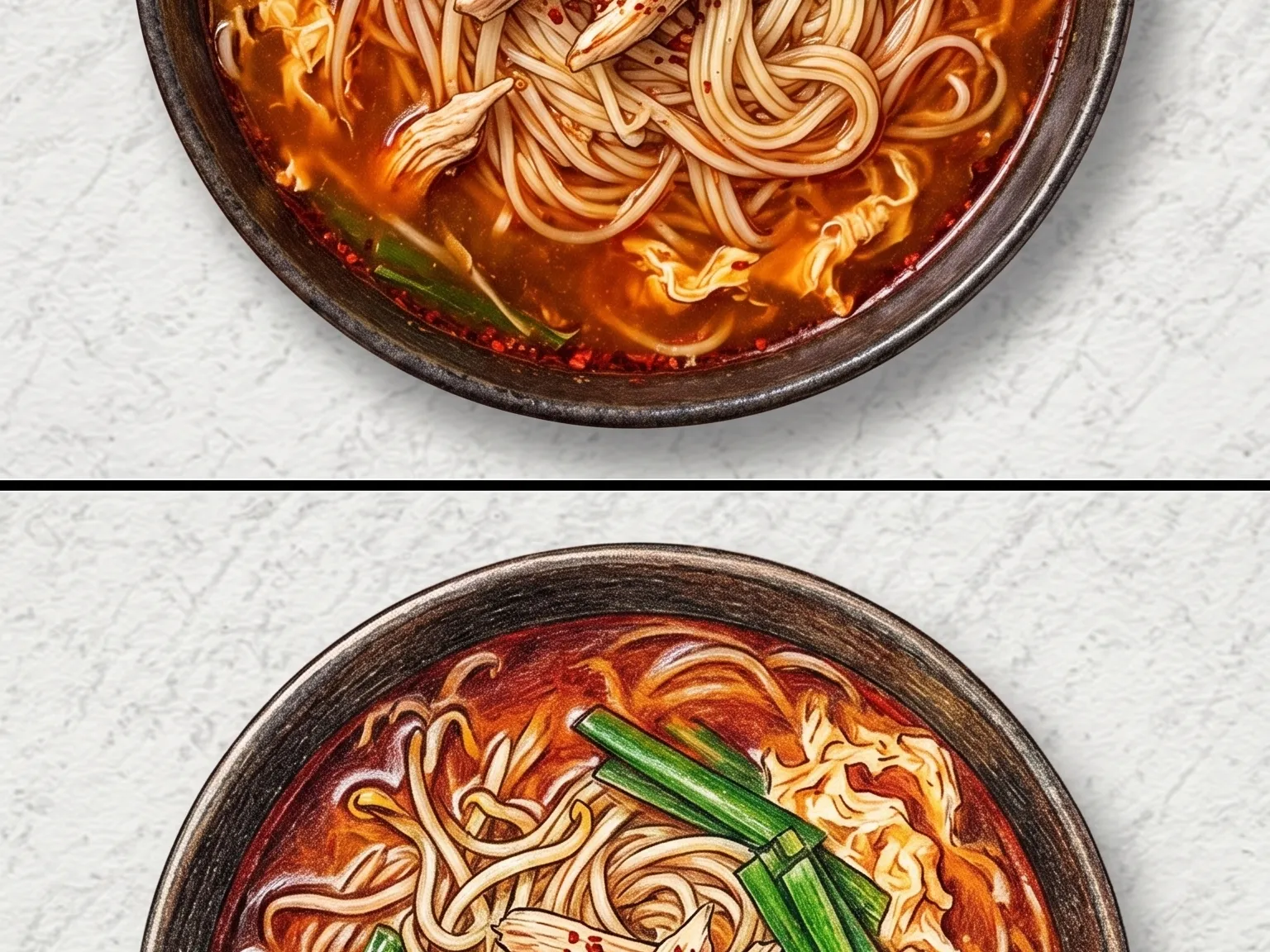
This spicy Korean noodle soup is built on dakgaejang, a chicken version of the classic beef yukgaejang. Poached chicken is shredded by hand, then simmered again in a broth seasoned with gochugaru, garlic, sesame oil, and sliced scallion. The resulting liquid is vivid red and assertively spicy, yet the underlying chicken stock keeps the heat clean rather than harsh. Bean sprouts tossed into the pot just before serving retain their crunch and provide a cool, crisp contrast to the fiery broth. Either thin somyeon or medium-thickness noodles pair well, soaking up the spicy liquid without losing their texture too quickly. Swirling in a beaten egg softens the broth and adds body. The soup is widely regarded as an effective remedy for hangovers or chills, thanks to its combination of heat, protein, and warming spice.
Adjust Servings
Instructions
- 1
Simmer chicken thigh in water for 20 minutes, then shred the cooked meat.
- 2
Mix shredded chicken with chili flakes, garlic, and sesame oil to coat evenly.
- 3
Add bracken, bean sprouts, and soup soy sauce to broth; simmer 8 minutes.
- 4
Add seasoned chicken and noodles, then boil 5-6 minutes until noodles are cooked.
- 5
Finish with chopped green onion, bring to a brief boil, and serve hot.
As an Amazon Associate, we may earn from qualifying purchases.
Tips
Nutrition (per serving)
More Recipes

Korean Spicy Beef Soup Noodles
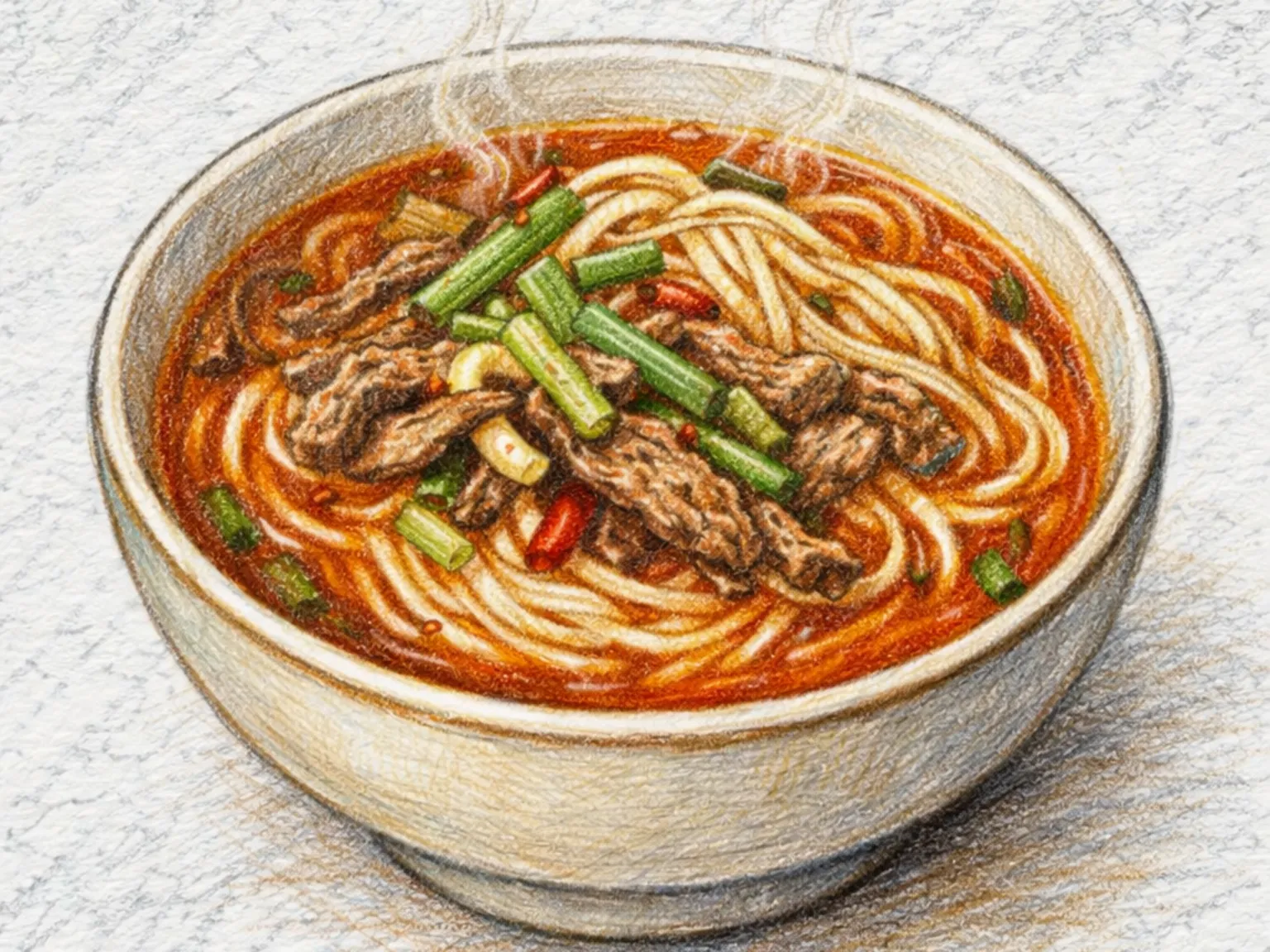
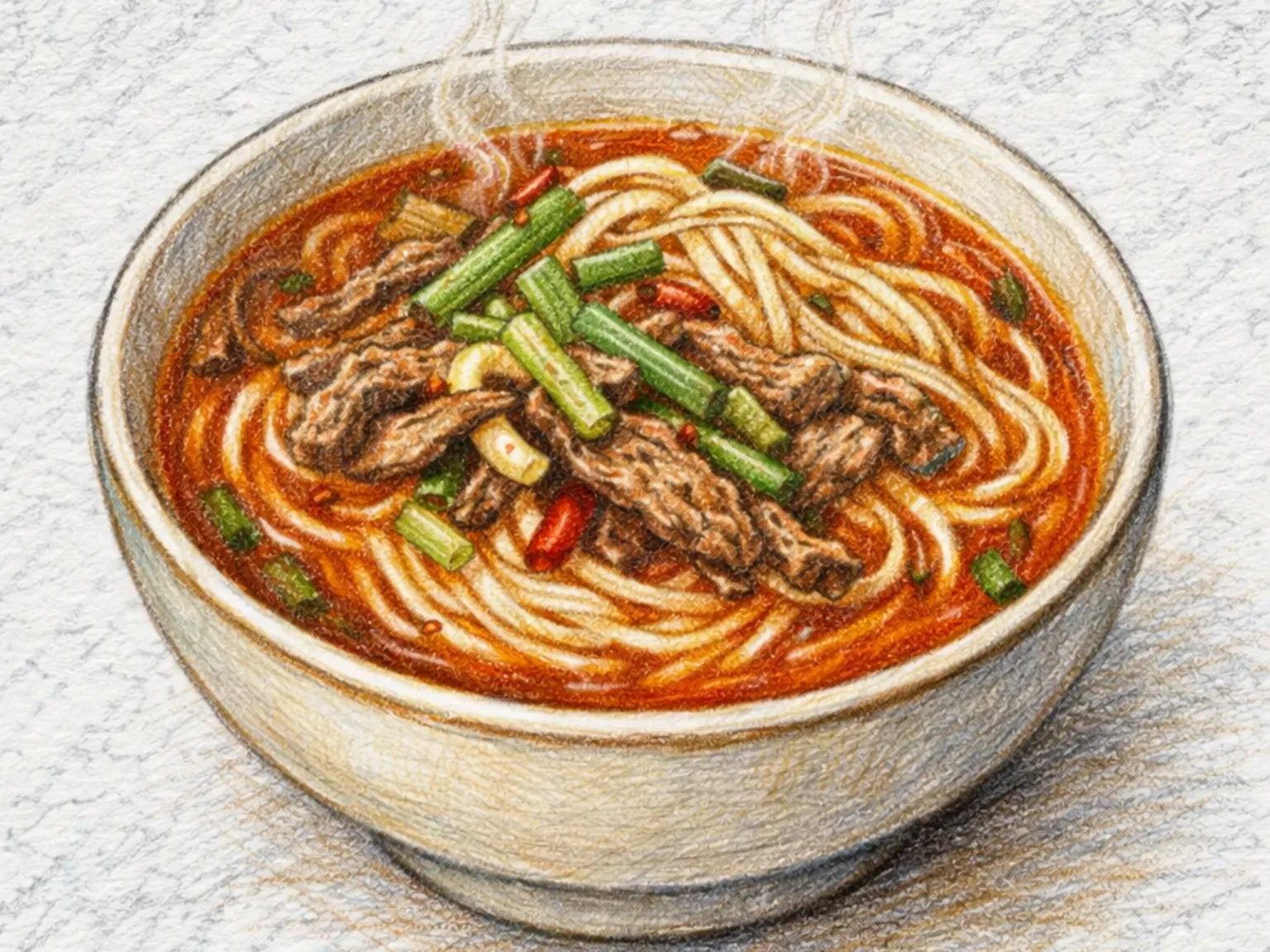
Yukgaejang guksu starts with a deep broth made by simmering beef brisket until the liquid turns rich and full-bodied. The meat is shredded along the grain and returned to the pot alongside fernbrake, bean sprouts, and green onion that have been seasoned with gochugaru, sesame oil, and garlic before a brief stir-fry. This pre-seasoning step lets the chili heat dissolve into the oil, producing a rounded spiciness rather than raw powder burn. Korean soup soy sauce adjusts the salt level without clouding the broth's color. Thin wheat somyeon noodles are boiled separately and added at the end so they absorb the broth without turning mushy. Swapping in glass noodles changes the texture to a chewier, more slippery bite that holds onto the soup longer.

Korean Chicken Knife-Cut Noodle Soup
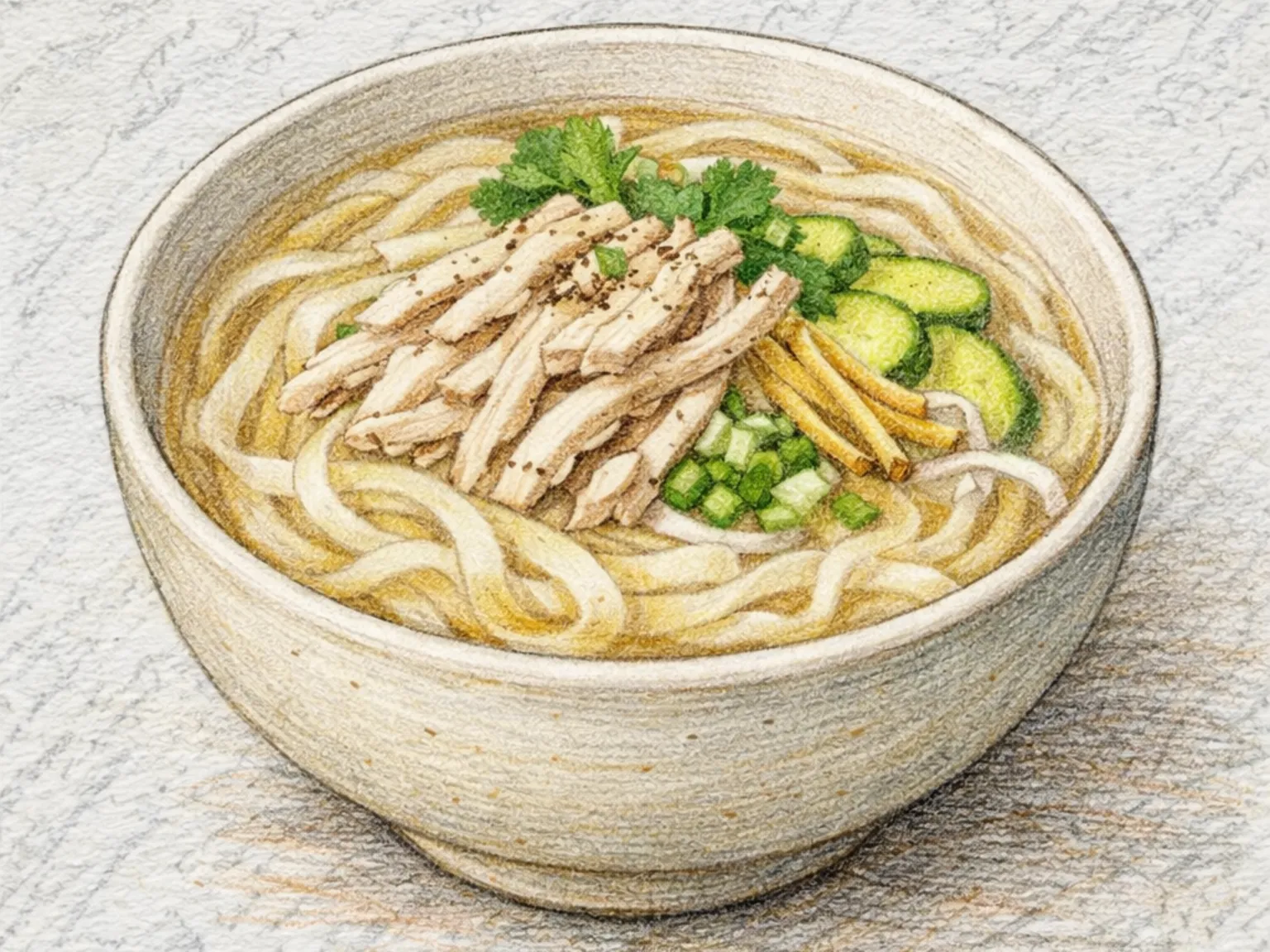
A whole chicken is simmered with scallion, garlic, and ginger until the broth turns cloudy and rich, then hand-cut wheat noodles are cooked directly in that liquid. As the noodles release their starch into the pot, the broth takes on a silky body that coats the palate, and the noodles themselves absorb the concentrated chicken flavor at every surface. Shredded chicken meat, pulled along the grain, is piled on top just before serving. Potato and zucchini chunks, added during the final minutes, contribute gentle sweetness and soft texture. A generous grind of black pepper over the steaming bowl sharpens the chicken aroma and adds a subtle warmth. On a cold day, this noodle soup delivers the kind of deep, lasting comfort that lighter broths cannot match.

Korean Warm Perilla Mushroom Rice Noodles
Deulkkae beoseot on ssalguksu is a warm Korean noodle soup built on kelp stock simmered with oyster and shiitake mushrooms, then thickened with ground perilla seeds into a creamy, opaque broth. Rice noodles are smoother and more slippery than wheat varieties, sliding through the rich liquid with ease, while the mushrooms provide a chewy counterpoint. Adding the perilla powder at the very end preserves its roasted, nutty fragrance on the surface of each spoonful. Soup soy sauce seasons the broth cleanly without the weight of soybean paste. This is a warming bowl suited for cold weather, filling enough to serve as a standalone meal.

Korean Spicy Freshwater Fish Noodle Soup
Eotang guksu is a regional Korean noodle soup from the Chungcheong provinces, built on a broth made by slowly simmering freshwater fish until the bones and flesh release a concentrated savory extract. The broth is strained multiple times to remove all bone fragments, then seasoned with doenjang and gochugaru. The soybean paste neutralizes any fishiness while the chili flakes add a steady warmth to the lean, oil-free liquid. Beaten egg stirred in at the end forms soft ribbons that float on the surface. Somyeon noodles go in last. This is an inland cuisine that evolved from the practical use of river fish, and its flavor is distinctly different from coastal seafood soups.

Korean Ginger Chicken Gomtang
This ginger chicken gomtang is a clear, restorative soup made by simmering a whole chicken with fresh ginger, onion, garlic, and green onion until the broth turns golden and deeply flavorful. The ginger cuts through the richness of the chicken fat, lending a sharp, warming note that distinguishes this from heavier beef-bone soups. After straining, the broth is remarkably clean-tasting despite its depth, and the chicken is pulled into tender shreds and returned to the bowl. Seasoning is kept to soup soy sauce, salt, and a generous amount of black pepper, which amplifies the ginger's heat. This is the kind of soup that Korean households turn to when someone is feeling under the weather or recovering - light enough to sip without strain, yet nourishing enough to rebuild strength. It also works as an elegant first course when served in small portions before a larger meal.

Korean Spicy Dakgalbi Rice Bowl
Dakgalbi deopbap brings the flavors of Chuncheon's famous spicy chicken to a single rice bowl. Boneless chicken thigh is stir-fried with cabbage, onion, and green onion in a gochujang-based marinade that balances heat with a touch of sweetness. High heat ensures the sauce caramelizes onto the chicken while the vegetables keep a slight crunch. A finishing drizzle of sesame oil adds a toasty fragrance that rounds out the bold seasoning. The dish captures the essence of a dakgalbi restaurant meal - the moment just before the leftover sauce gets turned into fried rice - and serves it as a complete, self-contained bowl that needs no side dishes.