Korean Spicy Chicken Stir-fry
Quick answer
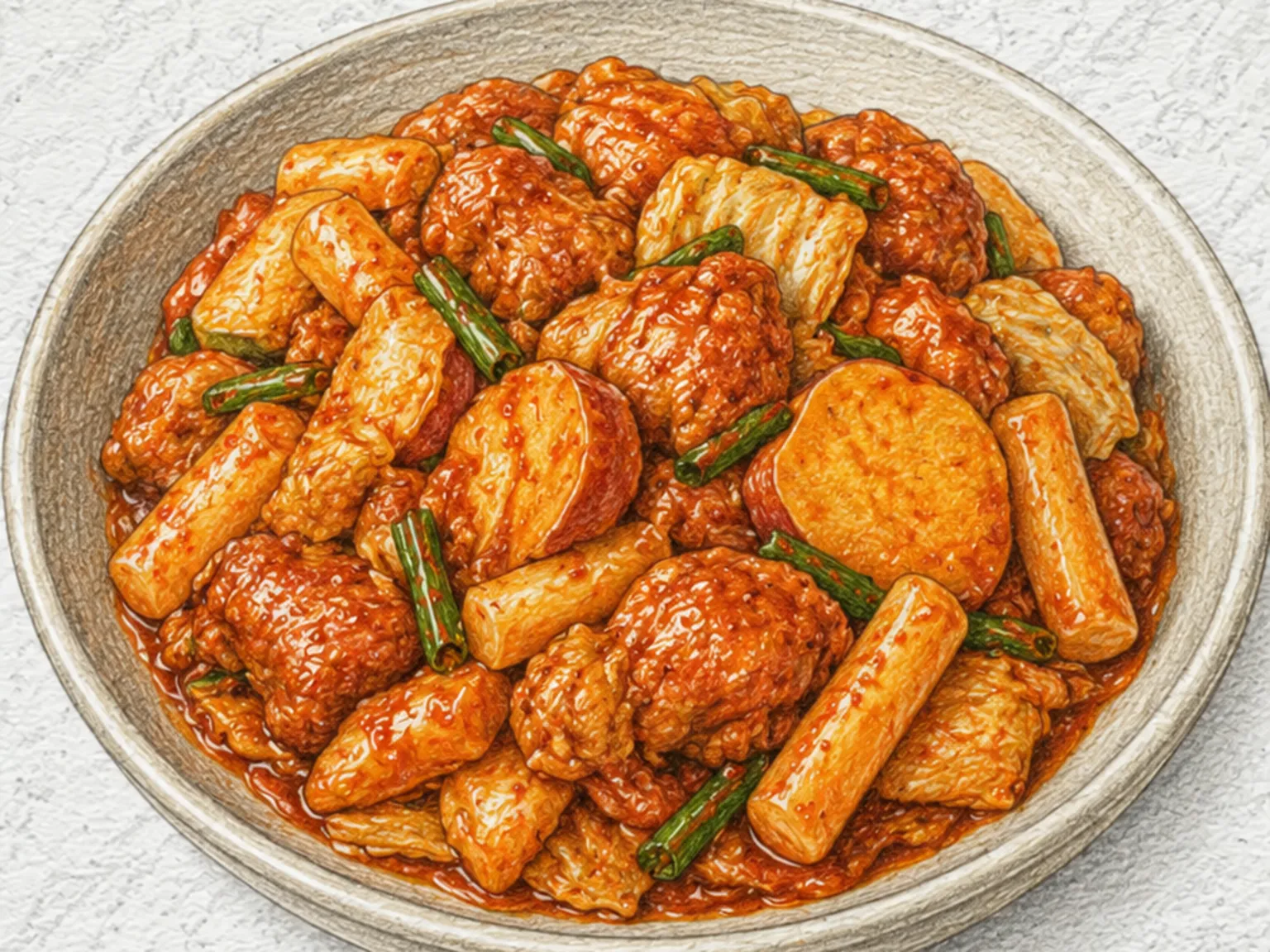
Dakgalbi is a Korean stir-fried chicken dish in which chicken thigh meat is marinated in a sauce of gochujang, chili flakes, soy sauce, sugar, minced garlic, and curry po...
What makes this special
- Hot griddle locks gochujang chicken thigh juices into sweet potato wedges and sliced rice cakes.
- A small amount of curry powder adds a spice layer to the gochujang base
- Sweet potato's natural sweetness tempers the intense chili paste heat
Key ingredients
Core cooking flow
- 1 Cut 400 g chicken thigh into 3 to 4 cm pieces, then flatten any thick parts slightly so they cook evenly.
- 2 Mix gochujang, gochugaru, soy sauce, sugar, minced garlic, and curry powder until no dry streaks remain.
- 3 Slice 1 sweet potato into thin 0.5 cm pieces so it softens before the chicken dries out.
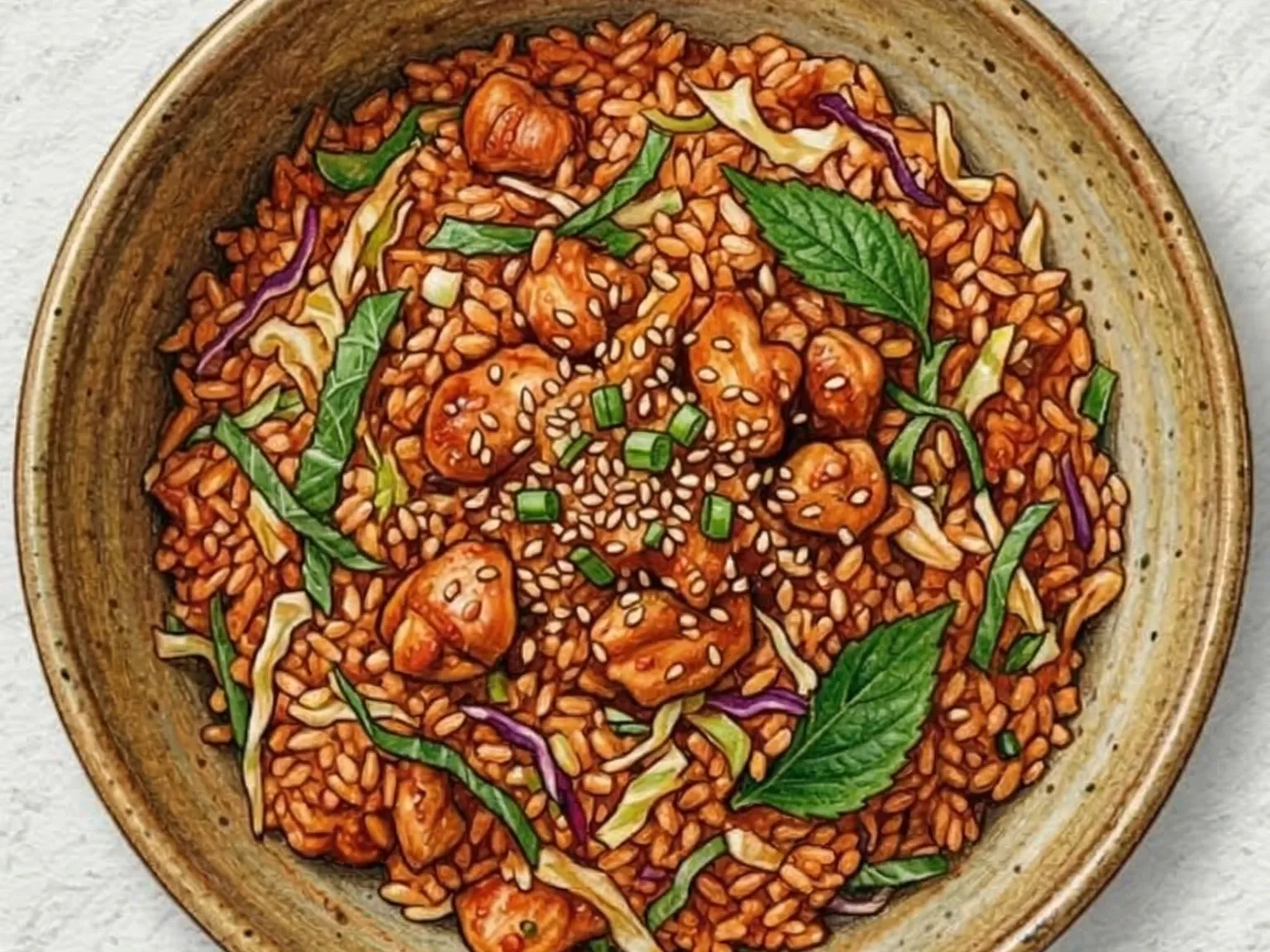
Dakgalbi is a Korean stir-fried chicken dish in which chicken thigh meat is marinated in a sauce of gochujang, chili flakes, soy sauce, sugar, minced garlic, and curry powder, then cooked with cabbage, sweet potato, sliced rice cakes, and green onion on a flat iron griddle or large pan. As the cabbage cooks it releases moisture that blends with the marinade, forming a natural sauce without any added liquid. Sweet potato softens gradually under heat, its natural sugars intensifying and acting as a counterweight to the sharp heat of the chili paste. Rice cakes cling to the sticky sauce on their surfaces, each piece absorbing the seasoning while staying chewy and dense inside. A small measure of curry powder is the defining addition -- it layers aromatic spice depth into the gochujang base, giving dakgalbi its slightly more complex fragrance compared to other Korean spicy stir-fries. The dish originates from Chuncheon in Gangwon Province, where it is served on large communal griddles. Finishing the meal by stir-frying rice in the leftover sauce at the bottom of the pan is a standard practice that turns the residual seasoning into a second course.
Instructions
Read the steps as a cooking flow: prep, heat, seasoning, doneness control, and finish.
- 1Heat
Cut 400 g chicken thigh into 3 to 4 cm pieces, then flatten any thick parts slightly so they cook evenly.
Pat the surface lightly dry so the marinade clings instead of sliding off.
- 2Season
Mix gochujang, gochugaru, soy sauce, sugar, minced garlic, and curry powder until no dry streaks remain.
Coat the chicken thoroughly and marinate it for 15 to 30 minutes for deeper seasoning.
- 3Prep
Slice 1 sweet potato into thin 0.5 cm pieces so it softens before the chicken dries out.
Tear 200 g cabbage into large pieces, slice the green onion diagonally, and separate the rice cakes.
- 4Control
Spread the sweet potato across the bottom of a wide pan, then add the cabbage and marinated chicken on top.
Cover and cook over medium heat for about 10 minutes as the cabbage releases moisture.
- 5Control
Uncover, turn the chicken, and mix the seasoning with the liquid from the vegetables.
When a chopstick slides slightly into the sweet potato, add the rice cakes and green onion.
- 6Finish
Raise the heat to high and stir-fry for about 5 minutes, turning often so the rice cakes do not stick.
Finish when the chicken is cooked through and the sauce looks thick and glossy.
After the steps
Pick a recipe that fits this dish.
Continue with shared ingredients, meal pairings, or a similar method.
Recipes That Go Well With This
More Stir-fry →Based on shared ingredients and meal pairing
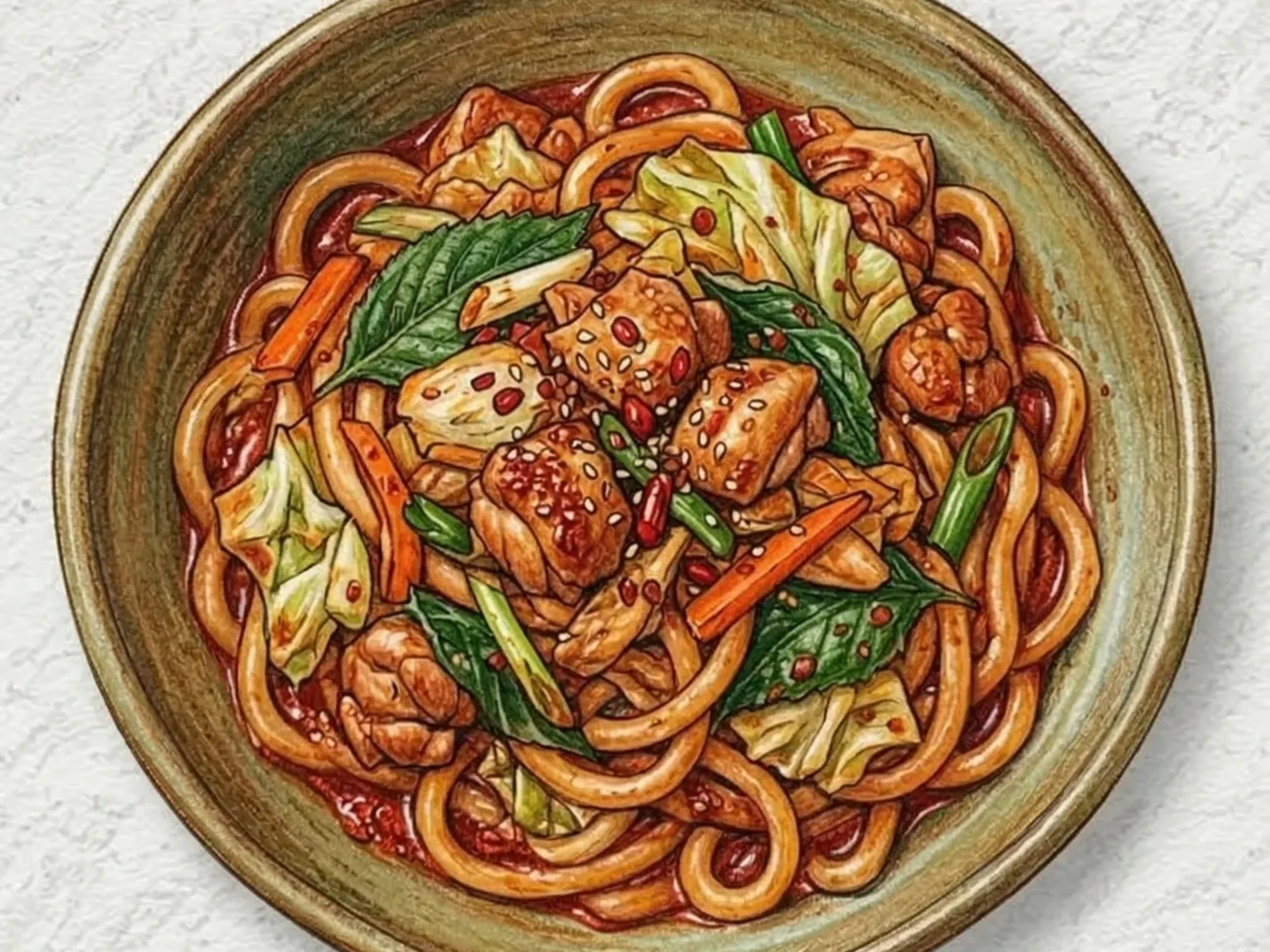
Korean Stir-Fried Udon with Spicy Chicken
Dakgalbi udon bokkeum is a Korean stir-fried noodle dish where gochujang-marinated chicken, cabbage, sweet potato, and rice cakes cook together in a wide pan before thick udon noodles are added and tossed through the spicy-sweet sauce. The dakgalbi seasoning is assertive and clingy, coating every broad surface of the udon so that each bite carries the full weight of the marinade. Cabbage and scallion wilt fast under high heat, releasing sugars that moderate the chili paste and prevent the sauce from tasting sharp or one-dimensional. Sweet potato contributes starch that slightly thickens the sauce while cushioning its spice. Udon, being considerably thicker than ramen or somyeon, holds up under the heavy coating without turning mushy, and delivers a satisfying, bouncy chew throughout the meal. Managing the heat is important: keeping the pan at high temperature drives off excess moisture and produces the lightly charred, smoky edge that separates a good stir-fry from a steamed mess. Melting cheese over the top just before serving adds a creamy, fatty layer that offsets the heat. Sesame seeds and shredded seaweed finish the dish. It is well suited to group cooking on a large griddle or electric pan.
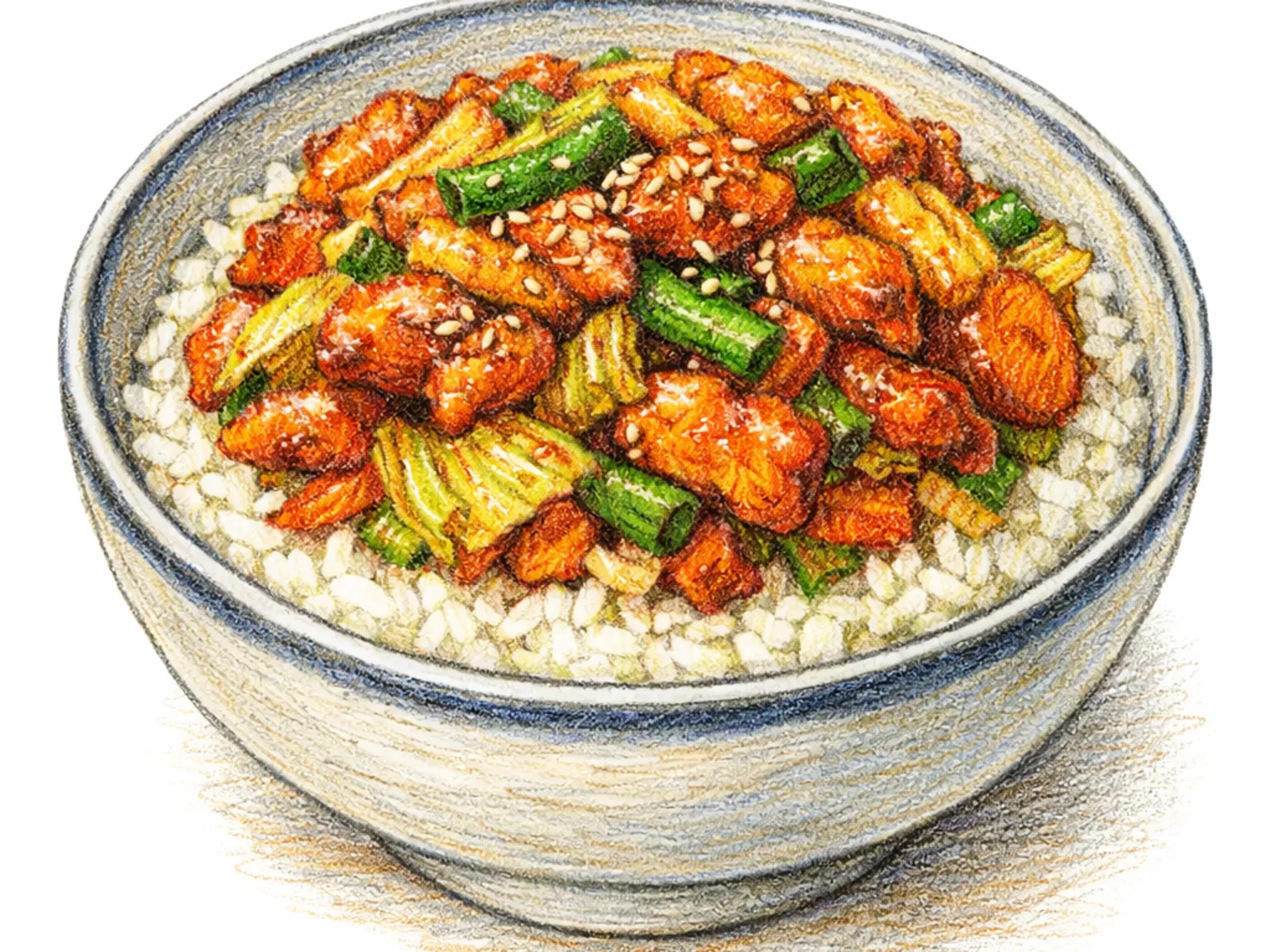
Korean Soy-Glazed Chicken Stir-Fry
Chicken thigh meat stir-fries in soy sauce, sugar, and oligosaccharide syrup for a sweet-salty glaze. Garlic and ginger go into the oil first to infuse the fat with fragrance before the chicken is added, letting the aromatics penetrate deep into the meat as it cooks. The oligosaccharide heats into a tacky gloss that coats each piece evenly as the liquid reduces. Sesame oil and whole sesame seeds scattered over the top at the end bring a nutty, aromatic finish. The flavor profile runs close to Japanese teriyaki, but the heavier use of garlic and ginger pushes it toward the more direct, punchy spice character typical of Korean cooking. Boneless thighs cut into bite-sized pieces cook more evenly than larger pieces, and keeping the heat high through most of the cook ensures the surface caramelizes without turning rubbery.
Naejang-tang (Spicy Mixed Beef Tripe Soup)
Naejang-tang is a Korean offal soup that simmers a combination of beef innards including large intestine, tripe, abomasum, and omasum together with gochugaru, gochujang or doenjang, generous amounts of garlic, and green onion into a thick, aggressively seasoned broth. Each organ contributes a distinct texture to the bowl: the small intestine is chewy and springy, the large intestine is fatty and yielding, and the stomach linings are firm with a near-crunchy resistance that gradually releases umami as it is chewed. Long cooking renders the intramuscular fat and collagen from the innards directly into the broth, producing a body and richness that cannot be replicated by shorter-cooked, leaner soups. Some versions incorporate seonji, coagulated ox blood, cooked alongside the other organs; it darkens the broth significantly and introduces a mineral, iron-forward depth that distinguishes the blood-enriched variant as a richer, more fortifying bowl. Abundant green onion and garlic form the aromatic backbone, and gochugaru raises the heat to a level that is meant to be felt as much as tasted. The soup is traditionally served in a stone pot or a heavy ceramic vessel that retains heat and keeps the broth at a bubbling simmer through the meal. In Korea, naejang-tang is closely tied to early-morning hangover recovery: restaurants specializing in the dish, often located near traditional markets or late-night drinking districts, begin service well before dawn to catch customers emerging from long nights. The combination of fat, protein, intense heat, and restorative minerals is widely understood to ease alcohol-related discomfort and replenish the body.
Korean Stir-Fried Chicken
Dak-bokkeum is a Korean stir-fried chicken dish seasoned with a soy sauce-based marinade. Soy sauce, sugar, and minced garlic coat the chicken evenly before it hits the pan, producing a salty, umami-forward crust as it sears. Onion and carrot are added partway through, and the moisture they release as they soften blends into the seasoning to form a natural pan sauce without any added liquid. Sesame oil goes in at the end, its nutty aroma lifting through the dish as it finishes. Breast meat produces a leaner, cleaner-tasting result, while thigh meat stays more moist and springy throughout cooking. The dish pairs well with steamed rice and comes together quickly enough for weeknight cooking.
Serve with this
Korean Bracken Fern Namul with Perilla
This perilla-scented bracken fern namul begins by pre-seasoning 250 grams of boiled bracken with soup soy sauce, minced garlic, and half the perilla oil for five minutes so the flavor seeps into the chewy fibers. Green onion is sauteed briefly in the remaining perilla oil to build an aromatic base before the seasoned bracken joins the pan for a two-minute stir-fry that drives off excess moisture. Adding water and ground perilla seeds, then simmering gently for five minutes, transforms the dish into a lightly sauced namul where every strand carries a nutty, earthy depth. Sesame seeds scattered at the end add a visual accent and a faint crunch that complements the bracken's dense chew.
Korean Ssamjang Hwe Deopbap
This variation on hoe-deopbap replaces the standard cho-gochujang with a dressing of ssamjang mixed with vinegar and sesame oil, shifting the dominant flavor away from sweet heat and toward fermented bean depth. The doenjang component in ssamjang works against the rawness of the fish rather than masking it with chili, producing a rounded, earthy complexity that deepens with each bite. Vinegar cuts through ssamjang's thick, pungent weight and introduces a clean acidity that keeps the overall flavor from feeling heavy. Flounder sashimi is cut into bite-sized pieces and kept refrigerated, while the rice is served at room temperature so the two elements neither clash nor blend into an indistinct warmth. Julienned carrot and perilla leaves provide a crisp, juicy resistance that contrasts directly with the chewy elasticity of the fish. Dressing the vegetables in advance draws out moisture that would soften the rice, so all the components are placed in the bowl separately and tossed together only at the moment of eating to preserve every texture.
Korean Pork Bone Stew (Slow-Simmered Pork Spine & Potato)
Gamjatang is one of Korea's most recognized bone soups, made by simmering pork spine for a long time until the broth turns milky white and rich with collagen. Doenjang and gochugaru form the seasoning foundation, while perilla seed powder -- a signature addition -- gives the broth a nutty, slightly creamy depth that is hard to replicate with any substitute. Potatoes simmer until they absorb the broth and soften to the core, and the dried napa cabbage leaves add a chewy, vegetal contrast to the thick liquid. A handful of perilla leaves stirred in near the end brings a fresh herbal note, and the ritual of picking tender pork off the bones with chopsticks is part of what makes eating gamjatang a hands-on, satisfying experience. It is traditionally sought out as a late-night meal or a hangover cure.
Similar recipes
Korean Grilled Spicy Chicken Ribs
Dakgalbi-gui is the original Chuncheon-style grilled chicken dish, where bone-in thigh and leg pieces marinate in a crimson paste of gochujang, soy sauce, sugar, garlic, sesame oil, and ginger before cooking directly over an open flame or on a very hot pan. Unlike the more widely known iron-plate dakgalbi stir-fried with vegetables, this grilled version focuses solely on the meat to maximize char and smoky flavor on the surface. Deboned thigh meat spread flat exposes more surface area to both the marinade and the heat, concentrating flavor throughout, and a minimum two-hour rest in the marinade ensures the spice penetrates deep into the flesh. The gochujang caramelizes at high temperatures, forming edges that are simultaneously spicy, sweet, and faintly bitter from the char.
Korean Soy-Glazed Shrimp Stir-Fry
Ganjang saeu bokkeum coats plump shrimp in a sweet-savory soy glaze built on a base of melted butter and garlic. A single cheongyang chili adds a subtle kick that lifts the buttery richness without overpowering it. The key timing rule is to add the sauce the moment the shrimp turn pink: any longer and they become rubbery, but the glaze needs just enough heat to caramelize lightly and coat. Stir-frying the garlic in the butter before the shrimp go in lays a nutty base across the entire sauce. A final splash of soy sauce over high heat at the end creates the lacquered sheen that defines the finished dish. With only eight minutes of cooking time total, this works equally well as a quick banchan alongside rice or as an appetizer with drinks.
Korean Spicy Beef Stir-Fry
Sogogi gochujang-bokkeum marinates thin-sliced beef in a paste of gochujang, soy sauce, sugar, and minced garlic, then stir-fries it over high heat. The chili paste's spiciness and the sugar caramelize together on the meat's surface, building a dark, sticky glaze with layered heat. Onion cooked alongside the beef releases moisture that helps the seasoning distribute evenly across every slice. A finish of sesame oil adds a roasted nuttiness on top of the bold, spicy-sweet profile -- intensely flavored enough that a small portion carries a full bowl of rice.