Korean Doenjang Braised Tofu

Korean Doenjang Braised Tofu

Quick answer

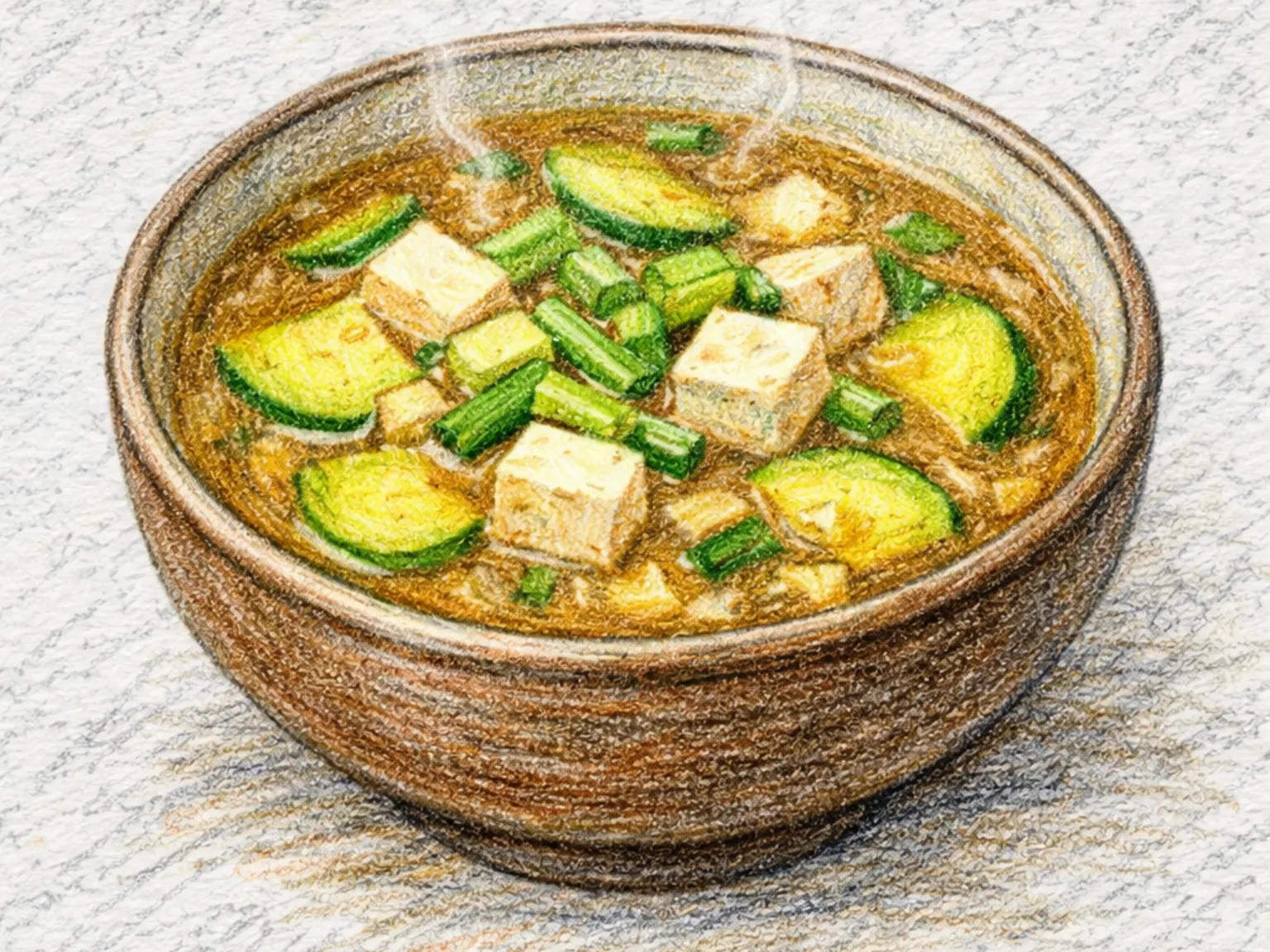
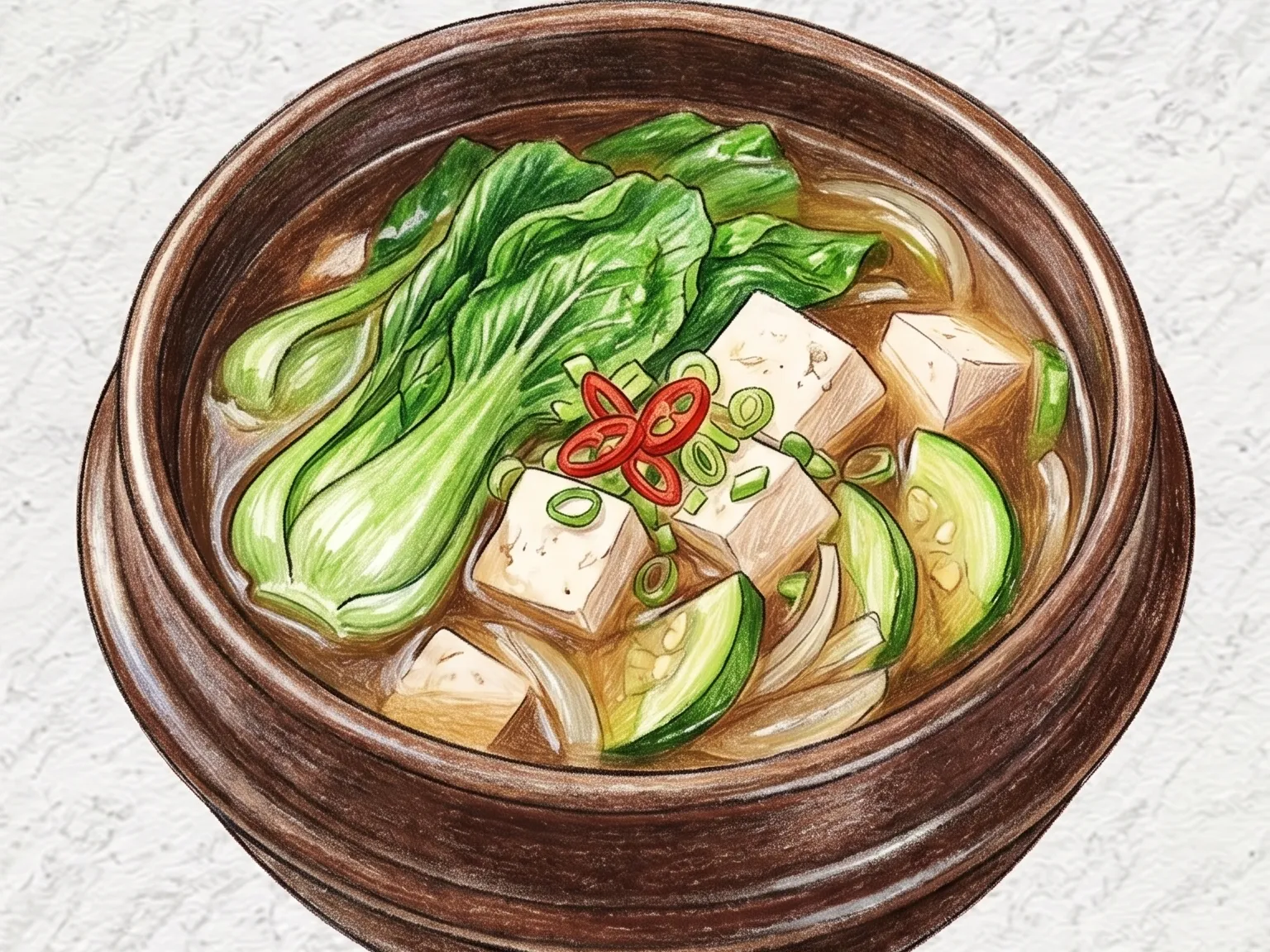
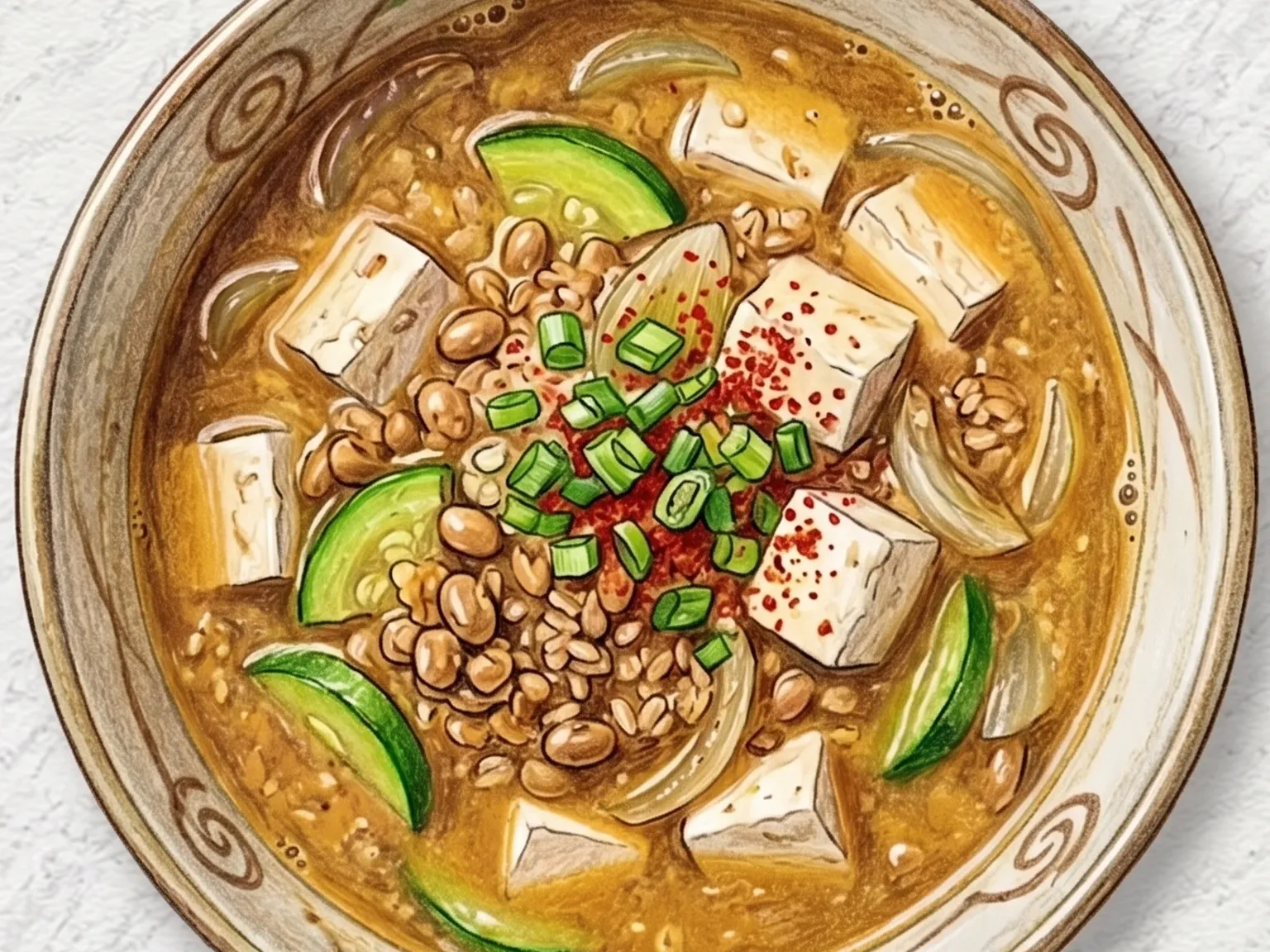
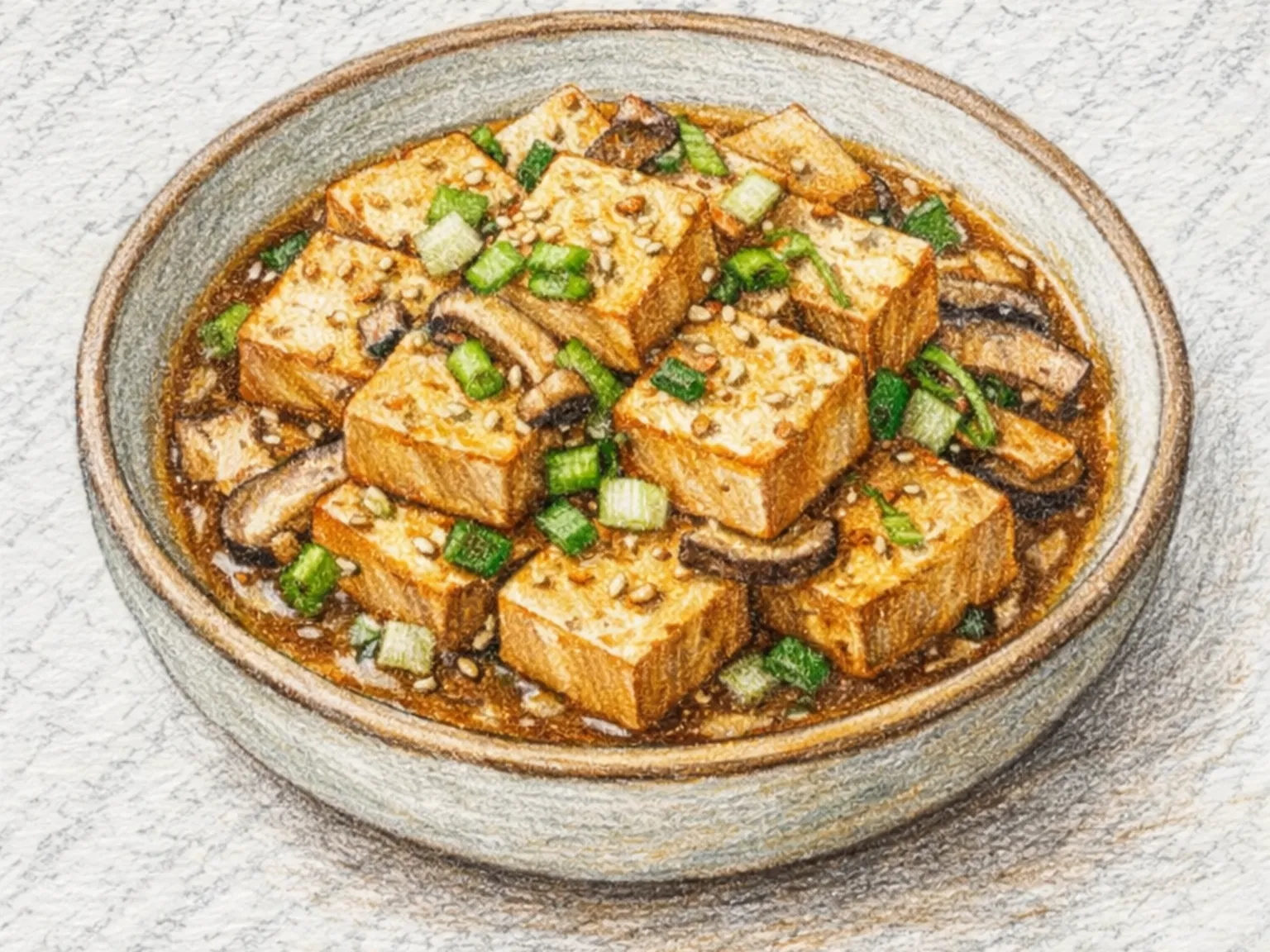
Doenjang-dubu-jorim is a braised tofu banchan in which tofu slices are simmered in a broth of fermented soybean paste, water, and aromatics until the liquid reduces and t...

What makes this special

  • Tofu slices simmer in fermented soybean paste until each slab carries the deep broth's seasoning.
  • Fermented doenjang slowly penetrates the tofu as it braises
  • Zucchini and onion sweetness softens the salty miso base
Total time
25 min
Level
Easy
Servings
2 servings
Ingredients
10
Calories
290 kcal
Protein
18 g

Key ingredients

firm tofuonionzucchinigreen oniondoenjang

Core cooking flow

  1. 1 Slice the tofu 1.5 cm thick and press between kitchen towels to remove moisture thoroughly.
  2. 2 Heat 1 tablespoon of cooking oil in a pan over medium-high heat, add the tof...
  3. 3 Mix 1.5 tablespoons of doenjang, 1 tablespoon of soy sauce, 1 teaspoon of mi...

Doenjang-dubu-jorim is a braised tofu banchan in which tofu slices are simmered in a broth of fermented soybean paste, water, and aromatics until the liquid reduces and the seasoning permeates the tofu throughout. Doenjang is a Korean fermented soybean paste with a deeply savory, earthy character distinct from Japanese miso, and its slow penetration into the porous interior of the tofu produces a richness that simple soy-seasoned tofu does not achieve. Zucchini and onion are added to the same pot, and their natural sweetness tempers the salt of the paste, giving the final braise a more balanced flavor. The tofu is braised until its surface firms slightly, which helps it hold its shape while the interior stays soft and fully seasoned. Any remaining braising liquid is well-seasoned and pairs naturally with a bowl of rice. It is an economical banchan that requires minimal preparation and stores in the refrigerator for several days.

Prep 10min Cook 15min 2 servings

Instructions

Read the steps as a cooking flow: prep, heat, seasoning, doneness control, and finish.

6 steps
  1. 1
    Prep

    Slice the tofu 1.5 cm thick and press between kitchen towels to remove moisture thoroughly.

    Sufficient drying ensures the surface crisps when pan-fried.

  2. 2
    Control

    Heat 1 tablespoon of cooking oil in a pan over medium-high heat, add the tofu, and pan-fry each side for 2 minutes until golden.

    Remove once the golden surface forms.

  3. 3
    Season

    Mix 1.5 tablespoons of doenjang, 1 tablespoon of soy sauce, 1 teaspoon of minced garlic, 0.5 tablespoon of red pepper flakes, and 200 ml of water to make the braising sauce.

  4. 4
    Season

    Lay the pan-fried tofu on the bottom of a pot, top with 80 g of sliced onion and 100 g of half-moon sliced zucchini, then pour the braising sauce over everything.

  5. 5
    Control

    Braise over medium heat for 8 minutes, continuously spooning the sauce over the tofu.

    Move on once the liquid reduces by half.

  6. 6
    Control

    Add diagonally sliced scallion and simmer for 2 more minutes.

    The dish is done when the doenjang aroma deepens in the sauce and the tofu surface develops a brown tint.

After the steps

Pick a recipe that fits this dish.

Continue with shared ingredients, meal pairings, or a similar method.

Recipes That Go Well With This

More Stir-fry →

Based on shared ingredients and meal pairing

Korean Braised Tofu Rice Bowl
Shared ingredient: firm tofu Rice

Korean Braised Tofu Rice Bowl

Dubu jorim deopbap places soy-braised tofu over a bowl of hot steamed rice, using the reduced braising glaze as the primary seasoning for the entire dish. Firm tofu is sliced into rectangles, patted dry to remove surface moisture, and pan-fried over high heat until a dense golden crust forms on both sides. This crust is essential - without it, the tofu absorbs the braising sauce too quickly and falls apart. With it, the exterior holds its structure while the interior slowly soaks up the seasoning from the inside out. The braising sauce is built from soy sauce, sugar, minced garlic, and a small amount of water. Sliced onion cooks alongside the tofu in the sauce, softening and dissolving into the liquid to contribute sweetness as the sauce reduces to a sticky, mahogany-colored glaze. Cheongyang chili, sliced on the bias, introduces a sharp clean heat that cuts through the sweetness of the sauce. Green onion goes in last, just before plating, to keep its fragrance intact. The finished sauce is spooned over the rice along with the tofu, where it seeps into each grain and ensures that flavor remains consistent from the first bite to the last. The dish stands on its own without additional side dishes and provides a practical source of plant protein for vegetarian meals.

Korean Spicy Braised Tofu
Shared ingredient: onion Stir-fry

Korean Spicy Braised Tofu

Spicy dubu-jorim pan-sears firm tofu slabs cut 1.5 centimeters thick until golden on both sides, then braises them in a sauce of soy sauce, gochugaru, garlic, and sugar. Searing first firms the tofu so it holds its shape through the eight-minute simmer, during which onion and green onion cook alongside in the reducing liquid. The chili flakes deliver a direct, persistent heat that penetrates the tofu as the sauce thickens, balanced by the sugar's sweetness. A final circle of sesame oil ties the flavors together with a roasted, nutty aroma.

Korean Bacon Kimchi Fried Rice
Serve together Rice

Korean Bacon Kimchi Fried Rice

Bacon kimchi fried rice takes the most common Korean leftover combination - cold rice and aging kimchi - and substitutes rendered bacon fat for the traditional sesame oil base. The bacon goes into a cold pan and cooks slowly so the fat renders completely before the meat crisps, creating a pool of smoky drippings that replace cooking oil entirely. Well-fermented kimchi, squeezed of excess juice and chopped roughly, goes into the hot fat and sizzles until its edges caramelize and the sharp lactic tartness mellows into a deeper, roasted sourness. Day-old rice is pressed flat against the pan to develop a crust reminiscent of nurungji - the scorched rice layer that fried rice enthusiasts seek. Soy sauce and a pinch of sugar season the dish, though both should be used in small amounts to avoid masking the interplay between the bacon's smokiness and the kimchi's fermented character. A fried egg on top, with a yolk still runny, becomes a sauce when broken and stirred through the rice. Bacon became a standard Korean grocery item in the 2000s, and this dish has since become a common home-cooking variation, with many cooks preferring its deeper, smokier flavor profile over the sesame oil original.

Korean Perilla Braised Tofu
Similar recipe Stir-fry

Korean Perilla Braised Tofu

Deulkkae dubu-jorim is a Korean braised tofu side dish finished with ground perilla seeds for a distinctly nutty, creamy character. Firm tofu slabs are lightly pan-seared, then simmered in a soy sauce and garlic broth with sliced onion. Ground perilla powder is stirred in toward the end, thickening the sauce into a pale, velvety coating that clings to each piece. A final drizzle of sesame oil and a scattering of green onion rounds out the dish with fragrant warmth.

Serve with this

Manduguk (Korean Dumpling Clear Broth Soup)
Soups Easy

Manduguk (Korean Dumpling Clear Broth Soup)

Manduguk is a Korean dumpling soup in which hand-folded dumplings stuffed with ground pork, tofu, scallion, and garlic are dropped into a clear, simmering broth, typically anchovy-kelp stock or beef broth, and cooked until they float. As the dumplings cook, their thin wheat-flour wrappers release a subtle starch that gives the broth a barely perceptible body, while the filling leaks savory juices that enrich the liquid gradually. A thin drizzle of beaten egg stirred in near the finish creates silken wisps on the surface of the broth and gives the bowl a more finished appearance. Shredded egg strips and crumbled dried seaweed scattered on top add a pleasant contrast in color and a faint oceanic note to the flavor. Many Korean households serve manduguk on Lunar New Year as an alternative to tteokguk, and some combine the two by adding sliced rice cakes alongside the dumplings. Dumplings can be made in large batches and frozen raw, which means this soup can be pulled together quickly on weeknights without sacrificing any of the flavor that comes from homemade filling. A small dish of soy-vinegar dipping sauce served alongside lets each person adjust the seasoning at the table, and the light acidity of the sauce cuts through the mild broth in a way that makes the contrast between the two worth trying.

🏠 Everyday 🎉 Special Occasion
Prep 10min Cook 15min 4 servings
Ogeurakji (Dried Radish Strips)
Side dishes Medium

Ogeurakji (Dried Radish Strips)

Authentic Gyeongsang-do style crunchy dried radish strips.

🔥 Trending Now 🏠 Everyday
Prep 30min Cook 10min 4 servings
Korean Kimchi Mandu Jjigae (Kimchi Dumpling Stew)
Stews Easy

Korean Kimchi Mandu Jjigae (Kimchi Dumpling Stew)

Kimchi mandu jjigae drops whole frozen kimchi dumplings straight into a simmering pot of aged kimchi, tofu, and anchovy stock. The dumpling wrappers absorb the broth as they cook, swelling plump and moist, while the kimchi filling inside echoes the stew's tangy base and doubles the fermented depth. Gochugaru and soup soy sauce add a clean chili heat, and firm tofu cubes absorb the spiced broth for a softer textural contrast. Because the dumplings themselves carry seasoning, it is better to start with less sauce and adjust after tasting the broth. This is a filling, no-fuss meal that needs nothing more than a bowl of steamed rice alongside it.

🏠 Everyday ⚡ Quick
Prep 8min Cook 15min 2 servings

Similar recipes

Korean Gondre Dubu Doenjang Bokkeum (Thistle Tofu Doenjang Stir-fry)
Stir-fry Medium

Korean Gondre Dubu Doenjang Bokkeum (Thistle Tofu Doenjang Stir-fry)

Gondre dubu doenjang bokkeum is a stir-fried side dish that pairs pan-seared firm tofu with blanched gondre thistle greens in a doenjang-based sauce. Searing the tofu separately in perilla oil before combining it with the greens is the step that makes the difference: the firm, lightly crisped surface that forms holds its shape through the subsequent stir-frying and absorbs the seasoning without breaking down into chunks. Doenjang dissolved in a small amount of water is stirred through the gondre so the fermented paste coats every strand evenly, and a small addition of soup soy sauce deepens the savory character without pushing the salt level too high. Sliced cheongyang chili adds a gentle heat that lingers at the finish. Perilla oil, with its nutty, herbal scent, binds the flavors and gives the dish its distinctive aromatic character. Gondre is a thistle variety grown in the Gangwon mountain region and pairs particularly well with doenjang because its earthy, slightly sweet fragrance complements the depth of the fermented paste.

🏠 Everyday 🍱 Lunchbox
Prep 18min Cook 10min 2 servings
Korean Oi Dubu Bokkeum (Cucumber Tofu Stir-fry)
Stir-fry Easy

Korean Oi Dubu Bokkeum (Cucumber Tofu Stir-fry)

Oi-dubu-bokkeum stir-fries half-moon cucumber slices and cubed firm tofu with soup soy sauce, garlic, and a light touch of Korean chili flakes. The tofu is pan-fried to golden first to prevent crumbling, then set aside while garlic and onion build flavor in the same pan. Cucumber goes in for just 90 seconds - long enough to warm through but short enough to stay crisp and juicy. The tofu returns for a final toss with sesame oil, creating a dish defined by the contrast between cool, crunchy cucumber and warm, soft tofu under a clean soy-based seasoning.

🥗 Light & Healthy 🏠 Everyday
Prep 10min Cook 8min 2 servings
Korean Braised Tofu with Kimchi
Steamed Easy

Korean Braised Tofu with Kimchi

Dubu-kimchi-jorim is firm tofu braised with well-fermented aged kimchi in a sauce of soy sauce, gochugaru, minced garlic, and a pinch of sugar. The sharp acidity of the aged kimchi mellows during braising while its deep, fermented flavor remains fully intact. The tofu absorbs the chili-stained braising liquid like a sponge, carrying the kimchi flavor into every bite. Sugar takes the edge off the sourness just enough, and sesame oil stirred in at the end ties all the flavors together. Pressing the tofu before cooking prevents excess moisture from diluting the sauce, and pan-frying the pieces until golden on both sides before braising creates a firmer surface that holds together better. This dish is an efficient way to use kimchi that has sat in the refrigerator for months, as the stronger the sourness, the better suited it is for braising. Adding thinly sliced pork shoulder deepens the flavor considerably. It goes best spooned generously over a bowl of hot steamed rice.

🏠 Everyday 🍱 Lunchbox
Prep 10min Cook 20min 2 servings

Tips

Searing tofu first helps it hold shape while braising.
Reduce soy sauce to 0.5 tbsp if your doenjang is salty.

Nutrition (per serving)

Calories
290
kcal
Protein
18
g
Carbs
13
g
Fat
19
g