Korean Stir-Fried Udon with Spicy Chicken
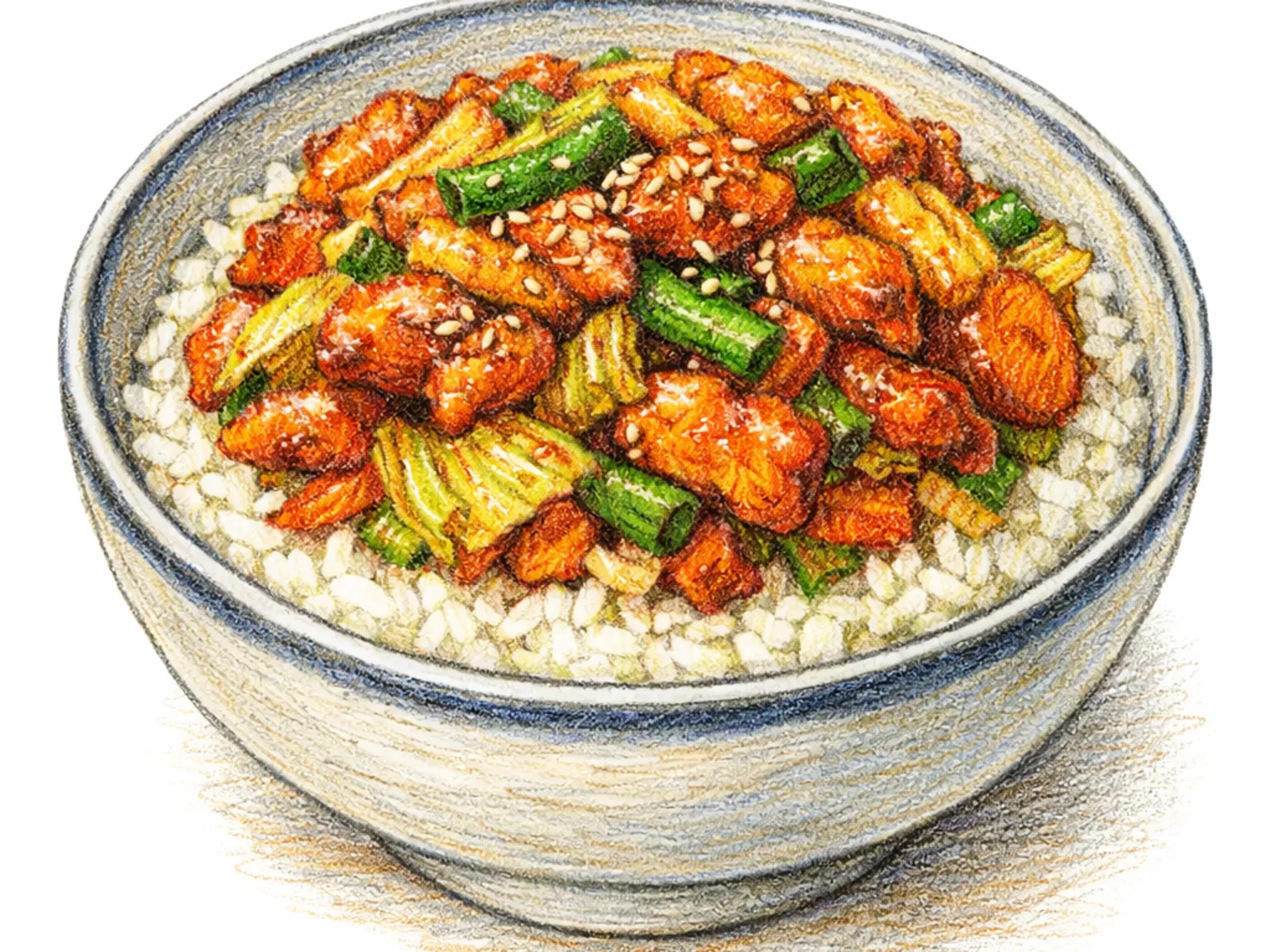
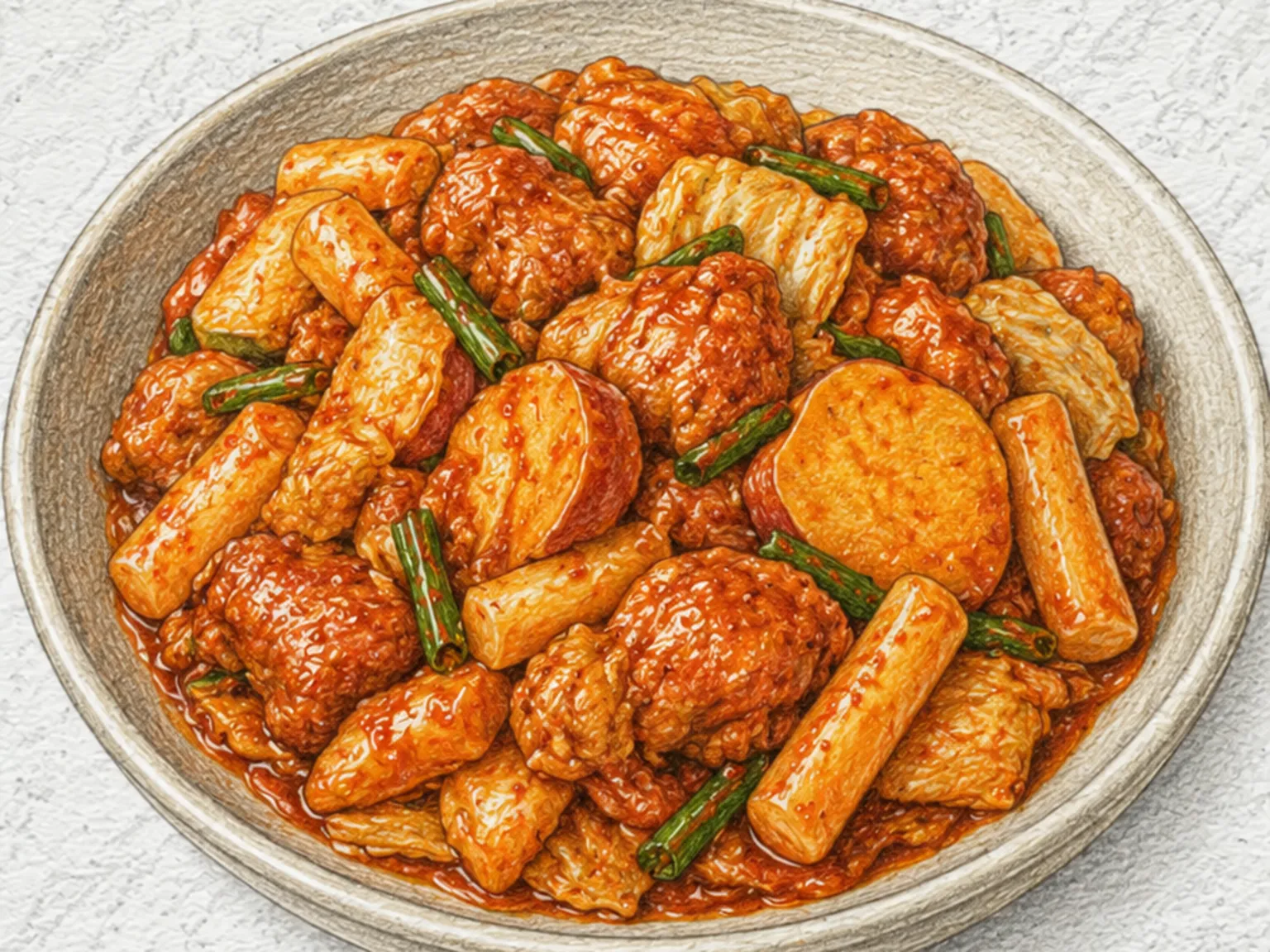
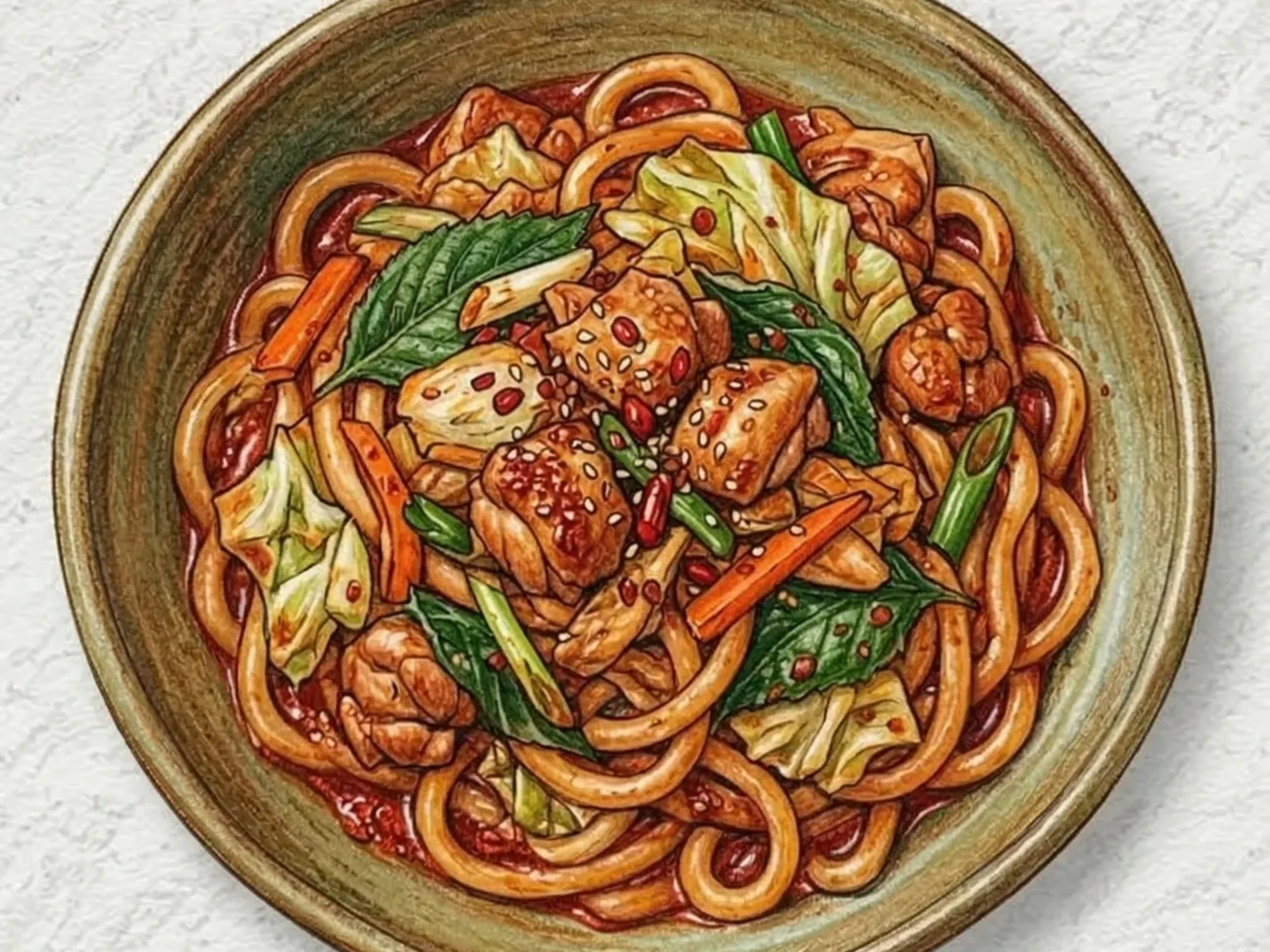
Gochujang-marinated chicken, cabbage, sweet potato, and rice cakes are stir-fried together before thick udon noodles join the pan and absorb the spicy-sweet sauce. The dakgalbi seasoning clings to the udon's broad surface, loading every bite with bold, smoky flavor. Cabbage and scallion wilt quickly in the high heat, releasing natural sugars that balance the chili paste's punch, while sweet potato chunks mellow the spice further with their starchy sweetness. Udon noodles, thicker than ramen or somyeon, stand up to the heavy sauce without going limp, delivering a satisfying chew throughout the meal. Melting a layer of cheese over the top just before serving adds a creamy, salty contrast to the heat. A sprinkle of sesame seeds and shredded seaweed finishes the dish. It scales well for groups sharing a large pan or griddle.
Adjust Servings
Instructions
- 1
Cut chicken thigh into bite-size pieces and marinate 10 minutes with gochujang, chili flakes, soy sauce, sugar, and garlic.
- 2
Slice sweet potato thinly into half-moons and prep cabbage, onion, and green onion.
- 3
Stir-fry sweet potato and onion first until half-cooked, then add chicken and cook over high heat.
- 4
Add cabbage and cook until wilted, then add udon noodles and combine.
- 5
When noodles absorb sauce, add green onion and sesame oil and stir-fry 1 more minute.
- 6
Turn off heat, rest for 2 minutes, and plate for more integrated flavor.
As an Amazon Associate, we may earn from qualifying purchases.
Tips
Nutrition (per serving)
More Recipes

Korean Stir-Fried Kale and Pork with Gochugaru
Keil-dwaeji-gochugaru-bokkeum stir-fries marinated pork shoulder with kale in a chili-forward gochugaru and gochujang sauce. The pork marinates to develop deep, spicy savoriness, then sears quickly at high heat for a lightly charred edge. Kale holds up to the heat better than most leafy greens, retaining a pleasant chew that contrasts with the tender pork and cuts through its richness. The dish works well wrapped in lettuce without any extra dipping sauce, or simply piled over a bowl of steamed rice.

Korean Spicy Beef Stir-Fry
Sogogi gochujang-bokkeum marinates thin-sliced beef in a paste of gochujang, soy sauce, sugar, and minced garlic, then stir-fries it over high heat. The chili paste's spiciness and the sugar caramelize together on the meat's surface, building a dark, sticky glaze with layered heat. Onion cooked alongside the beef releases moisture that helps the seasoning distribute evenly across every slice. A finish of sesame oil adds a roasted nuttiness on top of the bold, spicy-sweet profile -- intensely flavored enough that a small portion carries a full bowl of rice.

Korean Spicy Chicken Stir-fry
Dakgalbi marinates chicken thigh meat in a sauce of gochujang, red pepper flakes, soy sauce, and sugar, then stir-fries it with vegetables on a flat griddle or large pan. Cabbage releases moisture as it cooks, blending with the seasoning to form a natural sauce. Sweet potato gains sweetness under heat, which offsets the spice. Rice cakes pick up the sauce on their sticky surface, delivering a chewy bite loaded with flavor. The dish originated in Chuncheon and is traditionally finished by stir-frying rice in the remaining sauce at the bottom of the pan. A small amount of curry powder is added for an extra layer of aromatic depth.

Korean Spicy Stir-fried Octopus
Nakji-bokkeum is a fiery Korean stir-fry of small octopus (nakji) coated in a sauce of gochujang, gochugaru, soy sauce, sugar, and garlic, tossed with bean sprouts, onion, carrot, and scallion. Bean sprouts line the bottom of the pan, releasing moisture to prevent sticking while adding crunch. The vegetables and half the sauce go on next, then the octopus on top, covered and steamed on medium heat for three minutes before a final high-heat stir-fry sears everything for two minutes. Speed is critical - octopus toughens with prolonged cooking - and the dish is often mixed with boiled thin wheat noodles for a heartier meal.

Korean Stir-Fried Chicken
Dak-bokkeum is a Korean stir-fried chicken dish in a soy sauce-based seasoning. A mix of soy sauce, sugar, and minced garlic coats the chicken evenly, producing a salty, umami-forward flavor. Onion and carrot cook together with the chicken, and their released moisture blends with the seasoning to form a natural sauce. A final drizzle of sesame oil wraps everything in a nutty aroma. Using breast meat yields a leaner result, while thigh meat produces a more moist, succulent texture.

Kimchi Stir-Fried Udon (Pork Belly Kimchi Wok-Fried Noodles)
Kimchi udon stir-fry is a quick, high-heat noodle dish that brings together thinly sliced pork belly, aged kimchi, and thick udon noodles. The pork belly is seared until its edges crisp, rendering enough fat to cook the onion and green onion that follow. Kimchi goes in next and stir-fries on high heat until its moisture evaporates and the flavor concentrates. A mixture of gochujang, soy sauce, and sugar forms the seasoning, and blanched udon noodles are tossed in to coat evenly. The entire stir-fry stays on high heat for a short time to keep the udon bouncy rather than soft. Adding a spoonful of kimchi juice during cooking deepens the umami without increasing the volume of sauce.