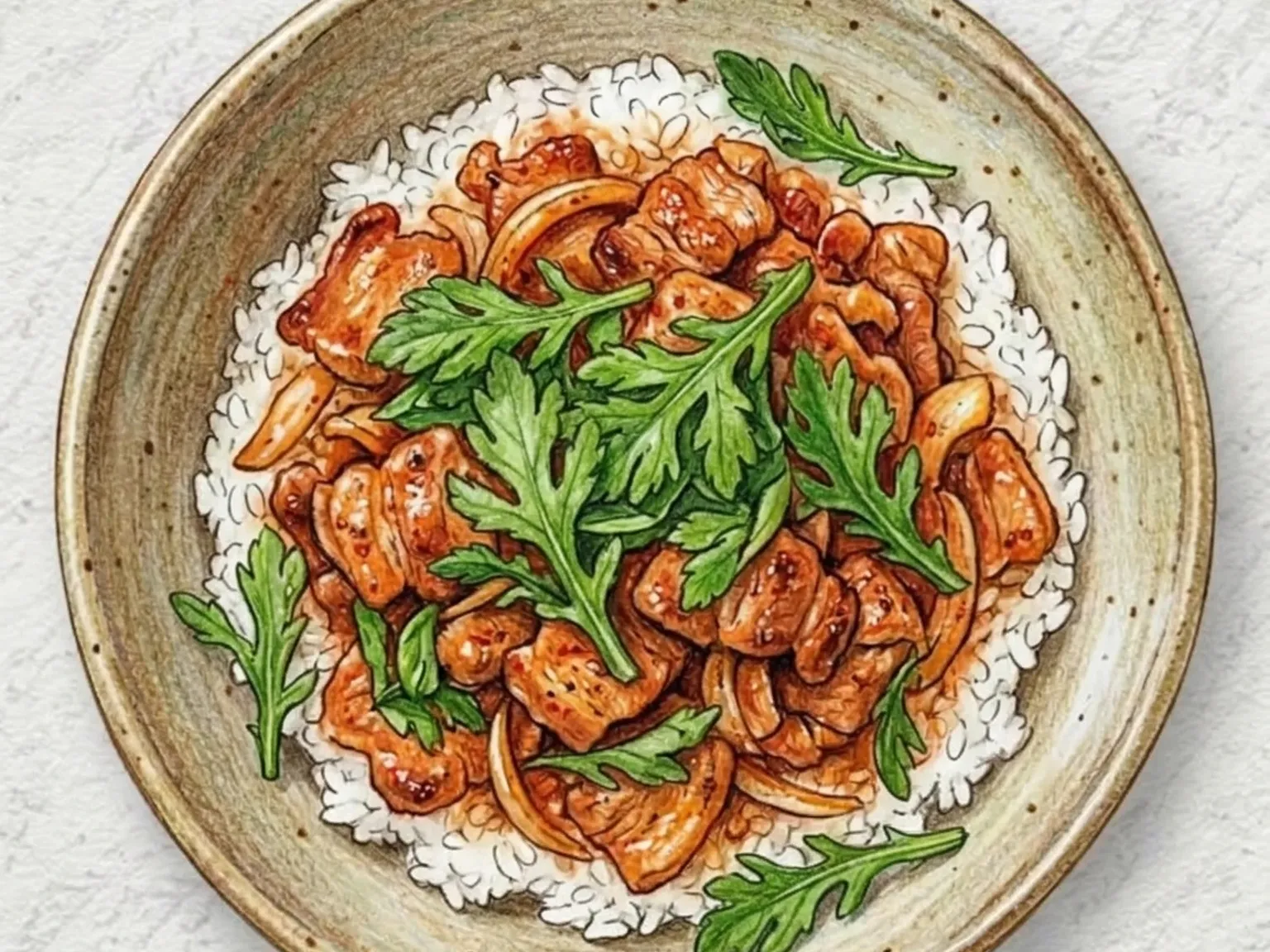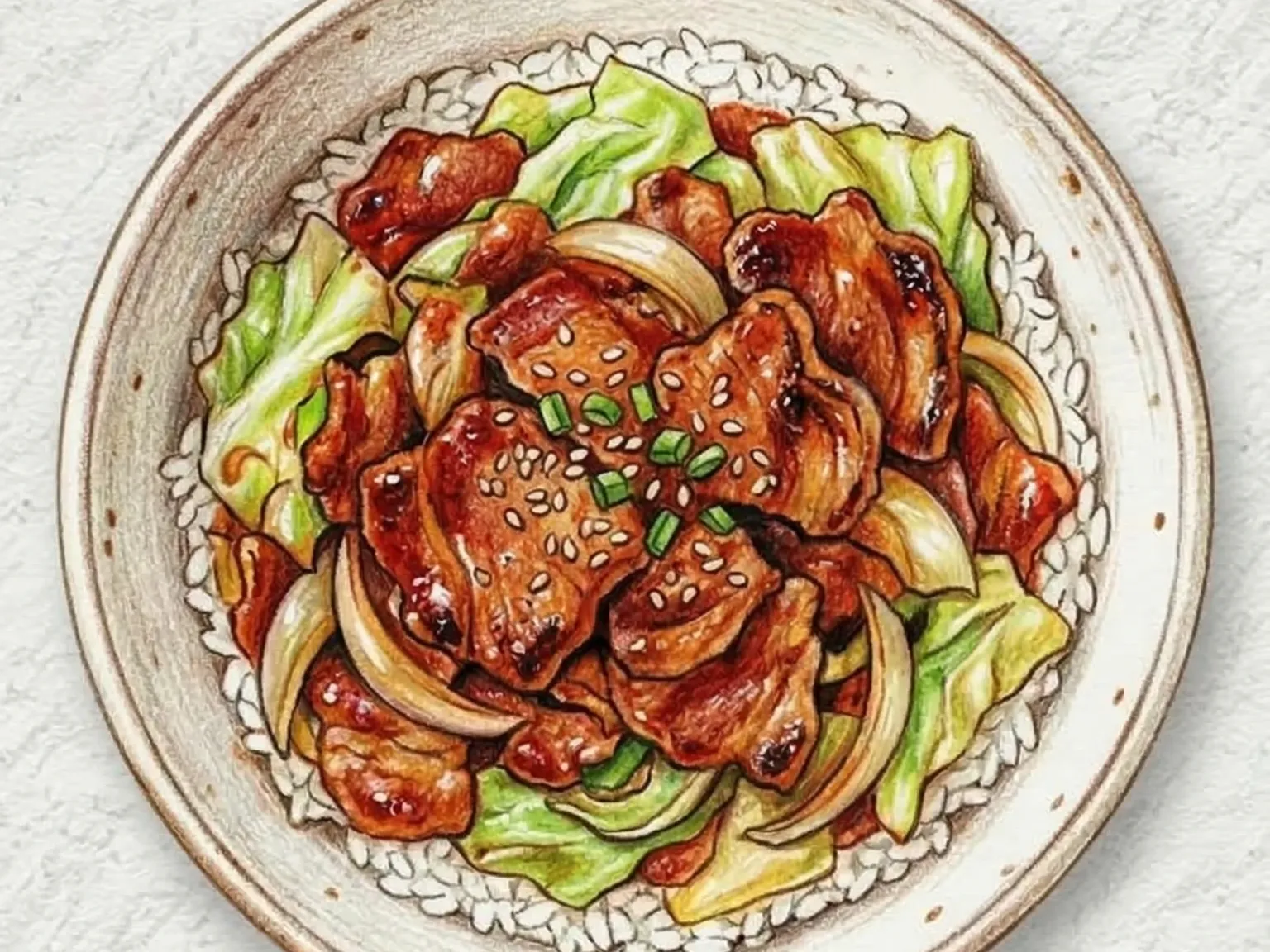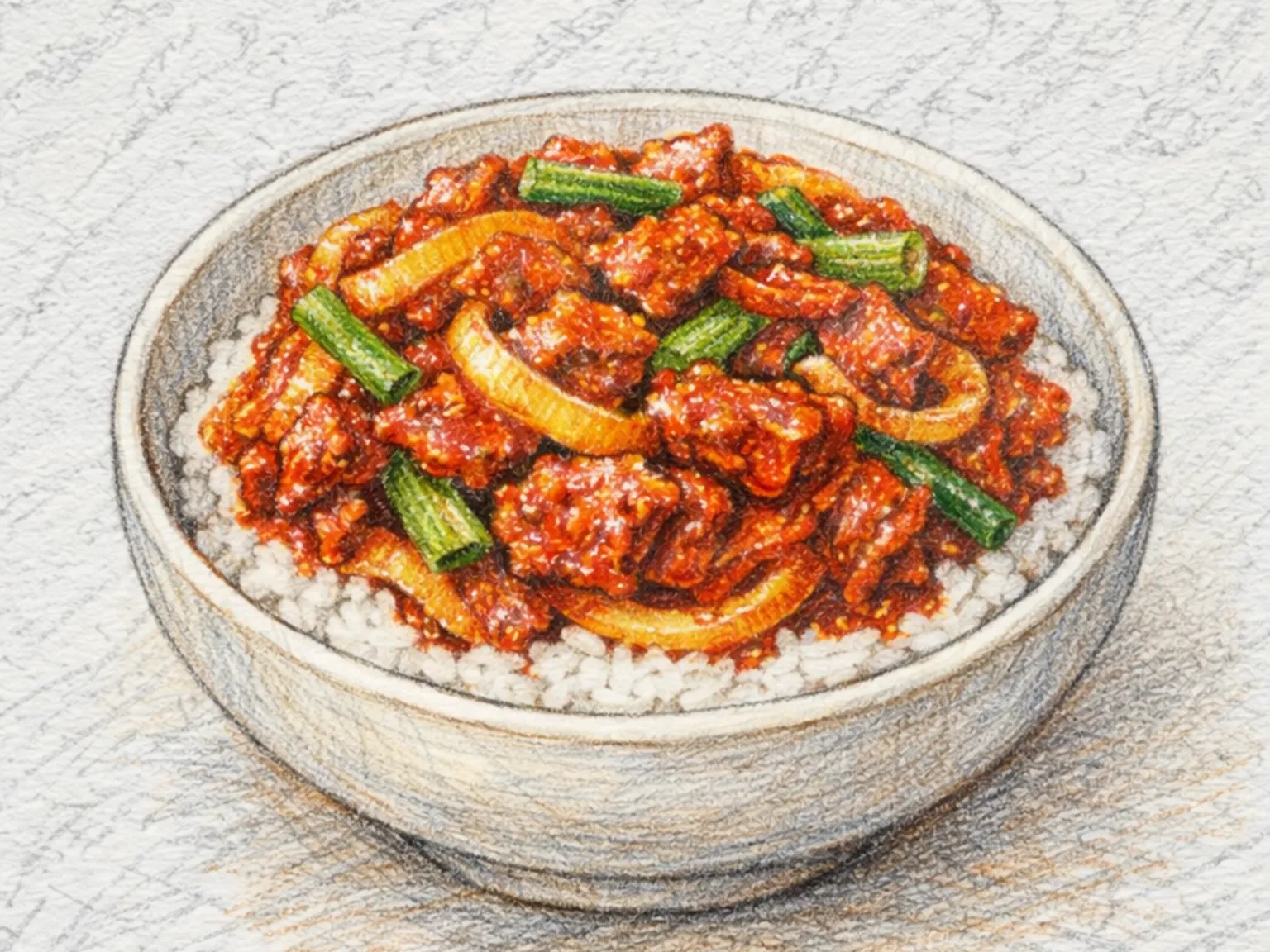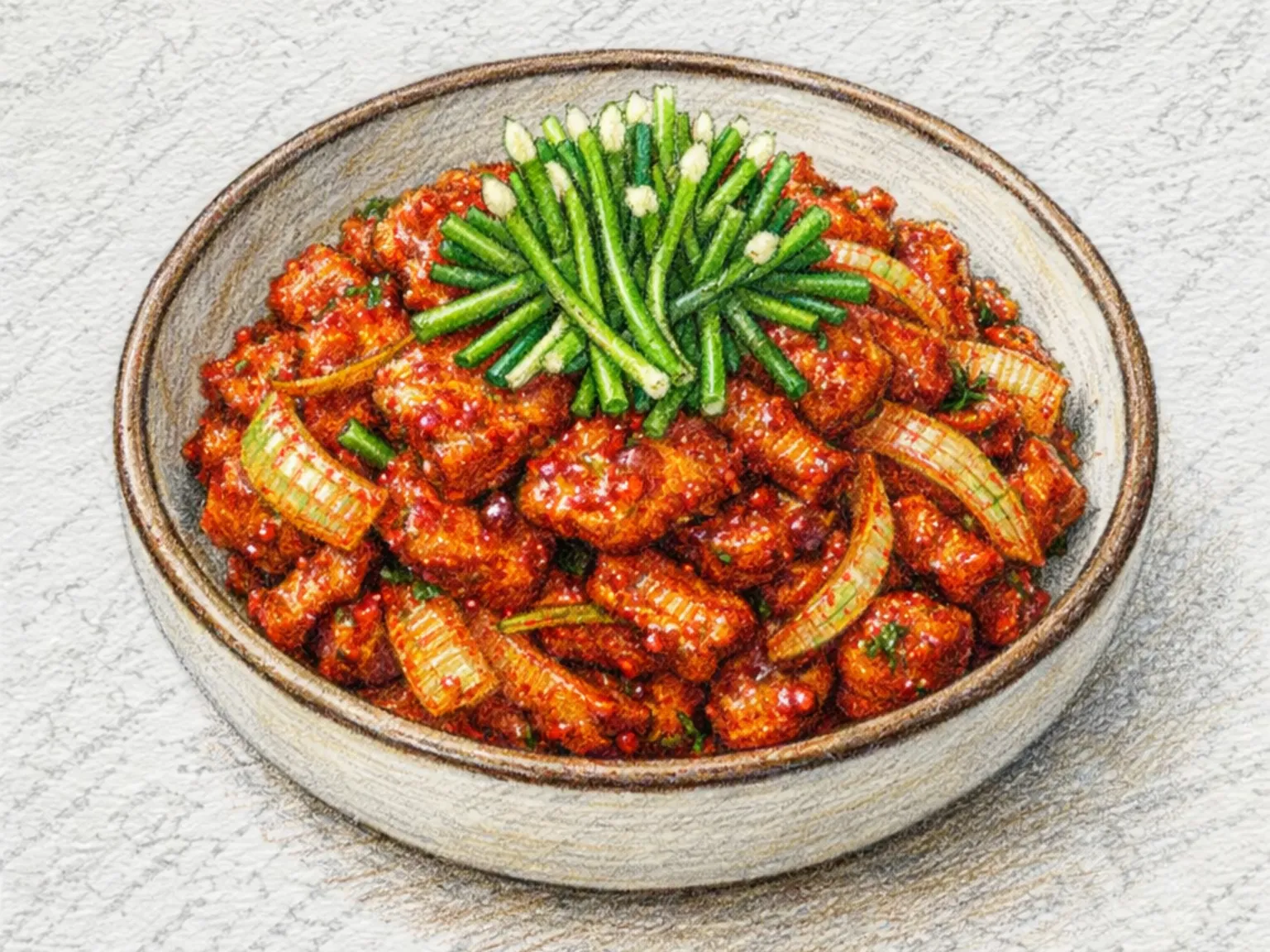
Korean Pork & Wild Chive Stir-fry
Dallae-dwaejigogi-bokkeum is a Korean springtime stir-fry of pork shoulder tossed in a gochujang and chili flake sauce, then topped generously with raw wild chives. The wild chives release a sharp, garlicky bite that cuts through the rich, spicy pork. Onions caramelize lightly during cooking, adding natural sweetness that rounds out the heat. The dish is cooked quickly over high heat to preserve the fresh aroma of the chives.
Adjust Servings
Instructions
- 1
Slice pork bite-size and marinate with gochujang, gochugaru, soy sauce, and minced garlic for 10 minutes.
- 2
Cut wild chives into 4 cm lengths and slice the onion thinly.
- 3
Heat oil in a pan and stir-fry onion for 1 minute to bring out sweetness.
- 4
Add marinated pork and stir-fry over medium-high heat for 5-6 minutes until fully cooked.
- 5
Add wild chives, toss quickly for 1 minute, then finish with sesame oil.
- 6
Turn off heat, rest for 1 minute, and serve.
As an Amazon Associate, we may earn from qualifying purchases.
Tips
Nutrition (per serving)
More Recipes

Korean Pork & Swiss Chard Stir-fry
This hearty stir-fry combines pork shoulder and Swiss chard in a doenjang-based sauce that delivers deep, earthy umami. Separating the chard stems from the leaves and adding them at different times preserves contrasting textures: the stems remain snappy while the leaves wilt into tender ribbons. Doenjang neutralizes any gamey pork notes and builds a robust savory backbone, finished with sesame oil for a nutty warmth. A touch of Korean chili flakes introduces mild heat that rounds out the dish. It pairs naturally with a bowl of steamed rice for a complete, nourishing meal.

Korean Stir-fried Pork with Seaweed Stems
Miyeokjulgi-dwaejigogi-bokkeum stir-fries thinly sliced pork shoulder - pre-marinated in soy sauce and cooking wine - together with desalted seaweed stems, onion, and garlic. The pork is seared quickly over high heat to stay soft, then the seaweed stems join with the remaining seasoning for a fast 2-3 minute finish. The core appeal lies in the textural contrast: yielding pork against the crunchy, slightly rubbery stems that absorb the salty-sweet sauce. A final drizzle of sesame oil and a sprinkle of toasted sesame seeds round out the dish.

Korean Young Radish Pork Stir-fry
Yeolmu-dwaejigogi-bokkeum is a spicy Korean stir-fry of pork shoulder marinated in gochujang, gochugaru, and soy sauce, cooked together with young radish greens (yeolmu). The pork is seared first over high heat for four minutes, then the greens are added on medium heat for another four minutes - just long enough to wilt without losing their fresh bite. The gochujang heat contrasts with the crisp, slightly grassy stems of the yeolmu, and sesame oil ties the flavors together at the end. It is a seasonal dish best made when young radish greens are in peak supply during summer.

Korean Gaji Dwaejigogi Bokkeum (Eggplant Pork Stir-fry)
Gaji-dwaejigogi-bokkeum is a Korean stir-fry of eggplant and thinly sliced pork seasoned with garlic and fresh chili. The eggplant absorbs oil and sauce as it cooks, turning silky and melding seamlessly with the pork. Garlic infuses the dish with an intense aroma while the chili adds a clean, sharp heat throughout. It is especially flavorful in summer when eggplant is at its seasonal peak.

Korean Wild Chive Kimchi (Spring Quick Gochugaru)
Dallae kimchi is a quick spring kimchi where wild chives are salted for just eight minutes to barely wilt them, then dressed in gochugaru, sand lance fish sauce, plum extract, and Korean pear juice. The bulb-end roots carry the strongest aroma, so they should not be trimmed too short, and seasoning from the root upward ensures even flavor distribution. Pear juice adds moisture and a gentle fruit sweetness that buffers the chili heat, while sand lance fish sauce provides a lighter umami than standard anchovy versions. This kimchi tastes fresh and fragrant immediately after preparation, but one day of refrigeration allows a mild fermented depth to develop, making it a seasonal side dish worth the brief wait.

Korean Garlic Scape Kimchi
Maneul jong kimchi is a Korean garlic scape kimchi made by lightly brining the scapes, then dressing them in a paste of gochugaru, fish sauce, and plum syrup blended with pureed onion and pear. The scapes' sharp, peppery garlic aroma survives fermentation while the stems maintain their crisp snap, delivering alternating waves of heat and umami with each bite. Pear lays a fruit sweetness into the base that buffers the chili intensity, and fish sauce adds the fermented depth expected in Korean kimchi. Trimming the woody bottoms before seasoning improves the texture, and the flavor settles into balance after about two days of fermentation.