Charim

2686 Korean & World Recipes

2686+ Korean recipes, clean and organized. Ingredients to instructions, all at a glance.

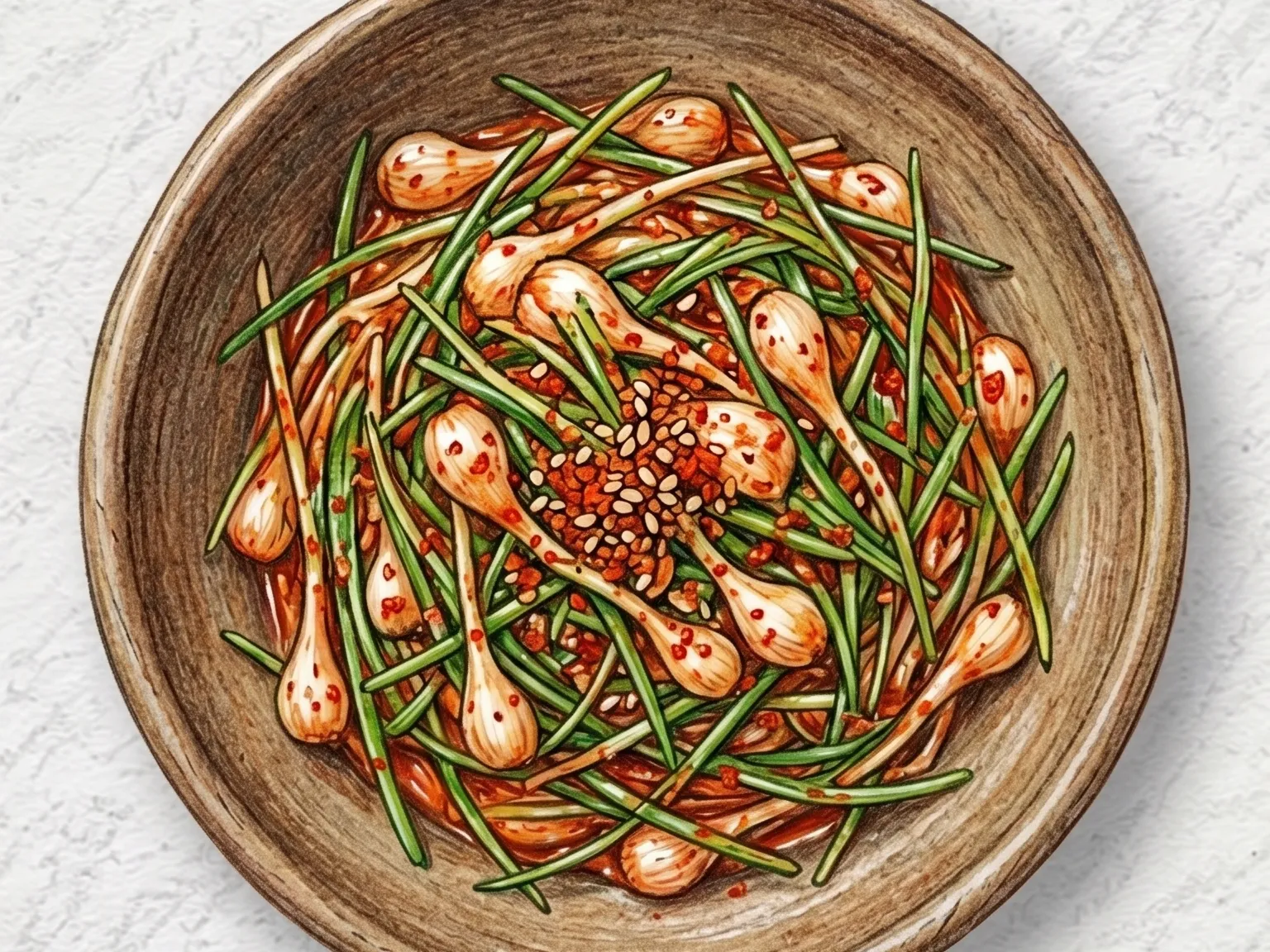
Korean Seasoned Wild Chive

Korean Seasoned Wild Chive

A pungent, no-cook spring side dish - raw Korean wild chives with a sharp garlic kick that clears the palate in one bite. Dallae emerges from hillsides in March, thinner and far more intense than cultivated chives. Dressed in soy sauce, gochugaru, vinegar, sugar, and sesame oil, the tiny bulbs and slender leaves deliver a nose-clearing zing. Koreans pair this muchim with doenjang-jjigae, where the raw chive's sharpness contrasts the stew's depth.

Prep 10min04 servings

Adjust Servings

2servings
servings

Instructions

  1. 1

    Clean the roots of wild chives thoroughly and trim.

  2. 2

    Cut into 3-4 cm lengths.

  3. 3

    Mix soy sauce, gochugaru, vinegar, sugar, and sesame oil to make the dressing.

  4. 4

    Gently toss the wild chives with the dressing.

  5. 5

    Sprinkle sesame seeds and serve immediately.

🛒Shop Ingredients on Amazon

As an Amazon Associate, we may earn from qualifying purchases.

Tips

Dress just before serving as the chives wilt quickly.
Pairs wonderfully with soft tofu for a contrast in texture.

Nutrition (per serving)

Calories
50
kcal
Protein
2
g
Carbs
5
g
Fat
3
g

More Recipes

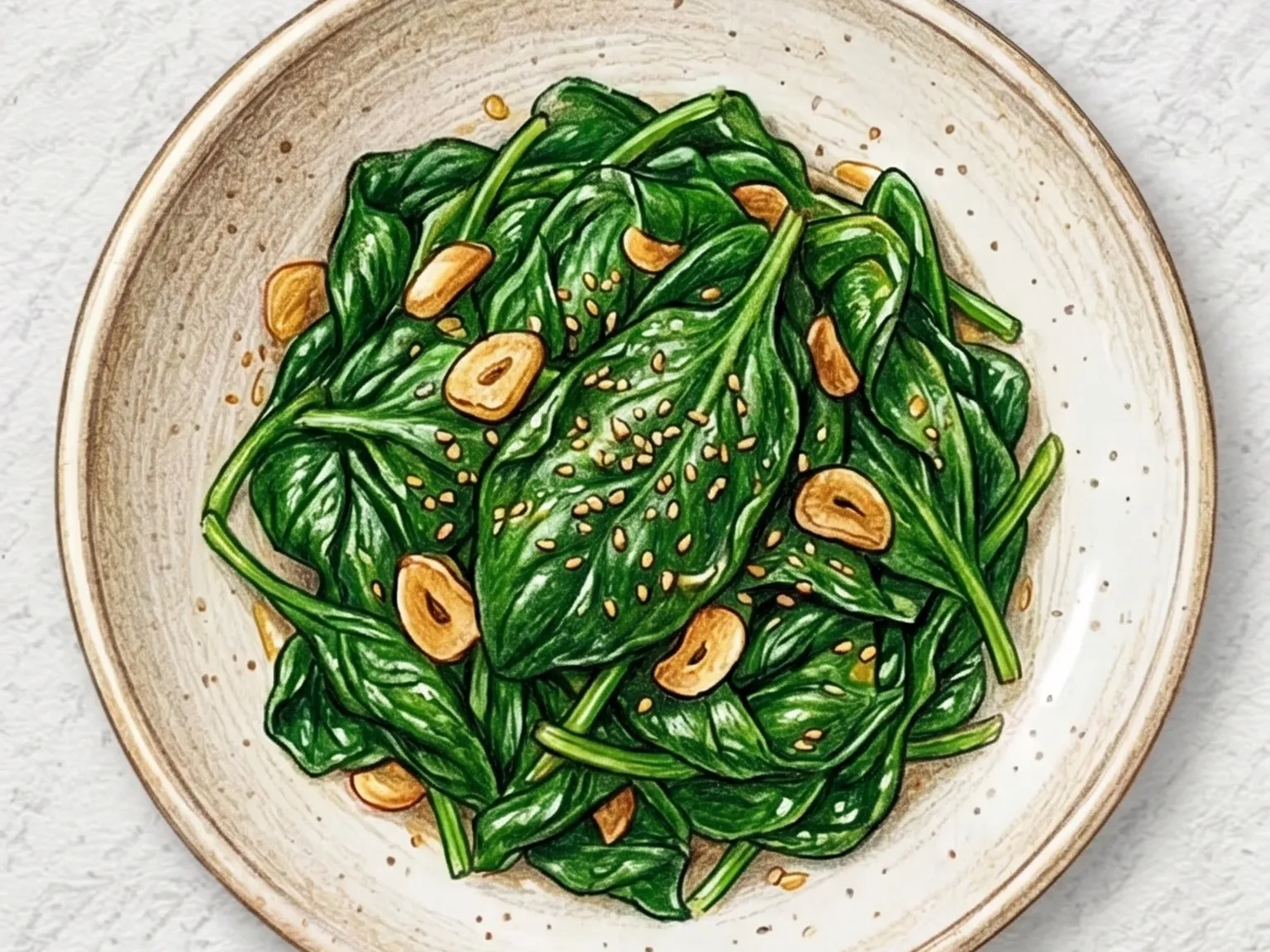
Korean Seasoned Chamnamul Greens
Side dishesEasy

Korean Seasoned Chamnamul Greens

Chamnamul - Korean pimpinella - grows wild in central Korea's mountain valleys and has been foraged since the Goryeo period. Its leaves carry a celery-like fragrance with a faint peppery finish. Blanched under a minute to preserve crispness, the greens are cut to 5 cm lengths and tossed with soy sauce, sesame oil, and garlic. Stems stay slightly firm while thinner leaves wilt just enough to absorb the dressing. A spring-only banchan, sometimes served raw when leaves are very young.

🏠 Everyday🍱 Lunchbox
Prep 10minCook 3min4 servings
Seasoned Korean Wild Lettuce
Side dishesEasy

Seasoned Korean Wild Lettuce

A bold, bitter-meets-spicy Korean side dish that wakes up the entire meal - foraged wild lettuce tossed in a fiery gochujang-vinegar dressing. Godeulppaegi (Ixeris dentata) is blanched briefly, then soaked in cold water for at least thirty minutes to tame its sharp bitterness. Dressed in gochujang, gochugaru, vinegar, sugar, garlic, and sesame oil, the remaining edge transforms into a complex, layered flavor. In season from spring through early summer, this is a prized banchan at rural markets across southern Korea.

🏠 Everyday🍱 Lunchbox
Prep 20minCook 7min4 servings
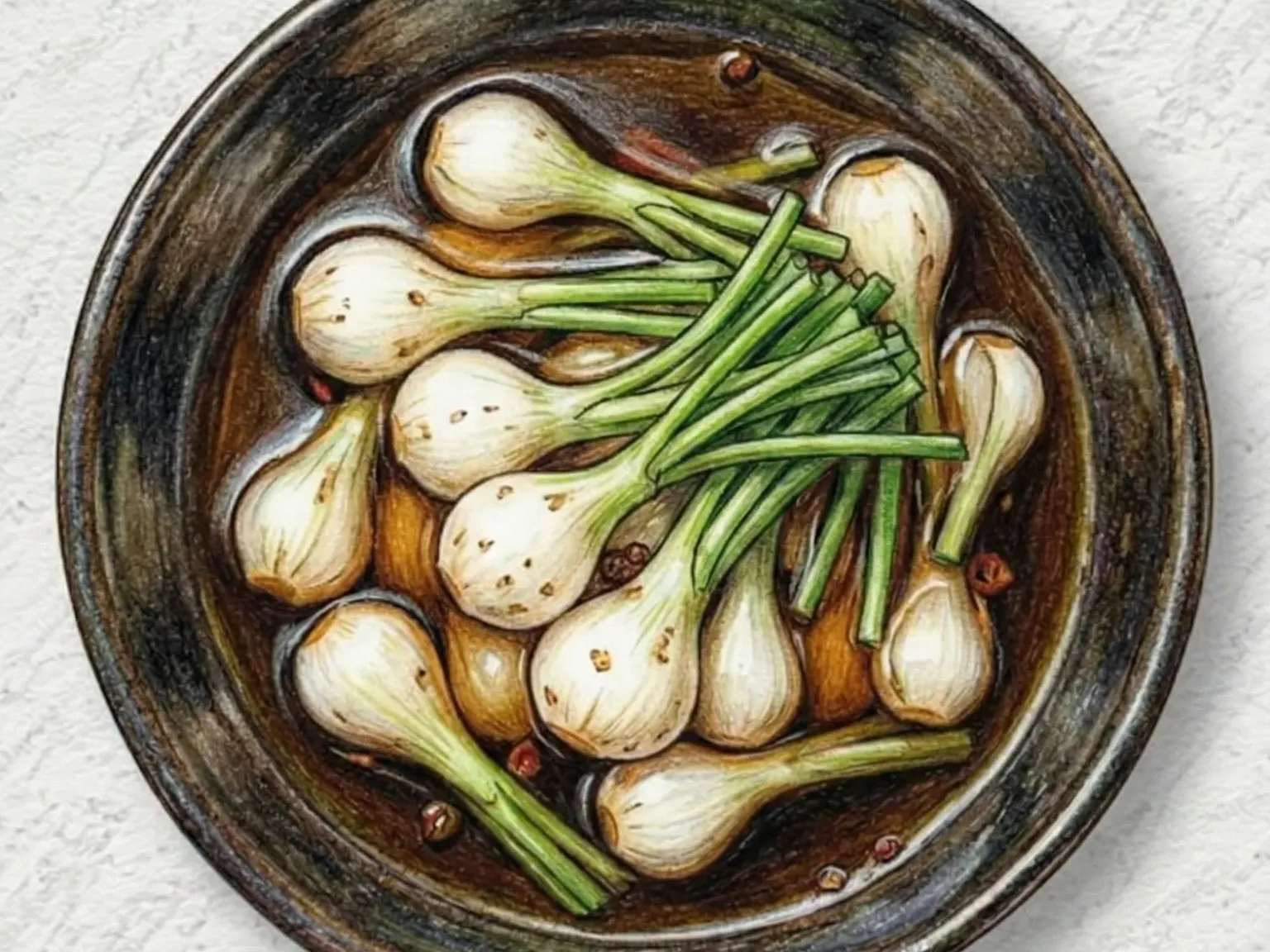
Korean Wild Chive Pickle (Spring Chive Soy Brine)
KimchiEasy

Korean Wild Chive Pickle (Spring Chive Soy Brine)

Dallae jangajji is a seasonal Korean pickle made by submerging spring wild chives in a brine of soy sauce, vinegar, and sugar with sliced Cheongyang chili and sesame seeds. Cleaning the dirt from the bulb-like roots and cutting the chives to five-centimeter lengths is the first step, after which the brine must be cooled past boiling point before pouring to preserve the wild chive's volatile, peppery aroma. Sesame seeds scattered on top add a mild toasted note. Ready after one day of refrigeration, this pickle is at its best as a springtime accompaniment to grilled meat, where the sharp, garlicky bite of the chives cuts cleanly through richness.

🍱 Lunchbox
Prep 15minCook 8min2 servings
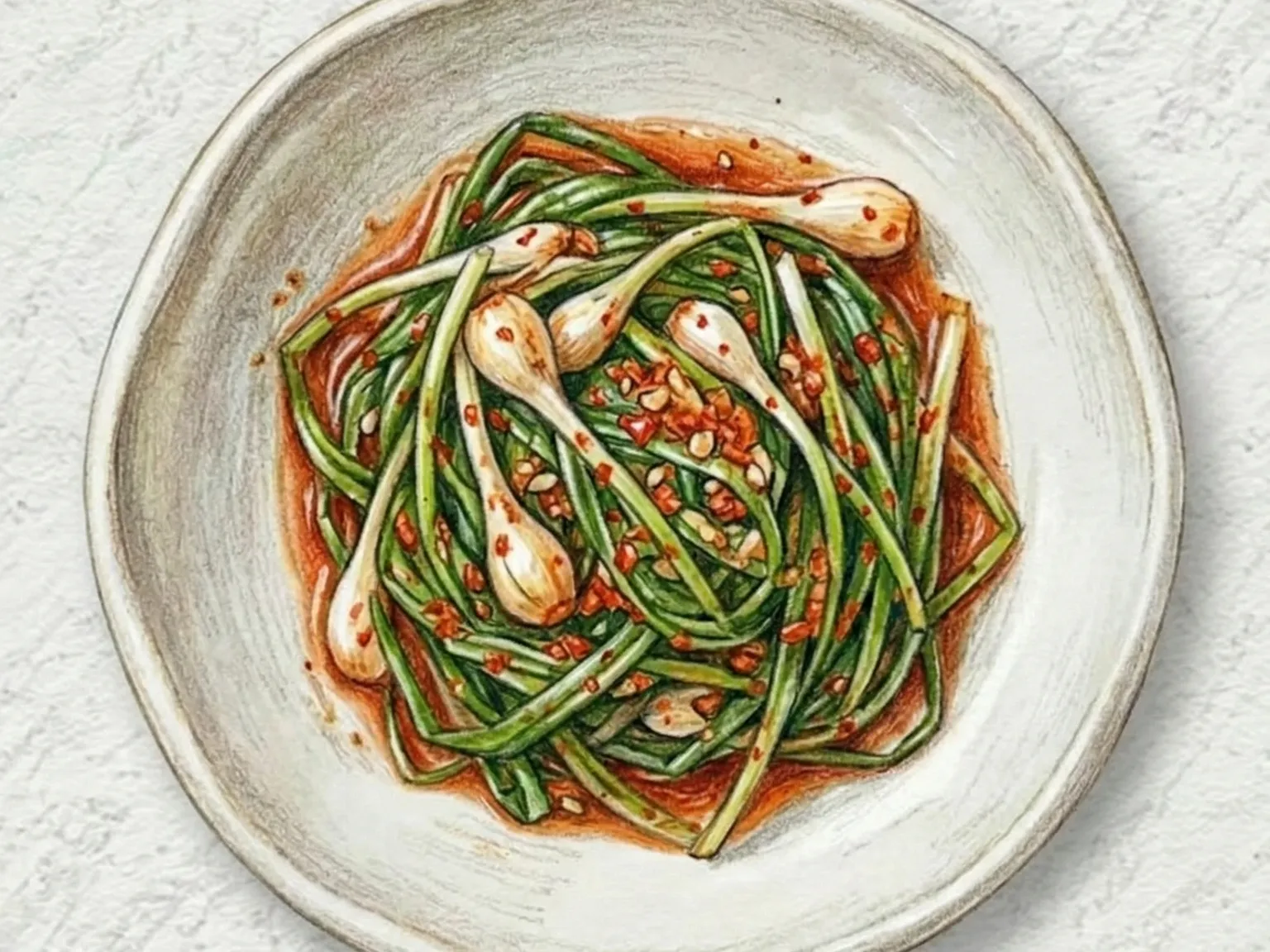
Korean Wild Chive Kimchi (Spring Quick Gochugaru)
KimchiEasy

Korean Wild Chive Kimchi (Spring Quick Gochugaru)

Dallae kimchi is a quick spring kimchi where wild chives are salted for just eight minutes to barely wilt them, then dressed in gochugaru, sand lance fish sauce, plum extract, and Korean pear juice. The bulb-end roots carry the strongest aroma, so they should not be trimmed too short, and seasoning from the root upward ensures even flavor distribution. Pear juice adds moisture and a gentle fruit sweetness that buffers the chili heat, while sand lance fish sauce provides a lighter umami than standard anchovy versions. This kimchi tastes fresh and fragrant immediately after preparation, but one day of refrigeration allows a mild fermented depth to develop, making it a seasonal side dish worth the brief wait.

🏠 Everyday🍱 Lunchbox
Prep 20minCook 5min4 servings
Korean Seasoned Eoseuri Herb Namul
Side dishesMedium

Korean Seasoned Eoseuri Herb Namul

Eoseuri - Korean cow parsnip, Heracleum moellendorffii - is a wild mountain herb foraged from Korea's central and northern highlands in early spring. Its thick stems and broad leaves carry a complex fragrance combining celery, parsley, and a faintly medicinal undertone that no cultivated vegetable can replicate. Blanched under a minute to soften the stems while keeping their slight resistance, the greens are dressed with gochujang, vinegar, garlic, and sesame oil. The bitterness is more pronounced than common namul like sigeumchi, giving eoseuri a polarizing reputation - those who enjoy it develop a craving that milder greens cannot satisfy. In Korean mountain villages, eoseuri has been gathered alongside chwinamul and chamnamul as part of the spring banchan spread.

🏠 Everyday🍱 Lunchbox
Prep 12minCook 3min2 servings
Korean Seasoned Stonecrop Salad
Side dishesEasy

Korean Seasoned Stonecrop Salad

Dollnamul - stonecrop, Sedum sarmentosum - is a succulent herb found along Korean stream banks in spring. Its plump, jade-green leaves burst with a mildly sour, grassy juice when bitten. Unlike most namul, dollnamul is never cooked - even seconds of heat destroy its crunch. Dressed immediately with gochugaru, vinegar, fish sauce, garlic, and sugar, it stays crisp and bright. The fish sauce provides a fermented undercurrent beneath the vinegar's sharpness. Must be eaten minutes after assembly.

🏠 Everyday🍱 Lunchbox
Prep 12min4 servings
More Side dishes