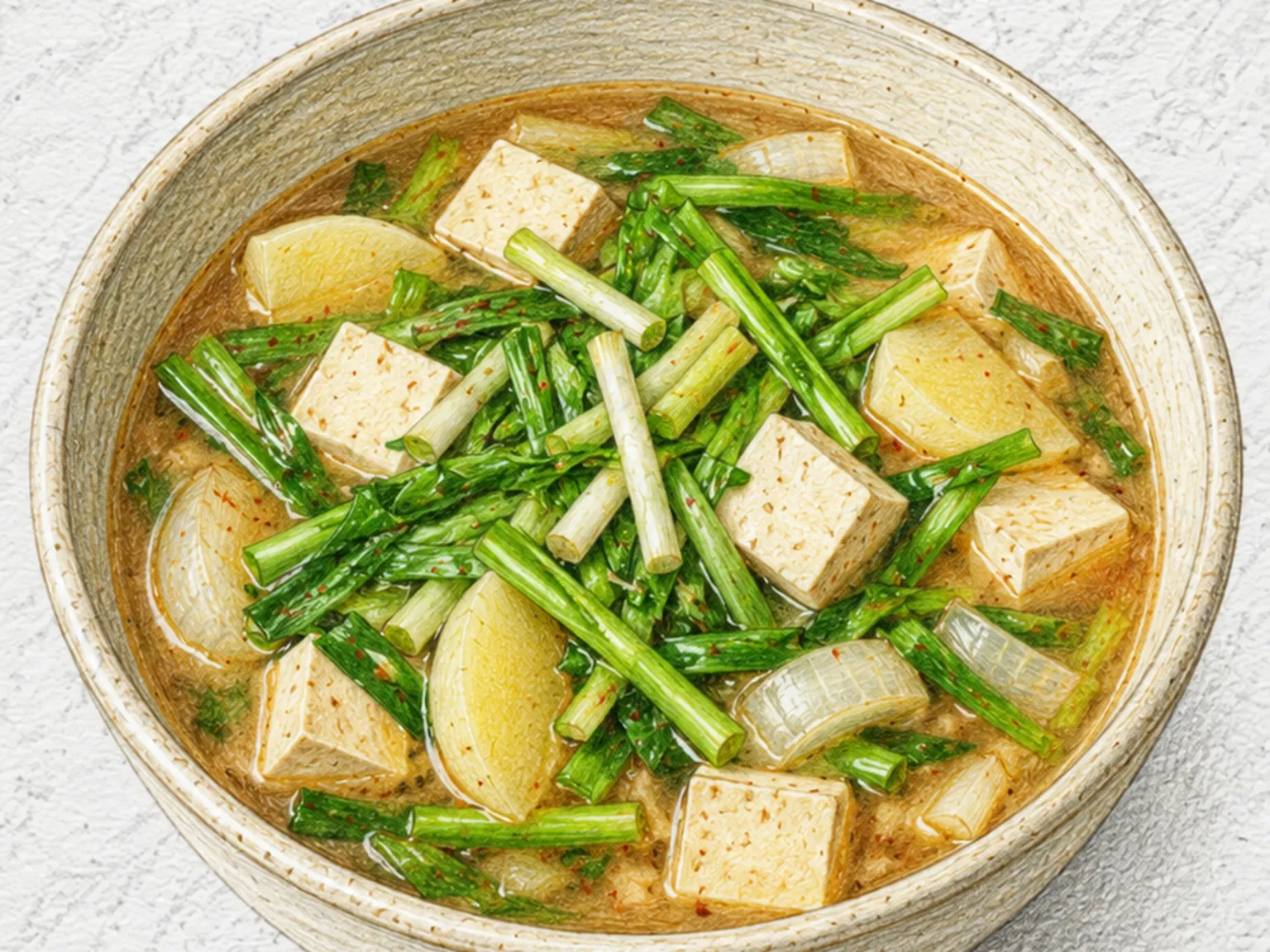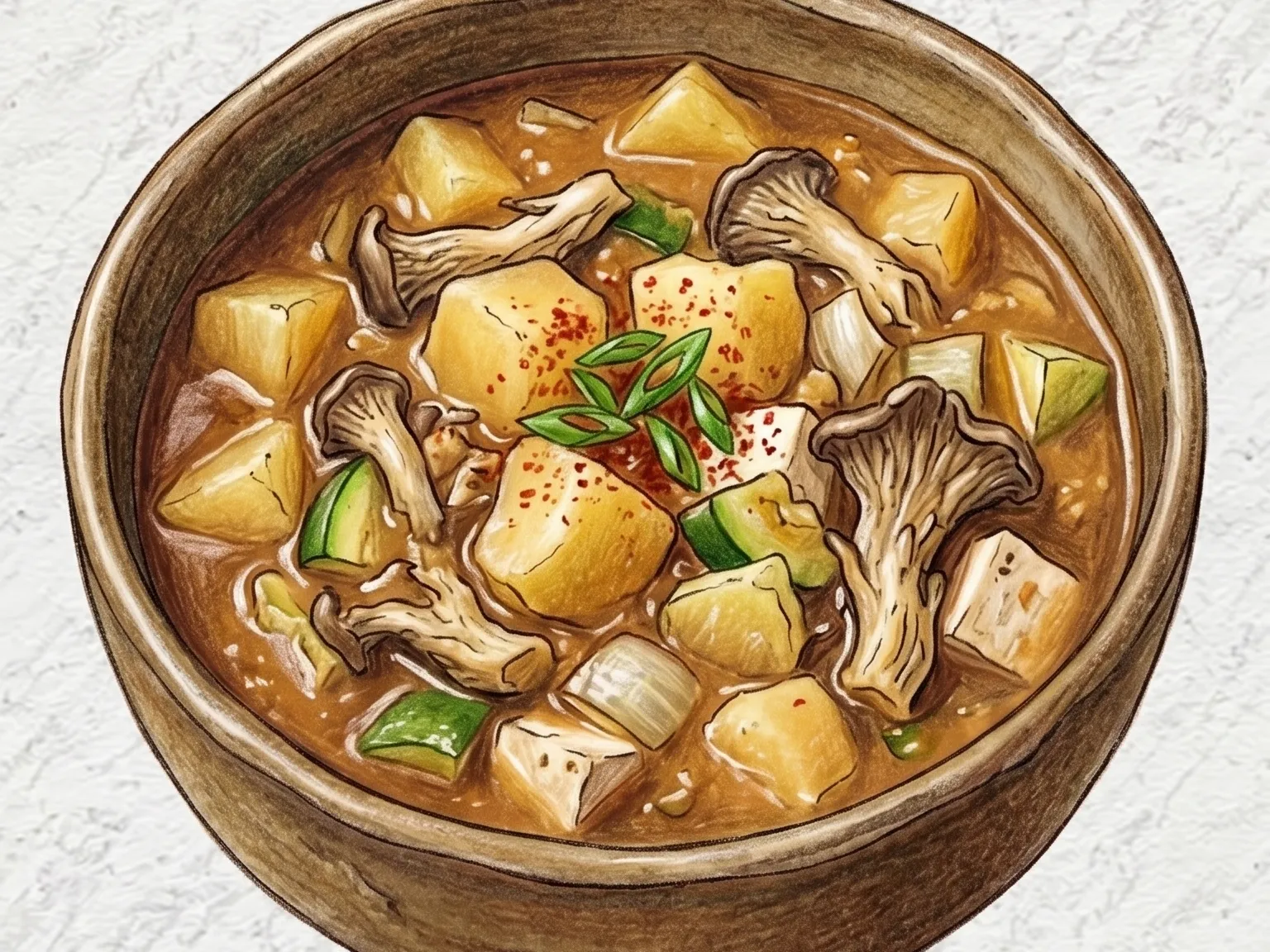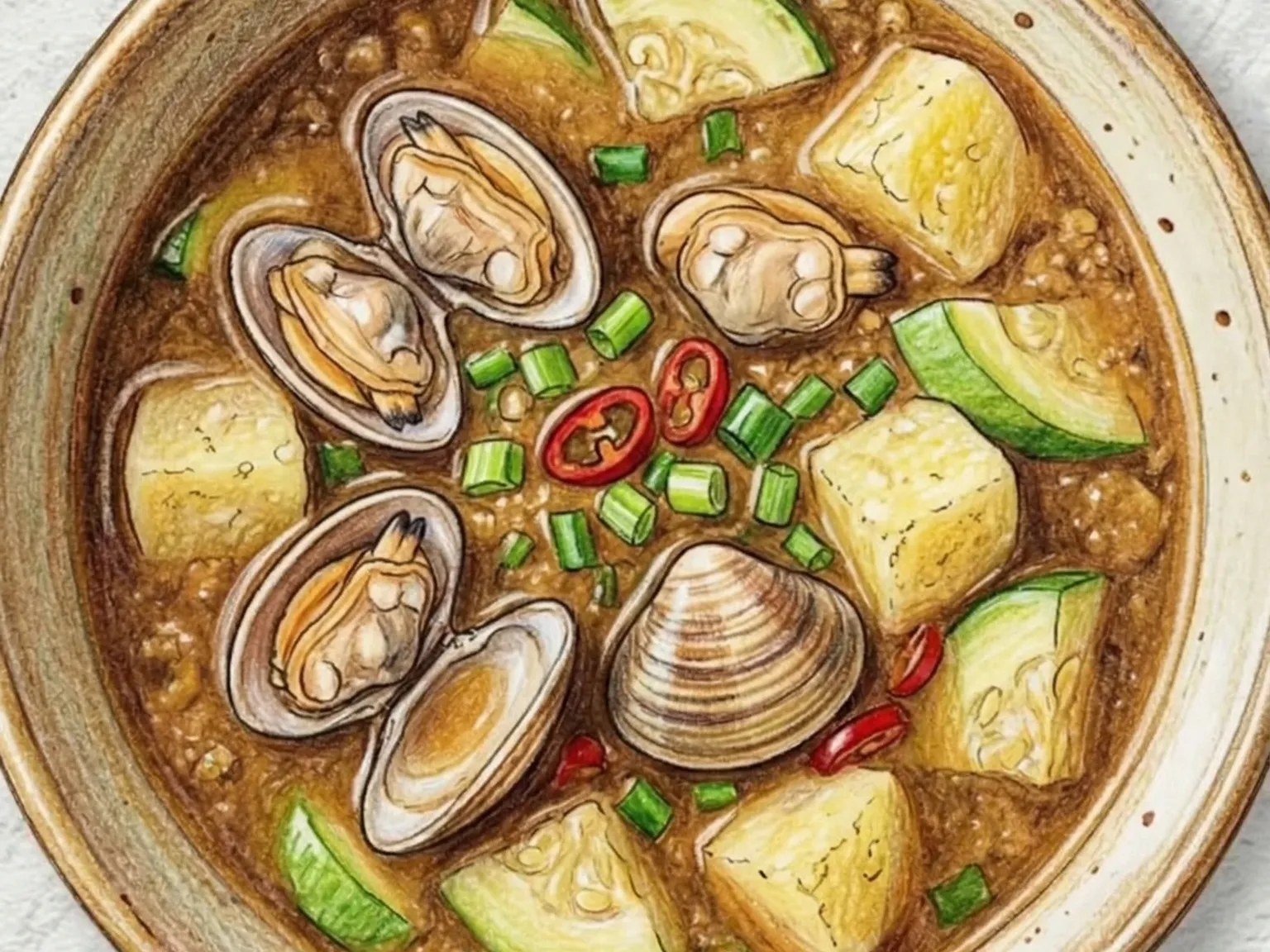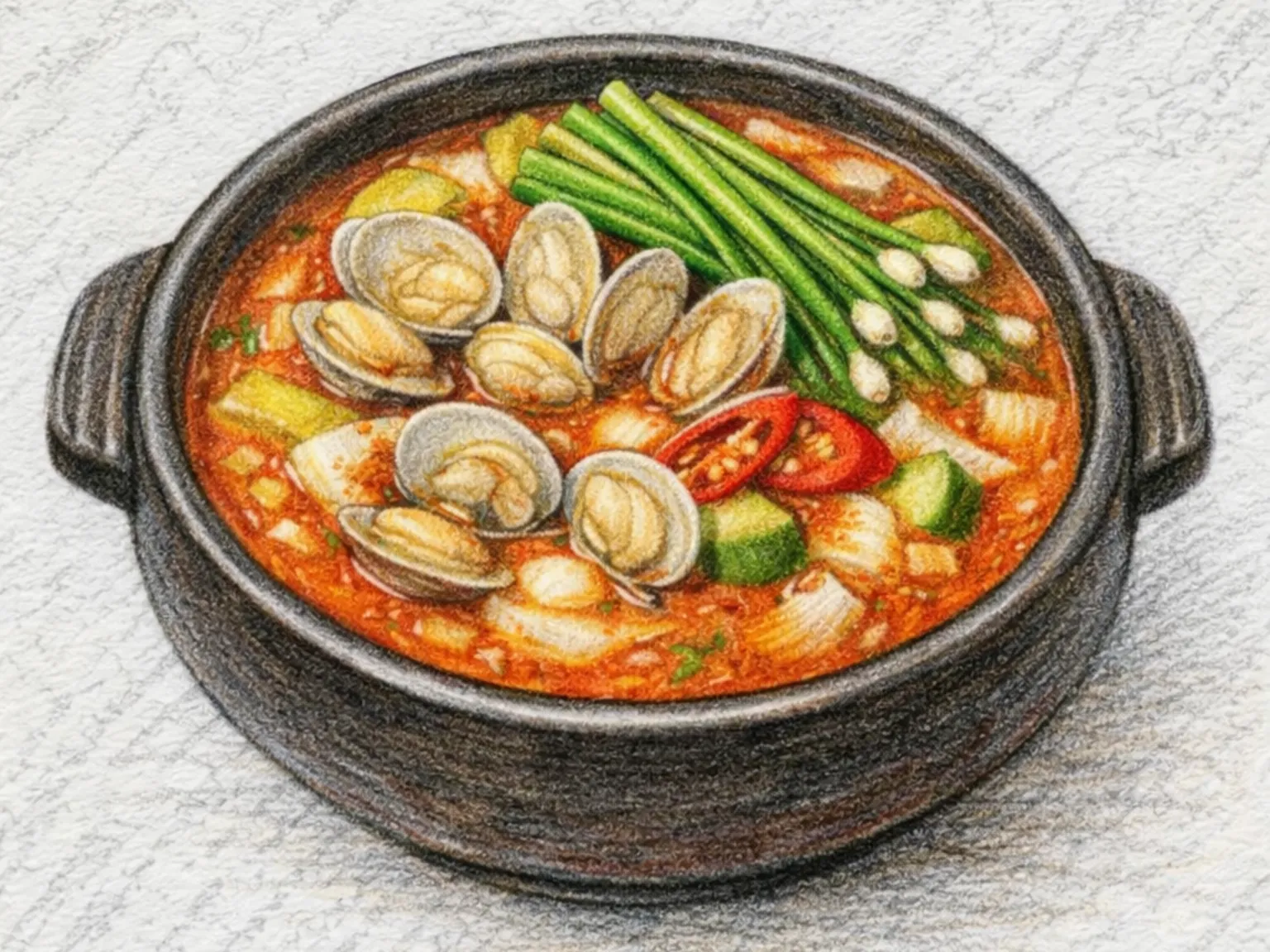
Korean Wild Chive Clam Chili Stew
Fresh clams and wild chives come together in a gochujang-spiked anchovy broth for this seasonal stew. The clams open during simmering, releasing their briny liquor into the spicy stock, while the wild chives - added near the end - contribute a sharp, garlic-like bite that lifts the whole dish. Potato and tofu give the stew substance, and the interplay of sea-briny clam flavor with pungent spring chives makes it a distinctly early-spring recipe.
Adjust Servings
Instructions
- 1
Purge clams in salted water, then rinse several times.
- 2
Boil stock with potato for 7 minutes until half-cooked.
- 3
Stir in gochujang, chili flakes, garlic, and onion; simmer 4 minutes.
- 4
Add clams and tofu, then cook until the clams open.
- 5
Lower heat and add wild chives for 1 minute to keep their aroma.
As an Amazon Associate, we may earn from qualifying purchases.
Tips
Nutrition (per serving)
More Recipes

Korean Beef Brisket & Water Parsley Chili Stew
Rich, marbled beef brisket melts into a fiery gochujang broth while fresh water parsley cuts through the heat with its herbal brightness. The brisket's marbling melts into the broth, tempering the heat with a fatty richness, while the water parsley adds an herbal freshness that cuts through the spice. Chunks of potato and firm tofu absorb the red-tinged broth, making the stew both filling and flavorful.

Korean White Chili Clam Stew
Baekgochu bajirak jjigae is a clear Korean clam stew where manila clams and daikon radish provide all the broth flavor without additional stock. The clams are purged thoroughly in salted water, then placed in cold water with the radish and brought to a boil. As the water heats, the clams open and release their liquor into the broth; any that remain closed are discarded. Seasoning stays light with minced garlic and guk-ganjang, while diagonally sliced red chili and cheongyang chili add color and layered heat. Scallion goes in at the end for freshness. The radish contributes a cool sweetness that melds with the briny clam liquor, producing a broth that tastes more complex than its simple ingredient list suggests. White chili peppers (baekgochu), milder than standard green ones, lend a soft peppery fragrance rather than sharp heat. The stew's strength is its restraint: clams and radish alone generate the depth that many stews need stock packets to achieve.

Korean Bajirak Miyeok Jjigae (Clam Seaweed Stew)
Bajirak miyeok jjigae is a Korean stew combining manila clams and soaked seaweed, layering shellfish umami with the mineral depth of sea vegetables. Clams start in cold water with radish, which adds a cool sweetness to the broth that balances the clams' natural saltiness as the temperature climbs. Once the shells open, rice wine removes any briny off-notes, and the stew is seasoned with soup soy sauce and minced garlic. The seaweed, soaked and cut into bite-sized pieces, must enter the pot only in the last five minutes; longer cooking turns it tough and unpleasantly slippery. Diagonally sliced scallion added at the end releases a fresh aroma across the surface of the stew. The iodine-rich character of the seaweed and the briny depth of the clams belong to the same marine family yet occupy different flavor registers, creating a broth with compound depth. Any clams that remain closed after cooking must be removed to prevent grit from contaminating the finished stew.

Korean Red Pepper Paste Stew
Gochujang jjigae uses Korean chili paste as its primary seasoning, producing a broth that is both spicy and subtly sweet. Pork shoulder simmers in the base, contributing its fat and flavor to the soup. Potato, zucchini, tofu, and onion fill out the pot generously. With gochugaru and soy sauce supporting the main gochujang seasoning, the stew offers a different flavor profile from the more common doenjang-based stews.

Korean Gochujang-Grilled Butterfish
Byeongeo gochujang-gui is a Korean spicy grilled butterfish where fillets are brushed with a paste of gochujang, soy sauce, plum syrup, minced garlic, and red pepper flakes, then pan-fried over medium heat. Butterfish has an exceptionally fine, soft flesh that absorbs the glaze readily, and the plum syrup's fruity acidity tempers the fermented heat of gochujang so the finish stays clean rather than heavy. The glaze must be applied in thin, repeated layers during cooking-a single thick coat causes the sugars to burn before the fish cooks through. A light squeeze of lemon at the end adds a bright citrus note that lifts the dish and prevents any lingering oiliness.

Korean Spicy Gochujang Bulgogi
This spicy gochujang pork bulgogi builds its bold flavor from a marinade of gochujang, Korean chili flakes, soy sauce, garlic, and corn syrup applied to thick-cut pork neck. Stir-frying on medium-high heat drives off moisture first, allowing the sauce to caramelize and develop depth rather than turn watery. Onion goes in next, contributing natural sweetness that tempers the chili heat, followed by green onion for a fresh aromatic lift. Scoring thicker slices helps the marinade penetrate more evenly. The generous four-serving yield makes it a practical centerpiece for family dinners.