Korean Wild Chive Soybean Paste Stew
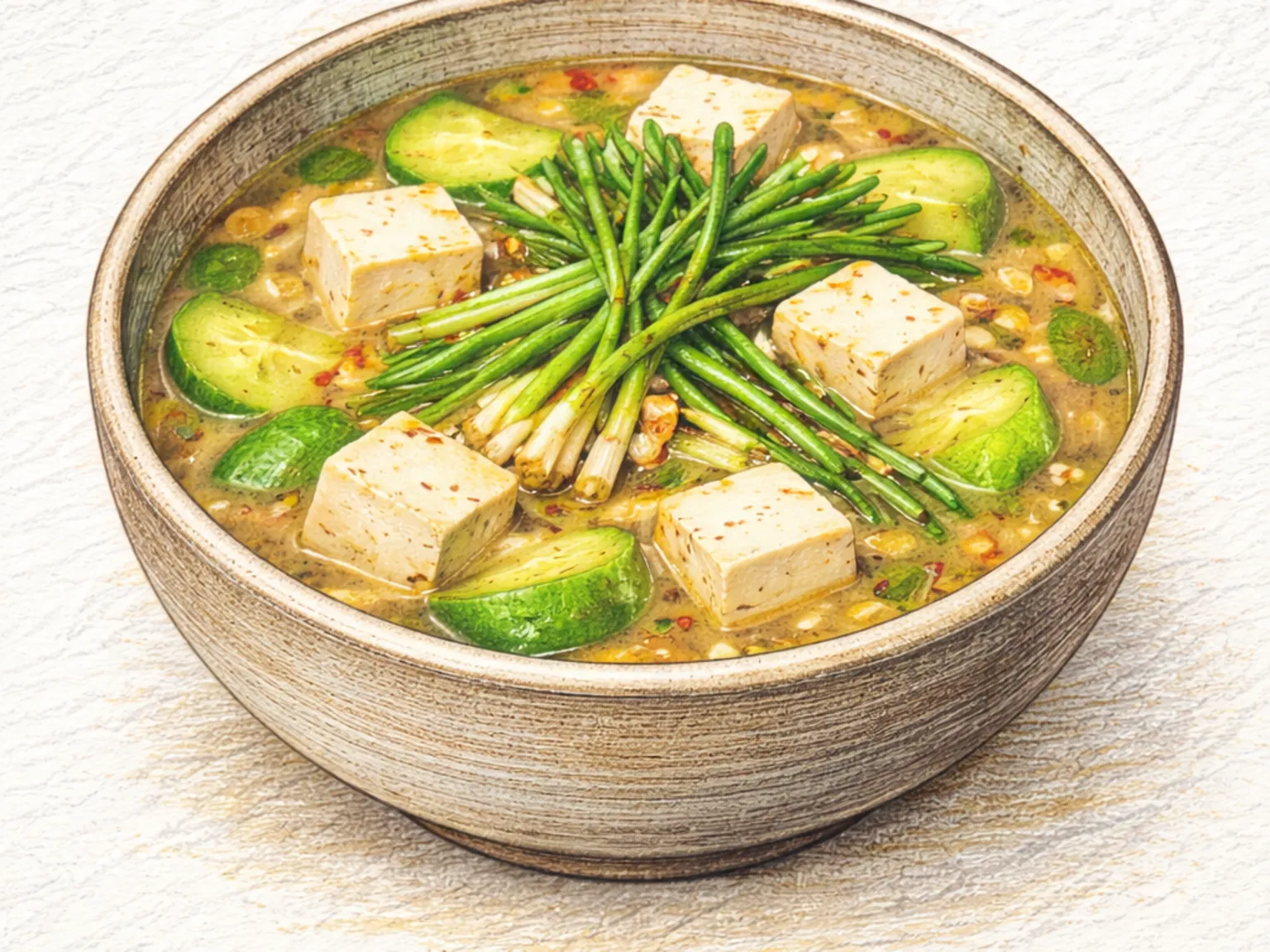
This doenjang jjigae features dalrae (wild chives), a prized spring ingredient in Korean cooking. Anchovy-kelp stock is simmered with soybean paste, tofu, zucchini, and onion, then finished with a generous handful of wild chives for their sharp, garlicky bite. A single Cheongyang chili adds gentle heat that complements the earthy depth of the doenjang. The wild chives wilt into the broth just enough to release their pungent aroma while retaining a slight crunch.
Adjust Servings
Instructions
- 1
Wash wild chives thoroughly, especially the roots, then cut into 4 cm lengths.
- 2
Bring stock to a boil and dissolve doenjang through a strainer into the pot.
- 3
Add zucchini and onion, then simmer 5 minutes to build sweetness.
- 4
Add tofu, minced garlic, and chili, then simmer 4 more minutes.
- 5
Lower heat, add wild chives, and cook only 1 minute to keep aroma fresh.
- 6
Taste and finish with a small pinch of salt if needed.
As an Amazon Associate, we may earn from qualifying purchases.
Tips
Nutrition (per serving)
More Recipes

Korean Wild Chive Soybean Paste Soup
Dallae doenjang-guk is a springtime Korean soybean paste soup that showcases wild chives - dallae - a seasonal ingredient prized for its sharp, garlicky bite. The anchovy-kelp stock is first simmered with potato and onion to build body and sweetness, then doenjang is strained in and tofu added for a soft contrast. Wild chives go in only during the final minute of cooking, because their distinctive pungent aroma dissipates rapidly under heat; adding them too early makes them indistinguishable from ordinary green onion. A half teaspoon of gochugaru tints the broth a faint red and bridges the chili warmth with the chives' natural spiciness.

Korean Aralia Shoot Soybean Paste Stew
This seasonal doenjang jjigae features dureup (aralia shoots), a mountain vegetable prized in Korean spring cuisine. The shoots have a pleasantly bitter edge and a crisp texture that stands out against the soft tofu and zucchini. Doenjang and a touch of gochujang are dissolved into anchovy stock, yielding a broth that is earthy with a subtle kick. It is a springtime dish that captures the fleeting flavors of the Korean mountains.

Korean Brisket Soybean Paste Stew
This version of doenjang jjigae adds thinly sliced beef brisket to the classic soybean paste stew. The marbled brisket renders its fat into the rice-rinsing water base, giving the broth a richer, more full-bodied character than the standard recipe. Potato, zucchini, tofu, and a cheongyang chili round out the pot, making each spoonful a mix of creamy, starchy, and spicy elements.

Korean Minari Doenjang Stew
This variation of doenjang jjigae adds a generous amount of water parsley (minari) to the classic soybean paste stew. Firm tofu, potato, and onion simmer in anchovy-kelp stock with doenjang, building a robust, earthy base. The minari goes in near the end to preserve its crisp texture and peppery herbaceous aroma. A half tablespoon of chili flakes rounds out the flavor with mild warmth.

Korean Soybean Paste Stew
Doenjang jjigae is one of the most iconic stews in Korean home cooking. Fermented soybean paste is dissolved into a simple broth and simmered with tofu, potato, zucchini, and onion until everything melds together. Garlic and a Cheongyang chili add aromatic warmth and a mild kick that lifts the rich, earthy base. This is the kind of everyday stew that anchors a Korean meal, pairing effortlessly with rice and any combination of banchan.

Soybean Paste Stew with Clams
Korea's most comforting one-pot stew -- briny clams pop open in a bubbling doenjang broth, releasing their salty liquor into fermented soybean paste for a flavor no other stew can match. Manila clams are purged of sand, then added to a pot of doenjang-laced broth where they pop open and surrender their salty liquor into the soup, transforming the base from merely savory to sea-tinged and complex. Zucchini softens in the bubbling liquid and contributes a natural sweetness, while blocks of tofu act as sponges, soaking up the broth and bursting with hot, flavorful liquid when bitten. Sliced cheongyang chili peppers are stirred in to cut through the heaviness of the fermented paste and lift the overall flavor. The stew is served bubbling in an earthenware pot alongside rice - many Koreans spoon the broth directly over their bowl - and adapts to any season: light with summer vegetables from the refrigerator, or piping hot in a stone pot during winter.