Dan Dan Mian (Sichuan Spicy Noodles)
Quick answer
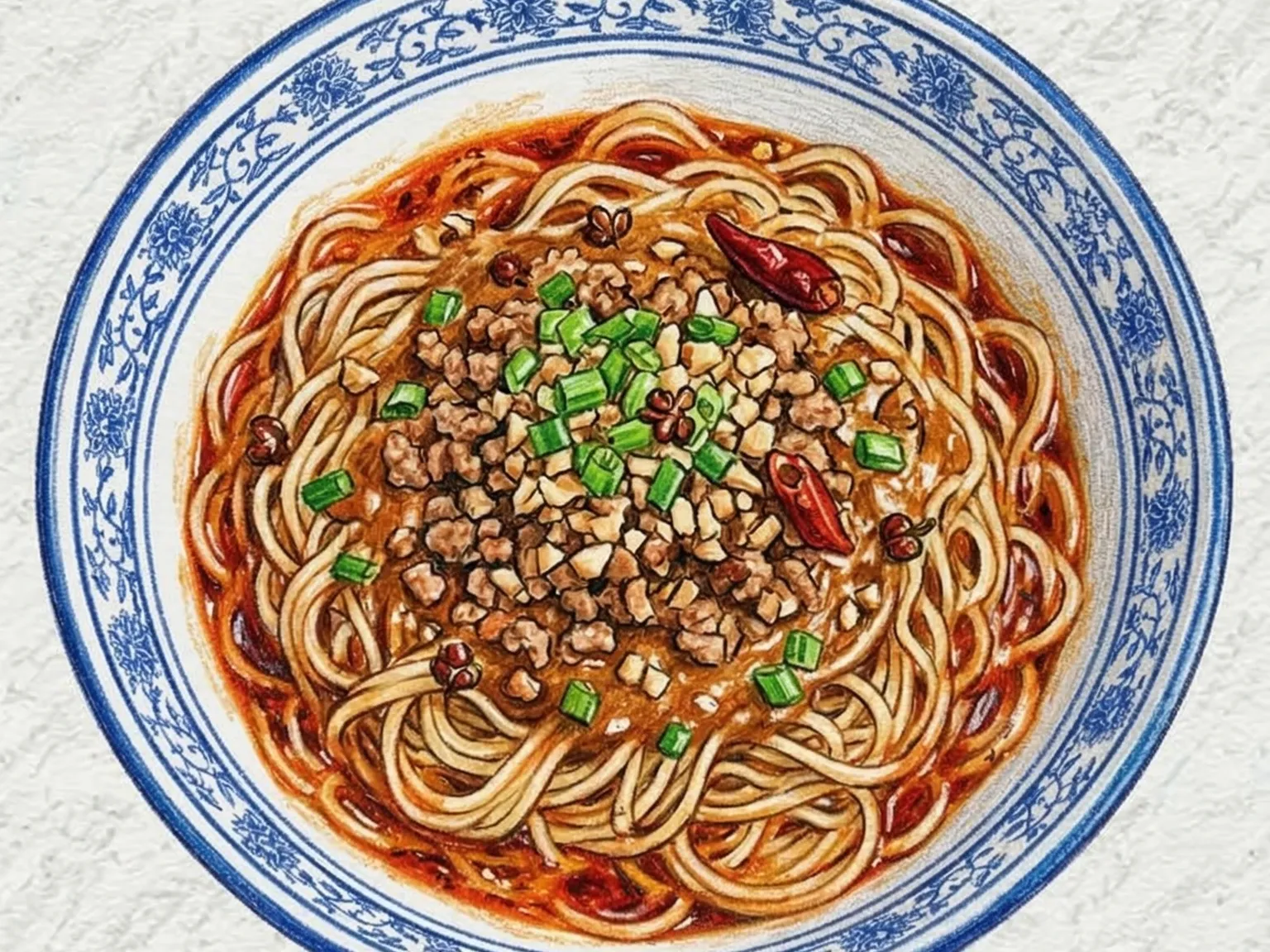
Dan dan mian is a Sichuan noodle dish built on a thick sauce of sesame paste, soy sauce, chili oil, and vinegar, topped with wheat noodles and browned ground pork.
What makes this special
- Sichuan peppercorns and chili oil provide a numbing heat to these savory dandan mian pork noodles.
- Sichuan peppercorn numbs the tongue before the chili oil heat registers
- Tahini, soy, chili oil, and vinegar sauce requires fully drained noodles to stay thick
Key ingredients
Core cooking flow
- 1 In a bowl, loosen 2 tbsp tahini with 2 tbsp soy sauce, 2 tbsp chili oil, 1 t...
- 2 Keep a little noodle cooking water available in case the sauce is too stiff.
- 3 Heat a pan over medium-high heat and spread out 150 g ground pork in an even layer.
Dan dan mian is a Sichuan noodle dish built on a thick sauce of sesame paste, soy sauce, chili oil, and vinegar, topped with wheat noodles and browned ground pork. Ground Sichuan peppercorn brings a lip-numbing, almost electric sensation that sits underneath the chili oil's direct heat and the sesame paste's deep richness, creating multiple distinct layers in a single mouthful. Browning the pork thoroughly before adding any liquid is essential -- the caramelized crust develops a roasted meatiness that permeates the entire sauce and prevents the dish from tasting flat. Blanched bok choy provides a fresh counterpoint to the oily intensity and keeps the bowl from feeling too heavy. Sichuan peppercorn's numbing effect accumulates quickly, so starting with a small quantity and tasting as you go gives precise control. Draining the cooked noodles completely is equally important; any residual water will thin the sauce and break the coating on the noodles.
Instructions
Read the steps as a cooking flow: prep, heat, seasoning, doneness control, and finish.
- 1Season
In a bowl, loosen 2 tbsp tahini with 2 tbsp soy sauce, 2 tbsp chili oil, 1 tbsp vinegar, and the minced garlic.
Add only half the Sichuan peppercorn at first so the numbing heat stays adjustable.
- 2Finish
Keep a little noodle cooking water available in case the sauce is too stiff.
The finished sauce should fall slowly from a spoon, thick enough to coat noodles without turning watery in the bowl.
- 3Control
Heat a pan over medium-high heat and spread out 150 g ground pork in an even layer.
Let it sit for about 2 minutes before stirring so browned crust forms instead of gray, steamed meat.
- 4Heat
Break the pork into small bits and stir-fry for about 4 more minutes.
When moisture has evaporated, the fat looks clear, and deep brown pieces are visible, lower the heat to prevent scorching.
- 5Heat
Blanch 100 g bok choy in boiling water for 1 minute, just until bright green, then remove it.
Cook 200 g Chinese wheat noodles in the same water and shake them well in a strainer to remove excess water.
- 6Season
Spread the sauce in the bottom of the serving bowl and toss in the hot noodles first.
Top with the pork, bok choy, and 20 g green onion, then add the remaining Sichuan peppercorn only after tasting.
After the steps
Pick a recipe that fits this dish.
Continue with shared ingredients, meal pairings, or a similar method.
Recipes That Go Well With This
More Noodles →Based on shared ingredients and meal pairing
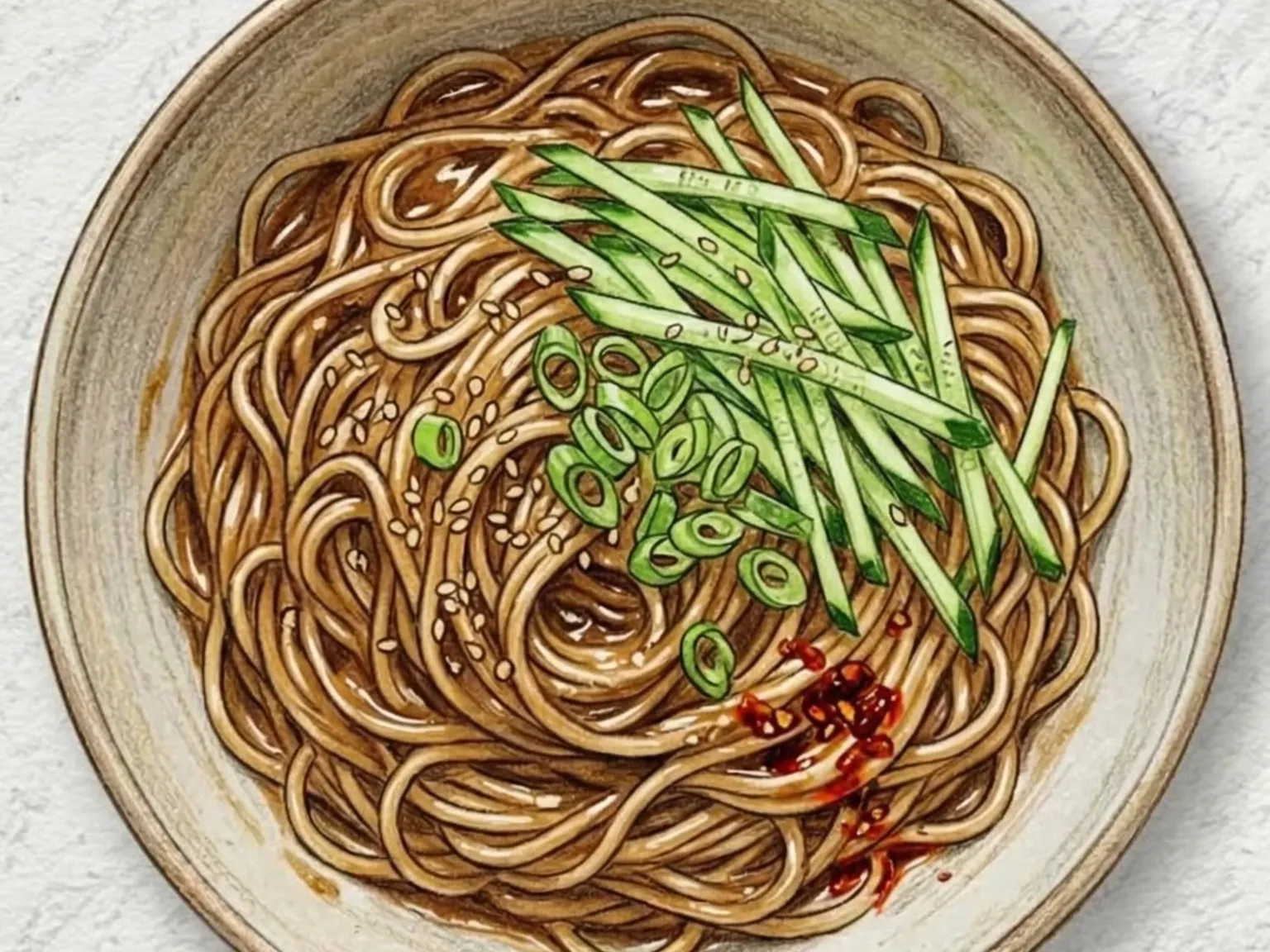
Cold Sesame Noodles
Cold sesame noodles are a fixture of Chinese-American cooking: chilled wheat noodles coated in a thick, nutty sauce that layers sweet, salty, sour, and savory flavors in a single bowl. The sauce is built from Chinese sesame paste or tahini blended with peanut butter, soy sauce, rice vinegar, and sesame oil until the mixture becomes a smooth, glossy emulsion. After boiling, the noodles are rinsed under cold running water to stop cooking and firm the texture, then tossed with a small amount of sesame oil to prevent clumping and add sheen. Julienned cucumber and sliced scallion provide freshness and crunch that cut through the dense sauce. Chili flakes or a spoonful of chili oil can be added for heat. Preparing the sauce in advance and refrigerating it means the entire dish can come together in the time it takes to boil a pot of noodles, making it a practical choice on hot summer days. Any leftover sauce works well as a salad dressing.
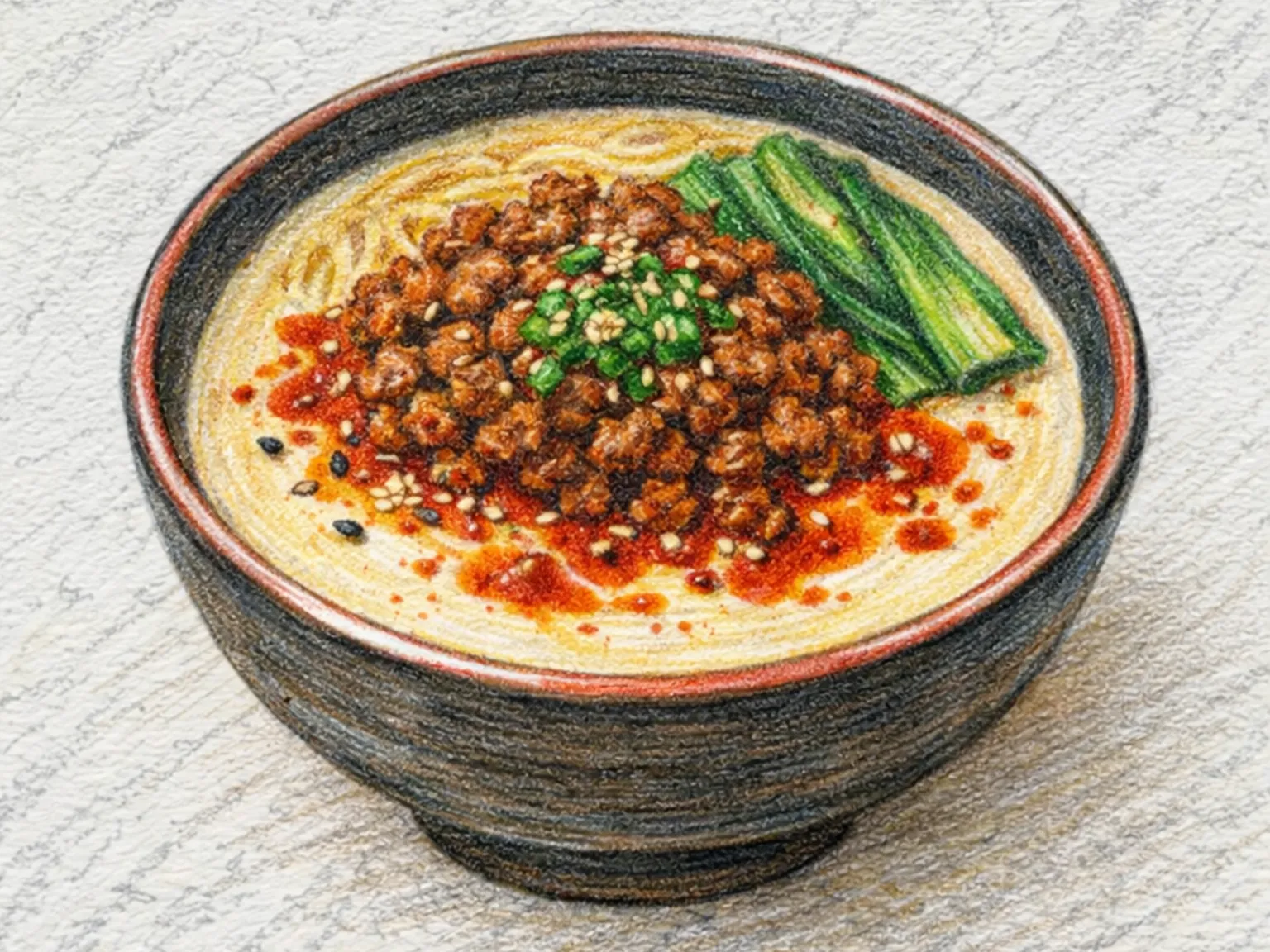
Japanese Dan Dan Ramen (Sesame Cream Broth with Spicy Pork)
Tantanmen is the Japanese adaptation of Sichuan dan dan noodles, served as a ramen with a thick sesame-cream broth. Ground pork is stir-fried with doubanjiang and spooned over the bowl along with chili oil. The sesame base gives the soup a dense, nutty body, while the chili oil adds a slow-building heat. Standard ramen noodles are used, paired with bok choy or scallions. Preparation takes about 45 minutes, with most of the effort going into building the sesame broth and seasoning the pork topping.
Yu Sheng Prosperity Salad
Yu sheng prosperity salad arranges thinly sliced sashimi-grade salmon and finely julienned daikon, carrot, and cucumber in a ring on a large platter, dressed with plum sauce, lemon juice, and sesame oil, then tossed vigorously just before eating. The salmon must be sashimi-grade for food safety, and patting it dry before slicing thin allows the sweet-tart plum sauce to cling more effectively to the fish surface. Cutting all vegetables as finely as possible maximizes the surface area in contact with the dressing, ensuring every chopstick-full carries the full spectrum of flavors. Keeping the prepared vegetables chilled maintains the freshness of the raw fish once assembled. Sesame seeds sprinkled on top add a nutty aroma that layers over the fruity plum sauce, completing the festive character of the dish.
Mala Biang Biang Noodles (Wide Numbing Chili Oil Noodles)
Mala biangbiang noodles consist of wide, thick strands that are coated in a complex sauce made from chili oil, doubanjiang, soy sauce, and black vinegar. This combination provides a specific type of heat that numbs the palate while simultaneously delivering spice. To achieve the authentic numbing character that defines mala, whole Sichuan peppercorns are briefly warmed in oil over a low heat. This controlled heating process is designed to release the numbing compounds from the spice without scorching the husks, a technical step that distinguishes genuine mala flavor from the simple heat of red chilies. The sauce is constructed in multiple layers by stacking the fermented saltiness of the doubanjiang with the deep and mellow acidity of the black vinegar. These ingredients work together to produce a seasoning profile with distinct depth rather than a single note of spiciness. For the preparation of the noodles, the broad strands are boiled for one minute less than the time indicated on the package. This ensures the dough remains elastic and chewy throughout the eating process. Because the noodles have such a large surface area, it is necessary to toss them aggressively in the sauce to ensure the seasoning is worked thoroughly into the wide surfaces of every strand. While the noodles are cooking, bok choy is blanched for forty seconds in the same boiling water. This vegetable adds a crisp and clean green element to the bowl, which serves to offset the richness of the oiled noodles. To finish the dish, a final drizzle of chili oil is applied over the top of the bowl just before it is served to intensify the aroma of the spices.
Serve with this
Korean Stuffed Perilla Leaf Pancakes
Kkae-ip-jeon are pan-fried perilla leaf parcels stuffed with a filling of ground pork and firm tofu, coated in flour and egg. The tofu must be squeezed dry in a cloth before mixing; excess moisture causes the filling to spread and stick to the pan. Garlic chives and onion add crunch and fragrance to the mix, and the filling seasoned with soy sauce and black pepper pairs cleanly with the perilla's strong herbal character. Dusting with flour first, then dipping in egg, produces an even coating, and frying covered over medium-low heat for two minutes per side ensures the filling is cooked through to the center. The bite-sized pieces work well as a packed lunch side or as bar food.
Korean Stir-Fried Sweet Potato Stems
Goguma julgi - sweet potato stems - are the above-ground vines of the sweet potato plant, a byproduct that Korean cooks transform into a summer namul rather than discarding. The most labor-intensive step is peeling each stem by hand, pinching the outer skin with a fingernail and pulling it away to reveal the tender core beneath. After blanching for two minutes and rinsing in cold water, the stems are stir-fried in perilla oil with garlic and seasoned with soup soy sauce. Perilla powder stirred in at the end thickens the remaining liquid into a nutty glaze. In season during summer, the stems are harvested from sweet potato fields before the tubers themselves are dug up.
Korean Pickled Taro Stems
Torandae jangajji is a Korean pickled side dish made from taro stems. The outer fibrous skin is peeled away first, and the stems are salted and then blanched. Raw taro stems contain calcium oxalate crystals that cause an unpleasant prickling sensation in the throat, and blanching effectively neutralizes this before the stems are packed into the pickling liquid. The brine is made by bringing soy sauce, vinegar, and sugar to a boil, and it is poured over the stems while still hot so the seasoning penetrates quickly and evenly. Sliced garlic and ginger are simmered in the brine before it is poured, which infuses the liquid with deep aromatic warmth without any of the sharp pungency those ingredients carry raw. After two to three days of refrigerating, each piece develops a layered depth of salty, savory flavor with a clean vinegar brightness underneath. The defining characteristic of this pickle is its distinctive fibrous crunch, which stays satisfying even after the stems have fully absorbed the brine. It works as a rice accompaniment throughout the week and doubles as a drinking snack alongside soju.
Similar recipes
Suanlafen (Sichuan Hot-and-Sour Sweet Potato Noodle Soup)
Suanlafen is a Sichuan street noodle soup featuring sweet potato glass noodles in a hot-and-sour broth. The broth gets its sharpness from black vinegar and its heat from chili oil and ground Sichuan pepper. Chewy, translucent noodles absorb the broth while maintaining a springy bite. Toppings typically include crushed peanuts, pickled mustard greens, and cilantro. The dish takes roughly 35 minutes to prepare and allows easy adjustment of sourness and spice levels to taste.
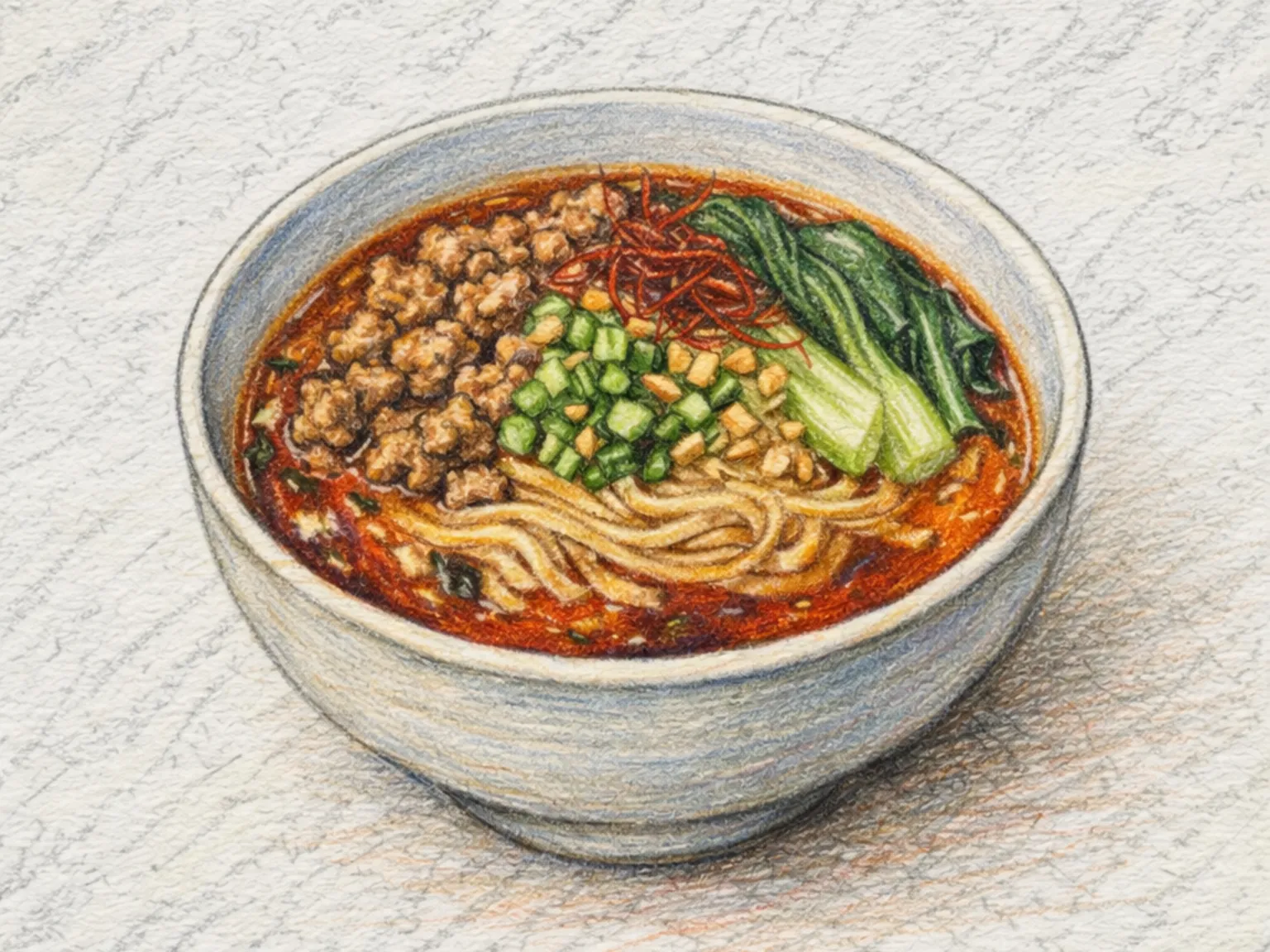
Sesame Spicy Tantanmen (Chinese Creamy Sesame Chili Oil Noodle Soup)
Tantanmen is a noodle soup of Chinese origin that is defined by the combination of a creamy sesame-based broth and the sharp heat of chili oil. This pairing creates a bowl of noodles that features nutty, spicy, and savory characteristics all at once. The preparation of the broth starts with a base of chicken stock. To this base, sesame paste is added and whisked thoroughly until it has fully dissolved into the liquid. The result of this process is a thick, tan-colored soup base that emits a prominent fragrance of roasted nuts. The meat topping for the dish is prepared separately by frying ground pork with minced garlic and fresh ginger. During this cooking process, doubanjiang, which is a paste made from fermented chili beans, is stirred into the pork to add saltiness and depth. The meat is cooked until it is well-browned and has a crumbly consistency, after which it is spooned over the noodles to provide a rich component to the final assembly. To balance the density of the broth, bok choy is blanched and added to the bowl, offering a crisp and vegetal element that provides a contrast to the liquid. Just before serving, a final drizzle of chili oil is applied to the surface of the soup, where it gathers in small pools and releases its aroma with the heat. The noodles are generally cooked until they are just short of being fully done, which allows them to maintain a firm and chewy texture while they remain submerged in the hot liquid. Each individual ingredient, from the sesame and chili to the fermented beans and pork, contributes its own specific layer of flavor. As these different elements gradually merge together in the bowl, the taste of the soup continues to develop and change while the meal is consumed slowly.
Yu Xiang Eggplant (Sichuan Spicy Garlic Pork Eggplant)
Yu Xiang Qiezi is a Sichuan-style eggplant stir-fry with ground pork, doubanjiang, black vinegar, and sugar. The eggplant is pre-fried to firm it up so it holds its shape in the sauce, while the pork and doubanjiang create a spicy, aromatic oil base. Soy sauce, vinegar, and sugar layer sweet and sour notes over the heat, producing the characteristic Yu Xiang flavor profile. Garlic and ginger add fragrance, and the eggplant absorbs the sauce deeply so every bite releases a concentrated burst of seasoning.