Korean Soy-Glazed Kabocha Grill

Korean Soy-Glazed Kabocha Grill

Quick answer

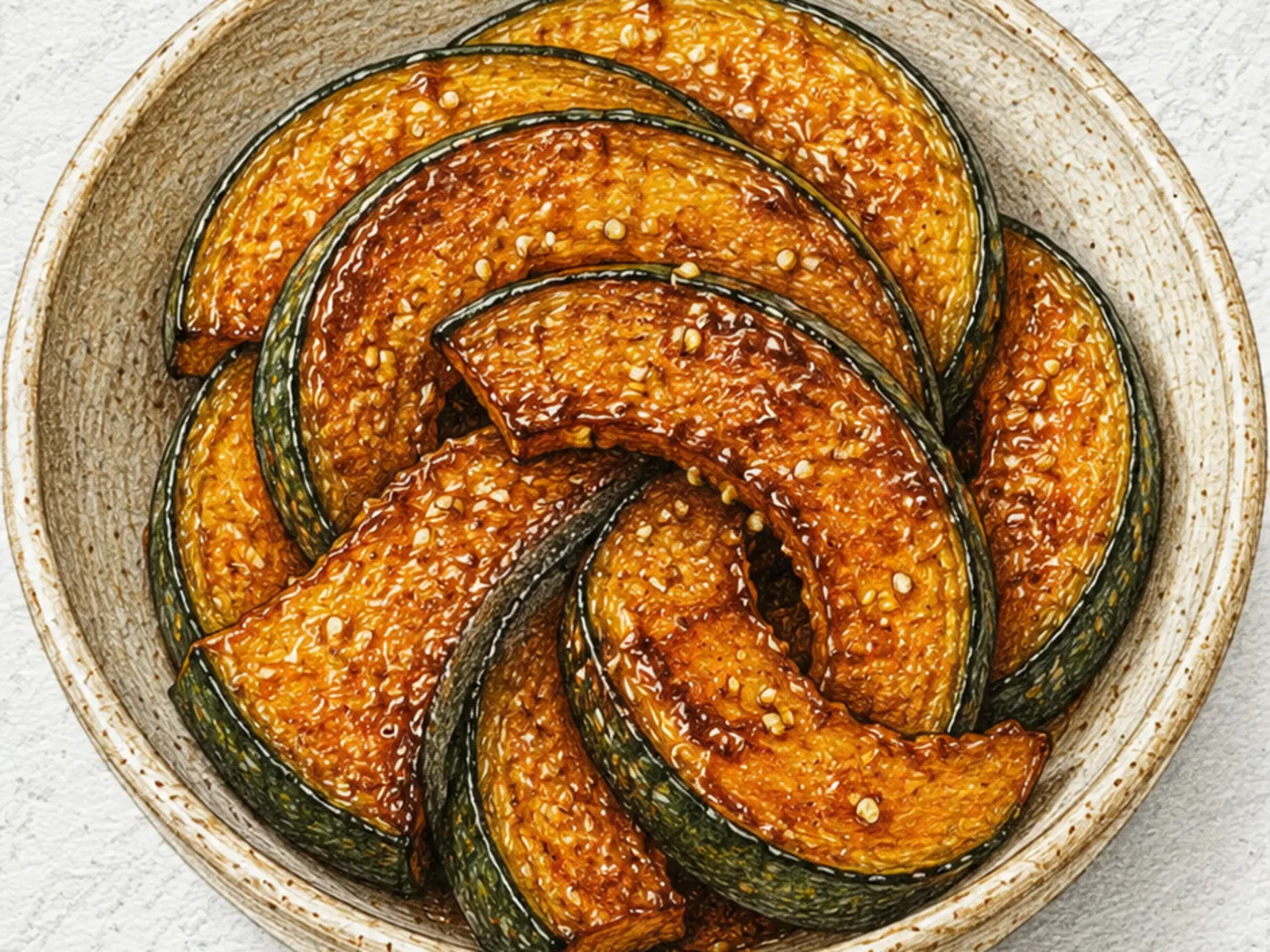
Danhobak-ganjang-gui is a Korean soy-glazed kabocha squash dish where thick half-moon slices are pre-steamed or microwaved until just tender, then pan-grilled with a glaz...

What makes this special

  • Pre-steamed kabocha squash slices are pan-grilled with glaze for Korean Soy-Glazed Kabocha Grill.
  • Microwave pre-cook means the pan only needs time to caramelize, not soften
  • Pumpkin's natural sugar meets soy saltiness for a sharp sweet-salty contrast
Total time
35 min
Level
Easy
Servings
4 servings
Ingredients
8
Calories
165 kcal
Protein
3 g

Key ingredients

kabocha squashsoy saucecorn syrupminced garlicsesame oil

Core cooking flow

  1. 1 Scoop out the seeds and pulp from 700g kabocha squash and slice it with the...
  2. 2 Microwave the squash in a microwave-safe dish for 2 minutes to partially cook it.
  3. 3 Combine 2 tbsp soy sauce, 1 tbsp corn syrup, 1 tsp minced garlic, 1 tsp sesa...

Danhobak-ganjang-gui is a Korean soy-glazed kabocha squash dish where thick half-moon slices are pre-steamed or microwaved until just tender, then pan-grilled with a glaze of soy sauce, corn syrup, minced garlic, and sesame oil. Pre-cooking the squash is essential: it eliminates the need for prolonged grilling, so the glaze can caramelize quickly over high heat without the interior remaining raw. The natural sugars in kabocha meet the salt of the soy sauce to create a pronounced sweet-salty contrast. The corn syrup melts into a shiny, lacquer-like coating on the surface. Sesame oil should be added only after removing from heat to preserve its fragrance, and a scattering of toasted sesame seeds finishes the dish with a crunchy, nutty accent. Kabocha squash skin is fully edible and becomes slightly crisp when grilled, creating a pleasant textural contrast with the soft, sweet interior. Substituting a spoonful of gochujang for part of the soy sauce produces a spicy variation, and minced cheongyang chili added to the glaze layers heat over the sweet-salty profile for a more intense side dish.

Prep 15min Cook 20min 4 servings
Recipes by ingredient → soy sauce garlic sesame oil

Instructions

Read the steps as a cooking flow: prep, heat, seasoning, doneness control, and finish.

6 steps
  1. 1
    Prep

    Scoop out the seeds and pulp from 700g kabocha squash and slice it with the skin on into uniform 1cm thick half-moon shapes.

  2. 2
    Control

    Microwave the squash in a microwave-safe dish for 2 minutes to partially cook it.

    This reduces the pan time needed, so the inside softens before the marinade can burn.

  3. 3
    Season

    Combine 2 tbsp soy sauce, 1 tbsp corn syrup, 1 tsp minced garlic, 1 tsp sesame oil, and a dash of pepper into an even soy glaze.

  4. 4
    Control

    Heat 1 tsp oil in a pan over medium heat, add the squash slices in a single layer, and cook 3 minutes per side until brown grill marks appear on the surface.

  5. 5
    Control

    Brush the glaze evenly over the squash, reduce to medium-low heat, and cook uncovered for 5 to 6 minutes until the sugar caramelizes and the surface becomes glossy.

  6. 6
    Finish

    Transfer to a plate, sprinkle 1 tsp toasted sesame seeds evenly for a nutty note, and serve immediately while the squash sweetness and soy saltiness are both vivid.

After the steps

Pick a recipe that fits this dish.

Continue with shared ingredients, meal pairings, or a similar method.

Recipes That Go Well With This

More Grilled →

Based on shared ingredients and meal pairing

Korean Stir-Fried Taro Stems
Serve together Side dishes

Korean Stir-Fried Taro Stems

Boiled taro stems are stir-fried in perilla oil with soy sauce and garlic to create a banchan prized for its uniquely chewy texture. Dried taro stems, once soaked and simmered, lose their rawness but retain a springy, almost rubbery bite along the center of each stalk, setting them apart from softer namul greens. Stir-frying in perilla oil first builds a nutty base note, and soy sauce with minced garlic layers savory depth onto the stems' neutral flavor. A splash of stock added mid-cook allows the seasoning to penetrate the fibrous interior during a brief simmer. Sliced green onion introduces a fresh aromatic accent, and a finishing spoonful of ground perilla seeds dissolves into the residual moisture, creating a creamy coating that clings to each piece. Mixed into a bowl of steamed rice, the chewy stems provide satisfying resistance with every bite, and their mild character lets them complement bolder dishes like doenjang jjigae without competing for attention.

Korean Grilled Short Rib Patty Rice Bowl
Serve together Rice

Korean Grilled Short Rib Patty Rice Bowl

Minced short-rib meat is seasoned with soy sauce, pear juice, and sesame oil, shaped into flat patties, and pan-seared until a caramelized crust forms on both sides. The exterior turns sweet and slightly charred while the interior stays moist and full of juice. Sauteed onion and green onion are added to sharpen the meat's savory depth and bring a fragrant note. Placed over hot rice with a spoonful of the pan sauce, the patty's sweetness melds with the warm grains for a quickly disappearing bowl.

Korean Pickled Taro Stems
Serve together Kimchi

Korean Pickled Taro Stems

Torandae jangajji is a Korean pickled side dish made from taro stems. The outer fibrous skin is peeled away first, and the stems are salted and then blanched. Raw taro stems contain calcium oxalate crystals that cause an unpleasant prickling sensation in the throat, and blanching effectively neutralizes this before the stems are packed into the pickling liquid. The brine is made by bringing soy sauce, vinegar, and sugar to a boil, and it is poured over the stems while still hot so the seasoning penetrates quickly and evenly. Sliced garlic and ginger are simmered in the brine before it is poured, which infuses the liquid with deep aromatic warmth without any of the sharp pungency those ingredients carry raw. After two to three days of refrigerating, each piece develops a layered depth of salty, savory flavor with a clean vinegar brightness underneath. The defining characteristic of this pickle is its distinctive fibrous crunch, which stays satisfying even after the stems have fully absorbed the brine. It works as a rice accompaniment throughout the week and doubles as a drinking snack alongside soju.

Korean Soy-Glazed Grilled Lotus Root
Similar recipe Grilled

Korean Soy-Glazed Grilled Lotus Root

This side dish features lotus root sliced into rounds and pan-grilled with a sweet and salty soy glaze. The peeled root is sliced and soaked in vinegar water for ten minutes, then blanched in boiling water for two minutes to eliminate astringency while locking in its signature crunch. After draining, the slices are seared in a pan with cooking oil for two minutes on each side until lightly browned. The glaze, composed of soy sauce, oligosaccharide syrup, minced garlic, and sesame oil, is poured in over medium-low heat. It is critical to turn the slices quickly and remove the pan from the heat as soon as they become glossy, before the syrup hardens. The holes of the lotus root capture the glaze, distributing the savory-sweet flavor evenly in every bite. Sprinkled with sesame seeds, it is left to cool briefly to let the coating settle, making it a clean, non-sticky addition to daily meals.

Similar recipes

Korean Grilled Eggplant (Soy Garlic Glazed Charred Eggplant)
Grilled Easy

Korean Grilled Eggplant (Soy Garlic Glazed Charred Eggplant)

Gaji-gui is Korean grilled eggplant, halved lengthwise, scored, and cooked slowly over medium heat until the flesh turns soft and creamy while the skin side holds a slight firmness. Salting the cut surface and resting it for ten minutes before cooking pulls out bitter moisture through osmosis and also reduces how aggressively the eggplant absorbs oil during grilling. The scoring pattern is functional as well as visual, creating channels that allow heat to penetrate into the thick interior so the eggplant cooks through evenly rather than remaining hard at the center while the outside chars. Covering the pan after laying the eggplant cut-side down traps steam and gently cooks the flesh from within. A sauce of soy sauce, sesame oil, Korean chili flakes, minced garlic, and sliced green onion is spooned over the grilled surface while the eggplant is still hot, and the residual heat releases the fragrance of garlic and sesame oil while the liquid seeps into the scored channels and seasons the interior. Toasted sesame seeds scattered over the top add a final layer of nuttiness that gives the otherwise mild eggplant the complexity needed to hold its own as a proper banchan.

🍺 Bar Snacks ⚡ Quick
Prep 10min Cook 10min 2 servings
Korean Chili Soy Grilled Tofu
Grilled Easy

Korean Chili Soy Grilled Tofu

Chili-tofu-gui is a Korean pan-grilled tofu dish where firm tofu slices are browned on both sides, then glazed with a sauce of soy sauce, minced hot green chili, garlic, sesame oil, and sugar. Pressing moisture out of the tofu before cooking is essential for achieving a clean, golden-brown sear without oil spattering across the pan. Once the sauce is added, a brief simmer on low heat coats each slice in a glossy layer where the soy's saltiness, the sugar's sweetness, and the chili's sharp heat play against the tofu's neutral base. The dish works equally well as a weeknight side dish or as a quick drinking snack. Adding one tablespoon of water when simmering the sauce prevents it from reducing too sharply and ensures each slice is evenly coated rather than over-salted. A scattering of sesame seeds at the end is optional but recommended.

🍺 Bar Snacks 🍱 Lunchbox
Prep 12min Cook 12min 2 servings
Korean Bollak Ganjang Gui (Soy-Glazed Rockfish Grill)
Grilled Medium

Korean Bollak Ganjang Gui (Soy-Glazed Rockfish Grill)

Bolak-ganjang-gui is a Korean soy-glazed rockfish dish where fillets are brushed with a sauce of soy sauce, cooking wine, minced garlic, ginger juice, and honey, then grilled over medium-high heat. Half the glaze is applied first and left for just ten minutes, long enough for the salt and sweetness to penetrate the surface without pulling out moisture from the lean fish. Starting skin-side down for four minutes builds a crisp base, and brushing on the remaining glaze during the final minutes of cooking lets the honey caramelize into a glossy, dark-brown coating. A finish of sesame oil and sliced green onion adds a nutty, sharp layer on top of the savory-sweet glaze. Rockfish has very little fat, so the total cooking time should stay within eight to nine minutes to prevent the flesh from drying out.

🍺 Bar Snacks 🍱 Lunchbox
Prep 20min Cook 14min 2 servings
Korean Steamed Lotus Root
Steamed Easy

Korean Steamed Lotus Root

Yeongeun-jjim is Korean steamed lotus root where thick-cut slices are braised gently in a soy sauce, sugar, and cooking wine seasoning under a covered lid. The thick cross-sections absorb the sauce slowly, developing a sweet-salty coating on the outside while maintaining a crisp-chewy dual texture inside. Sesame oil added at the end lifts a toasted fragrance, and scattered sesame seeds provide visual contrast. With only a handful of ingredients, this side dish showcases the lotus root's natural starchy character in a clean, understated preparation.

🍱 Lunchbox 🏠 Everyday
Prep 15min Cook 22min 2 servings
Korean Cauliflower Jangajji (Pickled Cauliflower)
Kimchi Easy

Korean Cauliflower Jangajji (Pickled Cauliflower)

Korean pickled cauliflower made by soaking bite-sized florets in a boiled-and-cooled brine of soy sauce, vinegar, and sugar. The dense, compact structure of cauliflower absorbs the pickling liquid at a gradual pace, developing flavor over time without turning soft - a texture advantage over vegetables like cucumber or radish that break down faster. Vinegar and sugar balance each other cleanly, and the soy sauce adds a low layer of umami beneath the bright, tangy top note. The pickle works well as a palate cleanser alongside fried or grilled food, and holds up just as well as a plain rice side. The preparation is simple: boil the brine, let it cool, pour it over the florets, and wait.

🍱 Lunchbox 🏠 Everyday
Prep 25min Cook 10min 4 servings

Tips

Keep slices even in thickness for uniform cooking.
Apply glaze in thin layers near the end to prevent burning.

Nutrition (per serving)

Calories
165
kcal
Protein
3
g
Carbs
25
g
Fat
7
g