Korean Shepherd's Purse & Napa Pancake
Quick answer
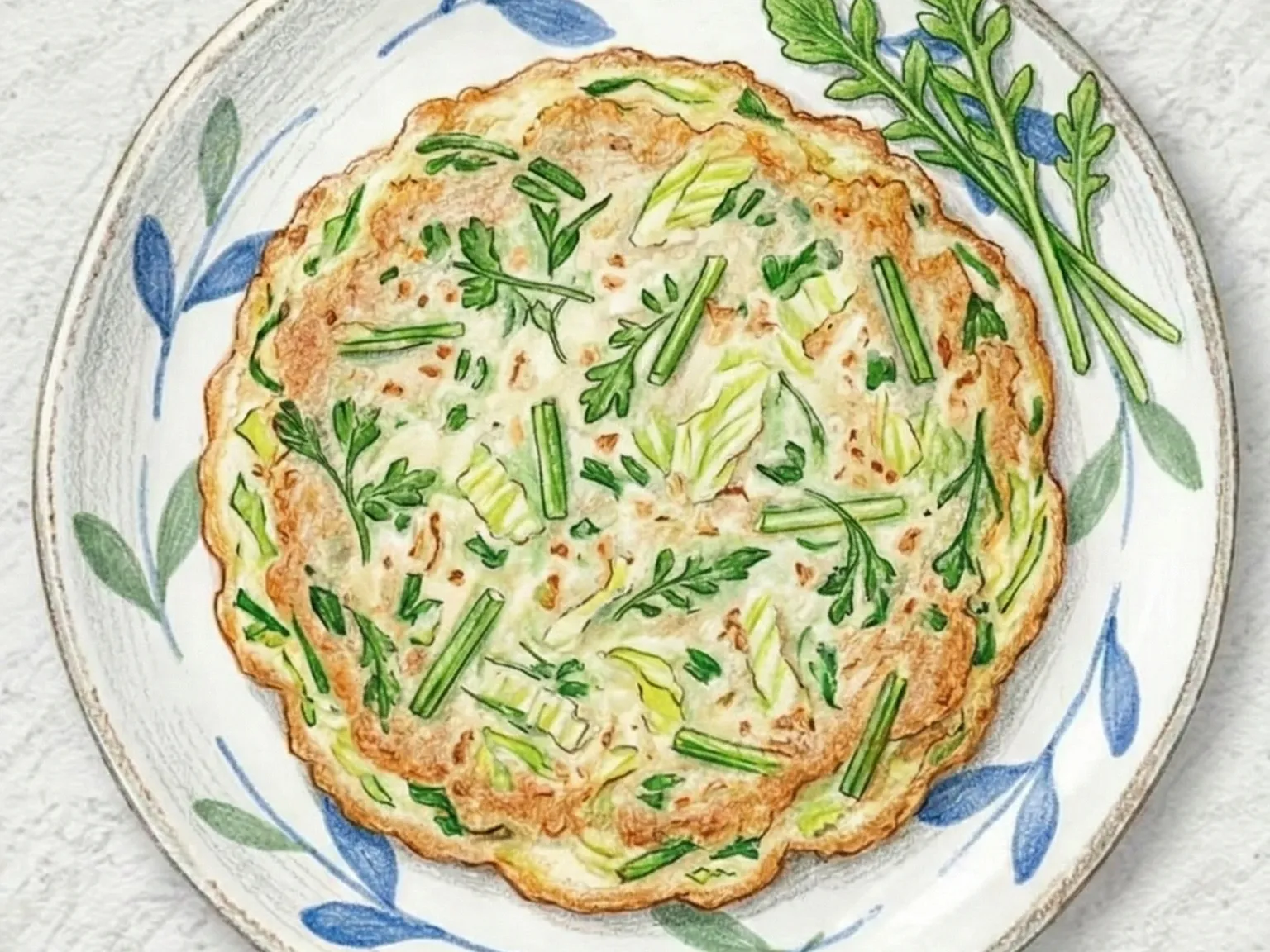
Naengi Baechu Jeon is a seasonal Korean pancake that features wild shepherd's purse and sweet napa cabbage.
What makes this special
- Bitter shepherd's purse and sweet napa cabbage pair in this seasonal, herbal spring pancake.
- Shepherd's purse spring bitterness coexists with cabbage's soft sweetness
- Rice flour adds chew, soup soy sauce preserves the herbs' natural flavor
Key ingredients
Core cooking flow
- 1 Scrub the roots of shepherd's purse (120 g) with a soft brush to remove soil.
- 2 Slice napa cabbage (220 g) into 1 cm wide strips and place in a bowl.
- 3 Whisk pancake mix (150 g), rice flour (30 g), egg (1), cold water (170 ml)...
Naengi Baechu Jeon is a seasonal Korean pancake that features wild shepherd's purse and sweet napa cabbage. To prepare this dish, the roots of the shepherd's purse are thoroughly scrubbed to remove soil and chopped into short lengths, while the cabbage is sliced, lightly salted to draw out moisture, and squeezed. The batter consists of Korean pancake mix, rice flour, an egg, cold water, and soup soy sauce, which provides a clean base that allows the flavors of the vegetables to stand out. Mixing rice flour into the batter ensures that the edges of the pancake turn crispy and remain tender even after cooling. The prepared greens are gently folded into the mixture, then pan-fried in oil over medium heat until both sides are golden brown. It is sliced on a board and served warm.
Instructions
Read the steps as a cooking flow: prep, heat, seasoning, doneness control, and finish.
- 1Prep
Scrub the roots of shepherd's purse (120 g) with a soft brush to remove soil.
Do not discard the roots; cut everything into 4 cm lengths.
- 2Season
Slice napa cabbage (220 g) into 1 cm wide strips and place in a bowl.
Sprinkle with a pinch of salt and rest 5 minutes until wilted. Lightly squeeze out the released water.
- 3Season
Whisk pancake mix (150 g), rice flour (30 g), egg (1), cold water (170 ml), and soup soy sauce (1 tsp) until smooth.
Rice flour adds extra crispness to the edges.
- 4Prep
Add squeezed shepherd's purse and cabbage to the batter and fold lightly with a spatula.
Thin coating is enough; over-mixing crushes the greens.
- 5Control
Heat oil (3 tbsp) in a pan over medium heat and spread the batter wide.
Cook for 3 minutes until the edges dry out and turn golden, then flip.
- 6Finish
Cook the other side 3 more minutes.
Test the center with a chopstick; no raw batter should cling to it when done. Transfer to a board and cut to serve.
After the steps
Pick a recipe that fits this dish.
Continue with shared ingredients, meal pairings, or a similar method.
Recipes That Go Well With This
More Pancakes →Based on shared ingredients and meal pairing
Korean Radish & Shrimp Pancake
Julienned Korean radish and small peeled shrimp are combined in a pancake batter fortified with a measured amount of potato starch for added crispiness. Egg is mixed into the batter to improve binding and keep the pancake intact when flipped. Scallions are distributed throughout for a mild, grassy fragrance. Radish releases notable moisture as it cooks, so frying over high heat is essential to drive off that liquid quickly and achieve a crisp outer surface. The sharp, slightly bitter edge of raw radish disappears with heat and gives way to a gentle natural sweetness that pairs cleanly with the mild, delicate flavor of the shrimp. Pressing the center of the pancake down with a spatula while frying encourages even browning all the way through.
Korean Water Parsley Pancake
Minari-jeon is a Korean spring pancake made by cutting water parsley into five-centimeter lengths and mixing them into a batter of Korean pancake mix, water, egg, and salt, then pan-frying in oil until golden on both sides. Water parsley's cool, herbaceous fragrance permeates the entire pancake, and its stems provide a fresh, snappy bite against the soft batter. Spreading the mixture thin and cooking over medium heat for three to four minutes per side ensures crisp, almost fried edges, while overcooking quickly diminishes the herb's distinctive aroma. Dipping slices in cho-ganjang-soy sauce mixed with vinegar-balances the subtle bitterness of the parsley with sharp acidity.
Ojingeo-muguk (Korean Squid Radish Soup)
Ojingeo-muguk is a clear Korean soup that pairs squid and radish in a gently sweet, clean-tasting broth built without any chili or strong seasoning. Radish is added to cold water from the start and simmered for at least eight minutes, during which the vegetable slowly releases a natural sweetness that forms the flavor foundation of the soup. Squid is cleaned, sliced into rings, and added only after the radish has softened, and the timing here is critical: five minutes in the hot broth is enough for the flesh to turn fully opaque and pleasantly firm, but even a minute or two beyond that causes the proteins to tighten and the rings to turn rubbery and tough. Soup soy sauce seasons the broth without darkening it, and minced garlic provides depth without heat. Sliced green onion stirred in at the end neutralizes any residual seafood aroma and leaves the broth tasting bright and clean. The simplicity of the combination is the point: the radish's sweetness and the squid's umami reinforce each other in a broth that is light in body but surprisingly satisfying.
Korean Napa Cabbage Pancake
Baechu jeon is a Korean pan-fried pancake made with napa cabbage leaves coated in a thin flour batter. The simplicity of the recipe makes it a practical use-up dish during kimchi-making season, when salted outer cabbage leaves are on hand and need to be eaten quickly before they deteriorate. Outer leaves of medium size work best; the stem end, if too thick, needs to be flattened with the back of a knife so that the batter adheres uniformly and the leaf lies flat during cooking without curling or buckling. The batter is mixed thin - roughly equal parts buchim flour and water - so it forms a light coating rather than a thick shell. A heavy batter masks the cabbage entirely and produces a texture that is doughy rather than crisp. Generous oil in a well-heated pan and steady medium heat are what produce the characteristic result: a thin, crackling exterior while the cabbage inside softens and its natural sweetness intensifies. Napa cabbage's sweetness becomes more pronounced with heat than in its raw state, which is why this pancake, despite its simplicity, tastes distinctly of the vegetable. Each side must be fully golden before flipping - attempting to turn it early, before the batter sets, breaks the pancake. The standard accompaniment is a dipping sauce of soy sauce sharpened with rice vinegar and sliced cheongyang chili, whose acidity and heat provide contrast to the mild, faintly sweet pancake.
Serve with this
Korean Stir-Fried Sweet Potato Stems
Goguma julgi - sweet potato stems - are the above-ground vines of the sweet potato plant, a byproduct that Korean cooks transform into a summer namul rather than discarding. The most labor-intensive step is peeling each stem by hand, pinching the outer skin with a fingernail and pulling it away to reveal the tender core beneath. After blanching for two minutes and rinsing in cold water, the stems are stir-fried in perilla oil with garlic and seasoned with soup soy sauce. Perilla powder stirred in at the end thickens the remaining liquid into a nutty glaze. In season during summer, the stems are harvested from sweet potato fields before the tubers themselves are dug up.
Korean Thick Doenjang Bibimbap
Gangdoenjang-bibimbap is a rice bowl built around gangdoenjang, a reduced and concentrated version of the fermented soybean paste cooked down with vegetables and tofu until most of the moisture has evaporated. Where ordinary doenjang jjigae centers on broth, gangdoenjang is intentionally reduced to intensify the fermented depth, allowing the paste to cling to rice like a thick sauce when spooned over and mixed in. Minced garlic is bloomed in sesame oil first, then diced onion and zucchini are added and cooked through before the dissolved doenjang and minced shiitake go into the pan to reduce over gentle heat. Firm tofu is crumbled in during the final stage, breaking apart as it cooks and giving the sauce a heavier, more substantial body. Water is added in 20 to 40 milliliter increments to adjust consistency depending on the saltiness of the paste. A chopped cheongyang chili raises the heat and sharpens the savory quality of the doenjang. An extra drizzle of sesame oil when mixing amplifies the nuttiness, and a fried egg or crumbled dried seaweed on top turns the bowl into a complete and filling meal.
Korean Mushroom Dumpling Hot Pot
Mandu jeongol is a generous hot pot of twelve large dumplings simmered with napa cabbage, shiitake mushrooms, oyster mushrooms, and bok choy in anchovy-kelp stock. The two varieties of mushroom add layers of umami to the clear broth, while the cabbage and bok choy soften and release their natural sweetness as they cook. The dumplings cook directly in the simmering stock, their wrappers gradually turning chewy as the filling flavors seep into the surrounding liquid. Soup soy sauce and garlic provide a clean, understated seasoning that keeps the broth from overshadowing any single ingredient. The right moment to eat is when the vegetables have wilted and the dumplings float to the surface, signaling they are cooked through. The absence of any spice or strong seasoning makes this one of the more universally approachable hot pots, suited for all ages. Leftover broth absorbs cooked rice or soaked glass noodles easily, turning what remains into a satisfying finish to the meal.
Similar recipes
Korean Shepherd's Purse Beef Soup
Naengi-soegogi-guk brings together sesame-oil-seared beef and shepherd's purse in a clear, deeply flavored broth. Thinly sliced brisket is stir-fried in sesame oil first, building a savory, aromatic base before water and a small amount of doenjang are added. The soup simmers until the beef releases its full flavor into the broth, then soup soy sauce and garlic round out the seasoning. Shepherd's purse goes in near the end and cooks for just five minutes so its characteristic earthy bitterness and wild green scent stay vivid rather than cooking out. The result is a bowl that feels both substantial and distinctly seasonal, with rich beef broth anchoring the delicate, slightly bitter quality of the spring herb. Adding the herb too early dulls its aroma, so timing is the most critical step in the preparation.
Korean Shepherd's Purse Doenjang Pot Rice
This spring pot rice infuses each grain with the deep, earthy flavor of doenjang dissolved in kelp stock. Naengi, or shepherd's purse, contributes a gentle herbal bitterness that offsets the fermented saltiness, while zucchini and onion bring natural sweetness for balance. Vegetables are first sauteed in perilla oil for fragrance, then doenjang and soaked rice join the pot for a slow cook. Naengi goes in after the pot starts boiling to protect its delicate aroma, and ground sesame seeds finish the dish with a final nutty layer.
Korean Dried Radish Greens Pancake
Boiled dried radish greens are combined with doenjang and pan-fried into a dense, rustic jeon with deep fermented character. The fibrous texture of the radish greens gives the pancake a satisfying chew, and the soybean paste saturates the batter so thoroughly that no dipping sauce is necessary. Buckwheat flour adds an earthy coarseness that suits the greens well. Cheongyang chili provides a spicy accent throughout. Minced garlic benefits from a brief saute in oil before being mixed into the batter-the raw edge cooks off and the garlic's savory depth integrates fully into the finished pancake. Cooking over low heat lets the inside set without burning the outside, producing a crisp surface and a tender, flavorful center.