Korean Shredded Sweet Potato Fritter
Quick answer
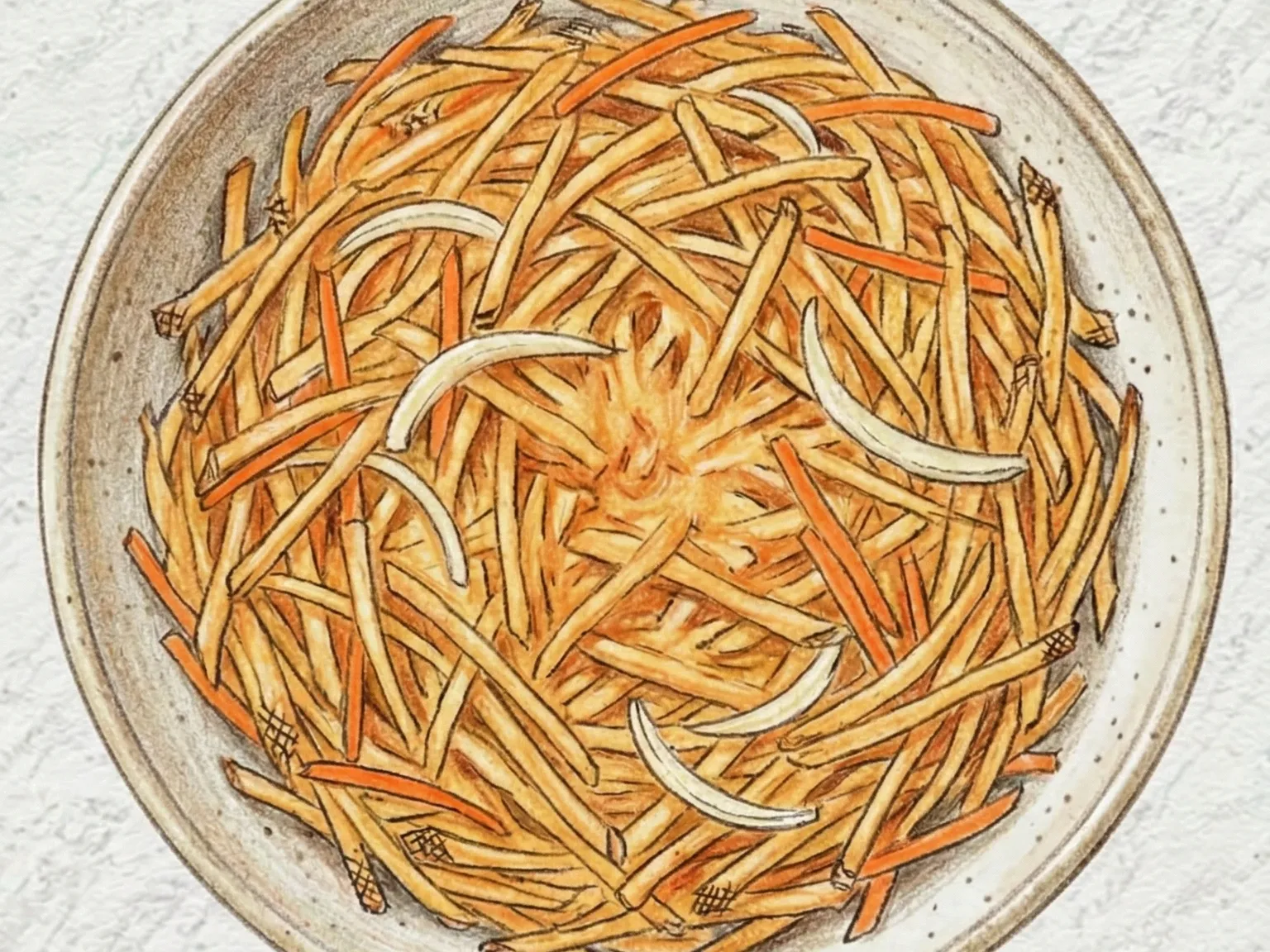
Sweet potato is cut into thin strips and pan-fried with julienned carrot and onion in a tempura-style batter.
What makes this special
- Shredded sweet potato and carrot strands fry into a crisp fritter with a naturally sweet core.
- Julienned sweet potato and carrot layer sweet flavors throughout
- Tempura batter with cold water crisps the edges like light tempura
Key ingredients
Core cooking flow
- 1 Peel sweet potato (320 g) and julienne into 3-4 mm wide strips.
- 2 Add tempura flour (80 g) and salt (0.4 tsp) directly onto the vegetables.
- 3 Pour cold water (100 ml) in three additions, mixing with chopsticks between each pour.
Sweet potato is cut into thin strips and pan-fried with julienned carrot and onion in a tempura-style batter. The overlapping sweet potato strands crisp up at the edges during frying, while the centers stay soft and carry the vegetable's natural sweetness. Using cold water to mix the batter keeps it light and loose, preserving the crunch of each strand after cooking. Black sesame seeds scattered over the top add a nutty note and visual contrast. The jeon is best eaten immediately off the pan, when the edges are at peak crispness. A soy-vinegar dipping sauce alongside balances the natural sweetness of the vegetables with a clean, sharp note.
Instructions
Read the steps as a cooking flow: prep, heat, seasoning, doneness control, and finish.
- 1Heat
Peel sweet potato (320 g) and julienne into 3-4 mm wide strips.
Julienne carrot (50 g) and onion (60 g) to the same width and place all in a large bowl. Matching thickness ensures even cooking.
- 2Season
Add tempura flour (80 g) and salt (0.4 tsp) directly onto the vegetables.
Toss with chopsticks until each surface is lightly dusted. Coating the vegetables dry before adding water helps the batter stick.
- 3Prep
Pour cold water (100 ml) in three additions, mixing with chopsticks between each pour.
The batter should thinly coat the vegetables with little excess pooling at the bottom.
- 4Control
Heat oil (3 tbsp) in a pan over medium heat.
Spread the batter into an 18 cm round and do not move it for the first 3 minutes to allow the base to firm up.
- 5Heat
Sprinkle black sesame seeds (0.5 tsp) evenly on top and flip the jeon in one motion with a wide spatula.
Cook the other side 3-4 more minutes until the edges are crisp.
- 6Finish
Transfer the jeon to a cutting board and cut into serving pieces.
Serve while hot since it softens as it cools.
After the steps
Pick a recipe that fits this dish.
Continue with shared ingredients, meal pairings, or a similar method.
Recipes That Go Well With This
More Pancakes →Based on shared ingredients and meal pairing
Korean Burdock Matchstick Pancake
Burdock root, julienned into thin matchstick strips and pan-fried with onion and cheongyang chili, is a jeon with texture as its main argument. The combination of Korean pancake mix and tempura flour in the batter produces a result that is crispier than standard jeon, particularly at the edges where the thin strips of burdock protrude from the batter and catch the heat. Burdock has an earthy, faintly bitter flavor that holds up in the pan, and the onion provides sweetness alongside it. Cheongyang chili cuts through with a slow-building, lingering heat. Cold water keeps the batter loose and inhibits gluten development, so the finished jeon stays light rather than dense. Hot from the pan, the edges shatter; cooled, they turn chewy.
Candied Sweet Potato
Goguma mattang is a Korean candied sweet potato snack made by cutting peeled sweet potatoes into large chunks and deep-frying them at 170 degrees Celsius until the interior turns floury and soft. A syrup of sugar, corn syrup, water, and a measured splash of soy sauce is cooked separately until large, foamy bubbles form - the visual cue for adding the fried sweet potatoes. Everything must be coated within thirty seconds to lock in a thin, glass-like caramel shell that crisps and turns translucent as it cools. The soy sauce shifts the flavor from purely sweet to a rounded, slightly savory depth. Pre-draining surface moisture from the cut sweet potatoes reduces oil splatter during frying and helps the syrup grip the pieces evenly. Black sesame seeds are scattered over the finished pieces for a toasted, nutty note, and each piece is spread individually on parchment paper while still warm so they cool without sticking together.
Korean Rolled Omelette (Layered Vegetable Egg Roll)
Gyeran-mari - Korean rolled omelette - is a staple of Korean lunchboxes and dinner tables, a dish every Korean home cook masters early. Finely diced carrot, onion, and scallion are mixed into beaten eggs and poured in a thin stream across a lightly oiled rectangular pan. When the egg layer is half-set, it is rolled from one side to the other, then more egg mixture is poured beside the roll and the process repeats three to four times, building concentric yellow layers visible when sliced. Air trapped between the thin sheets gives the omelette its characteristic pillowy softness. Temperature control is critical - too hot and the egg browns; too cool and the layers will not bond. After cooking, wrapping the roll in a bamboo mat or kitchen towel for two minutes sets its shape into a clean cylinder. Found in school cafeterias, picnic bento boxes, and family dinners across Korea.
Korean Sweet Pumpkin Pancake
Danhobak jeon is made by steaming kabocha squash, mashing it, then mixing the puree with glutinous rice flour and a small amount of all-purpose flour before shaping the mixture into rounds and pan-frying them in oil. The glutinous rice flour gives each piece a chewy, mochi-like texture, and the squash provides enough natural sweetness to keep added sugar minimal. The exterior crisps up in oil while the center stays soft and moist, like a compressed squash puree. The squash's natural sugars caramelize lightly against the hot pan, producing a golden color on the surface. Best eaten warm, when the squash's sweet, earthy aroma is most pronounced. Well suited as a snack or dessert.
Serve with this
Korean Scallion Shrimp Fried Rice
This scallion shrimp fried rice stir-fries plump shrimp and generous amounts of green onion over high heat for a clean, aromatic bowl. The shrimp go into the wok first, searing until the edges turn golden and leave behind a savory fond. Chopped scallions follow, releasing a sharp, oniony fragrance that cuts through the richness. Day-old rice is added and tossed rapidly with soy sauce and oyster sauce, breaking up clumps until every grain is individually coated. Beaten egg stirred in at the end wraps the rice in a soft, silky layer. Despite the short ingredient list, the combination of briny shrimp and pungent scallion delivers a depth of flavor that keeps this dish in regular weeknight rotation.
Korean Whelk Stew (Spicy Canned Whelk & Cabbage Pot)
Golbaengi-jjigae is a spicy Korean stew made with canned whelk as the centerpiece. Because the whelk is already fully cooked inside the can, it goes in near the end of cooking rather than at the start, allowing the broth and vegetables to reach their full flavor first. Extended heat makes whelk rubbery, so a brief simmer of two to three minutes is enough to warm the pieces through while preserving their distinctive chewy texture. Anchovy stock forms the savory foundation of the broth, delivering a clean seafood depth that amplifies the whelk's flavor without masking it. Gochujang and gochugaru combine to give the stew its fiery, full-bodied heat, while cabbage and onion absorb the broth over time and release a gentle sweetness that balances the spice. A single cheongyang chili added whole sharpens the heat at the finish, pulling the entire broth taut with a bright, clean burn. A handful of sliced green onion stirred in at the end brings a fresh aroma that lifts the richness of the stew. It works equally well as a rice-side dish or as an accompaniment to soju.
Ojingeo-muguk (Korean Squid Radish Soup)
Ojingeo-muguk is a clear Korean soup that pairs squid and radish in a gently sweet, clean-tasting broth built without any chili or strong seasoning. Radish is added to cold water from the start and simmered for at least eight minutes, during which the vegetable slowly releases a natural sweetness that forms the flavor foundation of the soup. Squid is cleaned, sliced into rings, and added only after the radish has softened, and the timing here is critical: five minutes in the hot broth is enough for the flesh to turn fully opaque and pleasantly firm, but even a minute or two beyond that causes the proteins to tighten and the rings to turn rubbery and tough. Soup soy sauce seasons the broth without darkening it, and minced garlic provides depth without heat. Sliced green onion stirred in at the end neutralizes any residual seafood aroma and leaves the broth tasting bright and clean. The simplicity of the combination is the point: the radish's sweetness and the squid's umami reinforce each other in a broth that is light in body but surprisingly satisfying.
Similar recipes
Korean Crispy Potato Pancake
Gamja-jeon is a Korean potato pancake made by finely grating raw potatoes, letting the starch settle out of the liquid for at least ten minutes, discarding the water, and folding the settled starch back into the pulp to improve binding. Waiting long enough for full starch separation is what gives the batter enough cohesion to hold together when the pancake hits the hot pan. Spreading the batter as thinly as possible produces glass-crisp edges while the center retains a chewy, starchy bite characteristic of potato starch. The first side must cook all the way through and the underside must firm up completely before any attempt to flip, and using two spatulas simultaneously makes the turn fast enough to keep the pancake intact. Frying both sides over medium heat until evenly golden delivers a crust that is crisp on the outside while the center stays moist. A dipping sauce of soy sauce, vinegar, and minced cheongyang green chili cuts through the oily richness with sharpness and heat.
Korean Kimchi Potato Jeon
Kimchi-gamja-jeon is a pan-fried Korean pancake made from grated potatoes combined with chopped napa kimchi, Korean pancake mix, green onion, and Cheongyang chili. The grating releases starch along with water, and the key step is letting the mixture settle so the starch sinks, then pouring off the liquid and recombining only the starch with the rest of the batter. This starch concentration creates the contrast between a shattering crust and a moist, soft interior that marks a well-made potato pancake. The batter is spread thin in a preheated oiled pan and fried on both sides over medium-high heat. Keeping the temperature high enough that the exterior sets quickly before oil soaks in is essential, as a pan that is too cool produces a greasy, soft result. Kimchi juice that hits the hot pan caramelizes at the edges, creating pockets of deep savory crust alongside the sharp fermentation flavor. The tangy acidity of the kimchi and the mild sweetness of the potato create a defined contrast in each bite. Dipped in vinegared soy sauce spiked with sliced Cheongyang chili, the pancake is a classic makgeolli pairing.
Korean Eggplant & Pork Pancake
Thick eggplant slices are topped with seasoned ground pork, coated in Korean pancake batter, dipped in beaten egg, and pan-fried until golden on both sides. As the eggplant absorbs oil over heat, it cooks through to a silky, yielding texture, and the pork filling stays juicy inside the batter crust. Minced garlic and onion season the pork mixture and mask any gaminess, while the egg coating forms a thin, evenly browned exterior. A soy-based dipping sauce sharpens the mild eggplant and savory pork into a balanced bite.