Charim

2686 Korean & World Recipes

2686+ Korean recipes, clean and organized. Ingredients to instructions, all at a glance.

Korean Braised Beef Short Ribs with Kabocha

Korean Braised Beef Short Ribs with Kabocha

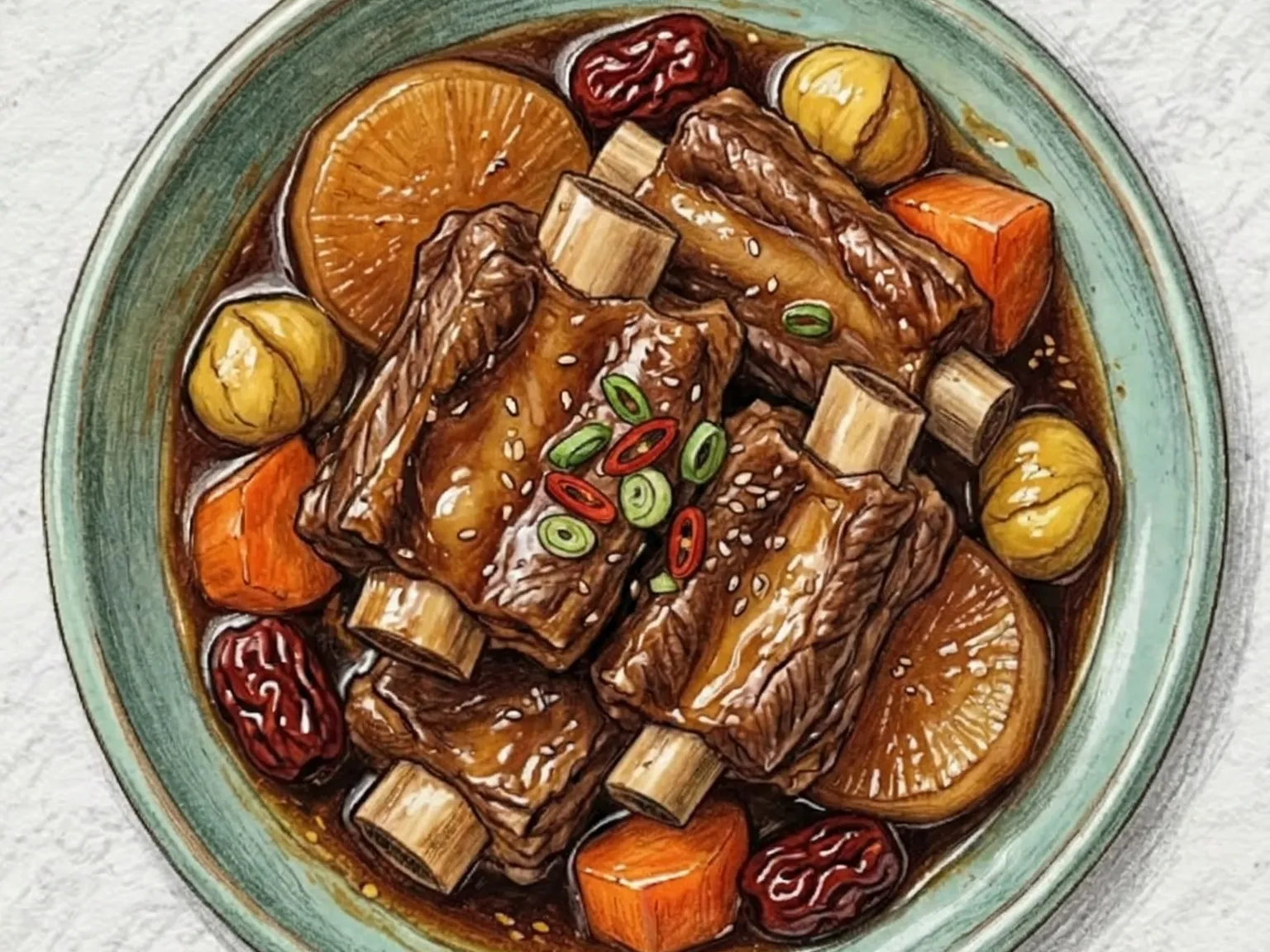
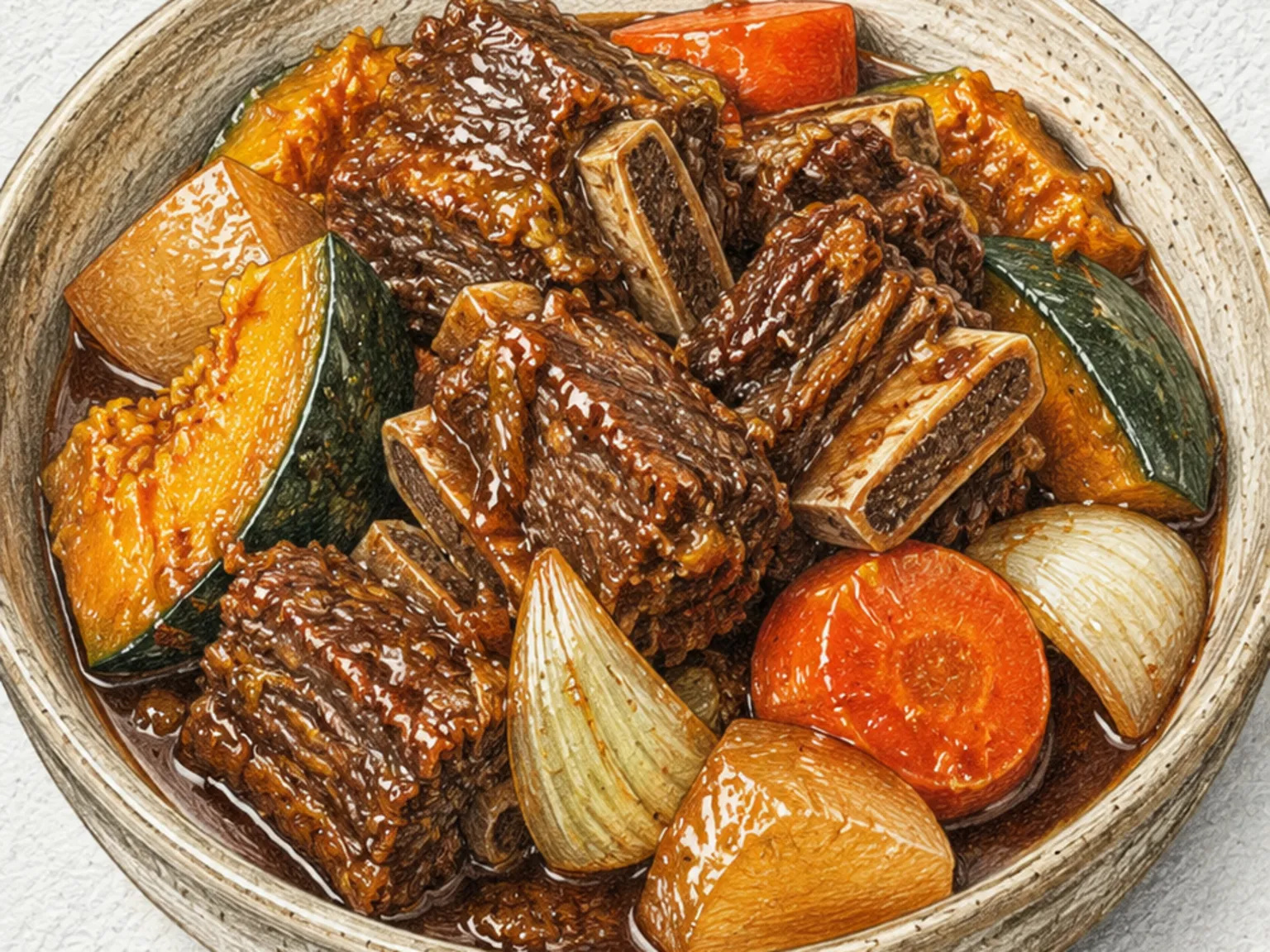
Danhobak-sogalbi-jjim is beef short ribs marinated in Korean pear juice, then braised with kabocha squash, radish, carrot, and onion in a soy-based sauce until deeply flavored. Pear juice works into the meat during marination, softening the muscle fibers and leaving a background fruit sweetness that comes through in the finished braise. Kabocha edges break down during cooking, releasing starchy flesh into the sauce and thickening it without any added starch. Radish and carrot spend the full braise in the soy sauce and absorb it thoroughly, becoming nearly as satisfying as the ribs themselves. A drizzle of sesame oil just before serving lifts the fragrance of the whole dish. This is a centerpiece preparation in Korean holiday and birthday cooking.

Prep 35min Cook 70min 4 servings

Adjust Servings

2servings
servings

Instructions

  1. 1

    Soak ribs in cold water for 30 minutes, then blanch 5 minutes to remove impurities.

  2. 2

    Combine soy sauce, pear juice, cooking wine, garlic, and water for the braising liquid.

  3. 3

    Add ribs and braising liquid to a pot, boil, then cook on medium-low for 40 minutes.

  4. 4

    Add radish, carrot, and onion; braise 15 more minutes to absorb flavor.

  5. 5

    Add kabocha and cook 10 minutes until tender, reducing sauce to desired thickness.

  6. 6

    Finish with sesame oil and simmer 2 minutes to lift aroma.

🛒Shop Ingredients on Amazon

As an Amazon Associate, we may earn from qualifying purchases.

Tips

Add kabocha in the last 10 minutes to prevent it from falling apart.
Chilling overnight and reheating deepens the flavor.

Nutrition (per serving)

Calories
546
kcal
Protein
36
g
Carbs
22
g
Fat
34
g

Goes Well With

Gomtang (Slow-Simmered Ox Bone Beef Soup)
SoupsHard

Gomtang (Slow-Simmered Ox Bone Beef Soup)

Gomtang is a Korean bone soup made by simmering beef leg bones and brisket in water for five to six hours or longer until the broth turns opaque and milky white. The prolonged cooking extracts collagen, marrow, and fat from the bones, giving the liquid a creamy texture and a deep beefy flavor that needs only salt and black pepper to taste complete. Before the long simmer begins, the bones should be soaked in cold water for at least an hour to draw out the blood, then parboiled briefly in a fresh pot of water and rinsed clean so that the final broth comes out clear and free of off flavors. The brisket is removed partway through cooking, sliced thin against the grain, and arranged on top of the steaming soup for serving. Sliced green onion and a generous shake of black pepper cut cleanly through the richness of the milky broth. The most common way to eat gomtang is with a bowl of steamed rice submerged directly into the soup, letting the grains soak up all the flavor. This is slow food in the truest sense - the hours of effort yield a pot that can sustain a family across two meals - and it remains one of the dishes Koreans reach for instinctively when the cold sets in.

🏠 Everyday🎉 Special Occasion
Prep 60minCook 360min4 servings
Korean Beef & Shiitake Japchae
Side dishesMedium

Korean Beef & Shiitake Japchae

Japchae originated as a Joseon royal court dish of stir-fried vegetables before sweet potato glass noodles were added to create the form recognized today. This version pairs glass noodles with soy-marinated beef and sliced shiitake mushrooms. Each component cooks separately: beef and mushrooms stir-fried with garlic, spinach blanched and squeezed dry, carrots and onions sauteed until just tender. A final toss with sesame oil brings everything together. The noodles should be translucent and springy, carrying a sweet-salty soy glaze into each forkful. A standard presence on every Korean holiday table at Chuseok, Seollal, and birthday celebrations alike.

🏠 Everyday🎉 Special Occasion
Prep 20minCook 18min4 servings
Korean Sesame Oil Abalone Porridge
RiceMedium

Korean Sesame Oil Abalone Porridge

Both abalone flesh and innards are used together with a generous two tablespoons of sesame oil to maximize nuttiness in this porridge. The innards carry a concentrated brininess unique to abalone, and sauteing them with minced garlic in sesame oil infuses the fat with both marine and roasted flavors simultaneously, forming the aromatic foundation for the entire pot. Soaked rice is stirred into that same seasoned oil and cooked until each grain turns translucent, a step that coats the starch in fat and gives the porridge a fuller, rounder flavor. Water is then added and the mixture simmers for 25 minutes while the grains slowly dissolve their starch into a naturally thick consistency. Stirring regularly throughout this stage prevents the rice from settling and scorching on the pot floor. Soup soy sauce and salt are added at the finish, their saltiness anchoring the nuttiness of the sesame oil rather than competing with it. Chopped chives provide both color and a light onion fragrance. An extra drizzle of sesame oil just before serving deepens the aroma and gives the surface a subtle sheen.

🎉 Special Occasion
Prep 20minCook 35min2 servings
Korean Stuffed Bossam Kimchi
KimchiHard

Korean Stuffed Bossam Kimchi

Bo-kimchi is a premium Korean stuffed kimchi where brined napa cabbage leaves are wrapped around a filling of julienned radish, water dropwort, chestnuts, jujubes, shrimp, and pine nuts, then tied into bundles and left to ferment. Each ingredient in the stuffing develops its own flavor during fermentation, building a complex, layered taste enclosed in a single neat package. Shrimp and pine nuts contribute richness and a roasted note, while chestnuts and jujubes add subtle sweetness that lifts this well above everyday kimchi. Originating in the Gaeseong region and tracing its lineage through Goryeo-era court cuisine, it is a kimchi reserved for holidays and formal occasions.

🎉 Special Occasion
Prep 70minCook 15min4 servings

More Recipes

Korean Braised Short Ribs
SoupsHard

Korean Braised Short Ribs

Galbi-jjim is one of Korea's most celebrated braised dishes, built around thick-cut beef short ribs that simmer for well over an hour in a deeply seasoned liquid of soy sauce, Asian pear juice, sugar, garlic, and sesame oil. Before braising, the ribs are soaked in cold water to purge the blood, then briefly blanched in boiling water to remove impurities; skipping either step results in a cloudy, less refined sauce. The long, low cook breaks down the collagen in the connective tissue until the meat offers no resistance, sliding off the bone with the lightest pull. As the liquid reduces it clings to each rib in a thick, glossy dark-brown glaze that is simultaneously sweet, salty, and intensely savory. Daikon radish and carrot chunks absorb the braising liquid and soften into something almost buttery, becoming a substantial side dish in their own right. Chestnuts and jujubes, traditionally added for Chuseok and Lunar New Year celebrations, lend a gentle sweetness and lift the visual festivity of the platter. A single spoonful of the finished sauce over plain steamed rice is enough to make an entire bowl disappear.

🏠 Everyday🎉 Special Occasion
Prep 30minCook 60min4 servings
Korean Braised Pork Ribs with Young Radish Greens
SteamedMedium

Korean Braised Pork Ribs with Young Radish Greens

Yeolmu dwaeji galbi jjim is a Korean braised pork rib dish finished with young radish greens, cooked in a gochujang and soy sauce seasoning. The ribs simmer until the meat separates from the bone, building a concentrated, spicy braising liquid from the rendered pork stock and chili paste. Young radish greens are added only in the final minutes to preserve their crisp stems and fresh, slightly peppery aroma, which lightens the rich, heavy sauce. The combination of fall-off-the-bone pork and bright summer greens makes this a seasonal main course that bridges richness and freshness.

🎉 Special Occasion
Prep 25minCook 60min4 servings
Korean Braised Oxtail (Soy Collagen Radish Braise)
SteamedHard

Korean Braised Oxtail (Soy Collagen Radish Braise)

Kkori-jjim is a Korean braised oxtail dish that begins with an extended soak in cold water to purge blood, followed by a preliminary boil to clean the joints before the main braise. The oxtail pieces go into a pot with soy sauce, sugar, minced garlic, ginger, and rice wine and cook low and slow for two hours or longer. The collagen concentrated in the tail joints breaks down gradually over that time, turning the braising liquid thick, glossy, and deeply gelatinous while the meat loosens away from bone without resistance. Korean radish and carrot cook alongside the meat, contributing natural sweetness and becoming saturated with the savory-sweet sauce. Jujubes and ginkgo nuts lend an herbal nuance and a subtle sweetness that distinguishes this dish from simpler braises. When chilled, the sauce sets into a firm jelly that liquefies again on reheating. The dish appears regularly on Korean holiday tables and is considered restorative food, valued for its concentrated beef flavor and the characteristic springy pull of slow-cooked collagen.

🎉 Special Occasion
Prep 30minCook 150min4 servings
Korean Steamed Beef with Radish Greens
SteamedHard

Korean Steamed Beef with Radish Greens

Mucheong sogogi jjim is a Korean braised beef dish where short rib meat is marinated in Korean pear juice and soy sauce, then slow-cooked with blanched radish greens and onion. The pear juice tenderizes the beef and lends a subtle fruit sweetness that deepens over the long braise. Radish greens are added near the end to preserve their earthy aroma and slight chew, bringing a rustic contrast to the soft meat. Ginger juice keeps the flavor clean, and sesame oil ties everything together with a toasted finish. The sauce reduces to a concentrated glaze meant to be spooned over rice.

🎉 Special Occasion
Prep 25minCook 70min4 servings
Korean Braised Pork Ribs
SteamedMedium

Korean Braised Pork Ribs

Dwaeji galbi-jjim is a Korean braised pork rib dish simmered in a soy sauce base with Korean radish, carrots, and onion. The ribs cook low and slow until the meat practically falls off the bone, absorbing the ginger- and garlic-infused braising liquid along the way. Soy sauce, sugar, and fermented depth from the ganjang build a savory-sweet profile without tipping into sweetness. The radish chunks turn translucent and soak up the seasoning, becoming as flavorful as the meat itself. Served with steamed rice, this is a hearty main course suited to cooler weather.

🏠 Everyday🎉 Special Occasion
Prep 20minCook 70min4 servings
Korean Braised Short Rib Rice Bowl
RiceMedium

Korean Braised Short Rib Rice Bowl

Galbi deopbap is a Korean rice bowl topped with beef short ribs slow-braised in a soy, sugar, and grated Asian pear marinade until the connective tissue dissolves and the meat separates from the bone at the lightest touch. Grated pear serves a dual purpose in the braise: the enzymes break down tough muscle fibers while the juice introduces a gentle fruit sweetness that sets the dish apart from heavier, wine-based braises. Grated onion dissolves completely into the braising liquid over the long simmer, deepening the savory foundation without leaving visible pieces. As the liquid reduces over one hour or more, it transforms into a dark, glossy sauce that coats the ribs and drips down onto the rice below. Spooning the sauce generously over the steamed rice allows each grain to absorb the soy-sweet glaze from the bottom up, making the rice itself as flavorful as the meat. Despite the long cooking time, the dish demands minimal active attention because the braise works inside the pot without stirring. Scattered sliced green onion on top provides a crisp, fresh contrast against the richness of the braised ribs.

🎉 Special Occasion
Prep 20minCook 90min2 servings
More Steamed →