Danish Pastry
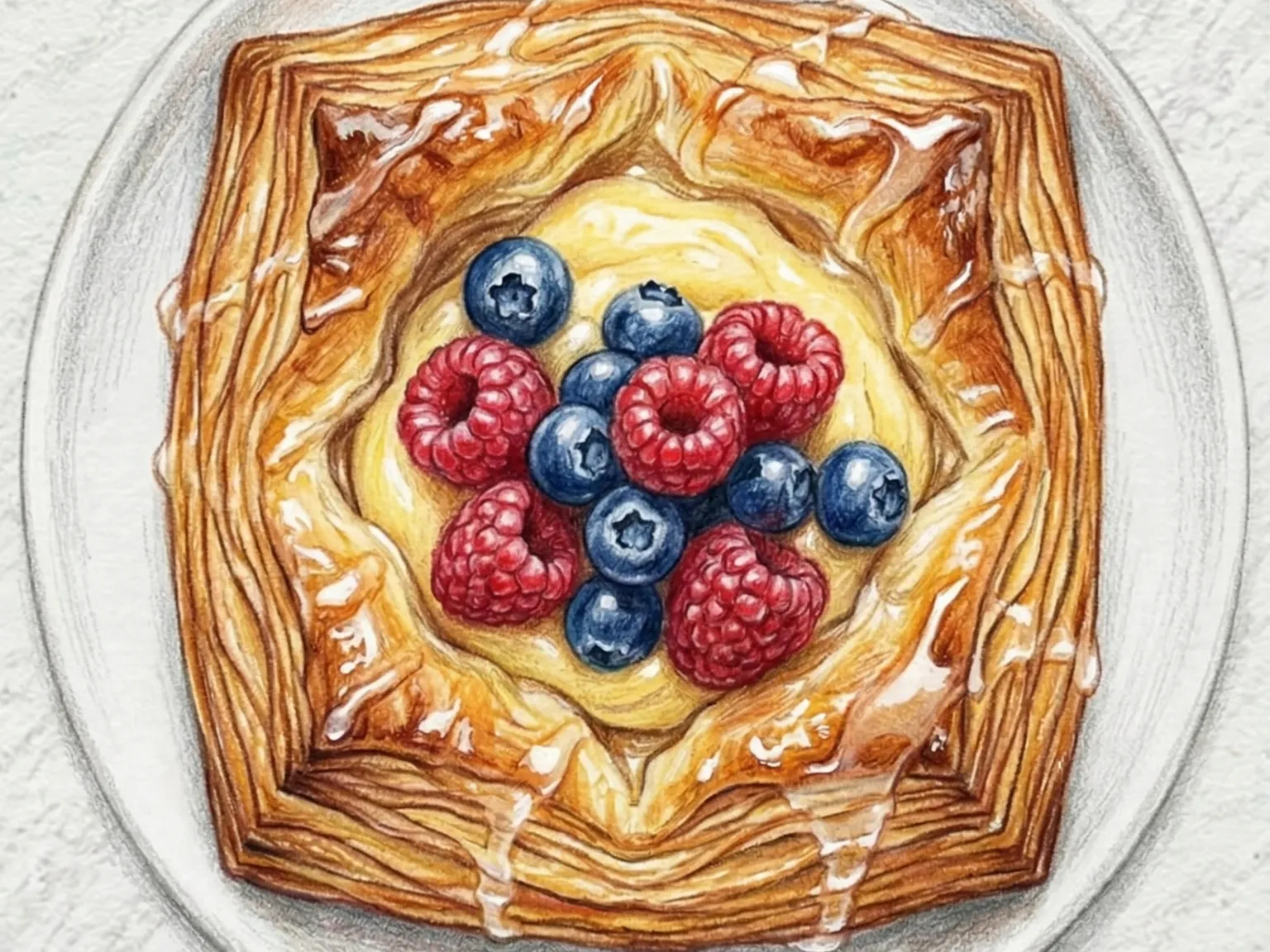
Danish pastry is a laminated dough enriched with eggs and butter, folded in successive turns to create flaky layers, then shaped and filled before baking. The process resembles croissant-making, but the dough is softer and sweeter, and the shaping is more varied - diamonds, pinwheels, and envelopes are all common forms. In the oven, the butter between the layers melts and creates steam, pushing apart each fold into crisp, golden leaves. The interior stays pillowy and brioche-like, carrying a pronounced butter flavor throughout. Custard cream or fruit placed in the center bakes alongside the pastry, the custard firming into a smooth, glossy pool. A drizzle of sugar glaze after baking adds a thin, sweet sheen.
Adjust Servings
Instructions
- 1
Mix dough ingredients and let rise once.
- 2
Laminate with cold butter through three folds.
- 3
Roll out, cut squares, and press centers.
- 4
Pipe pastry cream and add fruit if desired.
- 5
Bake at 190C for 16-18 minutes.
As an Amazon Associate, we may earn from qualifying purchases.
Tips
Nutrition (per serving)
More Recipes

Cronut
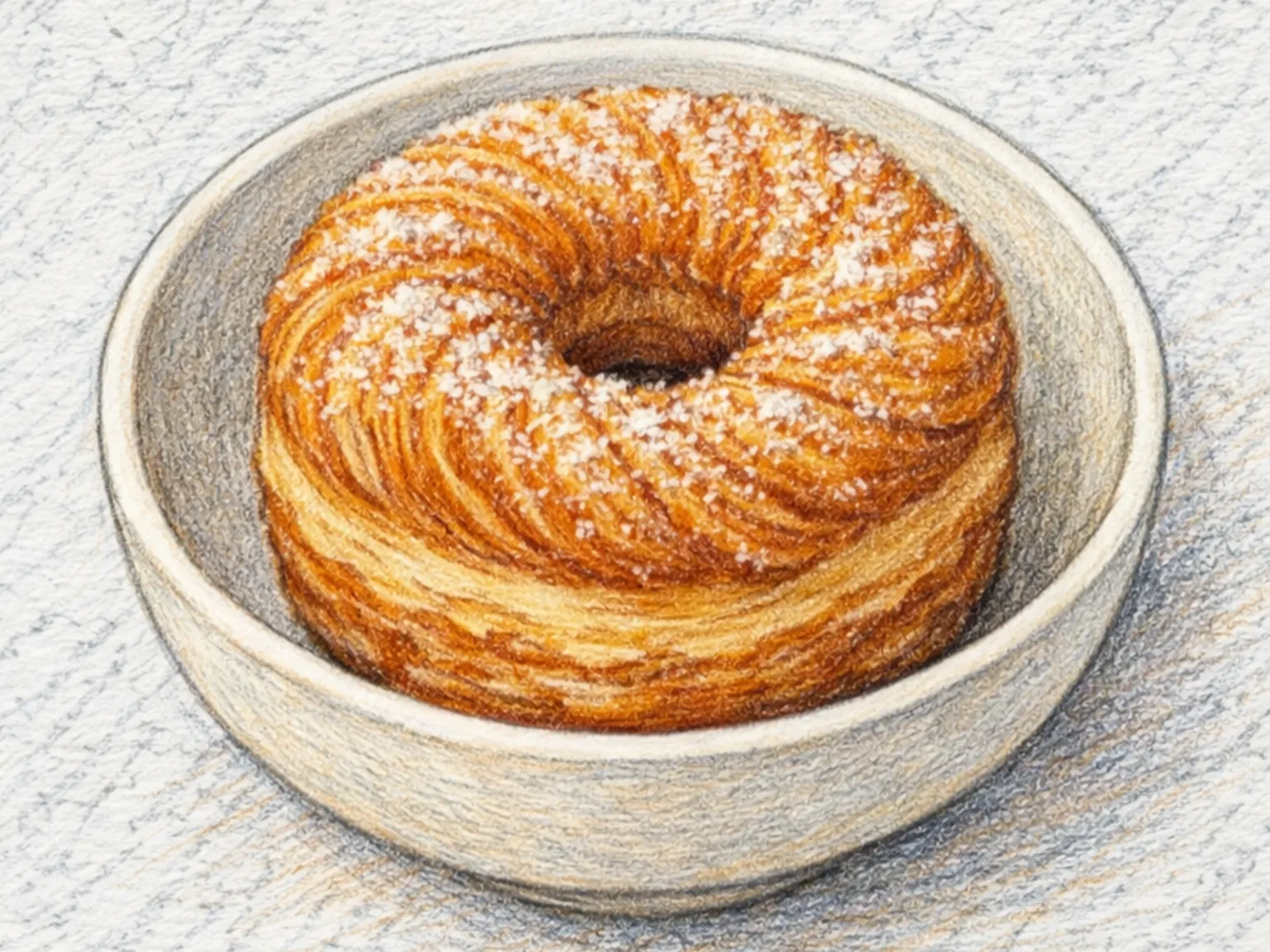
The cronut is a hybrid pastry created in New York in 2013, made by frying laminated croissant dough in a doughnut shape. The process starts with traditional croissant dough - flour, yeast, and layers of butter folded over three days. The laminated dough is cut into rings and deep-fried, producing a pastry with the flaky interior of a croissant and the crisp shell of a doughnut. A flavored cream is piped inside and the outside is finished with a glaze. Biting through delivers a sequence of cracking glaze, crisp exterior, airy buttery layers, and smooth cream filling. The three-day preparation is non-negotiable for proper lamination.

Portuguese Egg Tart (Flaky Pastry with Caramelized Custard)
Flaky puff pastry shells are pressed into muffin tins and filled with a rich egg yolk custard, then baked at very high heat until the tops blister with dark caramelized spots. Those charred patches are not a mistake but the defining feature of the tart, contributing a bittersweet complexity that balances the sweet, creamy filling below. The custard sets to a trembling consistency that is firm enough to hold when the tart is lifted but soft enough to melt on the tongue. Vanilla extract added to the custard rounds out the egg richness with a floral note. Straining the custard through a fine sieve before filling ensures a perfectly smooth texture. The extreme oven temperature is what separates these from ordinary custard tarts, as it caramelizes the surface in minutes while keeping the interior silky.

Cream Horn Pastry (Spiral Puff Pastry Cone with Cream Filling)
Cream horns are made by wrapping thin strips of puff pastry around conical metal molds and baking until the layers separate into a crisp, spiraling shell. The hundreds of laminated layers in the pastry open up in the oven's heat, producing a horn that is simultaneously delicate and structurally sound. Once cooled, the metal cone is removed, leaving a hollow pastry ready for filling. A mixture of cream cheese and whipped cream is piped inside, delivering a smooth, tangy sweetness that contrasts with the shattering pastry exterior. The critical rule is timing - filling the horns just before serving preserves the crispness of the pastry, which softens rapidly once the cream introduces moisture.

Classic Croissant
A classic croissant is built through lamination - a process of folding cold butter into yeast-leavened dough in successive turns to create dozens of alternating layers. Three sets of folds produce a structure so layered that when baked, the butter melts and releases steam, forcing each layer apart from within. The exterior caramelizes into a shell so thin and crisp it shatters at the slightest pressure, scattering golden flakes. The interior, by contrast, is a honeycomb of soft, airy strands held together by the ghost of dissolved butter. Tearing a warm croissant apart releases a rush of butter fragrance that fills the room. The dough itself carries a faint sweetness from sugar and milk, but the dominant flavor is pure butter, amplified and transformed by heat.

Clafoutis (French Baked Cherry Custard Dessert)
Clafoutis is a traditional French dessert from the Limousin region, made by pouring a thin batter of eggs, sugar, milk, and flour over fresh cherries arranged in a buttered baking dish. Baking at 180 degrees Celsius for thirty to thirty-five minutes puffs the batter into a texture between a pancake and a baked custard - golden and lightly set at the edges, moist and tender around the fruit. The cherries release their tart juice into the surrounding batter during baking, creating pockets of concentrated fruit flavor. Vanilla extract rounds out the egg-and-milk base. Serving the clafoutis slightly warm rather than fully cooled preserves its soft, custardy consistency.

Red Bean Pastry (Korean Gyeongju Soft Bun with Anko)
Gyeongju-ppang is a baked Korean pastry made from a yeast-leavened dough enriched with milk and butter, wrapped around a generous filling of sweet red bean paste. The dough is rolled thin, sealed around the paste with the seam facing down, and baked at 180 degrees Celsius until the top puffs up with a smooth, light golden surface. Because the filling-to-dough ratio is high, the first flavor in each bite is the dense, sweet red bean, followed by the mild dairy aroma of the thin bread shell. Rooted in the baking traditions of Gyeongju and its famous hwangnam-ppang, this pastry stays moist even after cooling, making it suitable as a packaged gift or an everyday snack.