Danza Noodle Soup (Tomato Chickpea Pasta Soup)
Quick answer
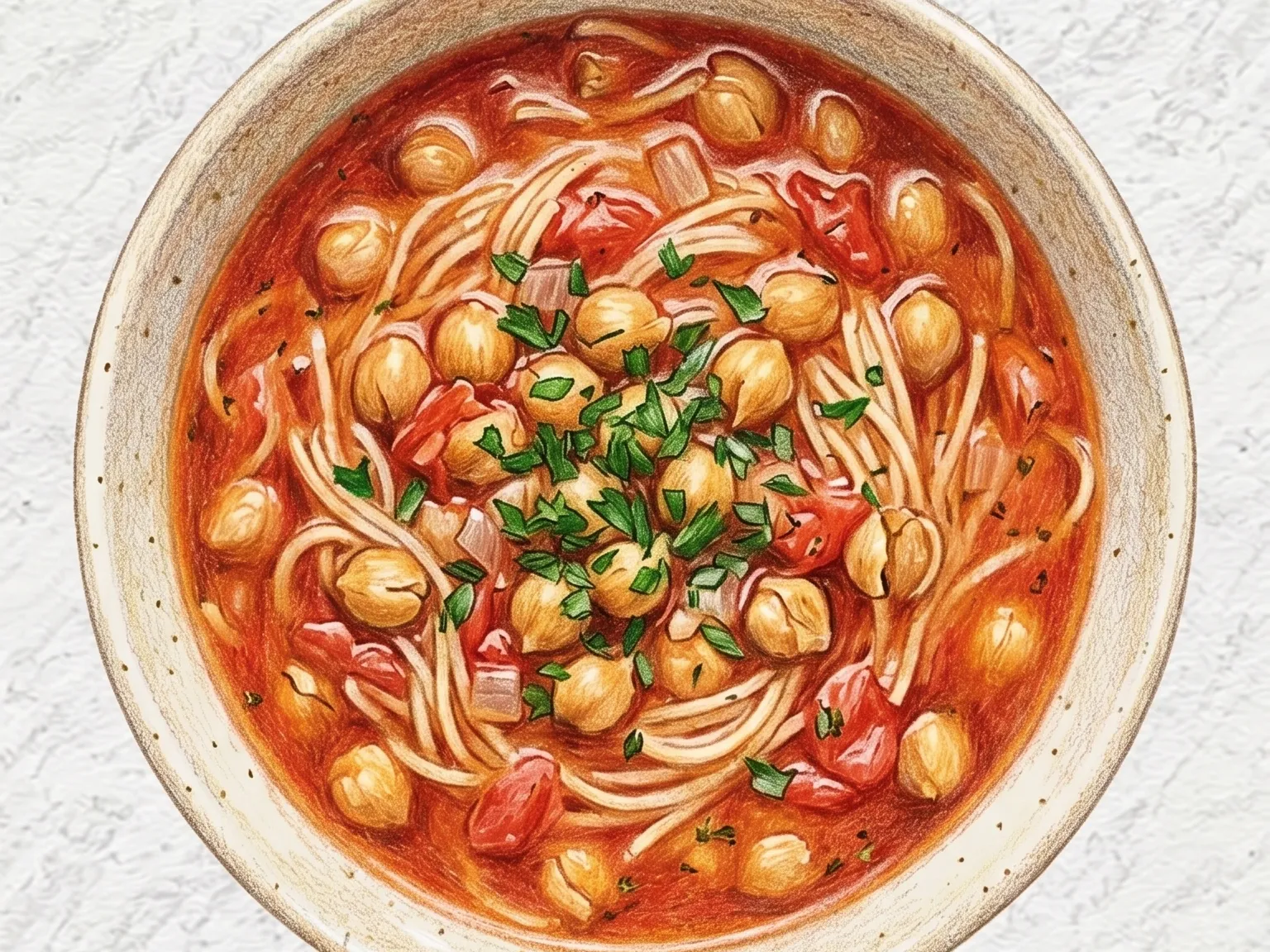
Danza noodle soup is a light Mediterranean-style soup that simmers diced tomatoes and chickpeas together in vegetable broth with dried oregano and thin pasta noodles.
What makes this special
- Soft chickpeas and diced tomatoes simmer into a nutty, Mediterranean-style danza pasta soup broth.
- Chickpeas soften in the broth adding nutty body without heaviness
- Oregano and parsley layer Mediterranean herbs over the tomato acidity
Key ingredients
Core cooking flow
- 1 Finely dice 60g onion and drain 120g chickpeas if they are packed in liquid.
- 2 Heat 1 tbsp olive oil in a large pot over medium heat.
- 3 Add 180g diced tomatoes and 1 tsp oregano.
Danza noodle soup is a light Mediterranean-style soup that simmers diced tomatoes and chickpeas together in vegetable broth with dried oregano and thin pasta noodles. Sauteing onion in olive oil until translucent before adding the tomatoes builds a deeper, more aromatic base than starting with raw aromatics. Chickpeas soften gradually as the soup cooks, contributing a nutty richness and satisfying substance without making the broth heavy. Stirring in fresh parsley just before serving lifts the finished soup with a clean herbal brightness against the tomato backdrop. Cooking the pasta separately and adding it at serving keeps the broth clearer and prevents the noodles from absorbing too much liquid.
Instructions
Read the steps as a cooking flow: prep, heat, seasoning, doneness control, and finish.
- 1Prep
Finely dice 60g onion and drain 120g chickpeas if they are packed in liquid.
Chop enough parsley for 1 tbsp and keep it separate so it can be added at the end while still fresh.
- 2Control
Heat 1 tbsp olive oil in a large pot over medium heat.
Add the onion and cook for 3 to 4 minutes, stirring often, until the sharp smell fades and the pieces look soft and translucent, not browned.
- 3Step
Add 180g diced tomatoes and 1 tsp oregano.
Keep the heat at medium and stir for about 3 minutes, letting some tomato moisture evaporate so the onion and tomato form a red, savory base.
- 4Control
Pour in 850ml vegetable broth and add the chickpeas.
When the soup comes to a boil, lower to gentle heat and simmer for 8 minutes, skimming foam from the surface to keep the broth cleaner.
- 5Season
Add 160g thin pasta noodles and stir right away so they do not clump or stick to the pot.
Cook for the package time until al dente, then adjust with salt and pepper only after the noodles are done.
- 6Finish
Stir in the chopped parsley once, then turn off the heat immediately to keep its aroma fresh.
Ladle the soup into bowls before the noodles absorb too much broth, and finish with a small drizzle of olive oil if desired.
After the steps
Pick a recipe that fits this dish.
Continue with shared ingredients, meal pairings, or a similar method.
Recipes That Go Well With This
More Noodles →Based on shared ingredients and meal pairing
Couscous Herb Salad
Couscous is hydrated in hot water for five minutes until each grain separates and fluffs up, then mixed with a generous quantity of flat-leaf parsley, diced cucumber, and halved cherry tomatoes. The dressing is intentionally sparse - lemon juice, olive oil, salt, and pepper - letting the grain absorb the citrus brightness without competing flavors getting in the way. Because herbs make up a significant portion of the volume, this reads more like a tabbouleh than a heavy grain salad, with a clean freshness that makes it easy to eat in large portions. Couscous holds its texture at room temperature better than most grains, meaning the salad does not go soggy in a packed lunch container or on a picnic spread. Adding fresh mint, a handful of chopped cilantro, or a pinch of lemon zest shifts the flavor toward something sharper and more aromatic, while crumbled feta adds a salty, creamy contrast that transforms it into a more substantial dish.
Mediterranean Chickpea Salad
This Mediterranean salad centers on cooked chickpeas for their starchy, satisfying chew, surrounded by diced cucumber, halved cherry tomatoes, black olives, and thinly sliced red onion. A stripped-down vinaigrette of red wine vinegar and olive oil keeps the dressing from overpowering any single ingredient, and crumbled feta added at the end provides a salty, creamy contrast that pulls the whole bowl together. The red onion should soak in cold water for five minutes before going in so its sharpness softens and it blends smoothly with the milder components. No heat is needed anywhere in the preparation, and the whole salad takes about twelve minutes to assemble. A twenty-minute rest in the refrigerator allows the vinaigrette to distribute evenly and deepens the overall flavor. Pita bread for dipping or grilled chicken laid across the top turns this easily into a full meal.
Quinoa Salad
Quinoa is boiled until fluffy and cooled to preserve its distinctive pop-when-bitten texture. Diced cucumber and halved cherry tomatoes mix in juicy crunch that energizes the mild grain base. Thinly sliced red onion adds sharpness, and generous chopped parsley pushes the herbal character forward. The dressing stays minimal - olive oil and lemon juice - letting raw ingredients speak clearly. As a complete protein containing all essential amino acids, quinoa makes this a nutritionally balanced light meal in a single bowl.
Pasta Primavera
Pasta primavera is a vegetable-forward Italian pasta that stir-fries broccoli, zucchini, bell pepper, and green peas in olive oil with garlic before tossing with spaghetti. Cutting each vegetable to a similar size and adding them in stages preserves distinct textures, while a splash of pasta water emulsifies the oil into a light, glossy coating that clings to every strand without the need for cream or a heavy sauce. Parmesan is folded in off the heat to prevent clumping, melting smoothly into the dish. The result is a bright, clean pasta that lets the natural sweetness and fragrance of the vegetables take center stage. Swapping in whatever vegetables are at peak freshness is part of how this dish works, making it as adaptable as it is straightforward to prepare.
Serve with this
Korean Seasoned Gamtae Seaweed
Gamtae is a green seaweed harvested only in winter from Korea's southern coast, particularly around Wando and Jangheung. It is thinner and more delicate than roasted gim, and its oceanic fragrance is sharper and more pronounced. For this banchan, dried gamtae sheets are torn by hand into large pieces and tossed with a dressing of soy sauce, vinegar, sesame oil, gochugaru, sugar, and minced garlic. Speed matters more than technique here. Once the dressing makes contact with the seaweed, it begins drawing out moisture immediately. Past twenty seconds of mixing, the fronds absorb liquid, lose their texture, and collapse into a sodden tangle. The dressing should be added and the whole thing tossed in one quick motion before serving. Vinegar does important work in this dish: its acidity counters the seaweed's natural brininess and leaves the palate clean between bites. Fresh gamtae is a strictly seasonal product, available only through winter markets in the Jeolla and Gyeongnam regions. Dried gamtae, however, keeps well and is available year-round, making this a quick, reliable side dish that pairs particularly well with plain steamed rice.
Korean Dried Radish Greens Pancake
Boiled dried radish greens are combined with doenjang and pan-fried into a dense, rustic jeon with deep fermented character. The fibrous texture of the radish greens gives the pancake a satisfying chew, and the soybean paste saturates the batter so thoroughly that no dipping sauce is necessary. Buckwheat flour adds an earthy coarseness that suits the greens well. Cheongyang chili provides a spicy accent throughout. Minced garlic benefits from a brief saute in oil before being mixed into the batter-the raw edge cooks off and the garlic's savory depth integrates fully into the finished pancake. Cooking over low heat lets the inside set without burning the outside, producing a crisp surface and a tender, flavorful center.
Korean Lotus Root Jangajji
Yeongeun jangajji is a soy-pickled lotus root made by blanching sliced root in vinegar water to prevent discoloration, then soaking it in a hot brine of soy sauce, sugar, peppercorns, and bay leaf. The brine seeps through the root's characteristic holes, distributing a balanced salty-sweet flavor evenly in every bite. Bay leaf tempers the heaviness of the soy base while whole peppercorns add a mild spice undertone. The result is a pickle with a dual texture - simultaneously chewy and crisp - that keeps well for days and works as a lunchbox side or everyday banchan.
Similar recipes
Korean Sigeumchi Dubu Jjigae (Spinach Tofu Stew)
Sigeumchi-dubu-jjigae is a Korean stew built from fresh spinach and soft tofu simmered in anchovy-kelp stock, seasoned with soup soy sauce and perilla oil. The process starts by warming perilla oil in the pot and softening minced garlic until its sharpness mellows into a rounded fragrance that transfers into the oil, giving the broth a subtle depth that would be absent if the garlic were added raw. Zucchini and onion release their natural sweetness as they cook, rounding out the broth and preventing it from tasting flat or austere. Soft tofu, added mid-way, absorbs the seasoned liquid gradually as it heats through, holding its shape while taking on the flavor of the broth around it. Spinach goes in last, only long enough to wilt, because extended cooking destroys the color and reduces the leaves to a limp, dull mass that works against the dish. The iron-forward earthiness of spinach pairs naturally with the mild creaminess of tofu and the nutty undercurrent of perilla oil, producing a stew that reads as simple but carries enough layered flavor to satisfy. This is a standard of Korean home cooking that earns its place at the table for being genuinely easy on the stomach, particularly welcome when appetite is low or the body calls for something clean.
Korean Corbicula Clam Noodle Soup
Jaecheop-guksu is a regional specialty from Hadong in South Gyeongsang Province, built on a clear broth extracted from purged freshwater corbicula clams. The broth carries the clams' concentrated brininess alongside a remarkably clean, light body, seasoned sparingly with soup soy sauce and salt to let the shellfish flavor dominate. A single cheongyang chili simmered in the pot lends a gentle background heat, and scallion with black pepper finishes the aroma. Widely regarded as a hangover remedy, this noodle soup is prized for its ability to settle the stomach with its pure, uncluttered flavor. Along the Seomjin River restaurants of Hadong, jaecheop dishes in various forms are considered the defining taste of the region.
Korean Shrimp Seaweed Soup
Saeu-miyeok-guk is a Korean seaweed soup made with shrimp rather than the more common beef, producing a lighter, ocean-forward bowl that carries a distinct marine clarity. The preparation begins by sauteing rehydrated seaweed and minced garlic together in sesame oil, a step that reduces any raw seaweed smell and builds a warm, nutty base before liquid is added. Shrimp are added to the pan and cooked just until they begin to turn pink, at which point their natural sweetness transfers into the seasoned oil. Water is poured in and the soup simmers on medium-low heat for twelve minutes, long enough for the mineral richness of the seaweed and the delicate shellfish umami to merge into a unified, clean-tasting broth. Soup soy sauce and salt provide the final seasoning without muddying the clarity of the stock. The textural interplay between the slippery, tender seaweed and the firm, bouncy shrimp makes each spoonful more satisfying than either ingredient would be on its own, and the overall lightness of the broth makes it a natural choice as a restorative meal or a birthday soup when a beef-heavy version feels too rich.