Dauphinoise Potatoes (Creamy Garlic Potato Gratin)
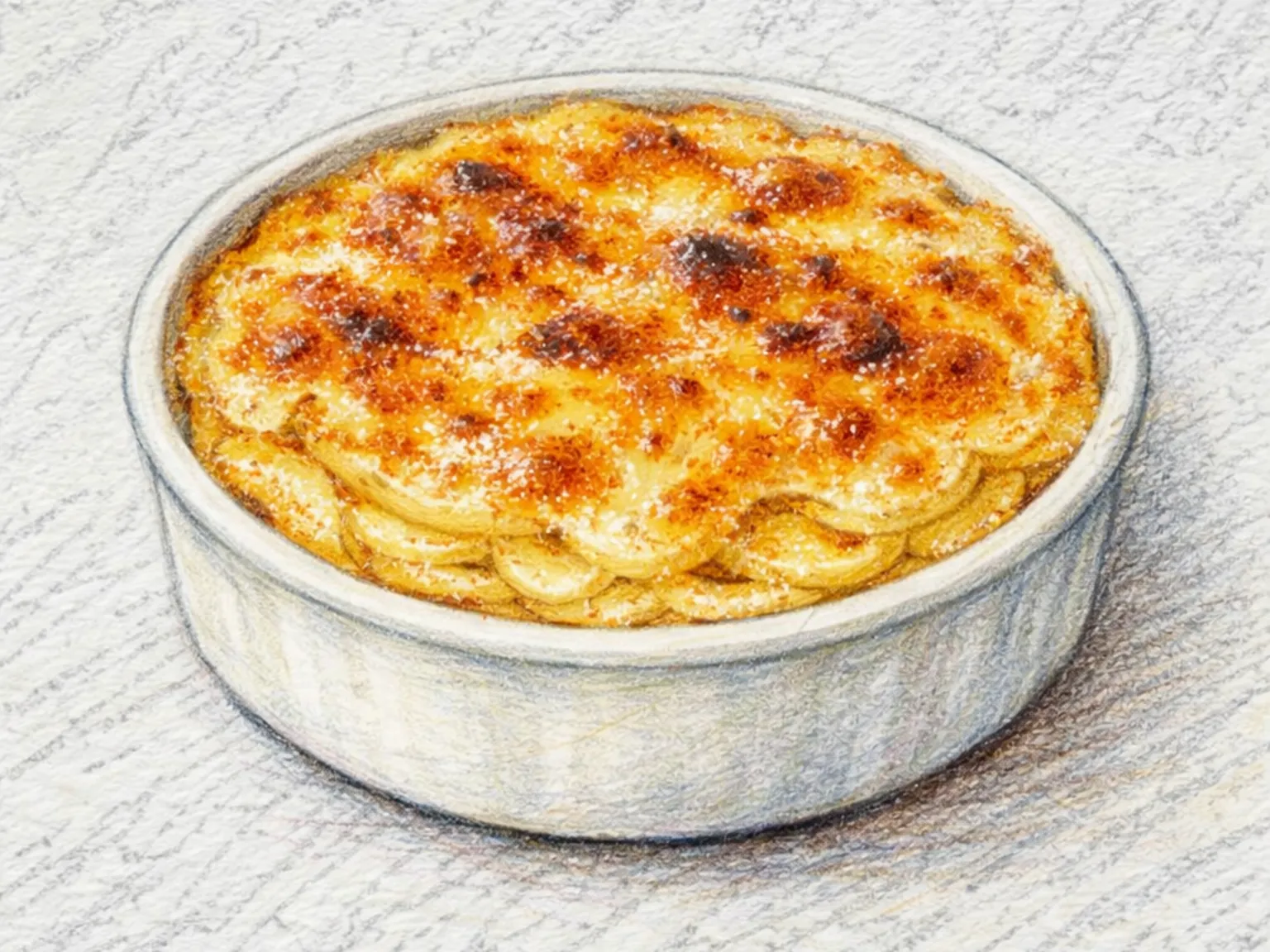
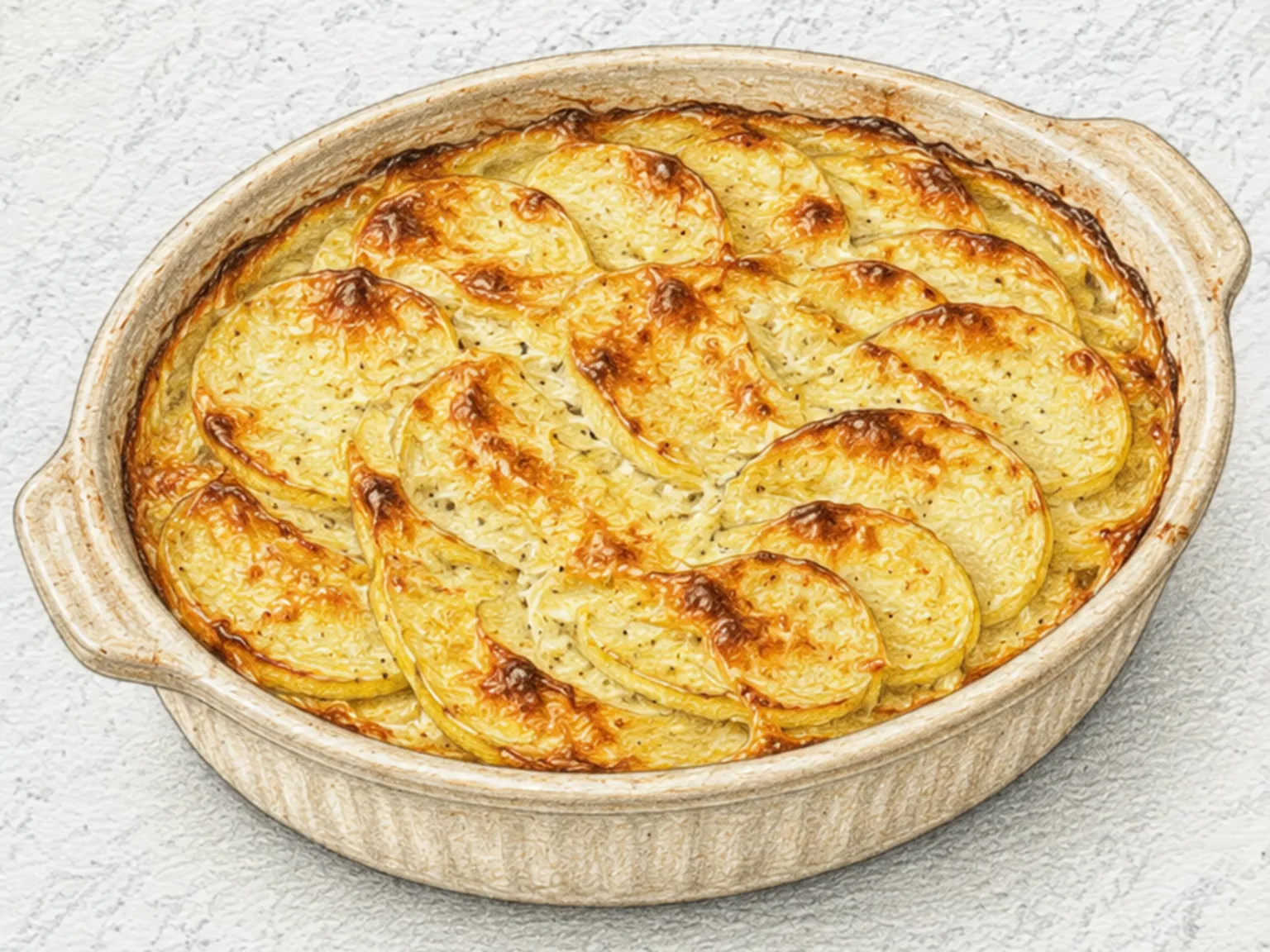
Dauphinoise potatoes are a French gratin made by layering uniformly thin potato slices - cut to two millimeters - in a buttered baking dish, with a warm mixture of heavy cream, milk, minced garlic, and salt poured between each layer. Rinsing and drying the sliced potatoes removes excess surface starch for a cleaner result. Grated Gruyère cheese goes on top before the dish bakes at 170 degrees Celsius for fifty-five to sixty minutes, during which the potatoes absorb the cream and turn meltingly tender beneath a golden crust. Resting the gratin for ten minutes after baking lets the layers firm up enough to hold their shape when sliced. Keeping the potato thickness consistent ensures every slice cooks at the same rate.
Adjust Servings
Instructions
- 1
Preheat oven to 170C and butter a baking dish.
- 2
Slice potatoes to 2 mm, rinse, and pat dry.
- 3
Warm cream, milk, minced garlic, and salt in a saucepan.
- 4
Layer potatoes in the dish, pouring cream mixture between layers.
- 5
Top with cheese and bake 55-60 minutes until golden.
- 6
Rest 10 minutes before serving so layers hold together.
As an Amazon Associate, we may earn from qualifying purchases.
Tips
Nutrition (per serving)
More Recipes

Potato Au Gratin
Potato Au Gratin is a French baked potato dish where thinly sliced potatoes are layered with cream and Gruyere cheese, then baked until the top forms a deep golden crust. The potatoes must be sliced to a uniform two to three millimeters - a mandoline slicer ensures consistent thickness so every layer cooks at the same rate. A mixture of heavy cream and milk warmed gently with garlic is poured between each layer of potatoes, where it meets the potato starch and thickens into a binding sauce that holds the layers together. Gruyere is the classic cheese choice - it melts into long, stretchy strands and carries a nutty, slightly sweet flavor. It is distributed between the layers for internal richness and piled on top for the signature golden crust. After about fifty minutes at 180 degrees Celsius, the cream bubbles around the edges, the potatoes turn completely tender, and the surface cheese crisps into a crackling, browned cap.

Lobster Thermidor
Lobster thermidor is a French dish in which boiled lobster meat is cut into bite-size pieces, folded into a cream sauce made from shallots sauteed in butter, white wine reduced by half, Dijon mustard, and heavy cream, then packed back into the cleaned shell and topped with grated Parmesan for a brief gratin under high heat. Reducing the wine concentrates its acidity, and the mustard adds a sharp undercurrent that prevents the cream sauce from tasting flat. Baking at 220 degrees Celsius for only six to eight minutes gives the cheese a golden crust while keeping the lobster meat tender. Lemon juice stirred into the filling at the last moment lifts the richness. The dramatic presentation in the shell makes it a natural choice for entertaining.

Potato Leek Soup
Potato leek soup is a French home-style cream soup made by sweating leeks and onion in butter over low heat, simmering with diced potatoes in chicken stock, and blending until velvety smooth. Cooking the leeks slowly is essential - it dissolves their raw sharpness into a sweet, mellow base that carries the entire soup. The potato starch provides natural body without any added thickener, and an immersion blender produces a seamless, silky texture. Heavy cream stirred in at the end adds a layer of richness and rounds out the flavor. The soup can be served hot for a comforting meal or chilled as vichyssoise for a refined summer starter.

Vichyssoise (French and potato soup)
Vichyssoise is a chilled French leek and potato soup blended smooth with cream.

Fruit Clafoutis (Baked Custard with Fresh Fruit)
Clafoutis is a rustic French baked dessert that suspends fresh seasonal fruit in a thin custard batter and bakes it until the edges puff golden and the center sets to a silky cream. The batter, close to crepe batter in consistency, is made from eggs, milk, flour, and sugar whisked until smooth. Traditionally, unpitted cherries are used because the pits release a faint almond-like fragrance during baking that deepens the overall flavor. Strawberries, blueberries, and plums work equally well, their juices concentrating in the oven heat and creating pockets of intense sweetness against the mild custard. Because the method is little more than mixing and pouring, it requires no special technique. Served warm with a dusting of powdered sugar, the contrast between the crisp rim and the soft interior is what makes this dessert memorable.

Sweet Potato Cream Cheese Galette
Cold butter is rubbed into flour to create a flaky pastry shell, which is rolled flat, spread with a blend of mashed sweet potato, cream cheese, honey, and cinnamon, and then folded at the edges into a free-form galette. The sweet potato contributes mellow sweetness while cream cheese adds a tangy counterpoint, and honey bridges the two into a cohesive filling. Cinnamon provides a warm spice note that suits the autumnal character of the galette. Keeping the butter cold throughout the process is essential for flaky layers - if the dough softens, it should return to the refrigerator immediately. Leaving a four-centimeter border of bare dough around the filling makes the folding step clean and prevents leaking. Drier sweet potato varieties, such as chestnut-type, absorb less moisture and keep the crust from turning soggy during baking. The galette is best served warm, when the pastry is at its crispest and the filling is still soft.