Korean Bellflower Root Pork Stew
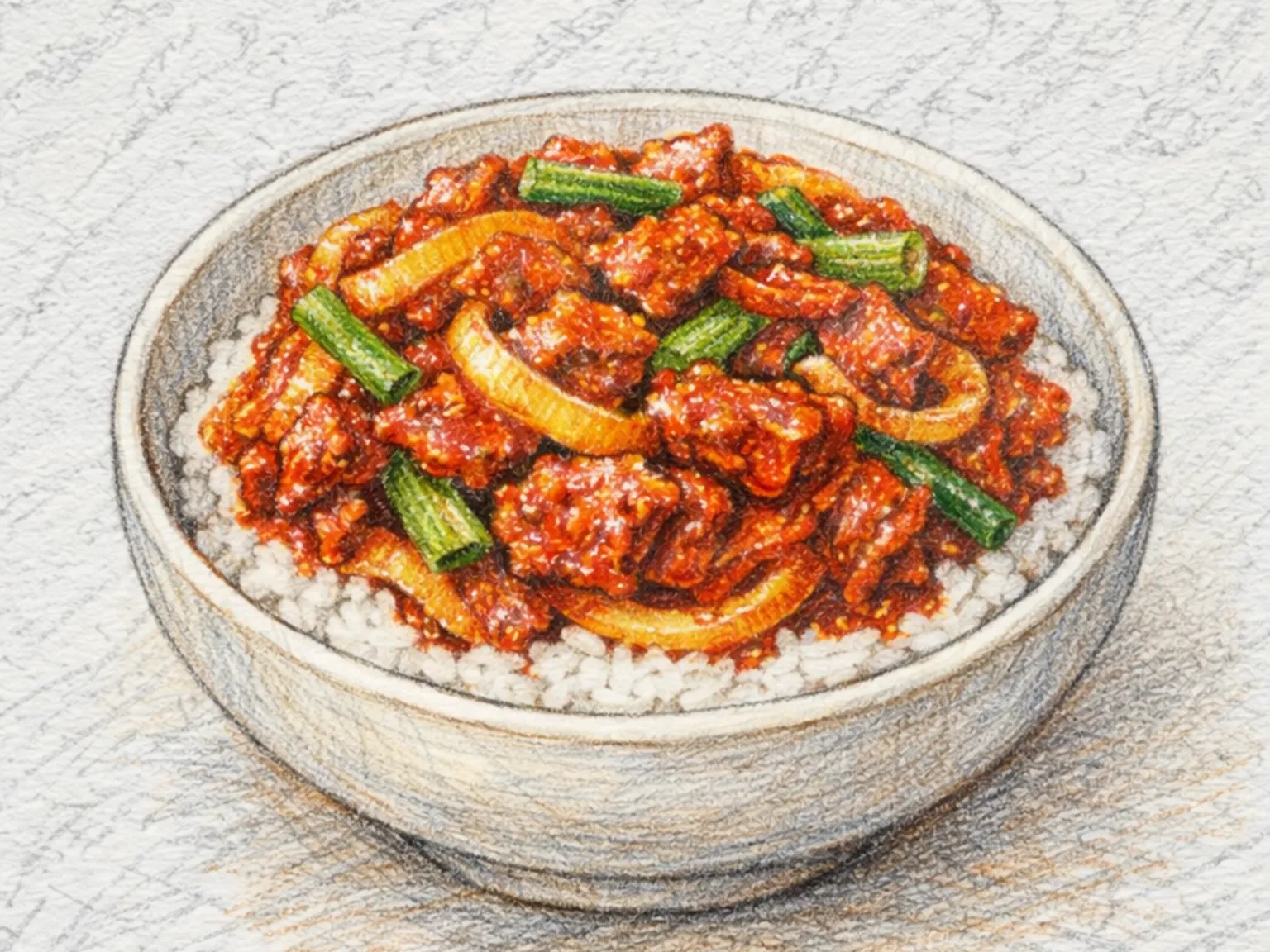
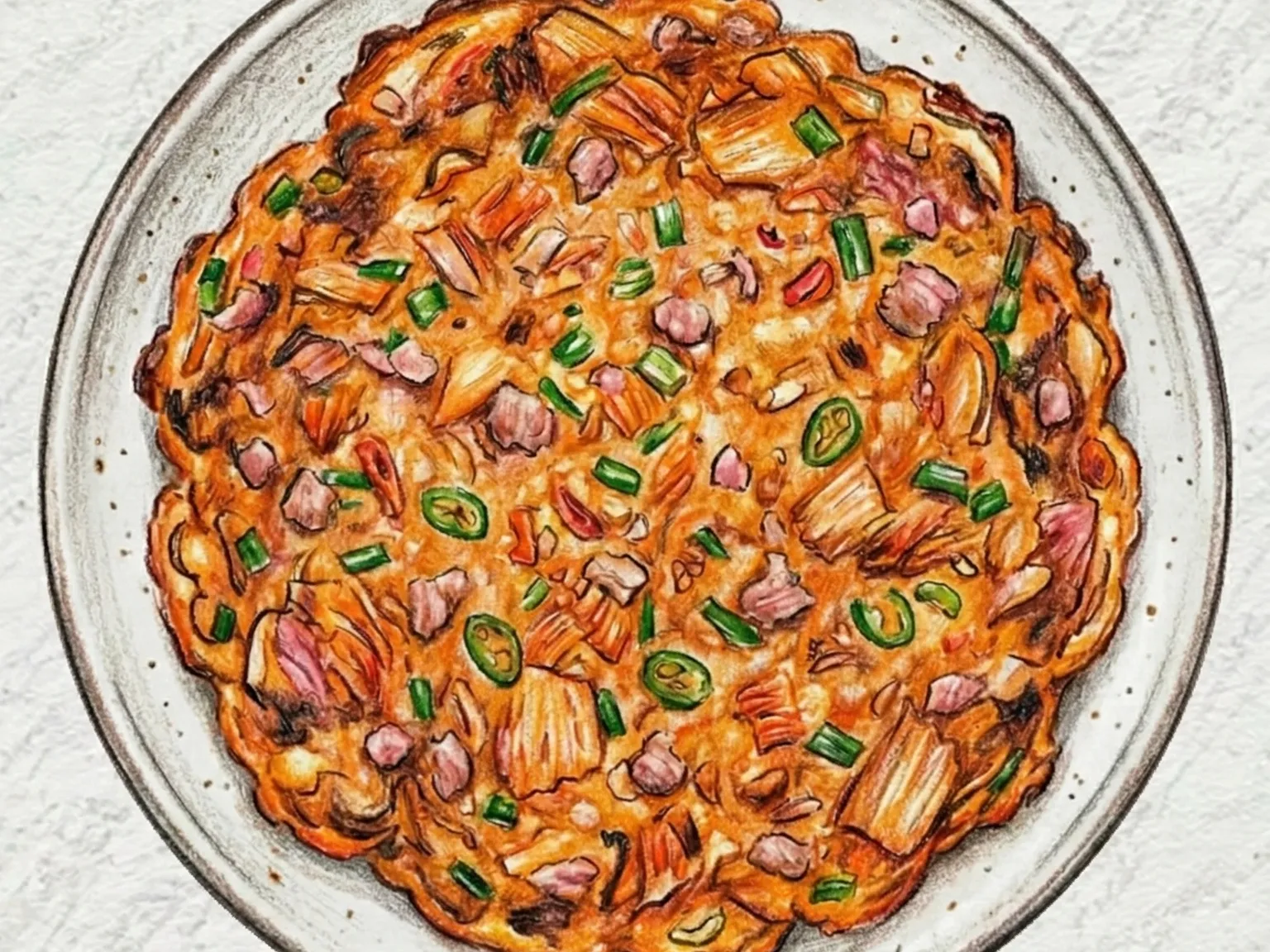
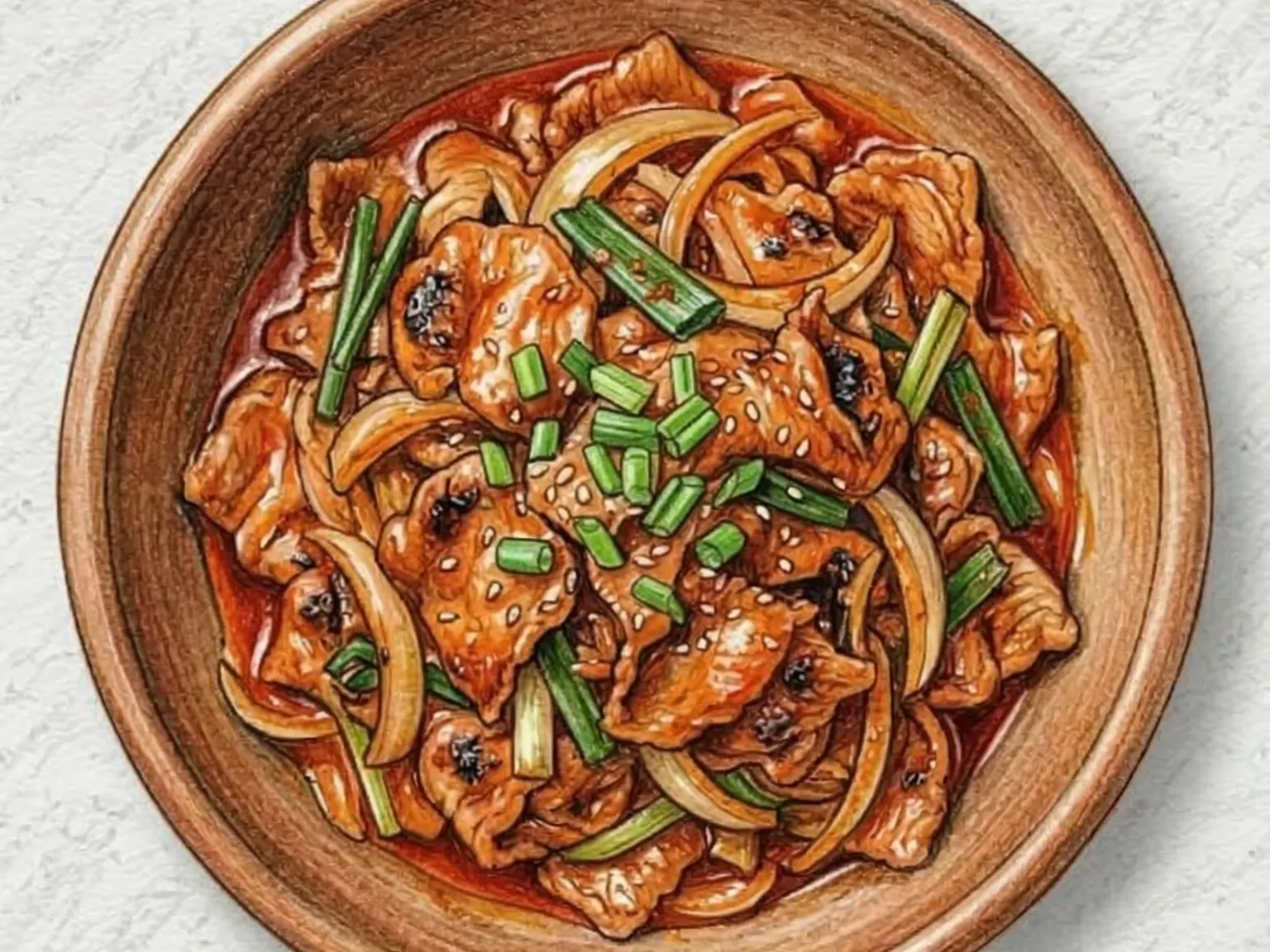
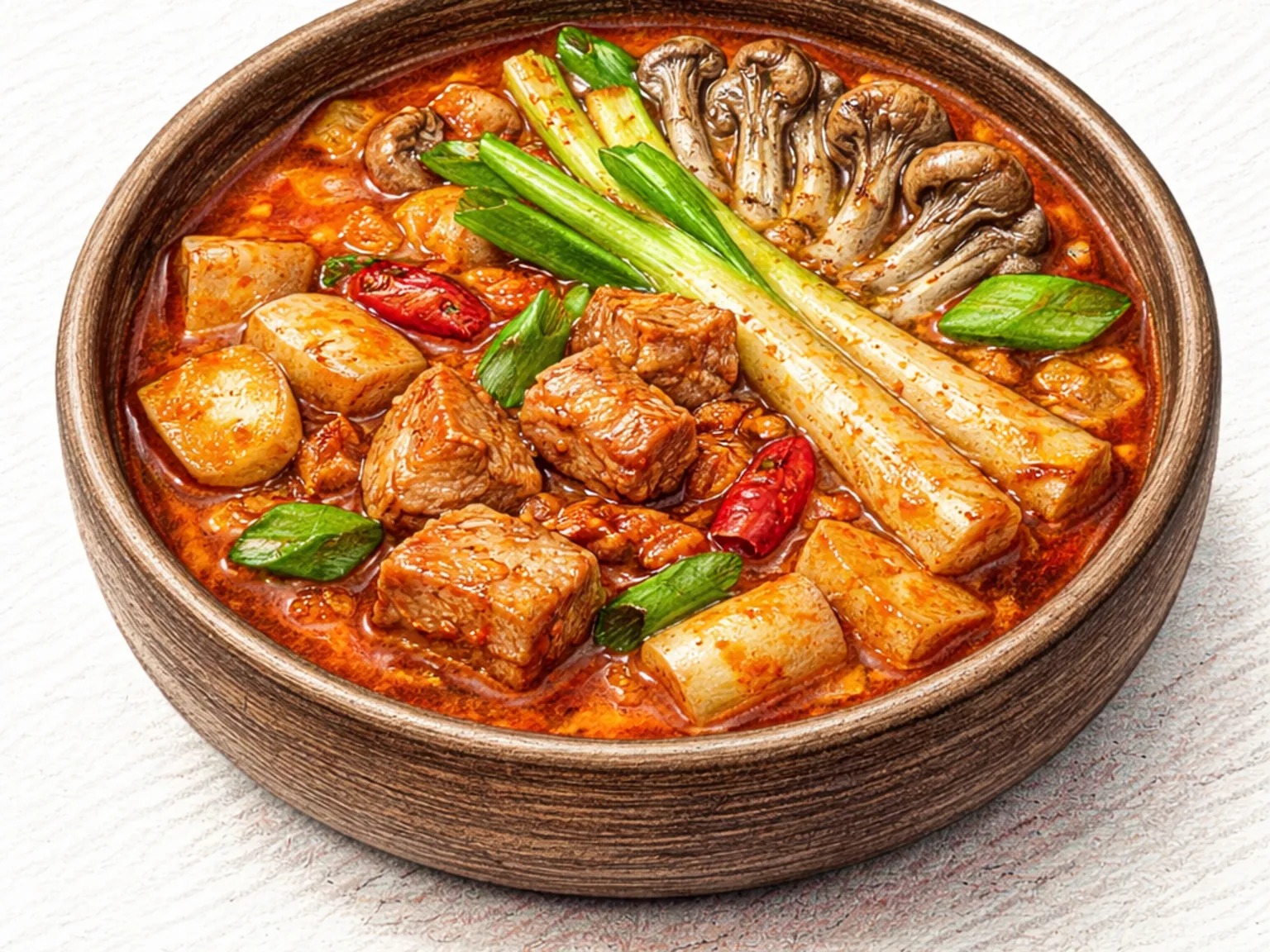
This stew combines pork shoulder and bellflower root in a bold, chili-laced broth made with rice-rinse water. Gochujang, gochugaru, and soup soy sauce build layers of heat and umami, while oyster mushrooms add meaty depth. The bellflower root's slight bitterness cuts through the richness of the pork, keeping each spoonful clean on the palate. With generous chunks of meat and vegetables, it works well as a standalone main dish over steamed rice.
Adjust Servings
Instructions
- 1
Peel bellflower root, split lengthwise, gently pound, and cut into 4 cm pieces.
- 2
Marinate pork with gochujang, gochugaru, and half the garlic for 10 minutes.
- 3
Add onion and pork to a pot and stir-fry over medium heat for 3 minutes.
- 4
Pour in rice-rinse water, add soup soy sauce and remaining garlic, then simmer 10 minutes.
- 5
Add bellflower root and oyster mushrooms; simmer 7 more minutes.
- 6
Finish with green onion for 1 minute and serve immediately.
As an Amazon Associate, we may earn from qualifying purchases.
Tips
Nutrition (per serving)
More Recipes

Korean Bellflower Root Tofu Stew
A hearty jjigae that pairs bellflower root (deodeok) with soft tofu in a rice-rinse water base. The broth gets its complex flavor from a blend of gochujang and doenjang, creating a spicy yet earthy profile. Bellflower root contributes a distinctly bitter-sweet, herbaceous note along with a firm, slightly chewy texture. The rice-rinse water thickens the broth naturally and mellows the stronger flavors into a balanced, warming bowl.

Korean Pork Kimchi Stew (Fermented Kimchi & Pork Shoulder)
Pork kimchi jjigae is one of the most beloved home-cooked Korean stews, built on aged kimchi and pork shoulder. The marbled fat from the pork shoulder melts into the broth, balancing the kimchi's sharp acidity with richness. Tofu and onion bulk up the pot, while soup soy sauce and chili flakes season the liquid. The riper and more sour the kimchi, the better this stew tastes - it is the ideal use for old kimchi.

Korean Zucchini Pork Stew
Aehobak-jjigae is a home-style Korean stew that builds bold flavor from modest ingredients - pork, zucchini, and a spoonful each of gochujang and gochugaru. The pork is stir-fried first with garlic to render fat and build a savory fond at the bottom of the pot, then the chili paste is toasted into the fat before anchovy broth goes in. This layering technique gives the broth a depth that plain boiling cannot achieve. The zucchini cooks in the simmering liquid for just six minutes, softening into the stew while keeping enough structure to hold its half-moon shape. The broth finishes spicy and slightly sweet from the pork fat and vegetable sugars, with enough body to soak into a bowl of rice. A reliable weeknight meal that requires no special ingredients beyond a basic Korean pantry.

Korean Galchi Kimchi Jjigae (Hairtail Kimchi Stew)
This stew brings together hairtail fish and aged kimchi in an anchovy-kelp stock, creating a layered broth where the oily richness of the fish meets the deep tanginess of well-fermented kimchi. Korean radish and onion add body to the soup, while gochugaru and soup soy sauce round out the seasoning. The hairtail flesh breaks down gently during cooking, releasing its natural umami into every spoonful.

Korean Deodeok Honey Latte (Bellflower Root Latte)
Deodeok honey latte is made by peeling and chopping bellflower root, blanching it for two minutes to reduce bitterness, then blending it with a portion of milk and honey into a smooth base. The base is combined with the remaining milk and warmed gently, then finished with condensed milk, vanilla extract, and a pinch of salt for a rich, creamy body. The deodeok's distinctive earthy character persists beneath the layers of sweetness, giving this latte an unusual herbal depth, and a light dusting of cinnamon ties the flavors together.

Korean Grilled Deodeok Root
Deodeok-gui is a traditional Korean mountain vegetable dish where peeled deodeok (codonopsis lanceolata) roots are pounded flat with a mallet, coated in a paste of gochujang, gochugaru, honey, sesame oil, and garlic, then grilled over high heat. The pounding step is critical: it breaks down the tough fibers so the seasoning absorbs evenly and the root develops a pleasant chewiness instead of remaining stringy. Deodeok has a distinctive bittersweet, slightly medicinal aroma that sits in balance between the fermented spice of gochujang and the sweetness of honey. Quick grilling at high temperature chars the glaze just enough to add smokiness while keeping the interior moist, and toasted sesame seeds scattered on top contribute nuttiness to the wild herb's earthy character.