Korean Bellflower Root & Eggplant Soy Stir-fry
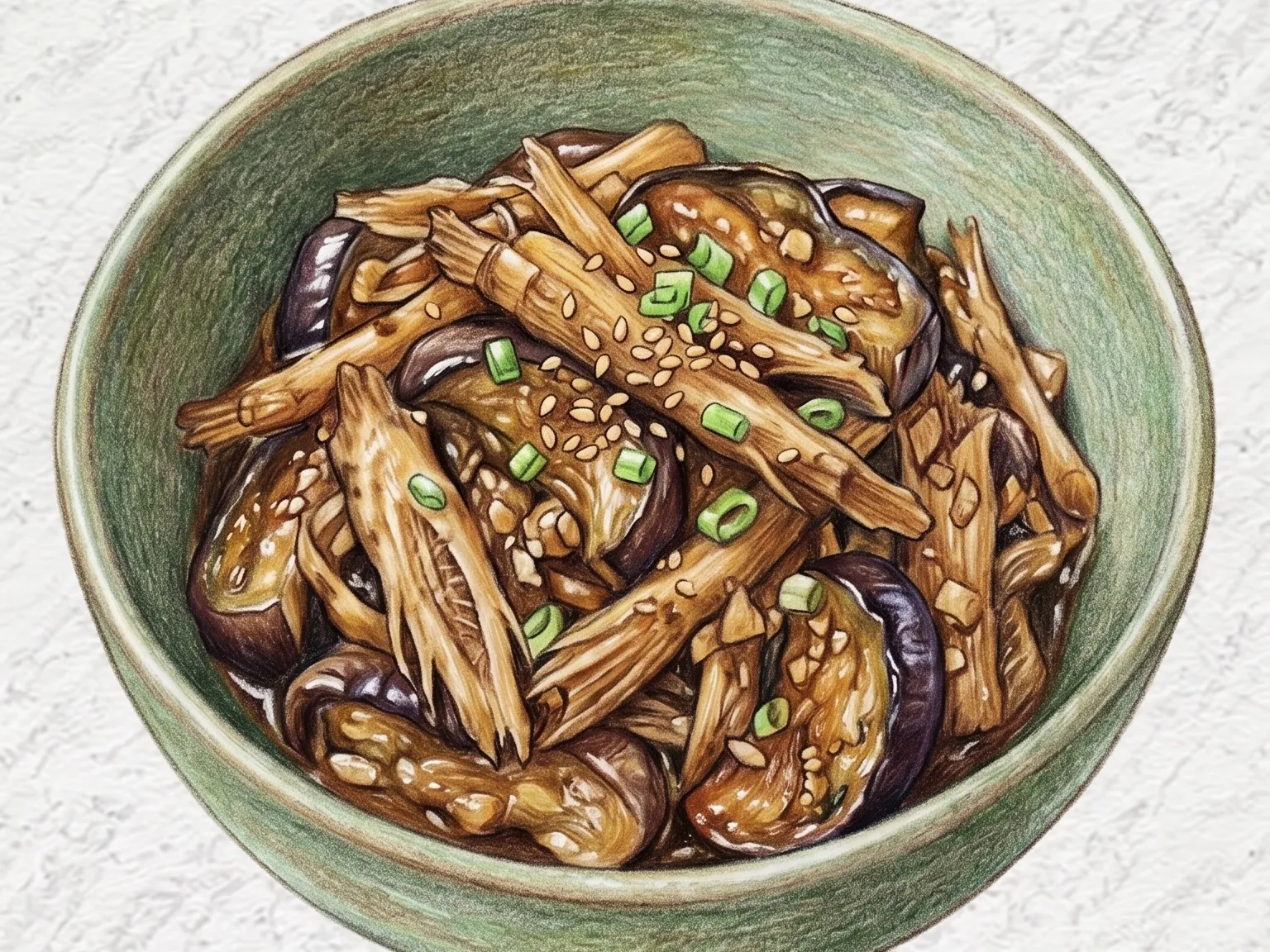
Deodeok gaji ganjang bokkeum is a Korean vegetable stir-fry that brings together deodeok root and eggplant in a soy-based seasoning sauce. The two main ingredients offer a clear textural contrast: deodeok has a firm, fibrous chew that resists the heat and holds its structure throughout cooking, while eggplant softens and collapses into a silky, yielding mass as it cooks. A dressing of soy sauce, sesame oil, and minced garlic ties the two together, tempering the slightly earthy, mildly bitter quality of the deodeok while drawing out the natural sweetness latent in both vegetables. The order in which the ingredients go into the pan matters. Eggplant absorbs oil readily and needs more time to soften properly, so it goes in first. Adding deodeok too early would leave it overdone by the time the eggplant reaches the right texture. The fermented umami of soy sauce and the glutamates naturally present in both vegetables layer together to produce depth in the finished dish without any meat. If the deodeok tastes particularly bitter, soaking the peeled pieces in lightly salted water for ten minutes before cooking draws out a significant portion of the bitterness. Salting the eggplant and letting it sit briefly before cooking removes excess moisture, reducing the amount of oil it absorbs and producing a cleaner, firmer texture in the finished stir-fry. The dish can be served directly over hot rice or presented as a standalone banchan. Like most soy-seasoned vegetable preparations, the flavors deepen and mellow overnight in the refrigerator, making leftovers worth keeping.
Adjust Servings
Instructions
- 1
Peel bellflower root, shred lengthwise, soak in salted water for 5 minutes, then drain.
- 2
Slice eggplant into half-moons, onion into strips, and chili diagonally.
- 3
Mix soy sauce, cooking wine, syrup, and minced garlic to make the stir-fry sauce.
- 4
Heat oil and stir-fry bellflower root for 2 minutes first to release aroma.
- 5
Add eggplant and onion, stir-fry 3 minutes, then add sauce and cook 3 more minutes.
- 6
Finish with chili and perilla oil, tossing for 1 minute until glossy.
As an Amazon Associate, we may earn from qualifying purchases.
Tips
Nutrition (per serving)
Goes Well With

Korean Bacon Kimchi Fried Rice
Bacon kimchi fried rice takes the most common Korean leftover combination - cold rice and aging kimchi - and substitutes rendered bacon fat for the traditional sesame oil base. The bacon goes into a cold pan and cooks slowly so the fat renders completely before the meat crisps, creating a pool of smoky drippings that replace cooking oil entirely. Well-fermented kimchi, squeezed of excess juice and chopped roughly, goes into the hot fat and sizzles until its edges caramelize and the sharp lactic tartness mellows into a deeper, roasted sourness. Day-old rice is pressed flat against the pan to develop a crust reminiscent of nurungji - the scorched rice layer that fried rice enthusiasts seek. Soy sauce and a pinch of sugar season the dish, though both should be used in small amounts to avoid masking the interplay between the bacon's smokiness and the kimchi's fermented character. A fried egg on top, with a yolk still runny, becomes a sauce when broken and stirred through the rice. Bacon became a standard Korean grocery item in the 2000s, and this dish has since become a common home-cooking variation, with many cooks preferring its deeper, smokier flavor profile over the sesame oil original.

Korean Potato Salad (Creamy Mashed Potato Ham Cucumber)
Korean potato salad arrived through Japan's yoshoku tradition but developed its own distinct identity in Korean home kitchens. Potatoes are boiled until tender and mashed while still hot, but not to a perfectly smooth consistency - leaving some lumps gives the salad a dual texture of creamy mashed potato and soft, intact chunks that hold together when eaten. Diced ham is pan-seared briefly to render out excess fat before being incorporated, preventing the finished salad from becoming greasy. Cucumber is salted and squeezed to remove water, which keeps the salad from turning watery as it sits. Boiled carrot is mixed in for color and a mild sweetness. The dressing is mayonnaise adjusted with sugar and salt, resulting in a distinctly sweet-creamy profile that is noticeably different from Western versions of the dish. Chilling the assembled salad for at least one hour before serving allows the seasoning to equalize throughout the mixture, improving the flavor considerably compared to eating it straight away. The salad is served as a banchan alongside rice, and it is also commonly spread inside sandwiches.

Korean Rice Cake Soup (New Year Sliced Rice Cake Beef Broth)
Tteokguk is the soup that marks the Korean New Year - eating a bowl is said to add one year to your age, and no Lunar New Year table is complete without it. Thinly sliced oval rice cakes made from garaetteok, a long cylindrical rice cake, are dropped into a clear beef broth that has been carefully skimmed of fat until it gleams. In the hot liquid, the rice cake surfaces soften just enough to release a faint starch that gives the broth the barest hint of body, while the interiors hold a dense, satisfying chew. The broth itself is kept deliberately simple - brisket simmered low and slow, seasoned only with soup soy sauce and salt - so that the rice cakes and their subtle sweetness remain the focus. Beaten egg swirled into the boiling soup forms wispy threads that add a delicate texture, and strips of egg garnish, crushed seaweed, and sometimes sliced scallion complete the bowl. Despite its apparent simplicity, tteokguk carries deep cultural weight: the white color of the rice cakes symbolizes purity and a fresh start, and the round shape of the slices represents coins and wishes for prosperity.

Korean Hot Chili Anchovy Tofu Stew
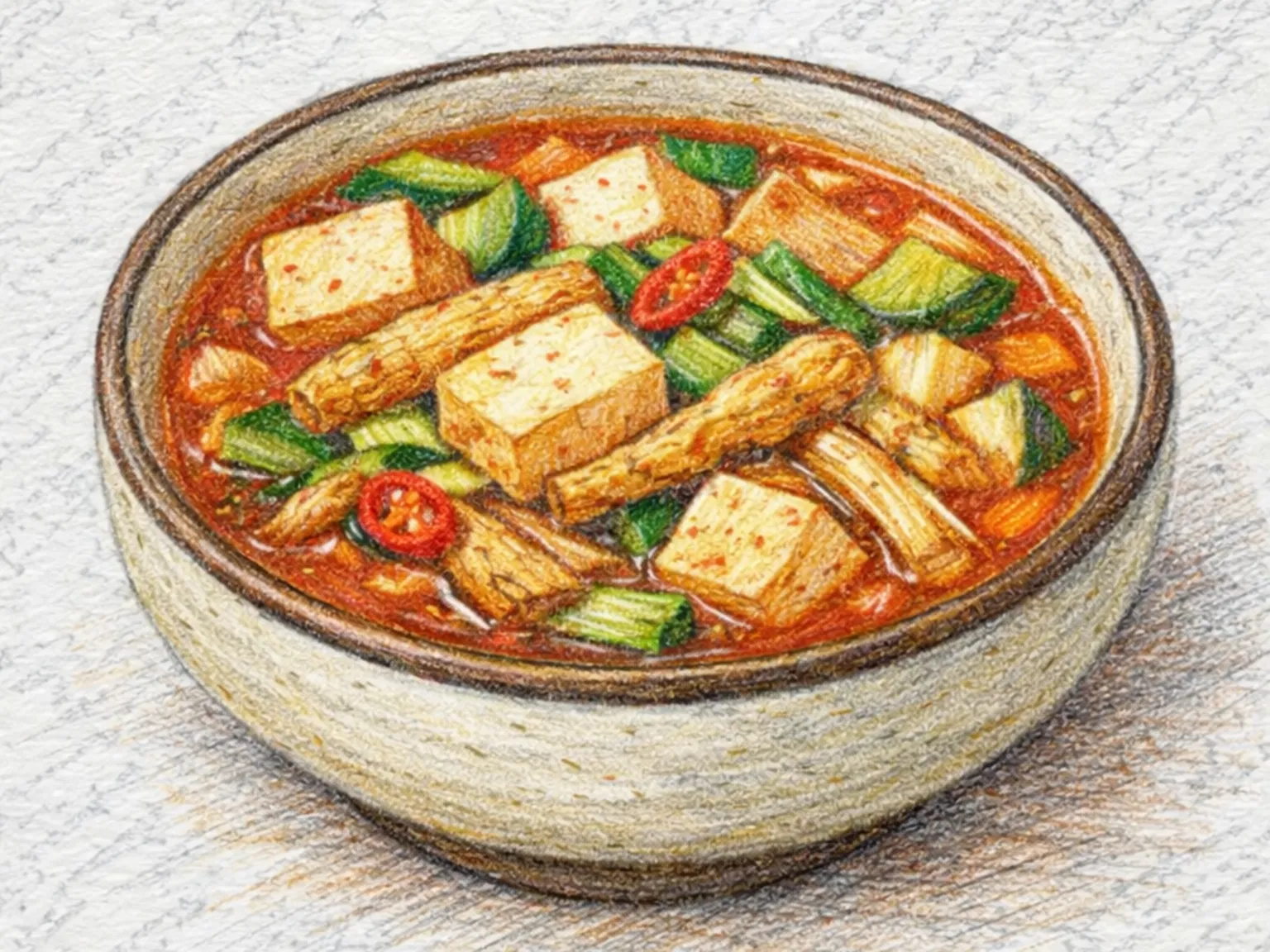
Dried anchovies and cheongyang chilies go into the pot together from the start so the broth itself absorbs the deep, pungent heat rather than the chilies simply floating on top. The anchovies are dry-roasted first to drive off any fishiness before water is added. Two whole cheongyang chilies, left uncut, release a sharp, penetrating spice that builds gradually through the simmer. Gochugaru adds color and layers the heat further, soup soy sauce keeps the seasoning clean, and tofu goes in only after the broth reaches a full boil so the cubes stay firm. The combination of anchovy-based richness and the chilies distinctive biting heat produces a broth that clears the palate without becoming salty.
More Recipes

Korean Bellflower Root & Beef Stir-fry
Deodeok-sogogi-gochujang-bokkeum is a Korean stir-fried side dish of pounded bellflower root and thinly sliced bulgogi-cut beef cooked together in a bold gochujang sauce. Beating the root with a mallet breaks up its dense fibers, increases its surface area, and allows the spicy paste to penetrate deeply, resulting in a texture that is simultaneously crisp and chewy after cooking. The fermented heat of gochujang and the saltiness of soy sauce work together to amplify the meaty richness of the beef, and the thick sauce binds the root and meat into a cohesive whole. Adding sesame oil and toasted sesame seeds at the end layers in a nutty, aromatic finish. Deodeok's faint natural bitterness and herbal fragrance survive the cooking process and create a complexity that distinguishes this dish from standard gochujang stir-fries. It is a boldly flavored side dish that pairs insistently with plain steamed rice.

Korean Mushroom and Vegetable Stir-Fry
Mushroom-yachae-bokkeum stir-fries king oyster and oyster mushrooms with broccoli and carrot in a light soy-oyster sauce seasoning. Harder vegetables go into the hot pan first to get a head start, then the mushrooms join and pick up the sauce. High heat is essential because mushrooms release water quickly - fast cooking evaporates that moisture and concentrates the umami rather than steaming the ingredients. A finish of sesame oil ties the flavors together in a low-calorie dish that draws its depth entirely from the mushrooms' natural savoriness.

Korean Blue Crab Soy Stir-Fry
Kkotge ganjang bokkeum is a Korean blue crab stir-fry where halved crabs are lightly dusted with flour, pan-seared until the shells turn deep red, then braised briefly under a lid in a sauce of soy sauce, sugar, garlic, ginger, and gochugaru. The flour coating seals in moisture and helps the sweet-salty sauce cling to the shell surface, leaving a sticky, aromatic glaze that is meant to be licked off the fingers. Ginger neutralizes the briny smell that crabs can carry, while scallion and sesame oil are stirred in at the end to build the final aromatic layer. Using live crabs and cooking them immediately after cleaning ensures the meat stays firm and sweet; frozen crabs lose moisture during thawing and produce a noticeably softer result. Scoring the claws before cooking allows the sauce to penetrate the thicker sections of shell.

Korean Gaji Dwaejigogi Bokkeum (Eggplant Pork Stir-fry)
Gaji-dwaejigogi-bokkeum is a Korean stir-fry of eggplant and thinly sliced pork seasoned with garlic and fresh chili. The eggplant absorbs oil and sauce as it cooks, turning silky and melding seamlessly with the pork. Garlic infuses the dish with an intense aroma while the chili adds a clean, sharp heat throughout. Heat management is the key technique: cooking over medium or low heat draws too much moisture from the eggplant and turns the stir-fry into a braise, so keeping the flame high from the start is what gives the eggplant a lightly seared exterior. A combination of soy sauce and gochujang balances salt and spice, and a final drizzle of sesame oil rounds out the flavor with a nutty finish. It is especially flavorful in summer when eggplant is at its seasonal peak, and it is substantial enough to serve over rice as a complete meal.

Korean Stir-Fried Eggplant Banchan
Gaji bokkeum turns eggplant, a vegetable Koreans have cultivated since the Goryeo period, into a quick, oil-glazed banchan where cooking speed matters as much as the seasoning. The eggplant is sliced into half-moons, and the pan must be smoking hot before they go in - any hesitation and the pieces steam rather than sear, collapsing into a soggy mass. High heat with restrained oil produces lightly charred edges while the interior becomes silky and almost custardy, two contrasting textures in the same bite. Soy sauce, garlic, and sesame oil go in during the final thirty seconds, sizzling against the hot surface and coating each piece in a thin, caramelized glaze. The result has a concentrated, clean umami quality that a braised preparation cannot match. Because the spongy cellular structure of eggplant absorbs oil rapidly, starting with too much fat leaves each piece greasy rather than glazed - the dish relies on pan temperature, not oil volume. Korean home cooks return to this recipe as a weeknight banchan precisely because the whole process, from cutting board to table, takes under ten minutes, and the payoff is consistently good.

Korean Napa Cabbage Perilla Stir-fry
Two ingredients carry this dish: baby napa cabbage and ground perilla seeds. Perilla oil goes into the pan first, then cabbage over high heat until just wilted. A splash of water and a measure of soup soy sauce follow, with the lid on for two minutes more. The timing gap between leaf and stem matters here - stems retain a little bite while leaves turn soft, and that contrast is the point of the dish rather than an oversight. Ground perilla seeds go in just before turning off the heat: too early and the nutty fragrance dissipates in the steam; too late and they do not thicken the liquid properly. When done right, the seeds create a pale, creamy sauce that clings to the cabbage and soaks into rice underneath. Salt and pepper are the only other seasoning. It keeps well cold and travels without issue in a lunchbox.