Korean Spicy Bellflower Root Chewy Noodles
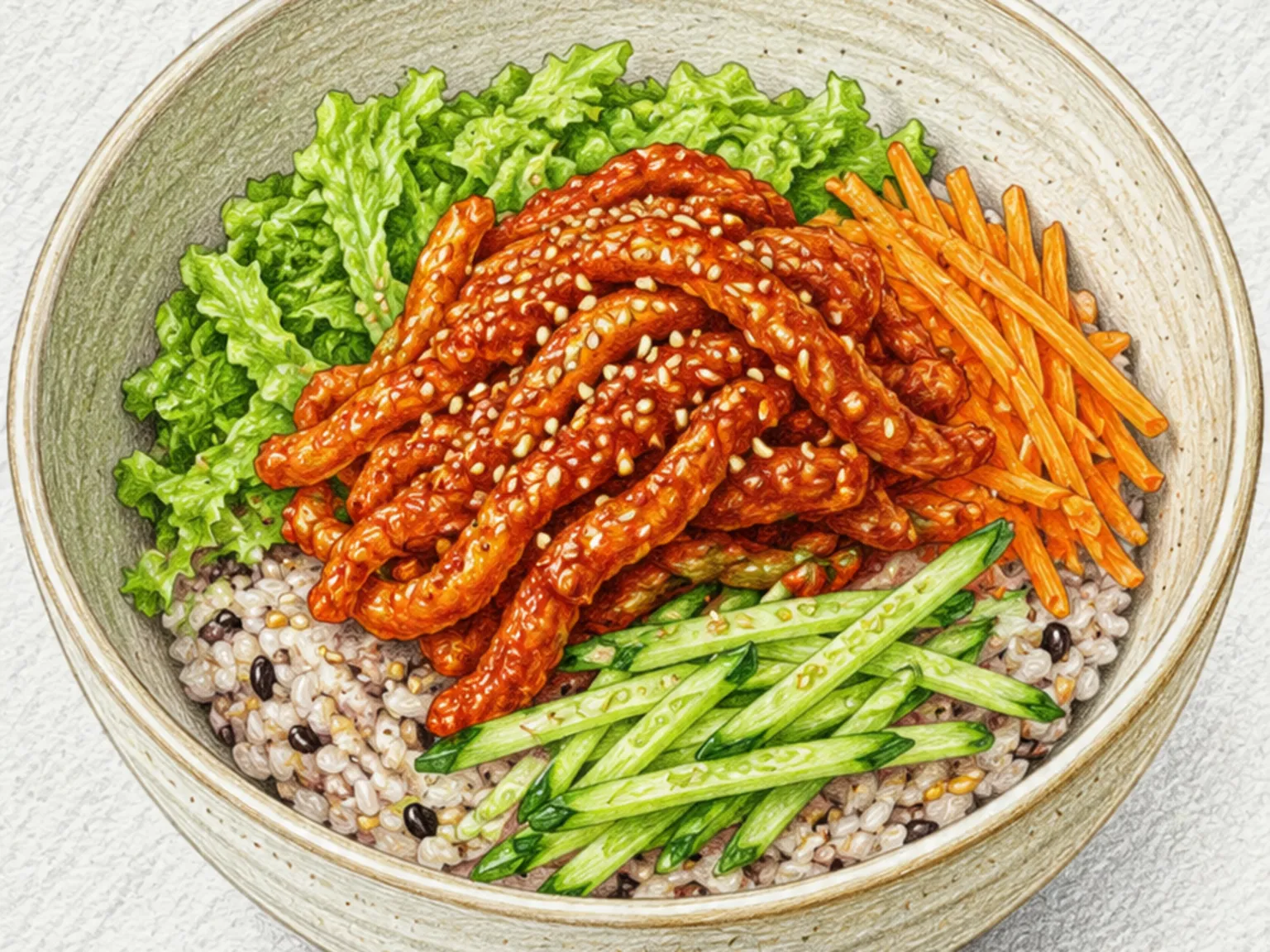
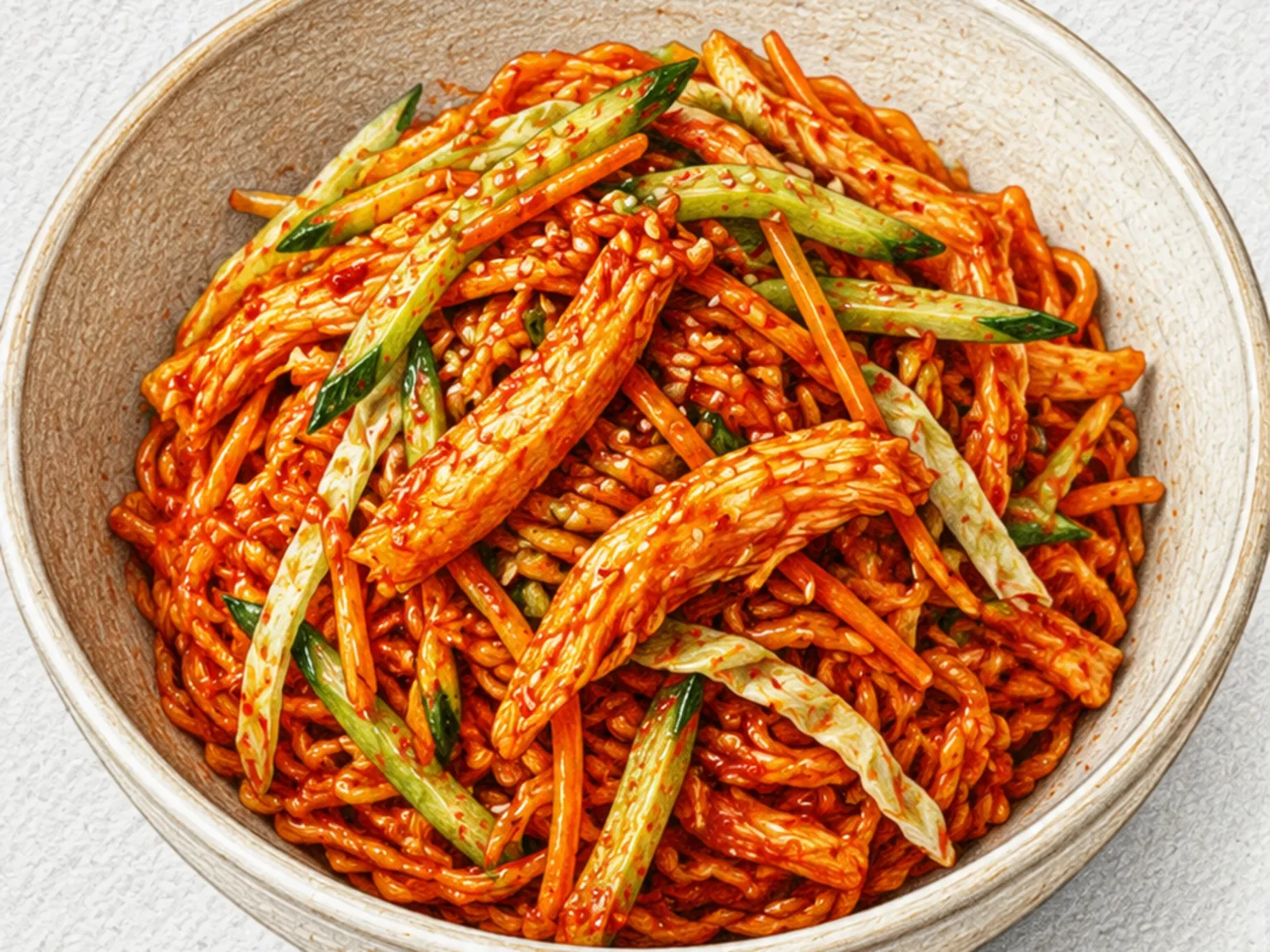
Deodeok gochujang jjolmyeon is a spicy noodle dish that combines the aromatic bitterness of bellflower root with gochujang-dressed chewy jjolmyeon noodles. Lightly pounding the peeled deodeok loosens its fibers, releasing its distinctive herbal fragrance and softening the texture. A brief salt cure draws out moisture and reduces bitterness, allowing the seasoning to penetrate more effectively. The sauce - gochujang blended with vinegar and oligosaccharide syrup - balances heat with a tangy edge and subtle sweetness that complements the root's character. Julienned cabbage, carrot, and cucumber provide a crisp, fresh layer between the dense noodles and the fibrous deodeok.
Adjust Servings
Instructions
- 1
Peel bellflower root, lightly pound it, and shred finely.
- 2
Season deodeok with a pinch of salt for 5 minutes, then squeeze moisture out.
- 3
Thinly slice cabbage, carrot, and cucumber.
- 4
Mix gochujang, vinegar, syrup, and garlic to make the sauce.
- 5
Boil noodles for 4 minutes, rinse under cold water, and drain.
- 6
Combine noodles, vegetables, deodeok, and sauce, then toss vigorously and serve.
As an Amazon Associate, we may earn from qualifying purchases.
Tips
Nutrition (per serving)
More Recipes

Korean Spicy Chewy Noodles
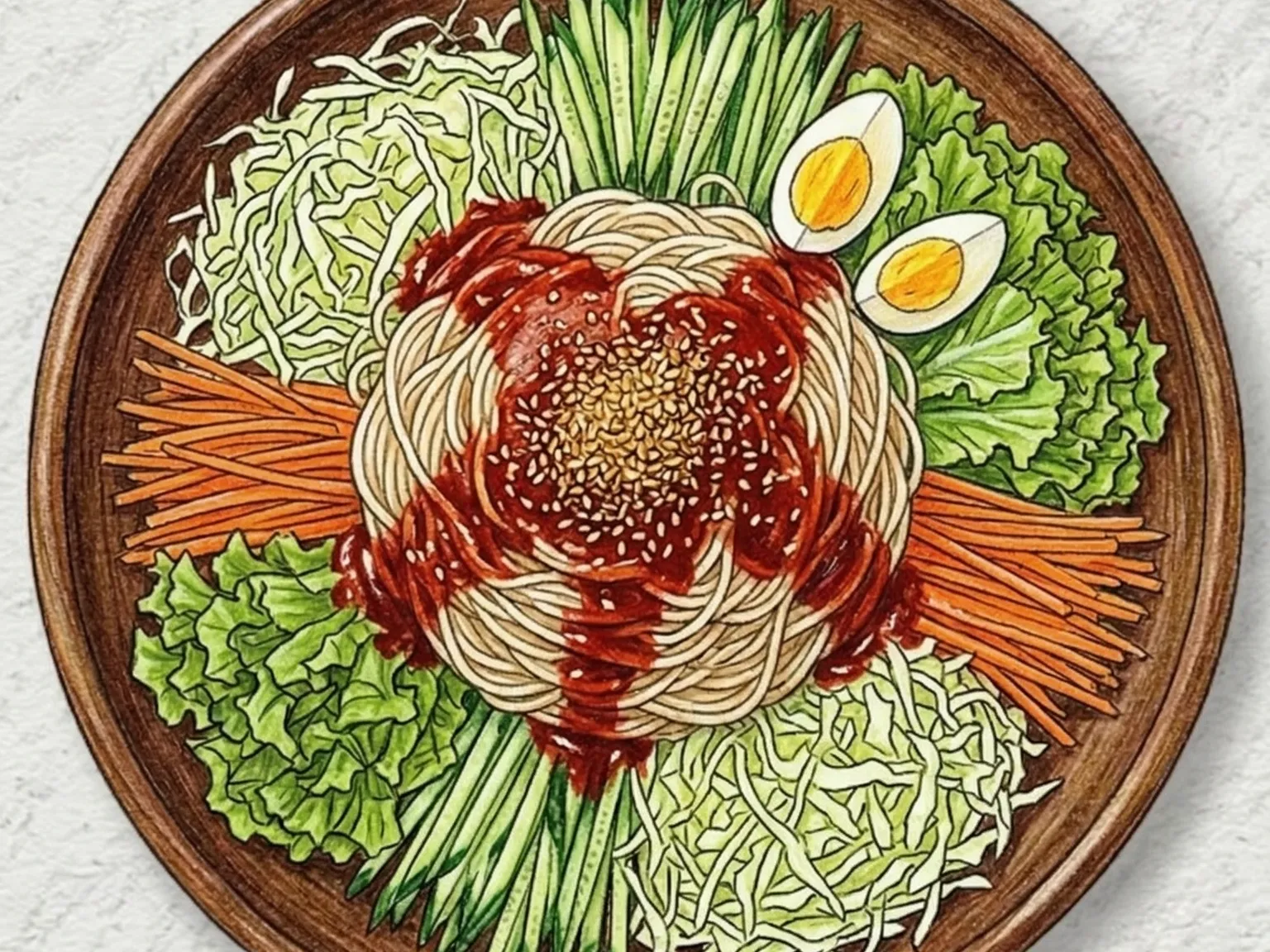
Jjolmyeon is a Korean cold noodle dish built around unusually thick, springy wheat noodles that were accidentally invented at an Incheon noodle factory in the 1970s. The noodles are boiled, rinsed in ice water to firm up their chewy texture, then dressed in a sweet-sour-spicy sauce made from gochujang, vinegar, sugar, soy sauce, and sesame oil. Shredded cabbage and julienned cucumber are chilled separately and piled on top, giving each bite a crisp contrast to the bold sauce. A halved boiled egg adds a creamy counterpoint to the heat. The dish is served cold and eaten after thorough mixing, making it a go-to summer meal and late-night snack across Korea.

Korean Beef Brisket Jjolmyeon
Seared beef brisket crowns a bowl of chewy jjolmyeon noodles dressed in a spicy gochujang sauce. The brisket is cooked fast over high heat so the outside crisps while the marbled fat inside renders just enough to leave each slice rich and fragrant. That beefy aroma mingles with the sweet-spicy dressing, elevating what is already a bold noodle dish. Jjolmyeon's signature rubbery chew traps sauce in every crevice, ensuring consistent flavor from the first bite to the last. Julienned cucumber and a halved boiled egg are the standard accompaniments, adding cool crunch and mild richness. Bean sprouts or perilla leaves can be tossed in for extra texture. The dish works equally well as a refreshing summer meal or a satisfying late-night bowl.

Korean Bulgogi Jjolmyeon (Marinated Beef on Chewy Spicy Noodles)
Bulgogi jjolmyeon tops springy, chewy jjolmyeon noodles with thinly sliced beef that has been marinated in soy sauce, sugar, and sesame oil, then quickly stir-fried over high heat. The noodles' intense elasticity and the beef's sweet-savory glaze come together for a bowl that satisfies on both texture and flavor. A spicy-tangy sauce of gochujang, soy sauce, and vinegar coats the noodles, counterbalancing the sweetness of the bulgogi. Shredded cabbage and carrot add crisp contrast, while a halved boiled egg tempers the overall heat. Cooking the beef fast over high flame minimizes moisture loss and keeps the slices from toughening.

Korean Spicy Pork Mixed Noodles
Jeyuk bibim-guksu tops cold mixed noodles with stir-fried spicy pork, combining two popular Korean dishes into one bowl. Pork shoulder is marinated in gochujang and gochugaru, then seared quickly so the edges caramelize while the inside stays moist. Shredded cabbage and onion provide a crisp contrast, and soy sauce with sugar balances the heat with savory sweetness. The temperature contrast between chilled somyeon and hot, sizzling pork creates a distinctive eating experience, finished with a drizzle of sesame oil for a nutty send-off.

Korean Bellflower Root & Beef Stir-fry
Deodeok-sogogi-gochujang-bokkeum is a Korean stir-fry of pounded bellflower root and thinly sliced beef in a bold gochujang sauce. Pounding the root splits its fibers, allowing the spicy-sweet paste to penetrate deeply and giving each piece a crisp yet chewy texture. The beef adds a layer of meaty richness that melds with the fermented chili paste. It is a robust, highly flavorful dish that pairs exceptionally well with plain steamed rice.

Korean Vinegared Bellflower Root Pickle
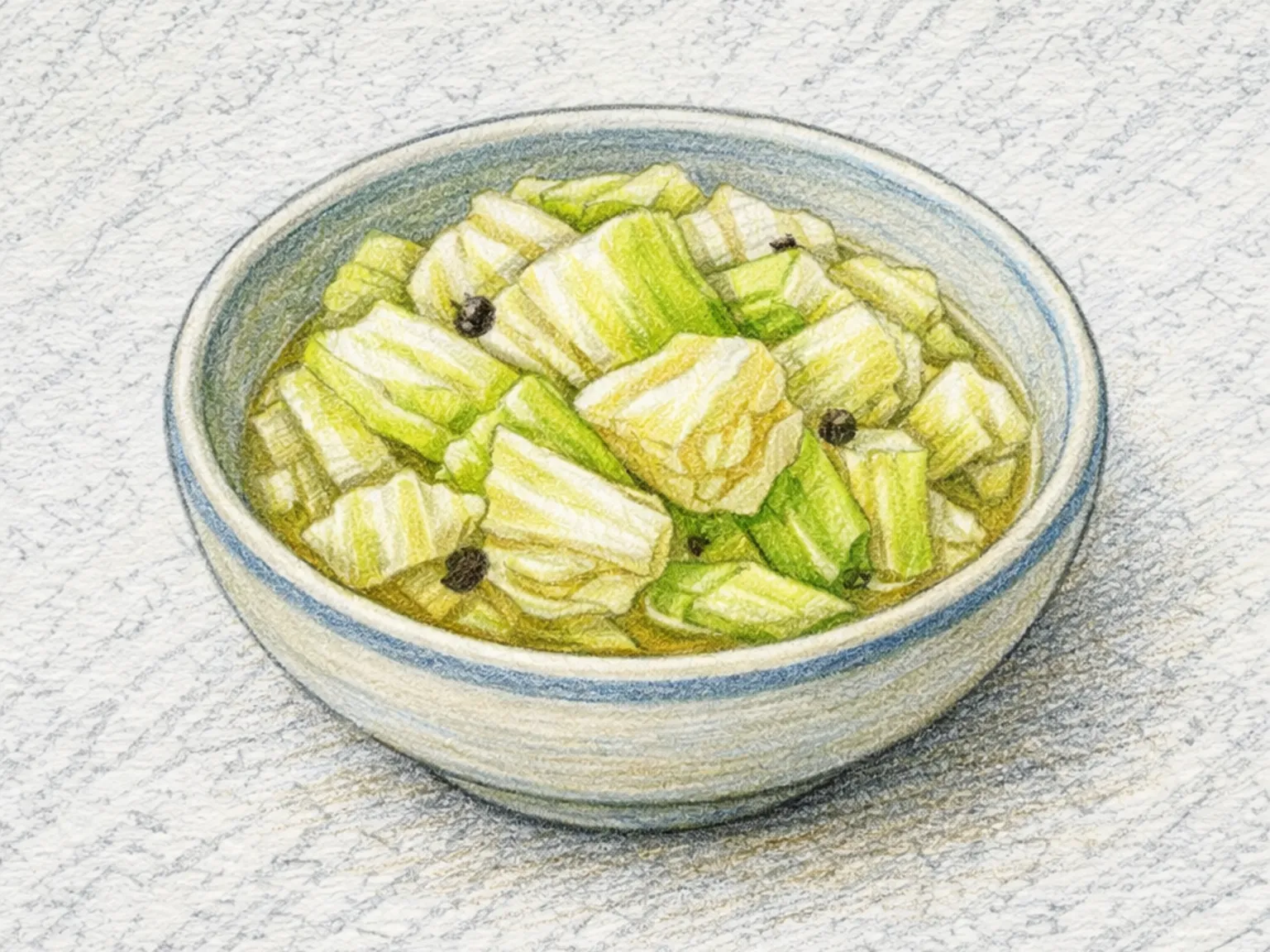
Deodeok chojeolim is a Korean vinegar pickle of bellflower root, prepared by peeling, splitting, and gently pounding the roots flat, then soaking them in a cooled brine of vinegar, water, sugar, and salt. A brief ten-minute salting before rinsing draws out the root's inherent bitterness while leaving its earthy, aromatic fragrance intact. The brine must be fully cooled before pouring to preserve the root's distinctive chewy, almost springy texture. After one day of refrigeration the pickle is dressed with a light toss of gochugaru and sesame oil just before serving, adding a spicy warmth and nutty finish. Served chilled, this side dish offers a rare combination of tangy acidity and deep root-vegetable aroma.