Korean Bellflower Root & Beef Stir-fry
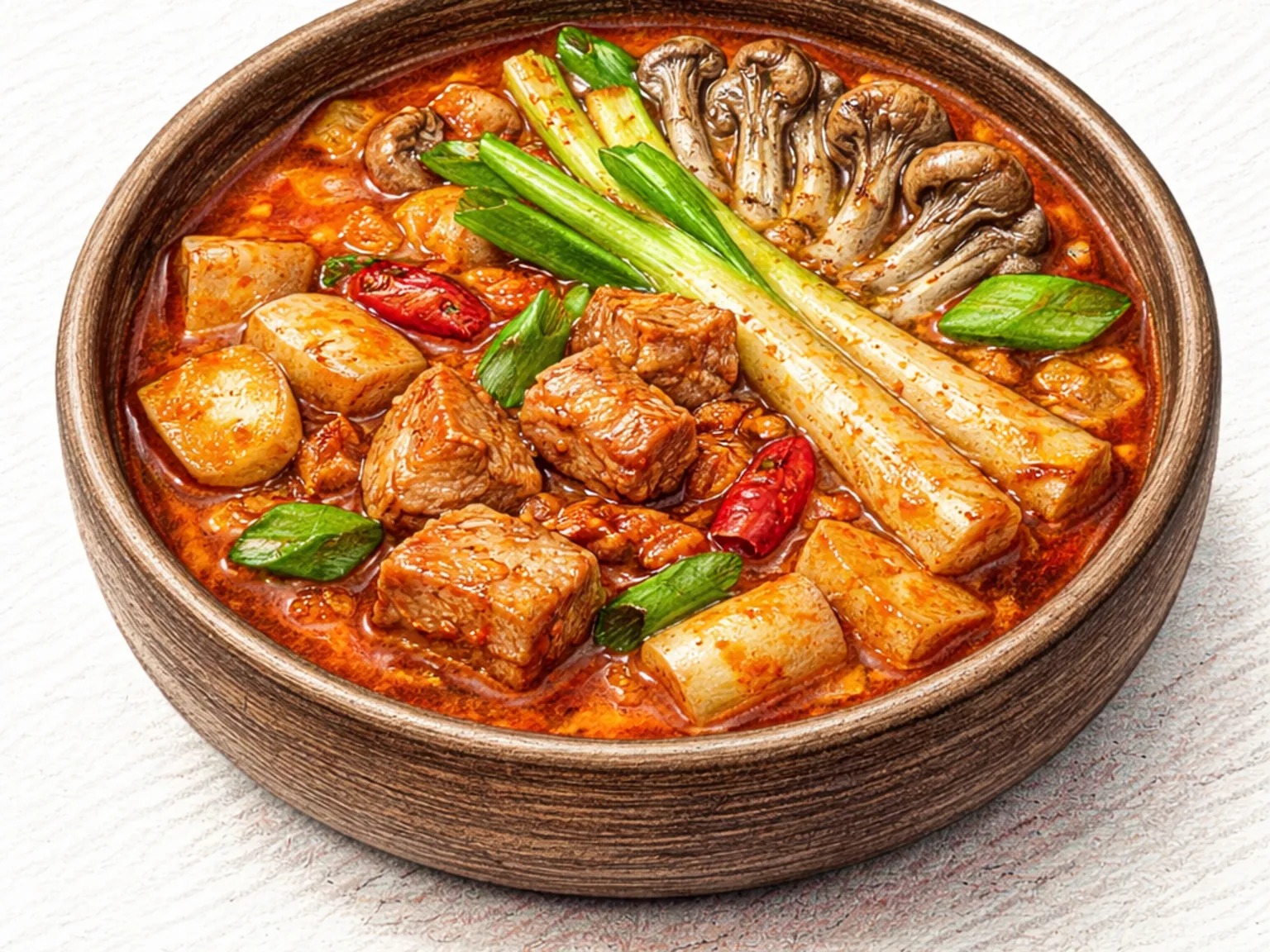
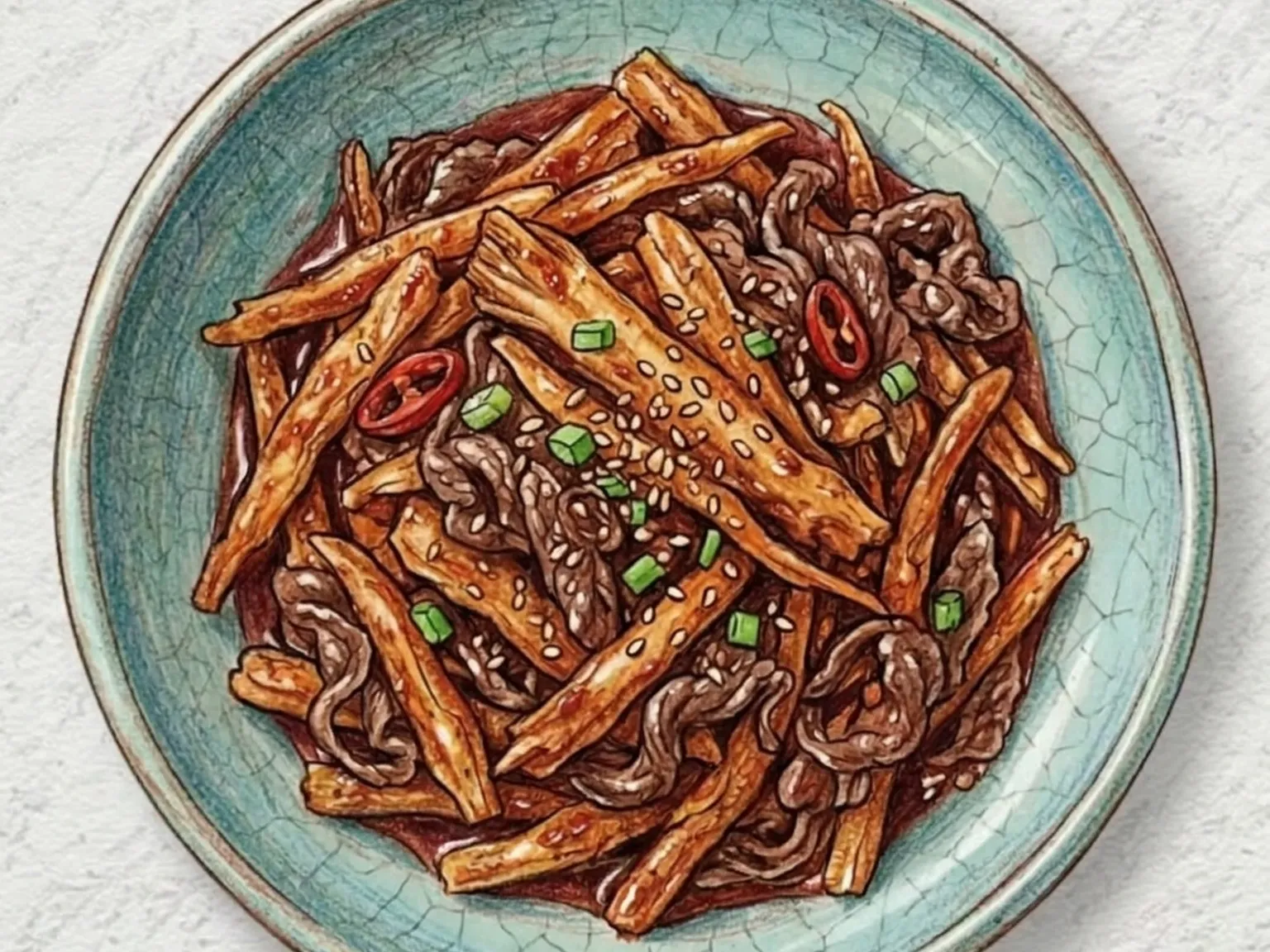
Deodeok-sogogi-gochujang-bokkeum is a Korean stir-fry of pounded bellflower root and thinly sliced beef in a bold gochujang sauce. Pounding the root splits its fibers, allowing the spicy-sweet paste to penetrate deeply and giving each piece a crisp yet chewy texture. The beef adds a layer of meaty richness that melds with the fermented chili paste. It is a robust, highly flavorful dish that pairs exceptionally well with plain steamed rice.
Adjust Servings
Instructions
- 1
Peel bellflower root, split lengthwise, lightly pound, and cut into 5 cm strips.
- 2
Mix gochujang, gochugaru, soy sauce, minced garlic, and syrup to make the sauce.
- 3
Toss beef with two-thirds of the sauce and marinate for 10 minutes.
- 4
Heat oil, sauté green onion for 30 seconds, then stir-fry beef over high heat.
- 5
When beef is 80% cooked, add bellflower root and remaining sauce; stir-fry 2-3 minutes.
- 6
Once slightly reduced and glossy, turn off heat and serve immediately.
As an Amazon Associate, we may earn from qualifying purchases.
Tips
Nutrition (per serving)
More Recipes

Korean Bamboo Shoot Beef Stir-fry
Juksun-sogogi-bokkeum is a Korean stir-fry of boiled bamboo shoots and thinly sliced beef in a soy sauce, cooking wine, and sesame oil seasoning. The bamboo shoots keep a crisp, snappy texture, while the beef stays soft from quick cooking. The soy-based seasoning is intentionally light, letting the natural flavors of both ingredients come through - bamboo shoots contribute a subtle sweetness and beef adds savory depth. Using fresh spring bamboo shoots elevates the dish with even better crunch and aroma.

Korean Beef & Lettuce Cabbage Stir-fry
Ssamchu soegogi-bokkeum stir-fries soy-and-pear-juice-marinated beef over high heat, then folds in ssamchu (Korean leafy cabbage) just long enough to barely wilt. Pear juice tenderizes the beef and lends a subtle sweetness, while soy sauce, garlic, and sesame oil form a glossy glaze as they hit the hot pan. The ssamchu stems go in a minute before the leaves and Cheongyang chili, preserving a mix of crunchy and soft textures in the finished dish. A final drizzle of sesame oil off the heat locks in the fragrance, making this a vibrant, lightly spicy beef-and-greens stir-fry.

Korean Spicy Beef Stir-Fry
Sogogi gochujang-bokkeum marinates thin-sliced beef in a paste of gochujang, soy sauce, sugar, and minced garlic, then stir-fries it over high heat. The chili paste's spiciness and the sugar caramelize together on the meat's surface, building a dark, sticky glaze with layered heat. Onion cooked alongside the beef releases moisture that helps the seasoning distribute evenly across every slice. A finish of sesame oil adds a roasted nuttiness on top of the bold, spicy-sweet profile -- intensely flavored enough that a small portion carries a full bowl of rice.

Korean Beef and Pimpinella Stir-fry
Beef sliced thin for bulgogi is marinated in soy sauce, cooking wine, minced garlic, and black pepper for ten minutes, then spread in a single layer across a hot pan so every piece browns without steaming. Crowding the pan drops the temperature and causes the meat to stew in its own liquid rather than sear. Sliced onion goes in next for two minutes to coax out its sweetness, followed by chamnamul, a Korean wild green with a distinctive herbal fragrance that sits somewhere between celery leaf and parsley. The chamnamul needs only forty seconds in the pan; any longer and the stems lose their snap while the leaves go limp and the aroma dissipates. Sesame oil stirred in after the heat is off wraps every piece in a smooth richness, and whole sesame seeds burst with a small pop of nutty oil when bitten. At 365 calories and 30 grams of protein, this is a nutrient-dense plate where the bright, almost grassy scent of the spring greens keeps the beefy weight from feeling heavy.

Korean Spicy Gochujang Dried Squid Stir-Fry
Jinmichae - shredded dried squid - is a Korean pantry staple prized for its chewy texture and umami that intensifies the longer you chew. This preparation coats the strands in a gochujang glaze, making it one of the most widely kept banchan in Korean refrigerators. Briefly soaking the dried squid in water before squeezing softens the tough fibers and opens them to absorb the sauce. The sauce - gochujang, gochugaru, rice syrup, soy sauce, and garlic - is stir-fried first over low heat to mellow the raw chili edge, then the squid is tossed through quickly. Sesame oil and seeds finish the dish off heat, producing a sweet-spicy coated snack that keeps well for days.

Korean Spicy Bellflower Root Chewy Noodles
Deodeok gochujang jjolmyeon is a spicy noodle dish that combines the aromatic bitterness of bellflower root with gochujang-dressed chewy jjolmyeon noodles. Lightly pounding the peeled deodeok loosens its fibers, releasing its distinctive herbal fragrance and softening the texture. A brief salt cure draws out moisture and reduces bitterness, allowing the seasoning to penetrate more effectively. The sauce - gochujang blended with vinegar and oligosaccharide syrup - balances heat with a tangy edge and subtle sweetness that complements the root's character. Julienned cabbage, carrot, and cucumber provide a crisp, fresh layer between the dense noodles and the fibrous deodeok.