Korean Deulkkae Aehobak Beoseot Bokkeum (Perilla Zucchini Mushroom Stir-fry)

Korean Deulkkae Aehobak Beoseot Bokkeum (Perilla Zucchini Mushroom Stir-fry)

Quick answer

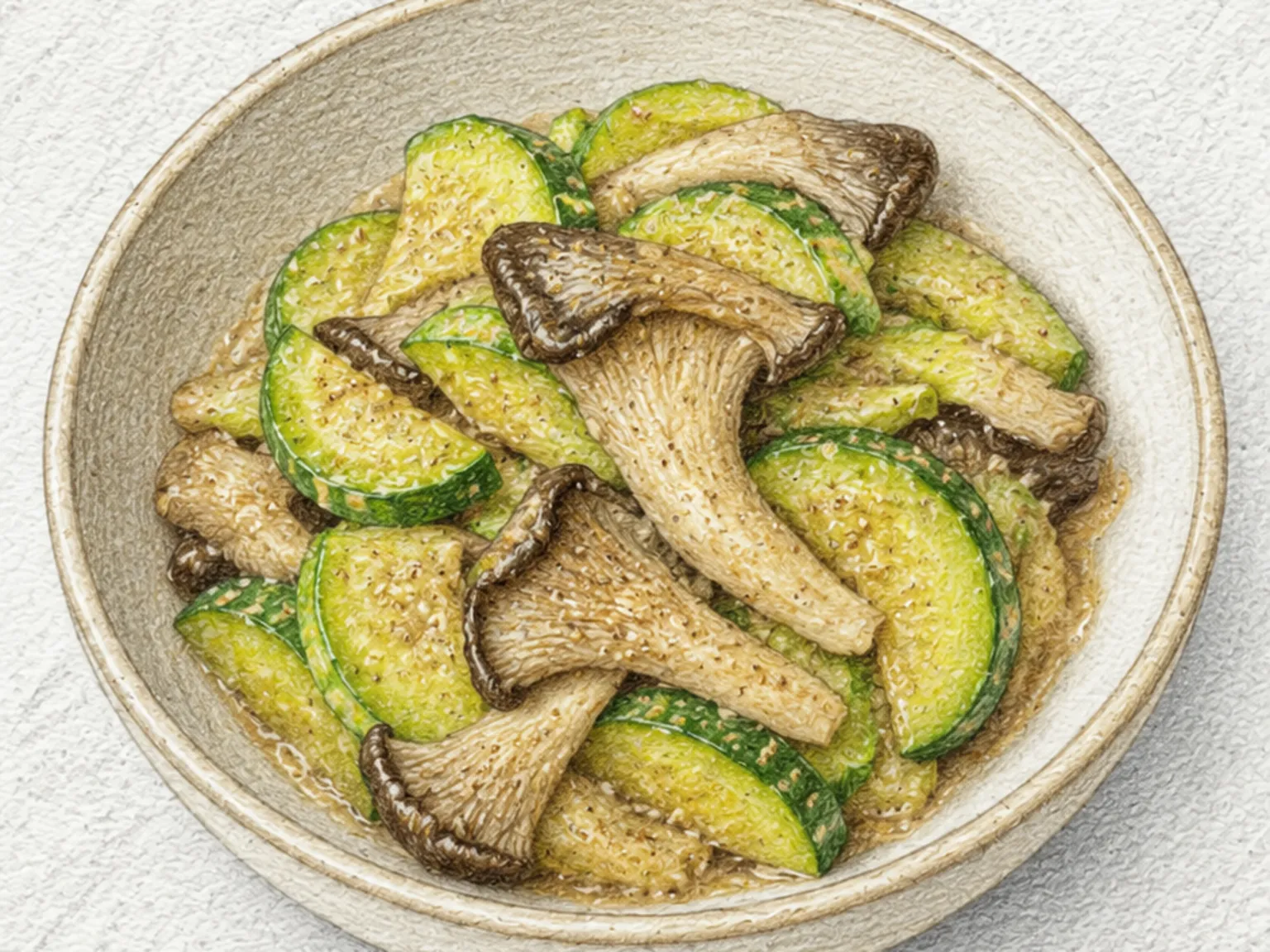
Deulkkae-aehobak-beoseot-bokkeum is a Korean stir-fry of zucchini and oyster mushrooms finished with ground perilla seeds.

What makes this special

  • Perilla powder coats zucchini and mushrooms in a nutty, thickened sauce.
  • Perilla powder turns cooking moisture into a thick coating sauce
  • Oyster mushroom umami and zucchini moisture create a moist, mild flavor
Total time
28 min
Level
Easy
Servings
4 servings
Ingredients
8
Calories
146 kcal
Protein
5 g

Key ingredients

zucchinioyster mushroomsonionground perilla seedssoup soy sauce

Core cooking flow

  1. 1 Slice 350 g of zucchini into 0.7 cm thick half-moon pieces, and tear 200 g o...
  2. 2 Shred 120 g of onion into thick strips, and pre-mix 2 tablespoons of ground...
  3. 3 Heat 1.5 tablespoons of cooking oil in a pan over medium heat, add 1 tablesp...

Deulkkae-aehobak-beoseot-bokkeum is a Korean stir-fry of zucchini and oyster mushrooms finished with ground perilla seeds. The perilla powder is added toward the end of cooking, where it combines with the moisture released from the vegetables to form a thick, nutty coating that clings to each piece. Oyster mushroom brings natural umami and a slightly fibrous chew, while the zucchini contributes its gentle sweetness and keeps the dish from drying out. No strong spices or fermented pastes are needed - the toasted, herbal fragrance of the perilla seeds carries the flavor from start to finish. The result is a moist, mild side dish that demonstrates how a single aromatic ingredient can add significant depth to a simple vegetable stir-fry.

Prep 16min Cook 12min 4 servings

Instructions

Read the steps as a cooking flow: prep, heat, seasoning, doneness control, and finish.

6 steps
  1. 1
    Prep

    Slice 350 g of zucchini into 0.7 cm thick half-moon pieces, and tear 200 g of oyster mushrooms into thick pieces along the grain.

  2. 2
    Prep

    Shred 120 g of onion into thick strips, and pre-mix 2 tablespoons of ground perilla seed into 80 ml of water to dissolve any lumps.

  3. 3
    Control

    Heat 1.5 tablespoons of cooking oil in a pan over medium heat, add 1 tablespoon of minced garlic and onion, and stir-fry for 1 minute to develop aroma.

  4. 4
    Control

    Add zucchini and stir-fry over medium heat for 2 minutes.

    Move on once the zucchini edges become slightly translucent and moisture starts to release.

  5. 5
    Season

    Add mushrooms and 1 tablespoon of soup soy sauce and stir-fry 2 more minutes to season.

    The dish is ready for the next step when moisture from the mushrooms makes the pan visibly moist.

  6. 6
    Season

    Add the perilla water and stir constantly for 2 to 3 minutes.

    Turn off the heat when the ground perilla absorbs the moisture to form a thick sauce and a rich nutty aroma intensifies.

After the steps

Pick a recipe that fits this dish.

Continue with shared ingredients, meal pairings, or a similar method.

Recipes That Go Well With This

More Stir-fry →

Based on shared ingredients and meal pairing

Korean Aehobak Chamchi Bokkeum (Zucchini Tuna Stir-fry)
Shared ingredient: zucchini Stir-fry

Korean Aehobak Chamchi Bokkeum (Zucchini Tuna Stir-fry)

Canned tuna and Korean zucchini are among the most constant fixtures in a Korean household refrigerator, and this stir-fry is one of the most efficient uses of both. The drained tuna brings protein and a clean saltiness that requires little beyond soup soy sauce to function as seasoning - no complex paste, no long list of aromatics. Zucchini provides mild sweetness and bulk. Garlic sauteed at the start builds a foundational aromatic layer, and cheongyang chili added shortly after threads a slow-building heat through the whole dish. The critical technique is brevity: the zucchini must come off heat while the half-moon slices still hold their shape. Overcooked zucchini releases water and collapses everything into a soft, wet mass. A finish of sesame oil seals the flavors and stabilizes the banchan at room temperature, which is why this dish transfers so well to lunchboxes.

Korean Napa Cabbage Perilla Stir-fry
Shared ingredient: onion Side dishes

Korean Napa Cabbage Perilla Stir-fry

Two ingredients carry this dish: baby napa cabbage and ground perilla seeds. Perilla oil goes into the pan first, then cabbage over high heat until just wilted. A splash of water and a measure of soup soy sauce follow, with the lid on for two minutes more. The timing gap between leaf and stem matters here - stems retain a little bite while leaves turn soft, and that contrast is the point of the dish rather than an oversight. Ground perilla seeds go in just before turning off the heat: too early and the nutty fragrance dissipates in the steam; too late and they do not thicken the liquid properly. When done right, the seeds create a pale, creamy sauce that clings to the cabbage and soaks into rice underneath. Salt and pepper are the only other seasoning. It keeps well cold and travels without issue in a lunchbox.

Korean Bacon Kimchi Fried Rice
Serve together Rice

Korean Bacon Kimchi Fried Rice

Bacon kimchi fried rice takes the most common Korean leftover combination - cold rice and aging kimchi - and substitutes rendered bacon fat for the traditional sesame oil base. The bacon goes into a cold pan and cooks slowly so the fat renders completely before the meat crisps, creating a pool of smoky drippings that replace cooking oil entirely. Well-fermented kimchi, squeezed of excess juice and chopped roughly, goes into the hot fat and sizzles until its edges caramelize and the sharp lactic tartness mellows into a deeper, roasted sourness. Day-old rice is pressed flat against the pan to develop a crust reminiscent of nurungji - the scorched rice layer that fried rice enthusiasts seek. Soy sauce and a pinch of sugar season the dish, though both should be used in small amounts to avoid masking the interplay between the bacon's smokiness and the kimchi's fermented character. A fried egg on top, with a yolk still runny, becomes a sauce when broken and stirred through the rice. Bacon became a standard Korean grocery item in the 2000s, and this dish has since become a common home-cooking variation, with many cooks preferring its deeper, smokier flavor profile over the sesame oil original.

Korean Gourd Namul Stir-fry
Similar recipe Stir-fry

Korean Gourd Namul Stir-fry

Baknamul deulkkae bokkeum is a Korean stir-fried side dish made from rehydrated dried bottle gourd strips coated in ground perilla seed. The dried gourd strips - thin slices of the gourd's inner flesh dried until pale and brittle - need at least thirty minutes of soaking to recover their characteristic chewy bite. Minced garlic is sauteed in perilla oil first to build a fragrant base, then the soaked strips go in along with soup soy sauce and small additions of water to braise them through. Ground perilla seed is added generously at the end, stirred in while the heat reduces the remaining liquid. As the moisture disappears, the perilla powder binds into a clinging, sauce-like coating on each strip rather than sitting as dry powder. This is the key technique: the coating should be smooth and adherent, not dusty. The whole dish is done in about ten minutes and offers a mild, chewy counterpoint to stronger-flavored banchan on the table.

Serve with this

Manduguk (Korean Dumpling Clear Broth Soup)
Soups Easy

Manduguk (Korean Dumpling Clear Broth Soup)

Manduguk is a Korean dumpling soup in which hand-folded dumplings stuffed with ground pork, tofu, scallion, and garlic are dropped into a clear, simmering broth, typically anchovy-kelp stock or beef broth, and cooked until they float. As the dumplings cook, their thin wheat-flour wrappers release a subtle starch that gives the broth a barely perceptible body, while the filling leaks savory juices that enrich the liquid gradually. A thin drizzle of beaten egg stirred in near the finish creates silken wisps on the surface of the broth and gives the bowl a more finished appearance. Shredded egg strips and crumbled dried seaweed scattered on top add a pleasant contrast in color and a faint oceanic note to the flavor. Many Korean households serve manduguk on Lunar New Year as an alternative to tteokguk, and some combine the two by adding sliced rice cakes alongside the dumplings. Dumplings can be made in large batches and frozen raw, which means this soup can be pulled together quickly on weeknights without sacrificing any of the flavor that comes from homemade filling. A small dish of soy-vinegar dipping sauce served alongside lets each person adjust the seasoning at the table, and the light acidity of the sauce cuts through the mild broth in a way that makes the contrast between the two worth trying.

🏠 Everyday 🎉 Special Occasion
Prep 10min Cook 15min 4 servings
Crispy Mushroom Tangsu (Sweet & Sour)
Side dishes Medium

Crispy Mushroom Tangsu (Sweet & Sour)

Double-fried oyster mushrooms with the same two-stage frying technique used for Korean tangsu pork. Oyster mushrooms fully dried of moisture are coated in a potato starch and flour batter, fried at 170°C, rested to release steam, then returned to 180°C for a second fry that locks in a crisp exterior while keeping the interior chewy. A sweet-sour sauce of soy sauce, vinegar, and sugar is simmered with onion, bell pepper, and carrot, then thickened with a starch slurry. Pouring the sauce over the mushrooms in advance softens the crust quickly, so serving the sauce separately and ladling it on at the table preserves the crunch. The technique produces a texture comparable to the pork version without any meat.

🏠 Everyday 🎉 Special Occasion
Prep 20min Cook 18min 4 servings
Korean Kimchi Mandu Jjigae (Kimchi Dumpling Stew)
Stews Easy

Korean Kimchi Mandu Jjigae (Kimchi Dumpling Stew)

Kimchi mandu jjigae drops whole frozen kimchi dumplings straight into a simmering pot of aged kimchi, tofu, and anchovy stock. The dumpling wrappers absorb the broth as they cook, swelling plump and moist, while the kimchi filling inside echoes the stew's tangy base and doubles the fermented depth. Gochugaru and soup soy sauce add a clean chili heat, and firm tofu cubes absorb the spiced broth for a softer textural contrast. Because the dumplings themselves carry seasoning, it is better to start with less sauce and adjust after tasting the broth. This is a filling, no-fuss meal that needs nothing more than a bowl of steamed rice alongside it.

🏠 Everyday ⚡ Quick
Prep 8min Cook 15min 2 servings

Similar recipes

Korean King Oyster Mushroom Stir-fry with Perilla
Side dishes Easy

Korean King Oyster Mushroom Stir-fry with Perilla

This stir-fry combines 250 grams of julienned king oyster mushrooms with onion, cooked rapidly over high heat in perilla oil and cooking oil to prevent the mushrooms from releasing too much water. Garlic is sauteed for 20 seconds first to infuse the oil, followed by onion for one minute to draw out its natural sweetness. The mushrooms then go in for a quick two-minute toss before soup soy sauce and a splash of water are added to create a light braising liquid. One and a half tablespoons of ground perilla seeds are stirred in during the final minute, thickening the sauce into a creamy coating without becoming pasty. Scallion is added off heat for a finishing touch of color and freshness.

🏠 Everyday 🍱 Lunchbox
Prep 10min Cook 8min 2 servings
Korean Beoseot Deulkkae Jeon (Mushroom Perilla Pancake)
Pancakes Easy

Korean Beoseot Deulkkae Jeon (Mushroom Perilla Pancake)

Mushroom and perilla seed jeon brings together oyster mushrooms and shiitake, sliced thin and folded into a batter built on perilla seed powder and a splash of soy sauce. Perilla seeds carry a heavier, slightly bitter nuttiness compared to sesame, and that quality anchors the earthy depth of the mushrooms rather than competing with it. Seasoning the batter directly with soy sauce means the pancake holds its own without a dipping sauce, though one on the side does not go amiss. Frying with enough oil gives the exterior a thin, crisp shell while the mushroom filling stays moist inside. Oyster mushrooms torn along their grain develop a pleasantly chewy bite as they cook; shiitake sliced fine distribute evenly so the whole pancake cooks at the same rate. It works as a makgeolli pairing or a straightforward side, and holds up well at room temperature - the perilla aroma actually deepens as it cools.

🍺 Bar Snacks 🏠 Everyday
Prep 18min Cook 14min 2 servings
Korean Kkaennip Gamja Bokkeum (Perilla Potato Stir-fry)
Stir-fry Easy

Korean Kkaennip Gamja Bokkeum (Perilla Potato Stir-fry)

High heat and a well-preheated pan are the keys to achieving the distinct texture of these stir-fried potato matchsticks. Before cooking, soaking the cut potatoes in cold water is a critical step to remove surface starch, ensuring the pieces stay separate and do not stick to the pan. Once thoroughly dried to prevent oil splattering, the potatoes are tossed quickly until the edges become translucent while the centers retain a subtle firmness. Overcooking results in a mushy consistency that lacks the intended character of the dish. Pouring the soy sauce around the perimeter of the pan allows it to caramelize against the hot surface before it is incorporated into the vegetables, adding a layer of savory complexity. Fresh perilla leaves should be tossed in just before the heat is turned off to preserve their bright green color and herbal fragrance. A final drizzle of perilla oil complements the leaves with its toasted scent, and a sprinkle of sesame seeds provides a light crunch. Sliced Cheongyang chilies can be included during the initial sautéing for a gentle heat. This combination pairs the carbohydrates of potatoes with the vitamin K and calcium found in perilla leaves, creating a nutritionally rounded side dish that tastes even better the next day after the flavors have settled.

🏠 Everyday 🍱 Lunchbox
Prep 12min Cook 15min 2 servings

Tips

Add perilla near the end to preserve its nutty aroma.
If you do not have soup soy sauce, use 0.7 tbsp regular soy sauce.

Nutrition (per serving)

Calories
146
kcal
Protein
5
g
Carbs
12
g
Fat
9
g