Korean Warm Perilla Mushroom Rice Noodles
Quick answer
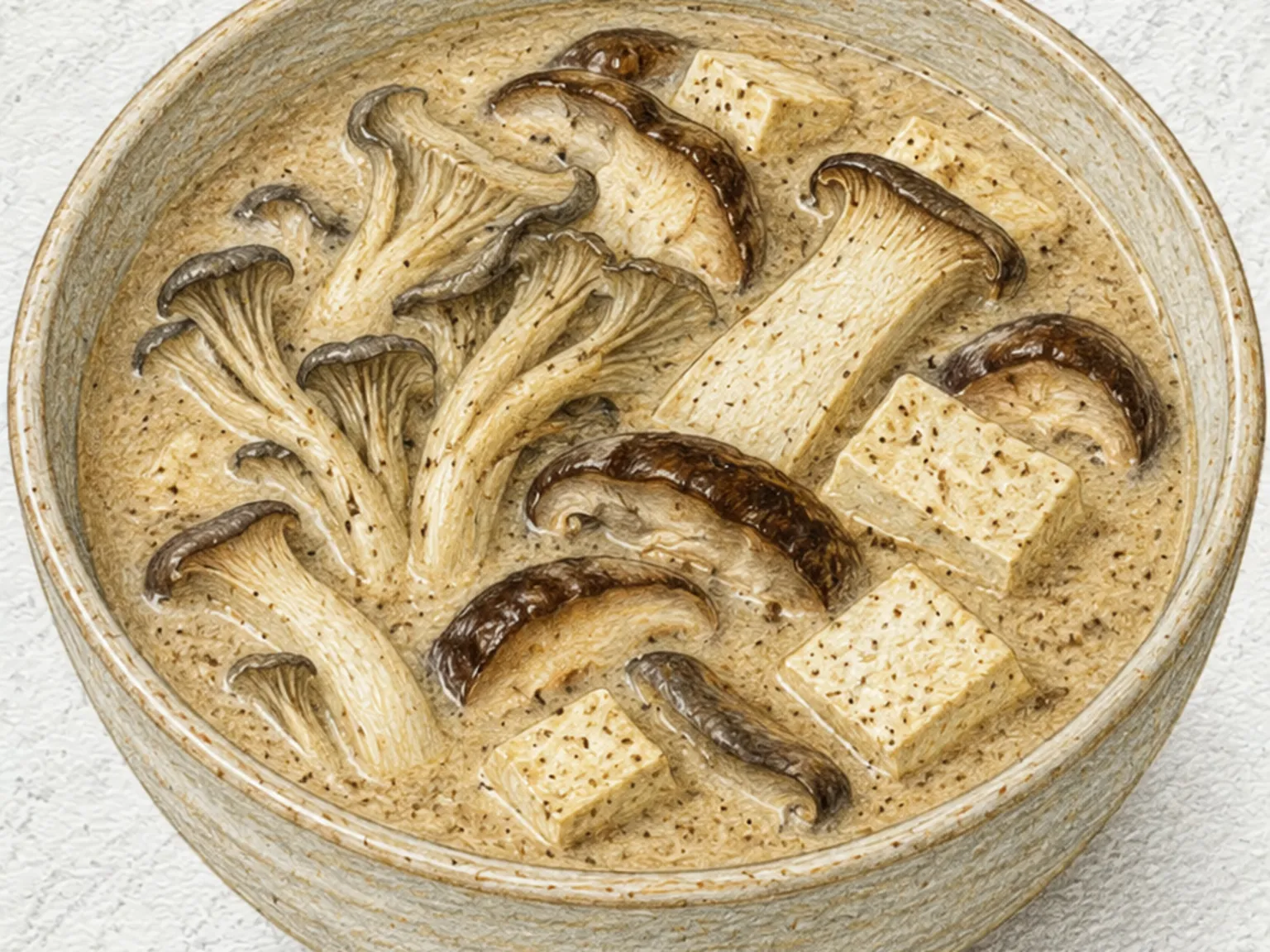
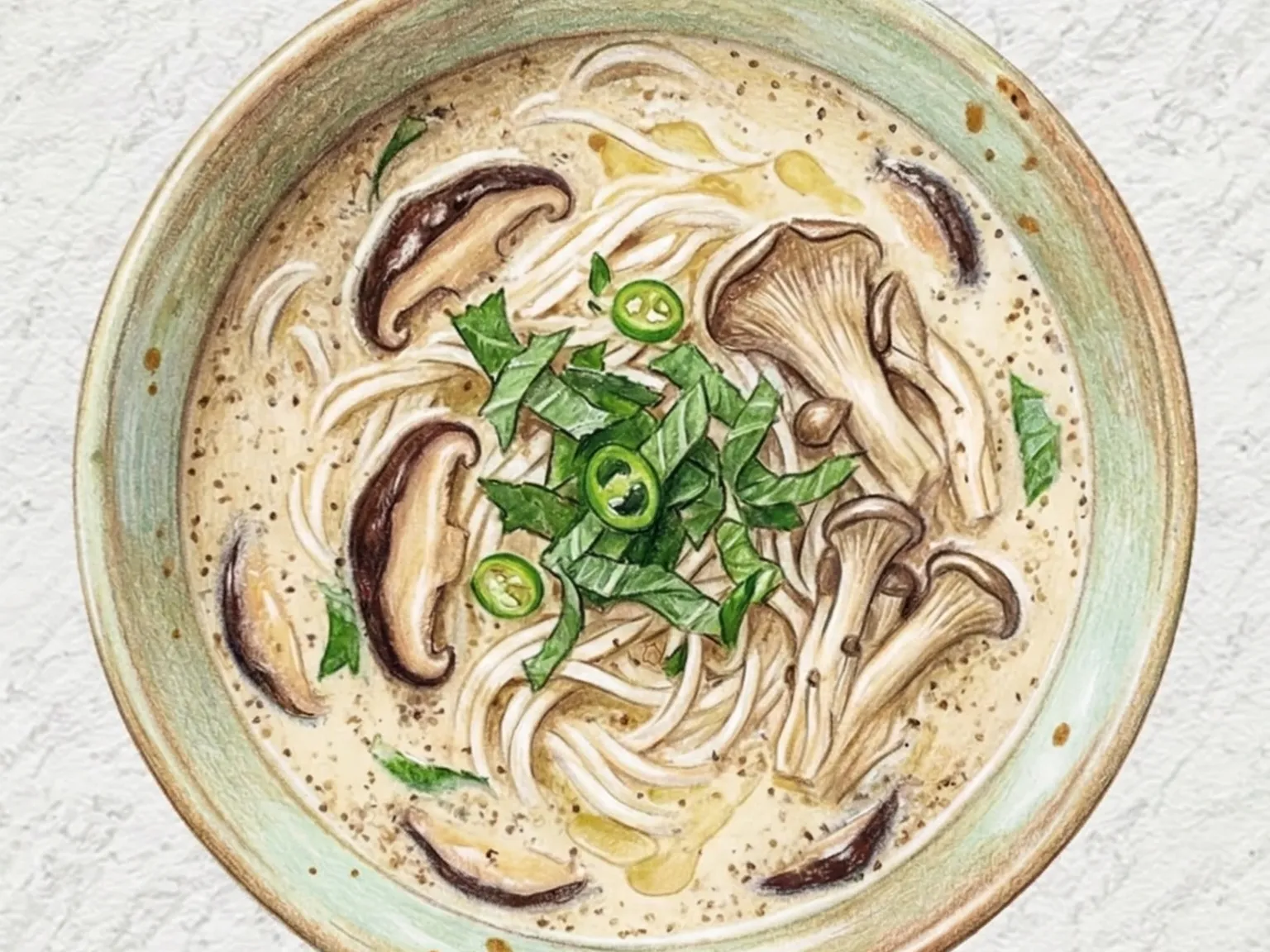
Deulkkae beoseot on ssalguksu is a warm Korean noodle soup built on kelp stock simmered with oyster and shiitake mushrooms, then enriched with ground perilla seeds into a...
What makes this special
- Rice noodles swim in a creamy perilla broth enriched by earthy ground seeds and mushrooms.
- Perilla powder stirred in last keeps the nutty aroma on the surface of every spoonful
- Rehydrating dried shiitake adds a second mushroom stock layer to the kelp base
Key ingredients
Core cooking flow
- 1 Soak 320g dried rice noodles in lukewarm water for 20 minutes until softened, then drain in a colander.
- 2 Tear 180g oyster mushrooms along the grain, slice 120g shiitake mushrooms th...
- 3 Heat perilla oil in a pot over medium heat, add the minced garlic, onion, an...
Deulkkae beoseot on ssalguksu is a warm Korean noodle soup built on kelp stock simmered with oyster and shiitake mushrooms, then enriched with ground perilla seeds into a creamy, opaque broth. Rice noodles are smoother and more slippery than wheat varieties, sliding through the rich liquid with ease, while the mushrooms provide a firm, chewy counterpoint. Adding the perilla powder at the very end preserves its roasted, nutty fragrance on the surface of each spoonful rather than cooking it off. Soup soy sauce seasons the broth cleanly without the heaviness of fermented soybean paste. Using dried shiitake mushrooms instead of fresh ones and soaking them in cold water first draws out a concentrated mushroom stock that deepens the base significantly. Substituting king oyster mushrooms cut into thick rounds for oyster mushrooms adds more substantial chew. The dish contains no wheat and suits gluten-free diets. It is particularly fitting on cold days as a light but warming meal.
Instructions
Read the steps as a cooking flow: prep, heat, seasoning, doneness control, and finish.
- 1Step
Soak 320g dried rice noodles in lukewarm water for 20 minutes until softened, then drain in a colander.
- 2Prep
Tear 180g oyster mushrooms along the grain, slice 120g shiitake mushrooms thickly, and julienne 100g onion.
- 3Control
Heat perilla oil in a pot over medium heat, add the minced garlic, onion, and mushrooms, and cook for 3 minutes to develop flavor and umami.
- 4Control
Pour in 1200ml kelp water, season with soup soy sauce, and simmer for 8 minutes to allow the ingredients to fully infuse the broth.
- 5Heat
Add the soaked rice noodles and cook for 2 to 3 minutes, then stir in 5 tbsp perilla seed powder evenly throughout the broth.
- 6Finish
Simmer for 1 more minute over low heat until the perilla powder fully dissolves into a rich, nutty consistency, then serve hot.
After the steps
Pick a recipe that fits this dish.
Continue with shared ingredients, meal pairings, or a similar method.
Recipes That Go Well With This
More Noodles →Based on shared ingredients and meal pairing
Korean Perilla Seed Kalguksu
Perilla kalguksu is a Korean noodle soup where ground perilla seeds give the broth a distinctly nutty, creamy quality. Potatoes are simmered first to release starch, naturally thickening the liquid before the noodles go in. Onion and garlic add mild sweetness, and soup soy sauce seasons the bowl without darkening the color. The perilla powder is stirred in near the end of cooking to preserve its fragrance. The main ingredients are fresh kalguksu noodles, ground perilla seeds, potato, and onion, and the recipe depends on careful handling of noodle cooking time and sauce thickness.
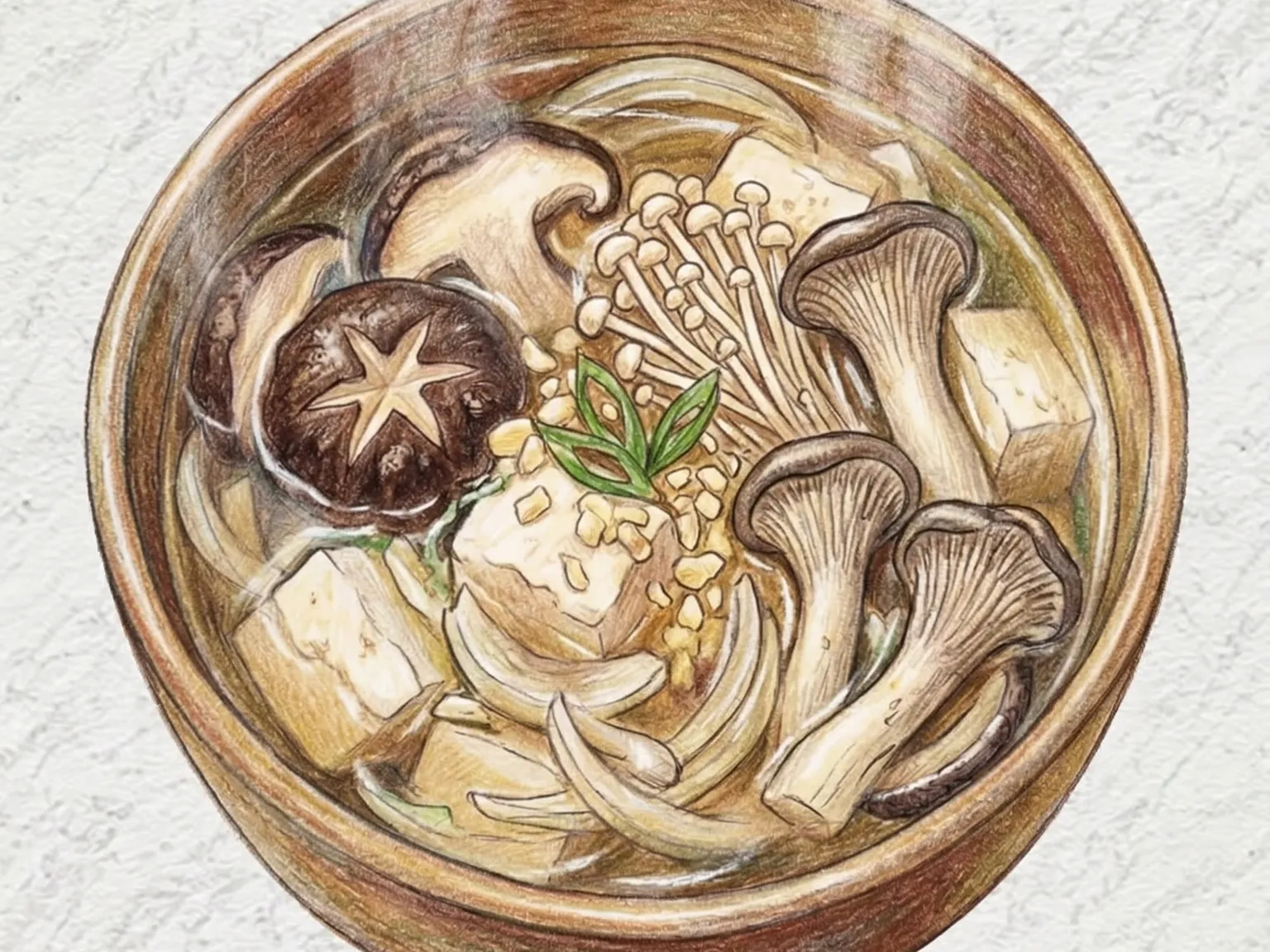
Korean Doenjang Mushroom Udon
Doenjang mushroom udon is a Korean noodle soup where thick-cut shiitake mushrooms simmer in an anchovy-kelp broth with dissolved soybean paste, building layered depth from two distinct fermented and dried umami sources. The shiitake's aromatic depth stacks on top of the doenjang's fermented, mellow character, while onion adds a quiet sweetness that prevents the broth from tasting one-dimensionally salty. Passing the doenjang through a fine sieve before stirring it into the broth ensures no lumps remain and the paste disperses evenly. Parboiling the udon noodles separately in plain water and rinsing briefly strips away surface starch, keeping the broth clear and clean to the last spoonful. A pinch of gochugaru added during the seasoning stage introduces a faint warmth at the finish that sharpens the overall flavor, and a few thin slices of cheongyang chili on top add color and a sharper bite. Adding silken tofu or sliced zucchini makes the bowl substantial enough to serve as a full meal.
Korean Crisp Chili Pepper Salad
Asakigochu is a specific variety of Korean pepper characterized by its thick walls and a distinct snap when bitten. This pepper was developed to prioritize texture over spiciness, resulting in a vegetable that offers a significant crunch without the heat of other varieties. The preparation of this dish involves a brief blanching process where the peppers are submerged in boiling water for a duration of exactly twenty seconds. This short exposure to heat is sufficient to eliminate the raw, grassy aroma often found in uncooked peppers, yet it is not long enough to soften the cellular structure. Consequently, the characteristic crispness remains unchanged. The seasoning sauce is a mixture of two traditional fermented pastes. Doenjang provides a salty and fermented depth, while gochujang adds complexity. To balance these heavy flavors, vinegar is added for sharpness and oligosaccharide syrup is used to adjust the consistency and add a subtle sweetness. This combination creates a contrast between the deep, funky notes of the fermented beans and a bright acidity that highlights the clean taste of the pepper. Timing is important for the final result. It is best to allow the seasoned peppers to rest for five minutes before serving. This pause allows the flavors from the thick sauce to soak into the pepper walls instead of simply sitting on the exterior. This side dish functions well as a standard accompaniment to a bowl of rice or as a more fullly flavored snack to be consumed while drinking soju.
Korean Spicy Chicken Soup Noodles
This spicy Korean noodle soup is built on dakgaejang, a chicken version of the classic beef yukgaejang. Whole chicken is poached until tender, the meat hand-shredded along the grain, then returned to the pot and simmered again with gochugaru, garlic, sesame oil, and sliced scallion. The resulting broth is vivid red and assertively spicy, yet the clean chicken stock underneath keeps the heat from turning harsh or muddy. Bean sprouts added just before serving retain their crunch and provide a cool, crisp contrast to the fiery liquid. Both thin somyeon and medium-thickness noodles work well, soaking up the spiced broth without dissolving too quickly. Swirling in a beaten egg softens the broth and adds a silkier body; adding cooked rice turns the bowl into a complete, filling meal. The combination of protein, capsaicin-driven warmth, and the mild diaphoretic effect of chili makes this a go-to remedy for hangovers and chills alike.
Serve with this
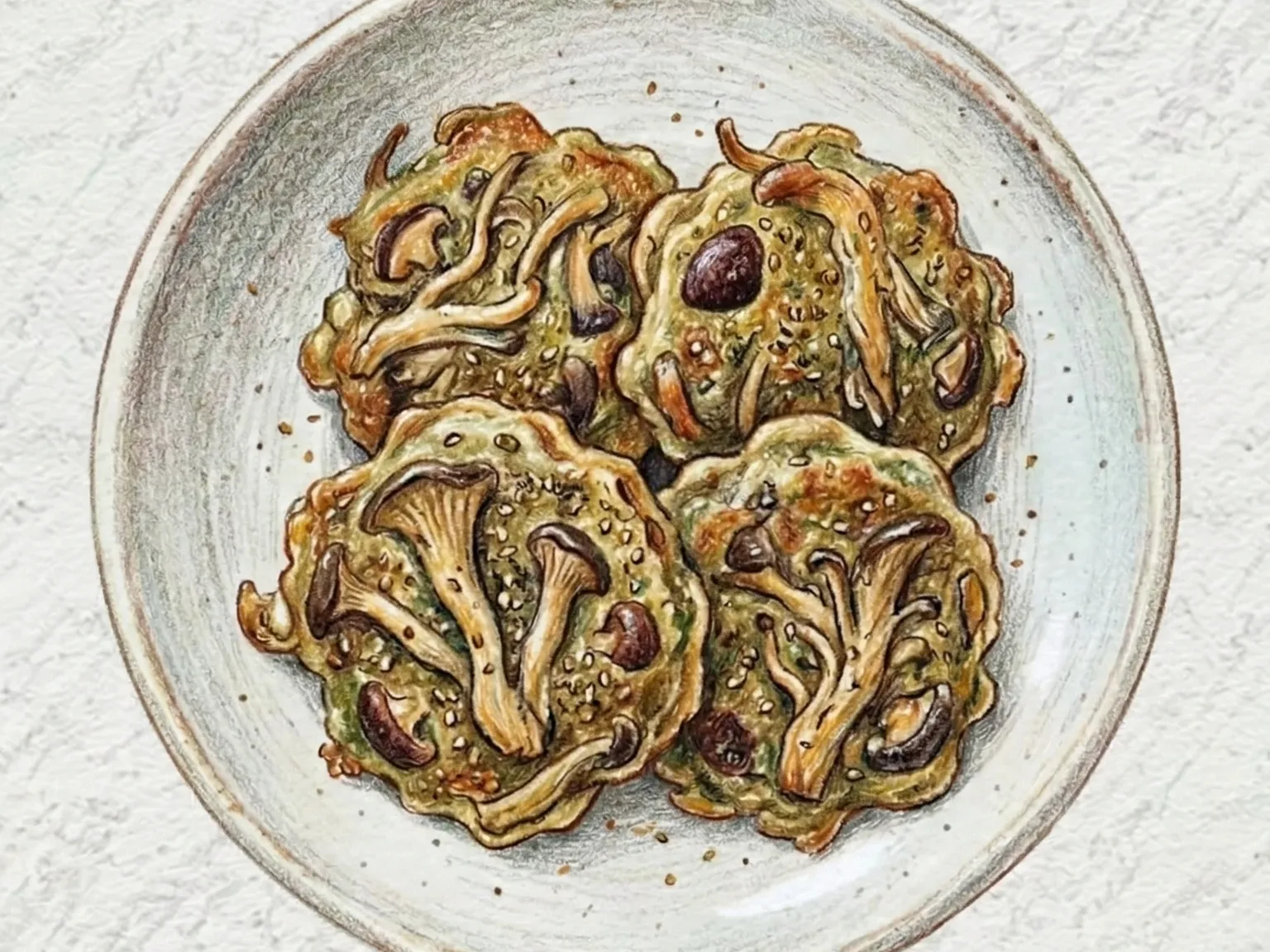
Korean Beoseot Deulkkae Jeon (Mushroom Perilla Pancake)
Mushroom and perilla seed jeon brings together oyster mushrooms and shiitake, sliced thin and folded into a batter built on perilla seed powder and a splash of soy sauce. Perilla seeds carry a heavier, slightly bitter nuttiness compared to sesame, and that quality anchors the earthy depth of the mushrooms rather than competing with it. Seasoning the batter directly with soy sauce means the pancake holds its own without a dipping sauce, though one on the side does not go amiss. Frying with enough oil gives the exterior a thin, crisp shell while the mushroom filling stays moist inside. Oyster mushrooms torn along their grain develop a pleasantly chewy bite as they cook; shiitake sliced fine distribute evenly so the whole pancake cooks at the same rate. It works as a makgeolli pairing or a straightforward side, and holds up well at room temperature - the perilla aroma actually deepens as it cools.
Korean Dried Radish Soy Pickles
Mu mallaengi jangajji is a Korean pickled dried radish that exploits the concentrating effect of dehydration to achieve a depth of sweetness and chew that fresh radish pickles cannot match. The dried radish strips are first soaked in lukewarm water to restore their flexibility, then coated with gochugaru before being submerged in a brine of soy sauce, vinegar, and sugar that has been briefly boiled and cooled. Drying collapses the radish cell walls and concentrates the natural sugars, so when the rehydrated strips absorb the brine, the sweetness hits in layers beneath the chili heat. The texture of the rehydrated strips is distinctly chewy rather than crisp, which makes each bite feel satisfying and substantial. Soy sauce provides a dense, savory floor while vinegar lifts the salt and keeps the palate clean, and a scatter of toasted sesame seeds adds a faintly nutty finish. After resting for a day the seasoning stabilizes and the flavors meld, producing a banchan assertive enough to carry a full bowl of plain rice on its own.
Korean Herb Citrus Chicken Salad
Chamnamul yuja chicken salad starts with chicken breast salted for ten minutes before boiling, then pulled apart along the grain for a lean, clean protein base. Chamnamul stems are trimmed of tough ends and cut to five centimeters to preserve the herb's sharp, grassy mountain scent. The dressing combines yuja-cheong, soy sauce, olive oil, and minced garlic - the bittersweet citrus sharpness balances the salty, savory soy. Romaine adds crunch and volume. Cherry tomatoes are halved and blotted dry to prevent the greens from getting soggy. Sesame seeds go on last for a toasted, nutty finish that rounds out the clean, bright flavors of the salad.
Similar recipes
Korean Clam Seaweed Onmyeon (Warm Noodle Soup)
Dongjuk miyeok onmyeon is a warm noodle soup where small surf clams are simmered to build a clear, deeply briny stock, then combined with rehydrated seaweed and thin wheat noodles. The cool, oceanic flavor of the clams forms the backbone of the dish, and simmering radish alongside rounds out the saltiness into something bright and clean. The seaweed unfurls in the hot broth, contributing its own quiet marine umami, and seasoning stays minimal with only soup soy sauce and salt so the ingredients speak clearly. This is a restorative bowl often eaten for morning recovery or when a light, clear-tasting meal is preferred. Dongjuk clams resemble Manila clams in shape but yield a deeper, more concentrated broth, making them effective even without additional stock. The thin noodles should be cooked until just tender and transferred directly to the bowl to prevent over-softening once the hot broth is ladled over.
Korean Perilla Radish Soup
Deulkkae mu-guk is a Korean radish and perilla seed soup that belongs firmly to the cool-weather calendar. Sliced daikon simmers in anchovy stock for ten minutes first, releasing its clean sweetness into the broth before anything else goes in. Perilla seed powder, stirred in toward the end, thickens the liquid noticeably - its heavier, earthier fat behaves differently from sesame and coats the palate in a way plain radish broth cannot. Garlic simmers alongside the radish to build the underlying savory base. The powder must go in just before the heat is cut; leave it in too long and the toasted fragrance dissolves into the broth and disappears.
Korean Beef and Mushroom Rice Bowl
Sogogi-beoseot deopbap is a Korean beef and mushroom rice bowl that sautees sliced beef with king oyster and shiitake mushrooms in soy-butter sauce. The beef is seared first over high heat to develop a golden crust, then the thickly cut mushrooms go in and absorb the rendered juices, forming a naturally concentrated sauce in the pan. A knob of butter melted in at the end adds a creamy richness, while soy sauce ties everything together with a salty umami backbone. Minced garlic and sliced scallion layered into the stir-fry build an aromatic base that makes the topping fragrant the moment it hits the rice. The mushrooms hold their springy bite against the tender beef, giving each mouthful a satisfying textural contrast.