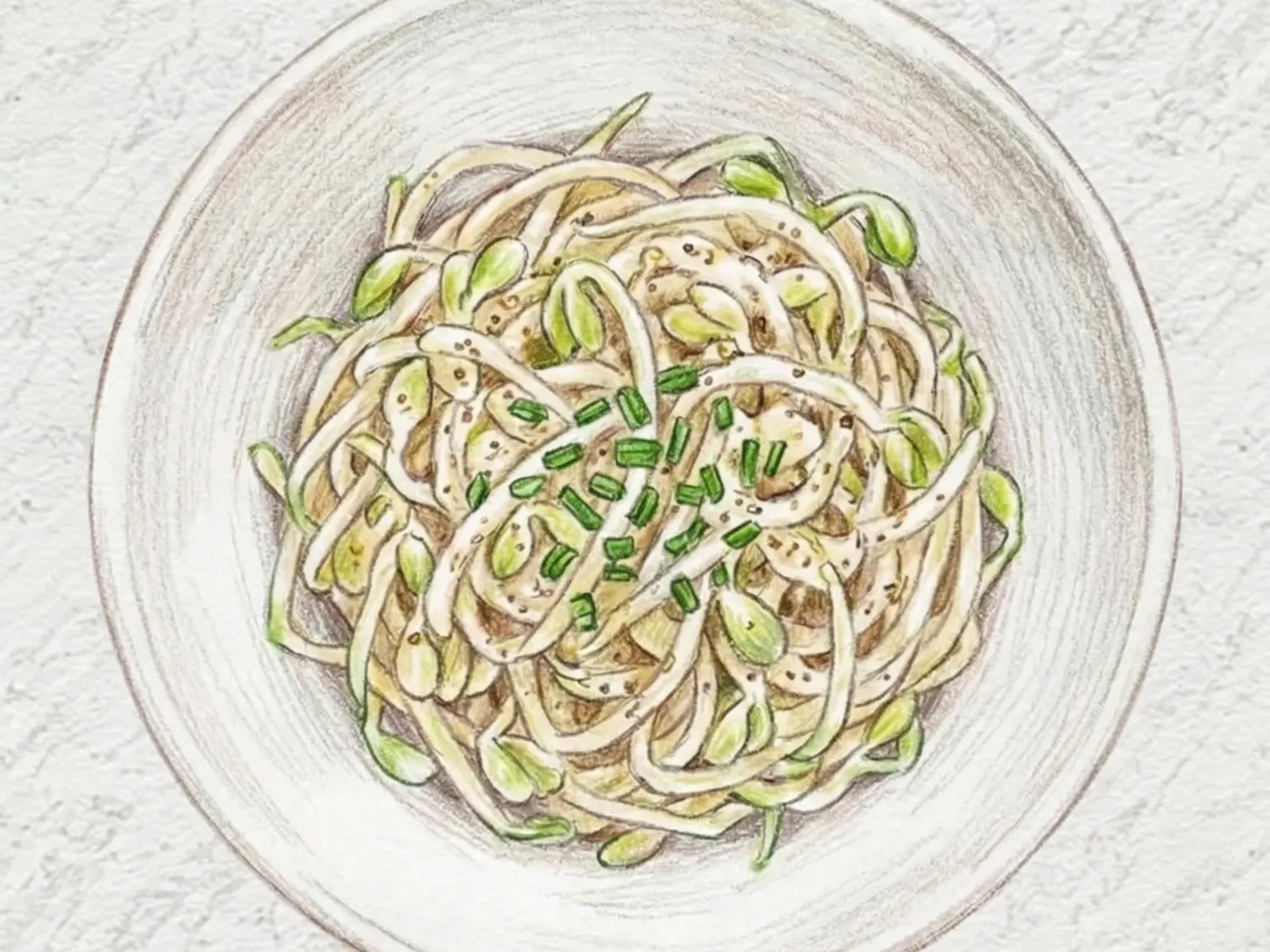
Korean Perilla Soybean Sprout Namul
Kongnamul - soybean sprouts - are Korea's most consumed vegetable, and this perilla-dressed version adds nutty depth missing from the plain sesame oil variety. Sprouts are steamed lid-sealed for five minutes, eliminating raw bean smell while keeping heads crunchy. Tossed with perilla powder, soup soy sauce, garlic, and sesame oil, the powder dissolves into a pale coating that turns each sprout creamy on the tongue. Chopped scallion adds green sharpness as contrast.
Adjust Servings
Instructions
- 1
Rinse the soybean sprouts thoroughly and drain well.
- 2
Add sprouts and 100ml water to a pot, cover, and cook for 5 minutes.
- 3
Drain the cooked sprouts, cool briefly, and gently squeeze out excess moisture.
- 4
In a bowl, mix soup soy sauce, garlic, salt, sesame oil, and perilla powder.
- 5
Add sprouts and chopped scallion, then toss gently.
- 6
Sprinkle sesame seeds, rest for 5 minutes, and serve once seasoned through.
As an Amazon Associate, we may earn from qualifying purchases.
Tips
Nutrition (per serving)
More Recipes

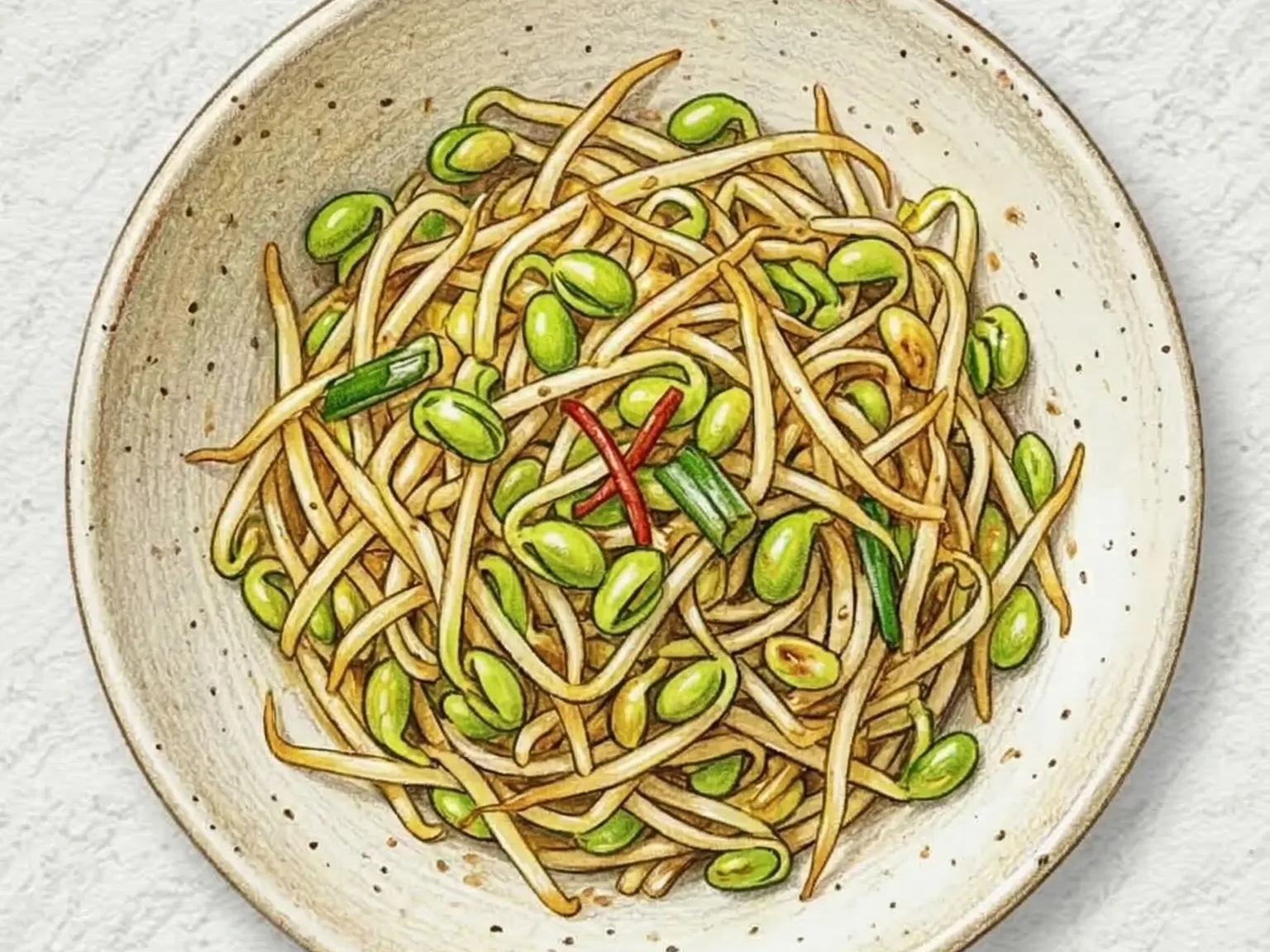
Korean Stir-Fried Soybean Sprouts
Kongnamul-bokkeum is stir-fried soybean sprouts cooked over high heat for a result that differs fundamentally from the blanched-and-dressed kongnamul-muchim. While the muchim version is cold and gentle, the bokkeum version introduces direct contact with a hot oiled pan, creating a faint wok char on the sprout surfaces. The critical rule is to never cover the pan - trapped steam converts the stir-fry into a boiled dish and locks in the raw bean smell that proper cooking should eliminate. Garlic goes into the oil first for twenty seconds to build an aromatic foundation, then the sprouts are tossed for no more than two minutes on high heat to preserve their crunch. Soup soy sauce (gukganjang) seasons more lightly and keeps the color clean compared to regular soy sauce. When a bag of bean sprouts is the only vegetable in the refrigerator, this five-minute banchan is the pragmatic answer.

Korean Soybean Sprout Cold Salad
Kongnamul-naengchae is a chilled Korean salad of boiled soybean sprouts and vegetables tossed in mustard dressing - conceptually distinct from regular kongnamul-muchim because it is designed to be served cold. The mustard sauce defines the dish: mustard powder (or tube mustard) mixed with vinegar, sugar, and salt creates a sharp, nose-tingling heat alongside a sweet-sour brightness. Prepared mustard needs five to ten minutes of resting after hydration for the allyl isothiocyanate compound to fully develop its pungency. Julienned cucumber and carrot release moisture, so they should be briefly salted or patted dry to prevent diluting the sauce. Chilling for at least ten minutes before serving maximizes the refreshing effect, and cold temperatures actually sharpen the mustard's bite. This banchan excels as a palate cleanser alongside fatty main dishes like samgyeopsal or bulgogi.

Korean Cucumber Doenjang Salad
Oi-doenjang-muchim dresses cucumber in a doenjang-based seasoning - a milder alternative to the gochugaru-forward oi-muchim, foregrounding the fermented soybean paste's savory depth over spicy heat. Cucumber is sliced into half-moons or diagonal cuts and salted for five minutes to draw out moisture; skipping this step dilutes the dressing into a watery puddle. The seasoning blends doenjang, soup soy sauce, minced garlic, sesame oil, and sesame seeds, with the doenjang quantity being the critical ratio - too much and the dish is aggressively salty, too little and the cucumber's blandness dominates. Roughly one tablespoon of doenjang to two cucumbers is the working proportion. The cucumber's cool moisture meets doenjang's deep umami to produce a combination that is refreshing yet substantial enough to anchor a rice meal, especially in summer. This banchan must be eaten promptly after assembly - over time, osmotic pressure draws water from the cucumber and collapses its crunch. Served alongside grilled meat, the doenjang's savoriness complements the char while cleansing the palate.

Korean Seasoned Hijiki Seaweed
Fresh hijiki seaweed is blanched and dressed in a chogochujang sauce, a blend of gochujang, vinegar, and sugar, that highlights the sea vegetable's briny character. Hijiki's slender, dark strands take on a deeper black after blanching, and their texture firms into a distinctive pop that crunches lightly between the teeth. The dressing's tangy heat meets the seaweed's subtle ocean salinity, producing a refreshing umami interplay that makes this banchan especially appealing in warmer months. Sugar tempers the vinegar's sharpness, rounding the overall flavor into something balanced rather than aggressive. Thinly sliced raw onion mixed in adds a crisp contrast to the seaweed's softer chew, and minced garlic contributes a pungent depth beneath the sauce's bright surface. Rinsing the hijiki in cold water immediately after blanching and draining it thoroughly prevents the strands from turning tough. The finished dish is rich in iron and calcium, making it as nutritionally substantial as it is flavorful.

Korean Steamed Soybean Sprouts
Kongnamul-jjim is a Korean steamed bean sprout dish cooked covered with gochugaru, soy sauce, and minced garlic. Keeping the lid on throughout cooking preserves the sprouts' characteristic crunch while allowing the seasoning to permeate evenly. The chili heat meets the sprouts' refreshing quality, leaving a clean aftertaste, and sesame oil with chopped scallions finish the dish with fragrance. Inexpensive and quick to prepare, this is a practical banchan that delivers reliable flavor when side dishes are needed in a hurry.

Korean Stir-fried Radish Greens with Perilla
Siraegi deulkkae-bokkeum is a Korean stir-fry of pre-boiled dried radish greens seasoned with soup soy sauce and garlic, then cooked in perilla oil and finished with generous perilla powder. The greens are first tossed in the seasoning to let the flavors penetrate, stir-fried for three minutes, then simmered briefly with water and perilla powder until a thick, nutty sauce coats every strand. Green onion added at the end provides a fresh aromatic lift. Compared to the doenjang-based siraegi jorim, this version leans lighter and more distinctly nutty from the perilla.