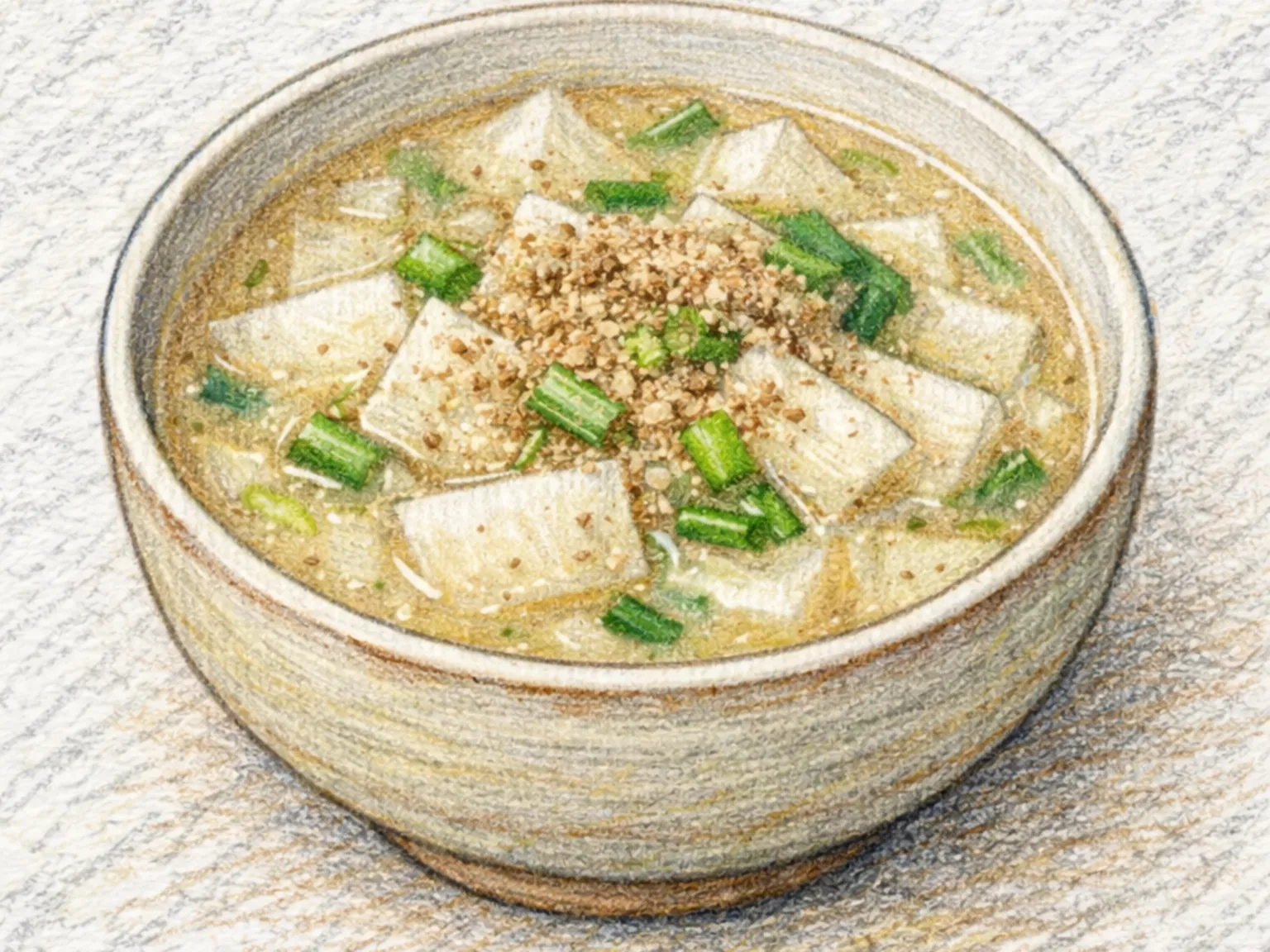
Korean Perilla Radish Soup
Deulkkae mu-guk is a Korean radish soup enriched with perilla seed powder, giving it a distinctly nutty, creamy quality that sets it apart from plain radish broth. Thinly sliced daikon radish simmers in anchovy stock for ten minutes first, releasing a clean sweetness into the liquid. When perilla powder is stirred in, it transforms the thin broth into something noticeably thicker and more substantial - unlike sesame, perilla carries a heavier, earthier fat that coats the palate. Adding the powder just before turning off the heat preserves its toasted fragrance, which fades if it simmers too long.
Adjust Servings
Instructions
- 1
Slice radish into flat pieces.
- 2
Add radish to boiling stock and simmer 10 minutes.
- 3
Add perilla powder and garlic, simmer 5 more minutes.
- 4
Season with soy sauce and salt, top with green onion.
As an Amazon Associate, we may earn from qualifying purchases.
Tips
Nutrition (per serving)
More Recipes

Siraegi Guk (Korean Perilla Radish Greens Soup)
Creamy, nutty, and deeply warming - this siraegi guk (dried radish greens soup) gets its velvety texture from perilla powder stirred into an anchovy-doenjang broth. The greens, which are dried and then rehydrated before use, carry a concentrated, earthy flavor and a fibrous chew that fresh vegetables cannot replicate. Massaging the greens with doenjang, garlic, and soup soy sauce before simmering allows the fermented seasoning to penetrate deep into the fibers over twenty minutes of cooking. Perilla powder added in two separate batches dissolves evenly without clumping, turning the broth an opaque, milky white with a thick, creamy consistency that clings to each spoonful.

Korean Potato Perilla Seed Soup
Nutty, creamy, and dairy-free - this Korean potato perilla seed soup is the kind of bowl that warms you from the inside out on a cold day. Potatoes are simmered in anchovy-kelp stock until they start to break apart and thicken the liquid naturally. Ground perilla seed is then stirred in, transforming the broth from clear to opaque and layering on a distinctive toasted, earthy fragrance. The flavor sits in a unique space - neither as pungent as doenjang soup nor as neutral as plain potato broth - with a lingering nuttiness that builds with each spoonful. Onion and green onion provide background sweetness, and a touch of soup soy sauce ties the seasoning together. This is everyday home cooking in Korea, the kind of soup that rarely appears on restaurant menus but shows up on family dinner tables whenever the weather turns cold.

Korean Radish Greens Perilla Soup
Mucheong-deulkkae-guk is a Korean soup that layers two of the cuisine's most comforting flavors - fermented soybean paste and ground perilla seeds - over a base of dried radish greens. The greens are boiled until tender, dressed with doenjang, and then simmered in anchovy-kelp stock with a generous scoop of perilla seed powder. As the powder dissolves, the broth turns from clear to opaque and takes on a creamy, nutty character that clings to the greens and pools richly over steamed rice. Garlic and green onion build the aromatic framework, while the radish greens themselves contribute a mild, earthy chew that makes the soup feel substantial despite having no meat. This is a dish most commonly associated with rural home cooking, where dried radish greens are a pantry staple preserved from the autumn harvest. The combination of doenjang and perilla creates a umami density that is quietly addictive - the kind of soup that never appears on trendy restaurant menus but occupies a permanent place in the memory of anyone who grew up eating it.

Korean Fish Soup (White Fish and Radish Clear Broth)
Saengseon-guk is a traditional Korean fish soup made with white-fleshed fish and radish in a clear broth. The radish simmers first, building a base of natural sweetness, before garlic and soup soy sauce are added for depth. The fish goes in once the radish is halfway cooked, and timing matters - it should cook only until the flesh turns opaque and begins to flake, as prolonged boiling would break it apart and cloud the broth. Tofu and sliced Korean chili peppers join near the end, adding soft texture and a mild kick. Green onion finishes the bowl with a fresh note. The result is a light, transparent soup where the fish's own clean, marine flavor does most of the work. It is the kind of straightforward home cooking that appears on Korean dinner tables throughout the year, requiring little more than fresh fish and basic pantry staples.

Korean Perilla Radish Greens Shrimp Stew
Radish greens and medium shrimp come together in this stew with a rich, nutty broth thickened by four tablespoons of perilla seed powder. The radish greens provide a hearty, slightly fibrous chew that absorbs the savory broth well. Doenjang and soup soy sauce season the anchovy-kelp stock base, while the shrimp release their own briny sweetness as they cook. The result is a deeply flavored, rustic stew that balances the earthiness of perilla with the ocean freshness of shrimp.

Korean Burdock Perilla Seed Stew
A hearty stew built on burdock root, potatoes, and oyster mushrooms in a perilla seed broth. The burdock root retains a firm, earthy crunch while the potatoes soften and break down slightly to thicken the stew. Anchovy-kelp broth provides the savory base, and generous perilla seed powder creates a creamy, nutty consistency throughout. This meat-free stew is substantial enough to serve as a satisfying main dish.