Korean Perilla Radish Greens Shrimp Stew
Quick answer
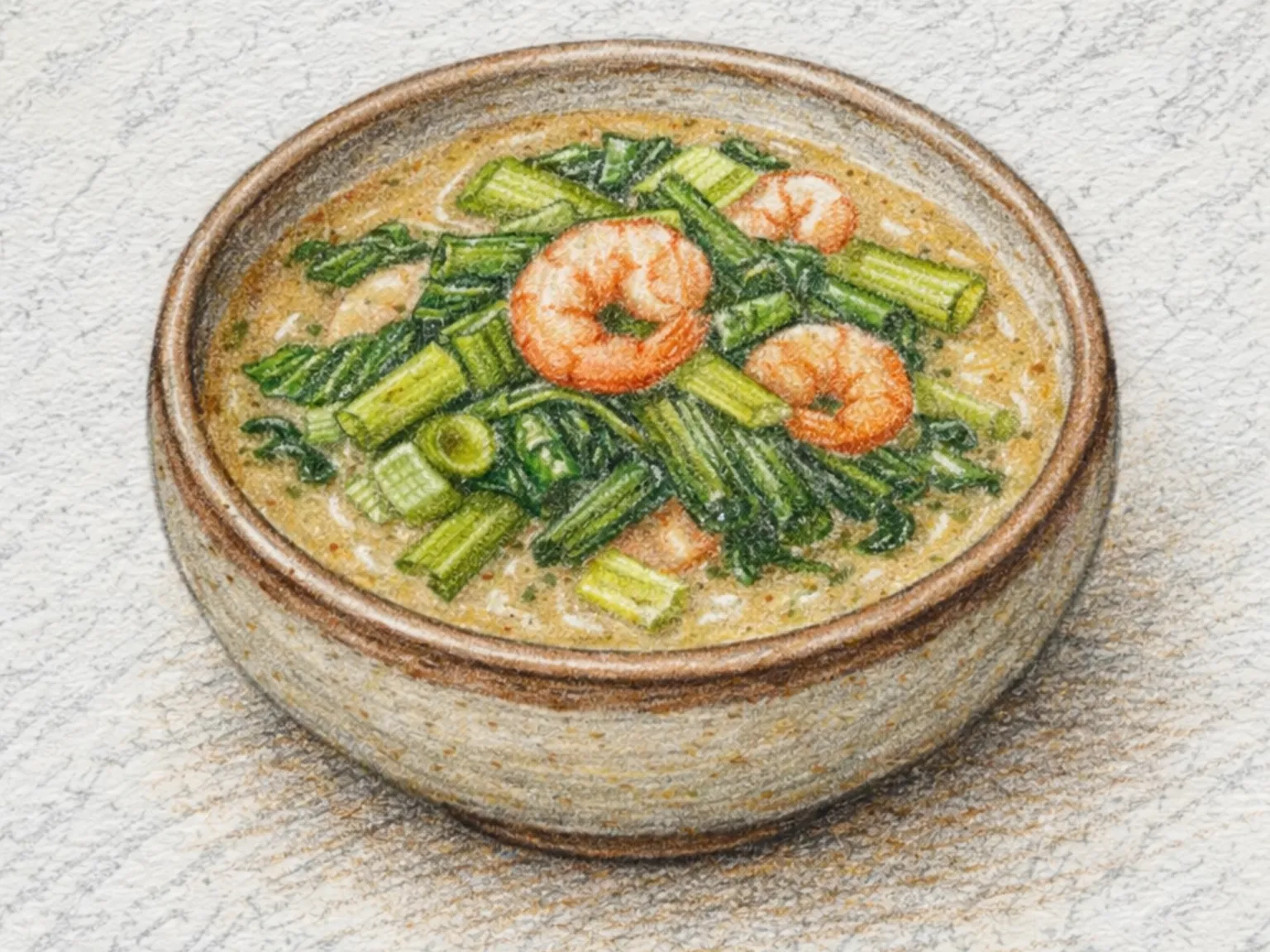
Deulkkae mucheong saeu jjigae is a hearty stew made with radish greens, medium shrimp, and four tablespoons of perilla seed powder stirred into an anchovy-kelp stock base.
What makes this special
- Radish greens and medium shrimp simmer in a nutty deulkkae mucheong saeu jjigae.
- Four tablespoons of perilla powder dissolved in anchovy-kelp broth give a dense, nutty base
- Shrimp umami and radish greens earthiness merge in the doenjang-soy base
Key ingredients
Core cooking flow
- 1 Prepare 250g of pre-blanched and rinsed radish greens by cutting them into 4...
- 2 Pour 1200ml of anchovy-kelp stock into a pot and dissolve 1 tablespoon of do...
- 3 Add 120g of sliced onion and the radish greens, then simmer on medium heat f...
Deulkkae mucheong saeu jjigae is a hearty stew made with radish greens, medium shrimp, and four tablespoons of perilla seed powder stirred into an anchovy-kelp stock base. Radish greens rather than dried sigeumchi give the stew a tender but substantive chew, and they absorb the savory broth well during cooking. Doenjang and soup soy sauce season the stock without overpowering the perilla, which contributes a deep, earthy nuttiness that defines the broth's character. As the shrimp cook, they release a clean briny sweetness that adds another layer of savory depth. Blanching and rinsing the radish greens before adding them removes any bitter edge and keeps the broth clear. The result is a sturdy, old-fashioned home-style stew with a well-rounded, deeply satisfying flavor.
Instructions
Read the steps as a cooking flow: prep, heat, seasoning, doneness control, and finish.
- 1Prep
Prepare 250g of pre-blanched and rinsed radish greens by cutting them into 4 cm pieces, then peel 280g of medium shrimp and remove the digestive tracts for a clean flavor.
- 2Heat
Pour 1200ml of anchovy-kelp stock into a pot and dissolve 1 tablespoon of doenjang through a fine sieve, then heat over high until the broth reaches a rolling boil.
- 3Control
Add 120g of sliced onion and the radish greens, then simmer on medium heat for 10 minutes until the greens become tender and absorb the savory stock deeply.
- 4Season
Incorporate the shrimp, 1.5 tablespoons of minced garlic, and 1 tablespoon of soup soy sauce, cooking for 5 minutes until the shrimp turn pink and release their briny sweetness.
- 5Control
Add 4 tablespoons of perilla seed powder, stirring carefully to prevent clumps, and simmer for 3 more minutes until the broth thickens slightly and develops a rich, nutty character.
- 6Finish
Toss in 60g of diagonally sliced green onions and bring to a final quick boil to infuse the aroma, then immediately turn off the heat to serve while hot.
After the steps
Pick a recipe that fits this dish.
Continue with shared ingredients, meal pairings, or a similar method.
Recipes That Go Well With This
More Stews →Based on shared ingredients and meal pairing
Korean Burdock Perilla Seed Stew
Ueong-deulkkae-jjigae is a Korean stew built on burdock root, potatoes, and oyster mushrooms simmered in an anchovy-kelp broth and thickened with perilla seed powder. The burdock root holds a firm, earthy crunch through the cooking while the potatoes soften and begin to break at the edges, and the oyster mushrooms add a pulling, fibrous chew that makes the stew feel substantial without any meat. Anchovy-kelp broth forms a clean, savory base, and a generous measure of perilla seed powder stirred in at the end creates a creamy, nutty consistency that coats every piece of vegetable and makes each spoonful feel round and warming. Soaking the burdock in cold water before cooking draws out bitterness and prevents the cut surfaces from darkening, which keeps the broth clear. Adding the potatoes after the burdock has partly cooked prevents them from collapsing entirely. Perilla seed powder should go in just before the heat is turned off so the toasted, nutty fragrance stays sharp rather than cooking away.
Korean Dried Radish Greens Perilla Stew
This stew simmers rehydrated dried radish greens in rice-rinse water thickened with a generous four tablespoons of perilla seed powder. A small amount of doenjang and gochujang provides savory depth, and using rice-rinse water instead of plain water adds a natural starchiness that helps the perilla powder integrate into the broth more smoothly. The perilla powder creates a creamy, nutty soup with a pale beige hue, and the chewy, fibrous texture of the radish greens contrasts with the richness of the liquid. The radish greens need to be fully rehydrated and pre-boiled so they absorb the broth evenly during cooking rather than remaining tough. Onion and green onion add layers of sweetness and fragrance, and seasoning gradually while the stew cooks produces a more balanced result than adding everything upfront. Served bubbling in an earthenware pot on cold days, this is one of the most comforting staples in Korean winter home cooking.
Korean Spam Mayo Rice Bowl
Thick-cut spam is pan-seared until the edges turn golden and crisp while the center stays moist. Soft-scrambled eggs are folded loosely so they remain creamy, then layered over steaming rice alongside the spam. A generous drizzle of mayonnaise sauce melts gently against the warm rice, binding the salty meat and silky egg together. A dash of soy sauce or sriracha adds a sharp accent that cuts through the richness and keeps each bite interesting. Controlling resting time and grain texture helps the ingredients cook evenly while keeping the final seasoning balanced.
Korean Radish Greens Perilla Soup
Mucheong-deulkkae-guk is a Korean soup that brings together two of the cuisine's most deeply comforting flavors - fermented soybean paste and ground perilla seeds - building them over a base of dried radish greens. The greens are boiled until fully tender, then worked with doenjang until the paste clings to every fiber, allowing the fermented soy flavor to penetrate thoroughly before the soup is even assembled. Simmered in a stock made from dried anchovies and kelp and enriched with a generous scoop of perilla seed powder, the broth shifts from translucent to an opaque, creamy white as the powder disperses. That transformation signals the moment when the soup reaches its characteristic nutty density - a flavor that sits somewhere between roasted sesame and warm earth. Garlic and green onion establish the aromatic structure, while the chewy resistance of the radish greens provides a textural contrast that distinguishes this soup from smoother versions made with tofu or mushrooms. The broth is substantial enough to pour directly over steamed rice, where the perilla richness coats each grain and becomes a natural base for mixing. This is a dish rooted in the practical food culture of Korean rural households, where radish greens harvested in autumn were dried and kept through winter as a pantry staple. The combination of doenjang and perilla creates an umami depth that is quietly compelling - the kind of soup that rarely appears on restaurant menus but occupies a permanent place in the memory of anyone who grew up eating it.
Serve with this
Korean Stir-fried Zucchini
Hobak-bokkeum is one of the quickest and most fundamental banchan in the Korean home-cooking repertoire. Thinly sliced Korean zucchini, known as aehobak, is salted for five minutes to draw out moisture before cooking. Skipping this step floods the pan during stir-frying and produces a steamed rather than properly stir-fried result. Seasoning with saeujeot, fermented salted shrimp paste, instead of plain salt brings a deeper marine umami that cannot be replicated by sodium alone, and the high salinity of the paste means additional salt is rarely needed. High heat and a short cooking time allow the surface of each slice to lightly caramelize, building a toasty, nutty aroma while the interior cooks through without turning watery or soft. Garlic goes into the oil first to bloom its fragrance before the zucchini follows, layering flavor from the base. Green onion added in the final seconds of cooking preserves its aromatic edge rather than wilting away. A drizzle of sesame oil and a scatter of toasted sesame seeds at the end produces a clean, simply flavored side dish with a lasting nutty finish. When aehobak is already in the refrigerator, the whole dish can be on the table within five minutes.
Korean Mustard Greens Pickle
Paeju mustard pickle is a quick vinegar preserve where mustard greens are cut into roughly four-centimeter pieces, packed into jars with sliced garlic, and submerged in a hot brine of vinegar, water, sugar, salt, and lemon juice. Mustard greens hold on to their peppery, nasal bite even after pickling, layering that natural heat against the sharp acidity of the brine. Lemon juice is added only after the heat is turned off, preserving the citrus aroma that would otherwise evaporate during boiling. Thicker stems absorb the brine more slowly than the leaves, so separating them and salting the stems first gives a more uniform texture throughout. The pickles are ready after twelve hours of refrigeration, but a full day of resting allows the brine to penetrate to the center of each piece and the flavors to settle into a rounder balance. Served alongside fatty meats, their peppery acidity cleans the palate effectively; tucked into a sandwich, they stand in for mustard with more complexity.
Korean Seaweed Oyster Pancake
Miyeok oyster jeon is a Korean seaweed and oyster pancake that offers a savory taste of the ocean. The cooking begins by rinsing fresh oysters in light salted water and draining them, while soaked seaweed is squeezed firmly to remove moisture before being cut. The pancake batter is prepared by mixing Korean pancake mix, cold water, an egg, minced garlic, and soup soy sauce. The seaweed, oysters, and minced red chili are gently folded into the batter. Ladles of the mixture are pan-fried in oil over medium-low heat for three minutes on each side, ensuring the oysters stay submerged in the batter to cook. The finished pancake features a crisp exterior with a soft, chewy seaweed interior, and juicy oysters that release their briny flavor with every bite.
Similar recipes
Korean Turnip Perilla Seed Stew
Sunmu deulkkae jjigae is a gentle Korean stew that simmers turnip with ground perilla seed in a kelp stock base. As the turnip cooks slowly, it softens and releases a quiet natural sweetness, while the perilla powder thickens the broth into a creamy, nutty layer that coats each spoonful. Oyster mushrooms add a chewy bite and soft tofu contributes protein, rounding out the bowl into a balanced meal on its own. Adding the perilla powder late in the cooking process preserves its aroma, and the stew should be finished within two to three minutes of the broth returning to a boil to prevent any bitterness from developing. Seasoned with soup soy sauce and a drizzle of sesame oil at the end, the result is a clean, quietly satisfying stew that is easy on the stomach.
Korean Dried Greens Mackerel Stew
Siraegi-godeungeo-jjigae is a spicy Korean stew that combines mackerel and boiled dried radish greens in a gochugaru-seasoned broth. The oily, pronounced umami of the mackerel and the earthy, slightly musty depth of the dried greens amplify each other in the pot, while Korean radish maintains a clean, refreshing base that prevents the combination from becoming too heavy. Using rice-rinse water as the broth foundation is a traditional technique that neutralizes the mackerel's fishiness while simultaneously giving the liquid a mild, rounded body that plain water cannot provide. The radish greens must be well squeezed after boiling to remove any grassy, off-putting odor; briefly sauteing them in perilla oil before adding them to the stew deepens their nutty character further. Seasoning with gochugaru alone, without gochujang, preserves the clarity and clean red color of the broth and keeps its defining quality: a penetrating spiciness that is simultaneously bracing and warming rather than paste-thick and murky. Onion, green onion, and minced garlic round out the aromatics and complete the flavor profile of a classic everyday Korean jjigae. Mackerel is typically added bone-in, and eating it by working the flesh off the bones with chopsticks as you go is part of the simple, unhurried character of the dish.
Siraegi Guk (Korean Perilla Radish Greens Soup)
Deulkkae siraegi guk is a rich, nutty Korean soup made by simmering dried radish greens that have been pre-seasoned with doenjang and soup soy sauce in an anchovy broth for at least twenty minutes. Siraegi, which refers to radish leaves that have been dried and then rehydrated before cooking, carries a concentrated earthiness and a fibrous, chewy texture that fresh greens cannot replicate. Massaging the greens with doenjang and garlic before they go into the pot allows the fermented seasoning to penetrate into the fibers over the extended cooking time rather than merely coating the surface. The anchovy broth beneath provides a clean, saline umami that supports the deeper, fermented notes of the doenjang without competing. Perilla powder added in two separate additions dissolves evenly through the broth without clumping, turning the liquid an opaque, milky white and thickening it to a consistency that clings to each spoonful and gives the soup its characteristic weight. Green onion added during the final three minutes of cooking contributes a fresh, sharp aroma that sits lightly on top of the perilla fragrance, completing the layered, hearty character of the soup.