Korean Perilla Chicken Soup
Quick answer
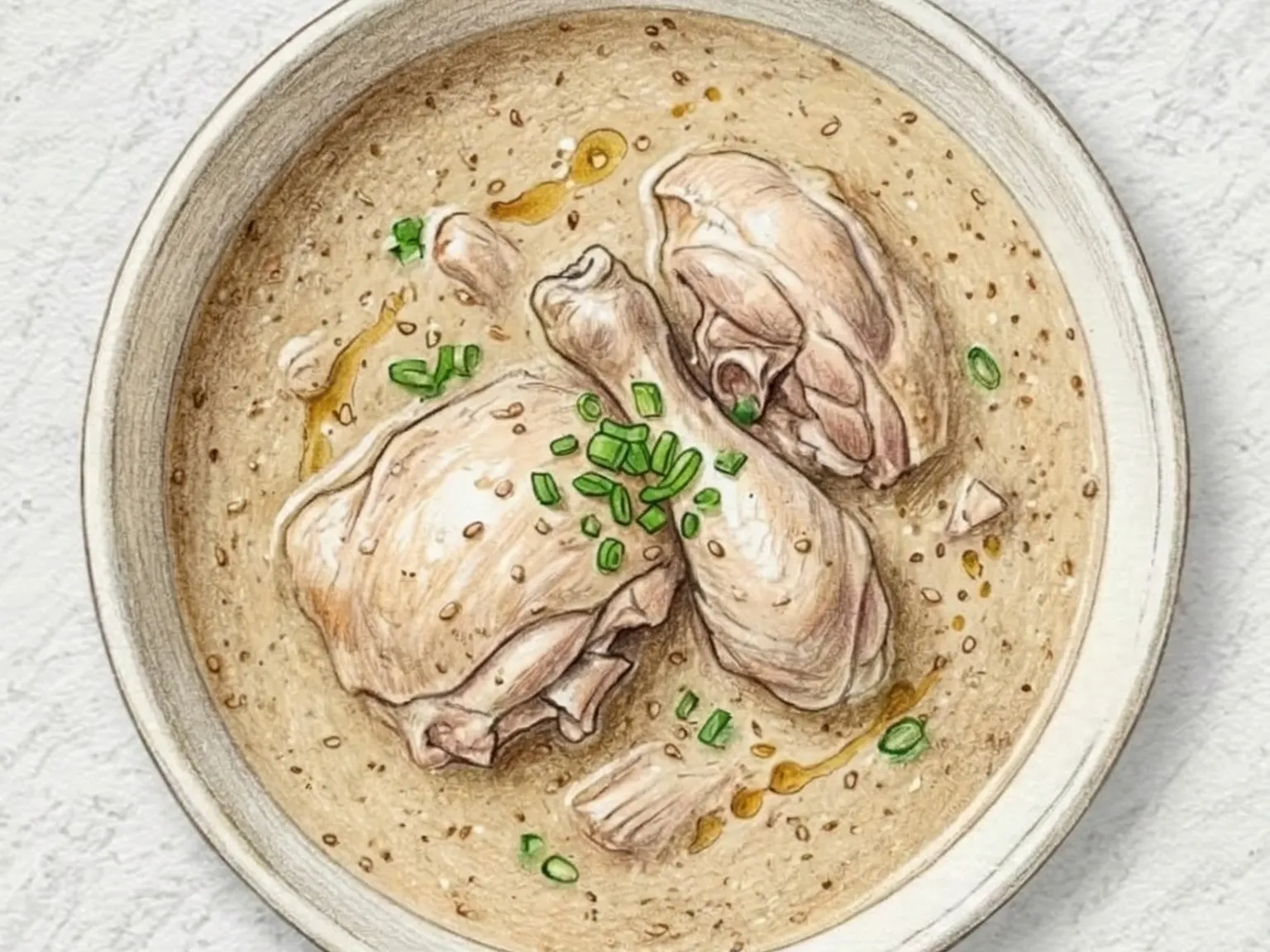
Deulkkae samgye-guk is a perilla-enriched Korean chicken soup that delivers the warming, restorative depth of samgyetang with a considerably simpler preparation -- no glu...
What makes this special
- Deulkkae samgye-guk provides a simplified chicken tonic enriched with the nutty body of ground perilla seeds.
- Perilla powder alone adds nutty body and depth, no ginseng or glutinous rice
- Pre-mixing perilla powder with water before adding prevents clumping in the broth
Key ingredients
Core cooking flow
- 1 Cut 0.5 whole chicken into large 5 cm pieces, then rinse away any blood or bone fragments.
- 2 Set the pot over high heat and bring it to a strong boil.
- 3 Add 2 green onion stalks and 5 garlic cloves, then lower the heat to medium and simmer for 40 minutes.
Deulkkae samgye-guk is a perilla-enriched Korean chicken soup that delivers the warming, restorative depth of samgyetang with a considerably simpler preparation -- no glutinous rice to stuff, no ginseng required, just chicken pieces and perilla seed powder. The chicken is cut into large pieces and placed in cold water from the start, then simmered for forty minutes so the collagen and flavor compounds dissolve gradually into the broth, turning it milky and full-bodied. Perilla powder must be pre-dissolved in a small cup of water before being stirred in -- adding it dry causes it to clump -- and ten more minutes of gentle simmering allows its oils to emulsify fully into the chicken stock, creating a broth with a smooth, nutty coating on every sip. Seasoning with only soup soy sauce and salt lets the natural savoriness of the chicken and the distinctive fragrance of perilla come through without distraction. Rich in the omega-3 fatty acids of perilla seed and the protein of chicken, this soup is eaten as a restorative meal during hot summers and whenever energy levels drop.
Instructions
Read the steps as a cooking flow: prep, heat, seasoning, doneness control, and finish.
- 1Prep
Cut 0.5 whole chicken into large 5 cm pieces, then rinse away any blood or bone fragments.
Place the chicken in a pot with 1500 ml cold water so the broth can extract gradually from the start.
- 2Finish
Set the pot over high heat and bring it to a strong boil.
As gray foam gathers on the surface, skim it off with a ladle so the finished soup tastes clean and the broth stays clear.
- 3Control
Add 2 green onion stalks and 5 garlic cloves, then lower the heat to medium and simmer for 40 minutes.
The broth should turn milky, and the chicken should begin to loosen gently from the bone.
- 4Prep
In a small bowl, mix 3 tsp perilla seed powder with a few spoonfuls of water before adding it.
Do not add the dry powder directly, because it can clump and leave a gritty texture.
- 5Control
Pour the dissolved perilla mixture slowly into the broth while stirring.
Simmer over medium low heat for 10 more minutes, letting the nutty oils blend into the chicken stock and lightly thicken it.
- 6Finish
Season with 1 tsp soup soy sauce and 1 tsp salt, then let the soup return to a brief boil.
Remove the green onion stalks, taste the broth, and serve it hot while the texture is smooth.
After the steps
Pick a recipe that fits this dish.
Continue with shared ingredients, meal pairings, or a similar method.
Recipes That Go Well With This
More Soups →Based on shared ingredients and meal pairing
Siraegi Guk (Korean Perilla Radish Greens Soup)
Deulkkae siraegi guk is a rich, nutty Korean soup made by simmering dried radish greens that have been pre-seasoned with doenjang and soup soy sauce in an anchovy broth for at least twenty minutes. Siraegi, which refers to radish leaves that have been dried and then rehydrated before cooking, carries a concentrated earthiness and a fibrous, chewy texture that fresh greens cannot replicate. Massaging the greens with doenjang and garlic before they go into the pot allows the fermented seasoning to penetrate into the fibers over the extended cooking time rather than merely coating the surface. The anchovy broth beneath provides a clean, saline umami that supports the deeper, fermented notes of the doenjang without competing. Perilla powder added in two separate additions dissolves evenly through the broth without clumping, turning the liquid an opaque, milky white and thickening it to a consistency that clings to each spoonful and gives the soup its characteristic weight. Green onion added during the final three minutes of cooking contributes a fresh, sharp aroma that sits lightly on top of the perilla fragrance, completing the layered, hearty character of the soup.
Korean Burdock Perilla Seed Stew
Ueong-deulkkae-jjigae is a Korean stew built on burdock root, potatoes, and oyster mushrooms simmered in an anchovy-kelp broth and thickened with perilla seed powder. The burdock root holds a firm, earthy crunch through the cooking while the potatoes soften and begin to break at the edges, and the oyster mushrooms add a pulling, fibrous chew that makes the stew feel substantial without any meat. Anchovy-kelp broth forms a clean, savory base, and a generous measure of perilla seed powder stirred in at the end creates a creamy, nutty consistency that coats every piece of vegetable and makes each spoonful feel round and warming. Soaking the burdock in cold water before cooking draws out bitterness and prevents the cut surfaces from darkening, which keeps the broth clear. Adding the potatoes after the burdock has partly cooked prevents them from collapsing entirely. Perilla seed powder should go in just before the heat is turned off so the toasted, nutty fragrance stays sharp rather than cooking away.
Korean Mushroom Porridge (Silky Shiitake Sesame Porridge)
Shiitake mushrooms and onion are sauteed in sesame oil to build a deep aromatic base, then simmered with soaked rice and water for 35 minutes until the grains break down into a silky porridge. Despite containing no meat, the natural glutamates in shiitake produce a full-bodied broth, sharpened with a finish of soy sauce and black pepper. Using rehydrated dried shiitake instead of fresh intensifies the woodsy fragrance further, and adding the soaking liquid to the pot deepens the broth even more. A few drops of sesame oil stirred in just before serving leave a nutty note in each spoonful. Mild and settling, it works as a morning meal or as something to eat when the stomach needs rest.
Korean Taro Soup (Autumn Taro in Nutty Perilla Seed Broth)
Toran-guk is an autumn soup centered on taro root, which is first parboiled to remove its slippery mucilage, then simmered in a broth thickened with ground perilla seeds. The taro pieces cook to a texture that falls somewhere between potato and chestnut - they crumble softly on the tongue yet retain a subtle stickiness that gives each bite a gentle cling. Ground perilla dissolves into the liquid and turns it opaque and creamy, layering a nutty richness over the taro's mild, earthy flavor. Beef is often added for depth, its rendered fat and juices rounding out the broth, while an anchovy-kelp base underneath sharpens the umami. The soup is closely associated with Chuseok, the Korean harvest festival, when taro is freshly dug and at its peak sweetness. Cooking the taro just long enough to soften without disintegrating is the key challenge - underdone pieces are chalky and irritate the throat, while overcooked ones dissolve into the broth and lose their identity. Served hot with steamed rice, toran-guk is one of those seasonal dishes that Koreans anticipate all year and miss the moment autumn ends.
Serve with this
Korean Braised Saury in Spicy Sauce
Kkongchi-jorim simmers Pacific saury with daikon radish in a soy-gochujang sauce until the bones soften enough to eat whole - a thrifty Korean fish braise built on one of autumn's most affordable catches. The radish lines the pot bottom, cushioning the fish from direct heat to prevent breakage while absorbing the braising liquid into sweet, flavor-soaked wedges. After bringing the sauce to a boil, twenty-five minutes of medium-low simmering renders the fine bones edible without adding vinegar. Canned saury, with bones already softened during processing, halves the cooking time for weeknight shortcuts. Green onion placed on top in the final two minutes tempers the fish's natural oiliness and adds a visual accent. Like most jorim-style banchan, this dish improves over several days in the refrigerator as the seasoning continues to penetrate.
Korean Spicy Salted Octopus Jeotgal
Nakji jeotgal is a Korean fermented octopus side dish made by packing cleaned octopus in coarse salt for at least forty minutes to draw out moisture and firm the flesh, then coating it thoroughly in a paste of gochugaru, minced garlic, minced ginger, anchovy fish sauce, and plum syrup before cold-aging in the refrigerator. The initial salt cure tightens the octopus's already springy muscle fibers, intensifying the chew, and the gochugaru paste forms a dense crimson coating that forces spicy, salty heat into every layer of flesh as the dish sits. Anchovy fish sauce builds the umami foundation while plum syrup counteracts any lingering marine smell and introduces a subtle fruit sweetness that rounds out the salt and chili. Ginger leaves a sharp, clean note at the back of the palate that keeps the overall flavor from becoming heavy. After two to three days of refrigeration, a slow fermentation sets in and the separate components fuse into a cohesive, deeply savory whole. Served over warm rice, each piece of octopus delivers a firm, elastic chew followed by a concentrated rush of ocean flavor, and a drop of sesame oil stirred in at serving adds a toasted, nutty finish.
Korean Chive Clam Jeon (Garlic Chive and Clam Seafood Pancake)
Buchu-bajirak-jeon is a seafood pancake of garlic chives and clam meat, pan-fried in a batter made with a mix of all-purpose pancake flour and rice flour. The rice flour addition increases the chew and gives the finished jeon a slightly more resilient texture than plain flour batters. Clam meat releases a briny, oceanic liquid as it cooks that seeps into the batter and flavors it throughout, while the chives add a sharp, grassy counterpoint. Minced garlic and diagonally sliced cheongyang chili worked into the batter suppress any fishiness and build a layered fragrance. A generous amount of oil in the pan over medium heat produces edges that crisp and brown like the outside of a fritter. Waiting until the bottom is fully set before flipping prevents the pancake from tearing. Served with soy dipping sauce or a seasoned soy mixture, the clean salinity of the clams comes through clearly.
Similar recipes
Korean Mushroom Perilla Soup
Three types of mushrooms - oyster, shiitake, and king oyster - simmer together in an onion-based vegetable stock before ground perilla seeds are stirred in to thicken the broth into a nutty, substantial soup. Cooking the mushrooms and garlic for ten minutes in the stock allows each variety's distinct aroma to build in layers: the fibrous texture of oyster mushrooms, the deep earthiness of shiitake, and the firm, meaty bite of king oyster mushrooms all hold their character in the finished bowl. Cubed tofu is added partway through and gently absorbs the surrounding broth as it warms. Adding the perilla powder in small increments rather than all at once prevents clumping and produces a smooth, even consistency; pulling the pot off the heat at the right moment also stops the broth from separating as it cools. The vegetable stock base delivers a satisfying, full-bodied result without any animal ingredients.
Korean Chicken Radish Soup
Dak mu-guk is a Korean chicken and radish soup that produces a clear, deeply flavored broth from two simple main ingredients. Chicken thigh meat, cut into bite-sized pieces, is blanched for one minute in boiling water before the main simmer - this step removes impurities and blood, which is the most reliable way to achieve a transparent broth rather than a cloudy one. Onion and ginger then build the aromatic backbone over twenty minutes of gentle, low heat, allowing the chicken's natural depth to develop without aggressive boiling. The radish is cut into thin, flat squares rather than thick slabs; this shape turns translucent within ten minutes and releases its clean sweetness into the liquid quickly and evenly. Soup soy sauce and salt season the broth, and diagonally sliced green onion goes in just before the heat is turned off to preserve its color and mild bite. The result balances the richness of chicken stock against the cool, vegetal sweetness of radish in a soup that is light enough to eat when recovering from illness yet satisfying as an everyday meal.
Perilla Pesto Chicken Penne
Perilla pesto chicken penne uses Korean perilla leaves and walnuts blended with olive oil into a thick, aromatic pesto that coats penne and thinly sliced seared chicken breast. Perilla leaves carry a grassy, slightly bitter fragrance with a faint sesame-like undertone that sets them entirely apart from basil - closer in character to shiso, but with a more pronounced herbal edge. Walnuts add a creamy, substantial body to the pesto and leave a lingering nuttiness after each bite. The chicken breast is seared in olive oil until golden on the outside, then sliced thin so it distributes evenly through the pasta rather than sitting in one heavy portion. Parmesan contributes salt and umami to bind the sauce, and fresh lemon juice cuts through the richness of the oil with enough acidity to keep each forkful from feeling heavy. Penne's hollow tube shape catches pesto inside as well as out, so every bite carries full flavor even when sauce coverage on the surface looks minimal.