Korean Perilla Seed Hand-torn Noodle Soup
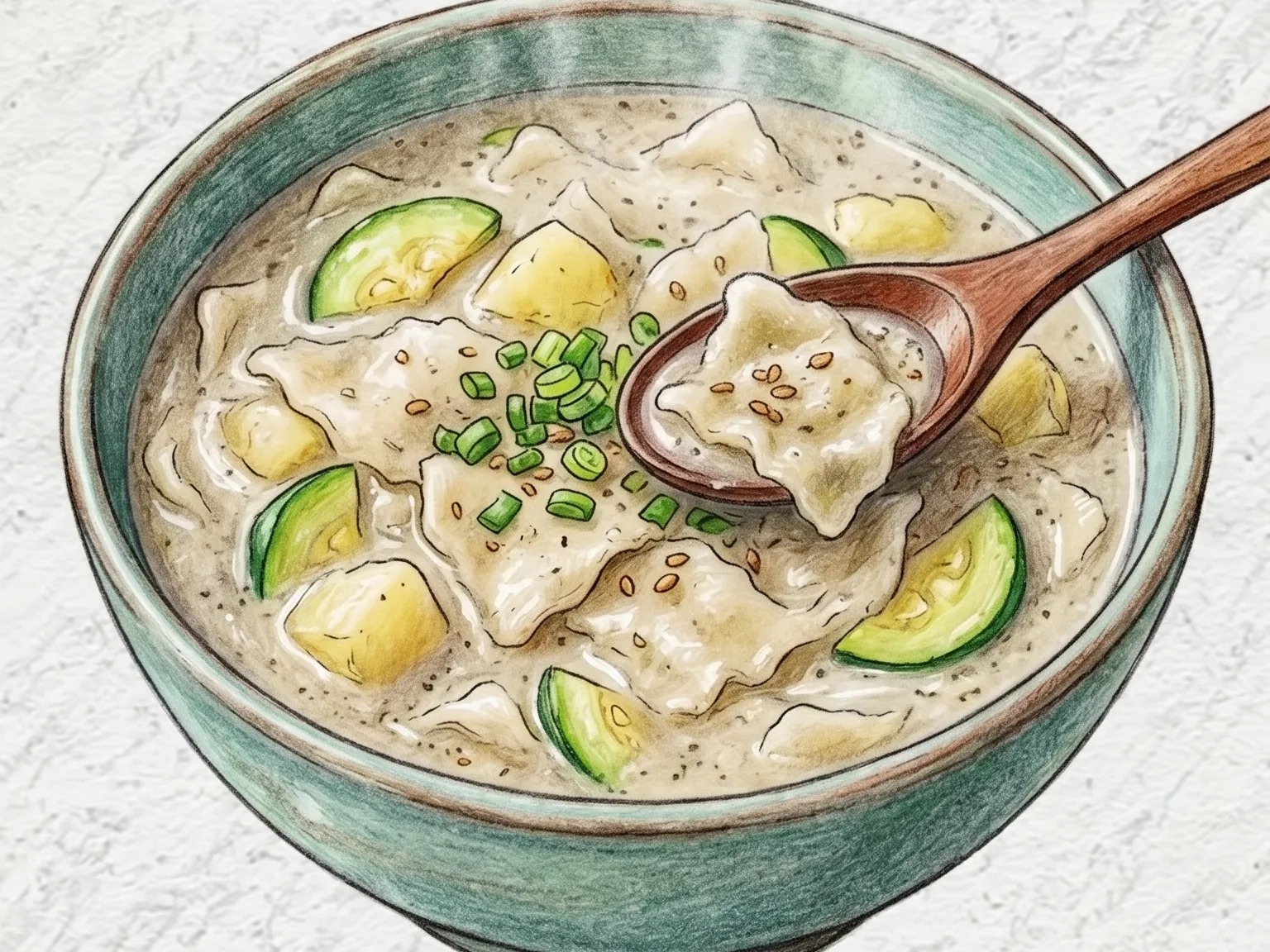
Deulkkae sujebi is a Korean hand-torn noodle soup where rested wheat dough is pulled into thin, irregular pieces and dropped into an anchovy-kelp broth enriched with ground perilla seeds. The thirty-minute rest gives the dough enough elasticity to tear thin while keeping a satisfying chew once cooked. Potato and zucchini simmer alongside the dough, contributing sweetness and a soft texture to the bowl. The perilla powder turns the broth milky and opaque, filling each spoonful with a roasted, creamy depth. This is a rainy-day and winter staple in Korean home cooking, valued for its warmth and the hands-on simplicity of tearing the dough.
Adjust Servings
Instructions
- 1
Mix flour with salt and water, rest for 30 minutes.
- 2
Make anchovy kelp broth, add potatoes and zucchini.
- 3
Add perilla powder, tear dough into broth and cook through.
As an Amazon Associate, we may earn from qualifying purchases.
Tips
Nutrition (per serving)
More Recipes

Korean Clear Noodle Soup (Anchovy Broth Somyeon)
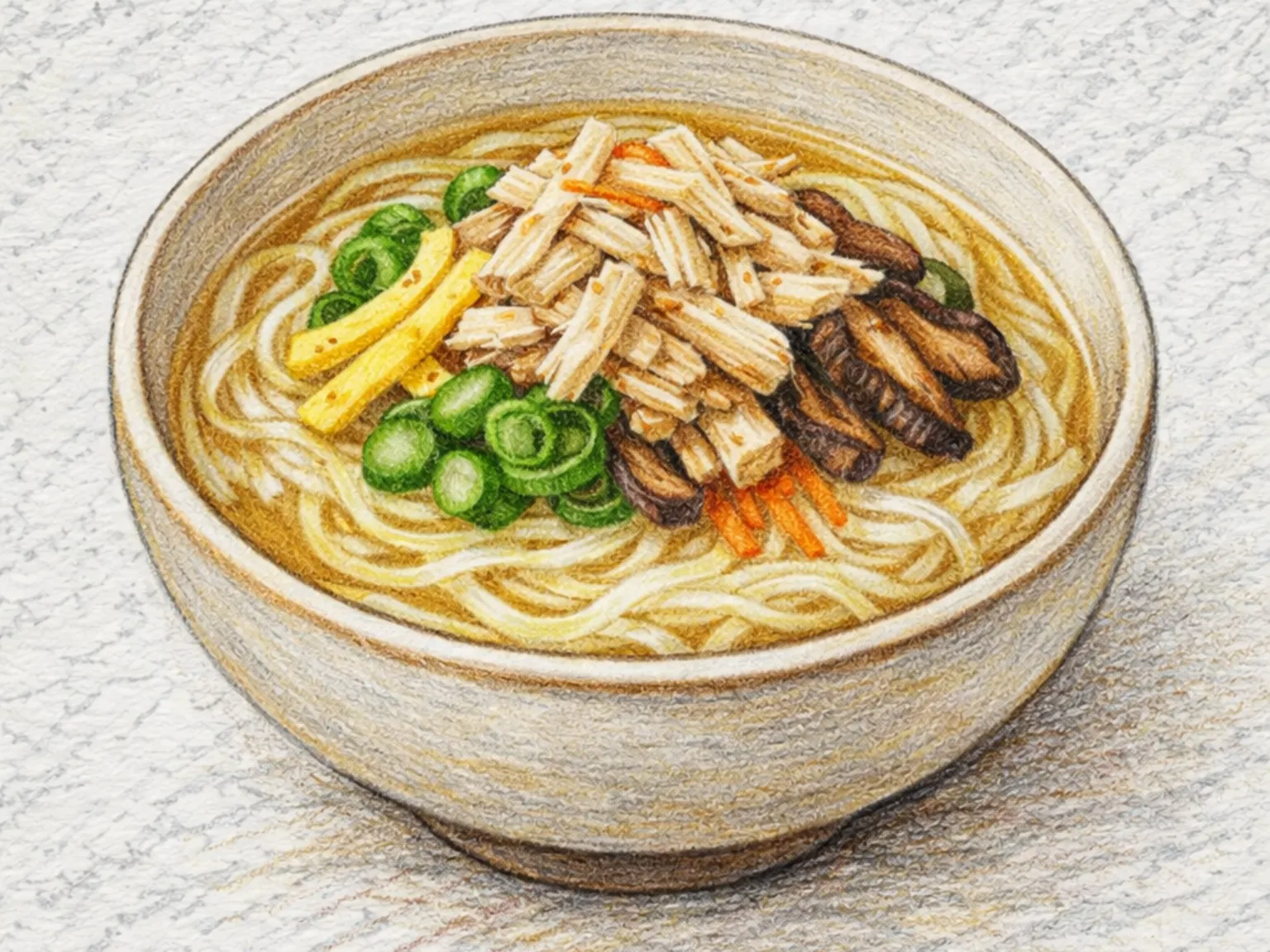
Mul guksu is a Korean noodle soup where thin somyeon noodles sit in a clear anchovy-kelp broth, served either warm or chilled as a light summer meal. The broth is made by simmering dried anchovies - heads and innards removed - with kelp for about fifteen minutes, producing a clean umami base without any off-flavors. Seasoning with salt and chilling the broth before serving heightens the refreshing quality. Somyeon noodles are boiled and rinsed several times in cold water to wash away surface starch, keeping the strands translucent and bouncy. Dried seaweed flakes and sesame seeds add a briny nuttiness, and sliced green onion provides a sharp aromatic point against the otherwise mild broth.

Korean Pork Noodle Soup (Jeju Milky Pork Bone Broth Noodles)
Gogi-guksu is a Jeju-style noodle soup built on a long-simmered pork bone broth. The broth turns milky-white and full-bodied from hours of boiling, carrying a deep pork richness that green onion and garlic temper into a clean, rounded flavor. A spoonful of doenjang stirred into the pot adds fermented depth that elevates the broth beyond a simple bone stock. Thin somyeon noodles, boiled separately and rinsed in cold water for a firm bite, soak up the hot broth and make this a filling, comforting bowl.

Korean Rice Cake Dumpling Noodle Soup
Tteok-mandu-guk-myeon combines sliced rice cakes, dumplings, and thin somyeon noodles in a rich beef bone broth. Each component contributes a different texture - chewy rice cakes, plump filled dumplings, and soft noodles - making the bowl substantial. The broth is typically garnished with egg strips, shredded seaweed, and scallions. This dish merges two traditional Korean soups (tteokguk and manduguk) into a single, filling meal. Using store-bought dumplings and pre-made broth, it can be ready in under 40 minutes.

Korean Perilla Seed Kalguksu
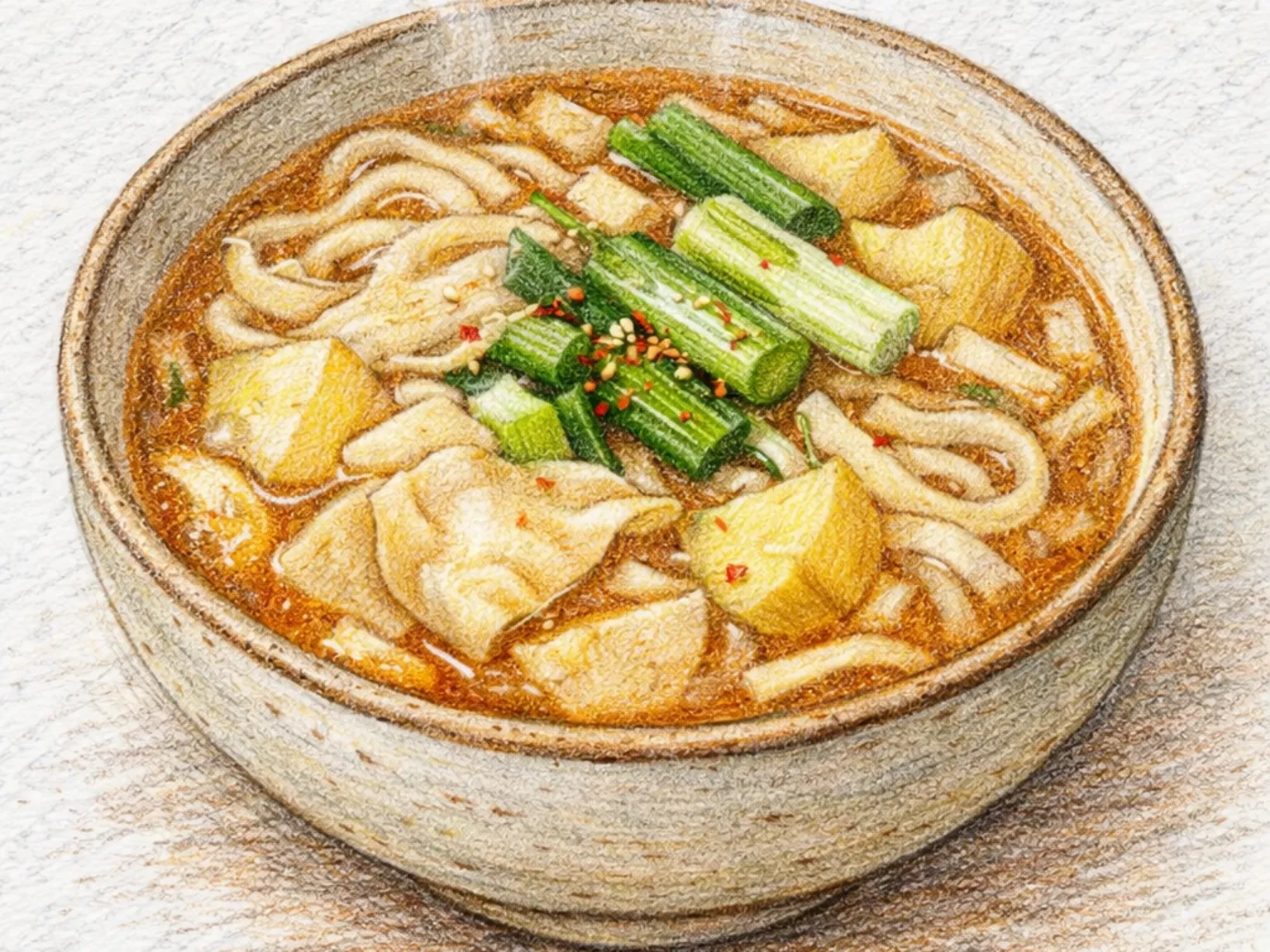
Perilla kalguksu is a Korean noodle soup where ground perilla seeds give the broth a distinctly nutty, creamy quality. Potatoes are simmered first to release starch, naturally thickening the liquid before the noodles go in. Onion and garlic add mild sweetness, and soup soy sauce seasons the bowl without darkening the color. The perilla powder is stirred in near the end of cooking to preserve its fragrance.

Korean Perilla Seed Porridge
Deulkkae juk is a traditional Korean porridge made by blending toasted perilla seeds into a smooth liquid and simmering it with soaked rice. Toasting the seeds beforehand unlocks a deep, earthy nuttiness that defines every spoonful of the finished porridge. The rice is first stir-fried briefly in sesame oil, then the perilla liquid is poured in and the mixture is stirred over low heat until the starch from the rice and the natural oils from the seeds combine into a thick, creamy consistency. Salt is the only seasoning needed - the perilla carries enough flavor on its own to make the bowl complete. The porridge is easy to digest and coats the stomach gently, making it suitable as a morning meal or a restorative dish during illness. In Korean tradition, deulkkae juk has long served as a warming winter food, valued for its ability to nourish without burdening the body.

Gamjaguk (Potato Doenjang Anchovy Soup)
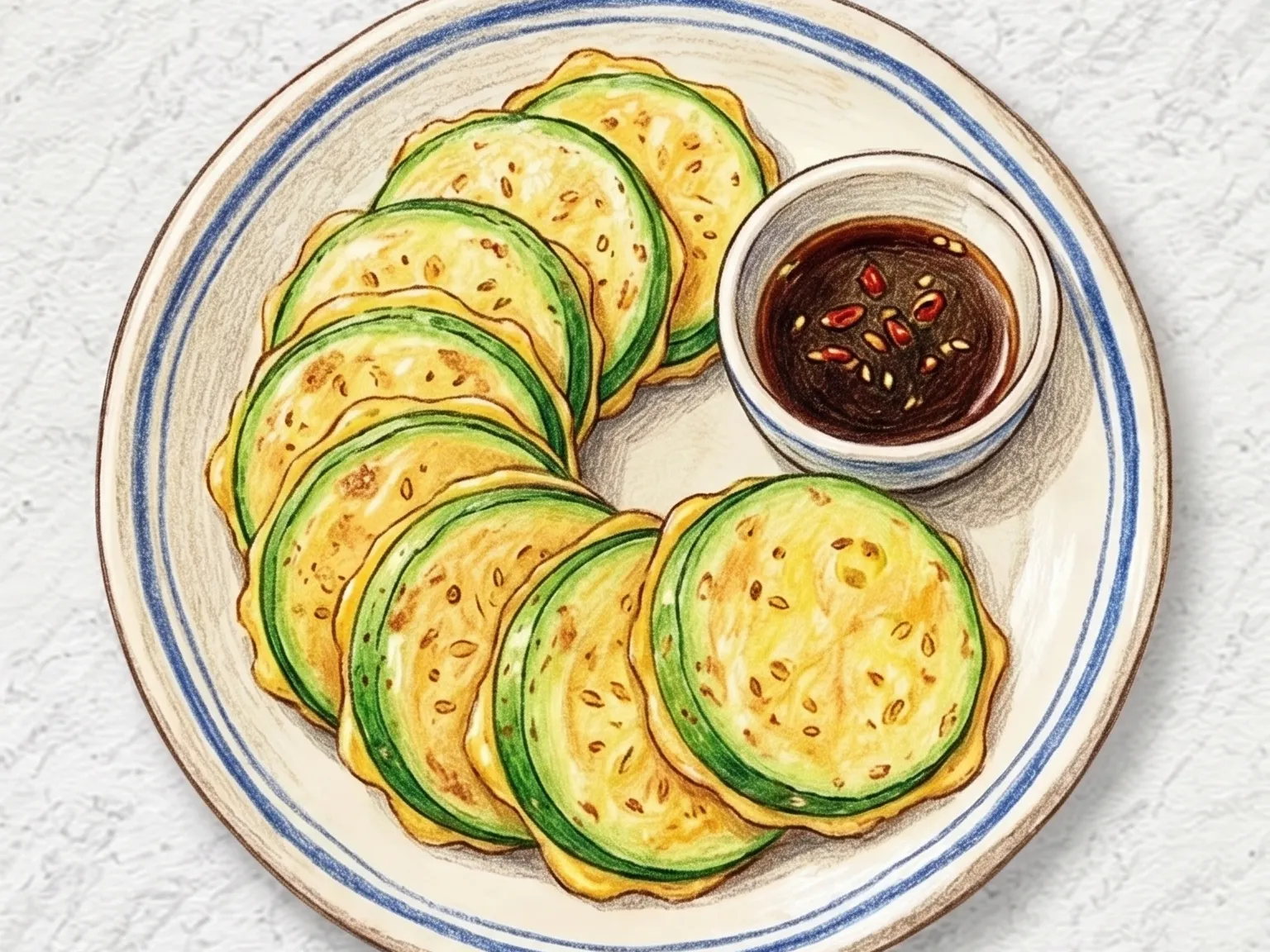
Gamjaguk is about as elemental as Korean soup gets - potatoes simmered in anchovy stock and seasoned with either doenjang or plain salt. When doenjang is used, the broth picks up a deep fermented savoriness that wraps around the mild potato flavor. When salt alone seasons the pot, the potato's own gentle sweetness becomes the star. Either way, the potatoes soften until their edges begin to dissolve, releasing starch that gives the broth a silky quality. Garlic and green onion provide the aromatic backbone, and a handful of zucchini can stretch the bowl into something more colorful. The beauty of gamjaguk lies in its accessibility - it can be assembled from a nearly empty refrigerator in fifteen minutes and still taste like home. It is one of those soups Korean families eat so often that it barely registers as a recipe, yet it remains one of the most requested comfort foods.