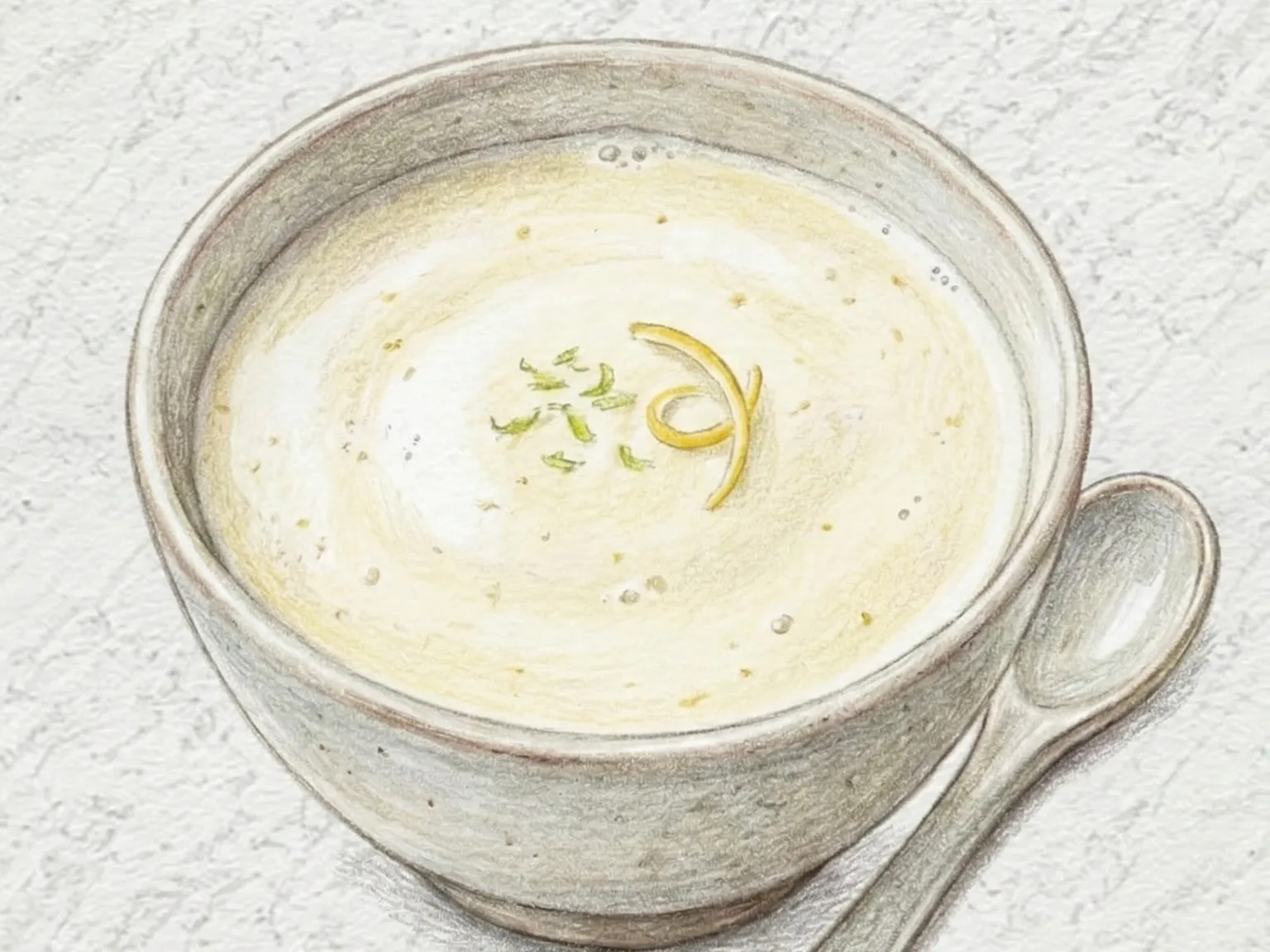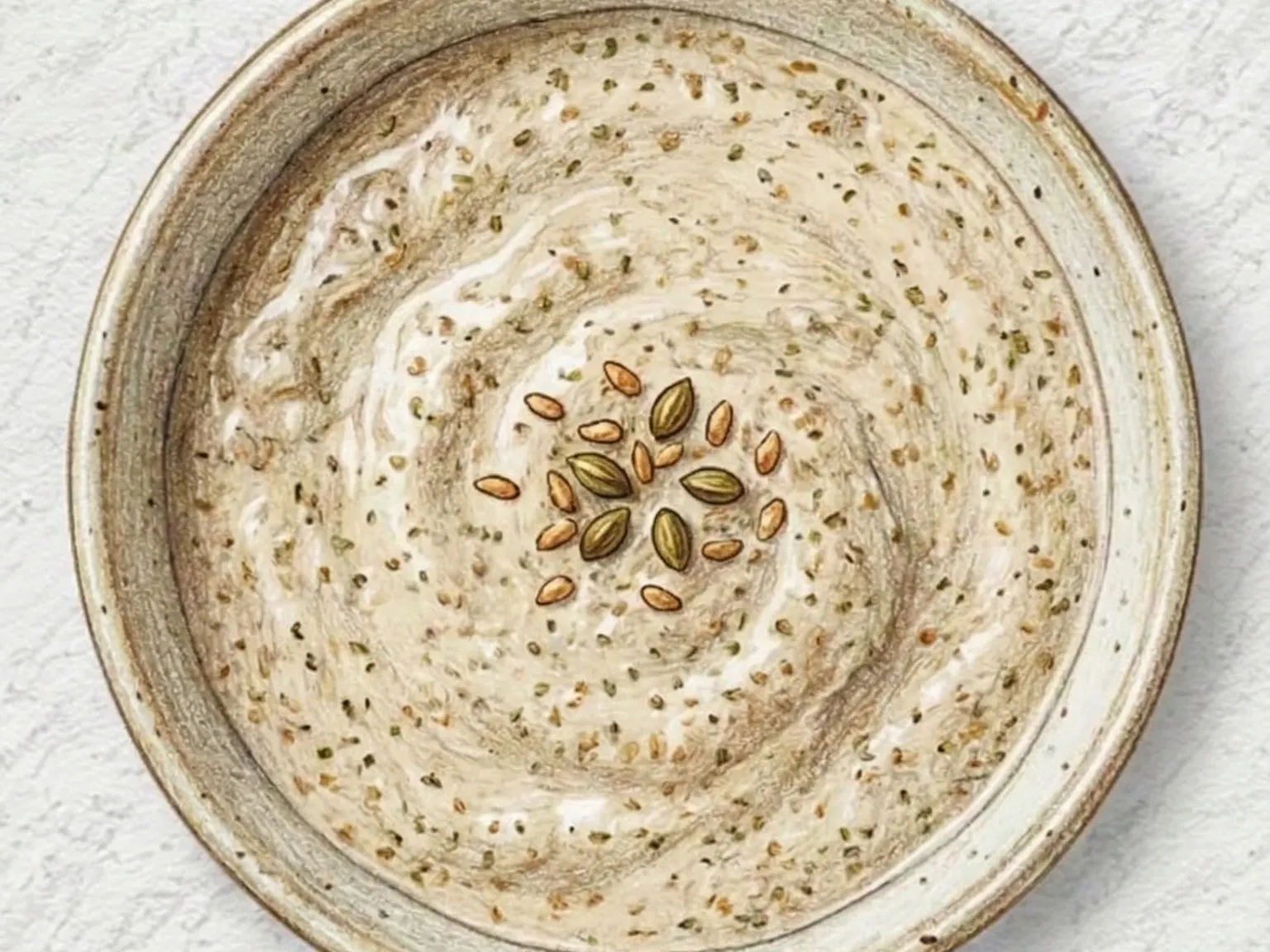
Korean Wild Soy Grain Smoothie
Quick answer
Deulkkong misut smoothie is a Korean grain-based drink made by blending wild soybean powder and roasted brown rice powder with milk, plain yogurt, and banana.
What makes this special
- Roasted brown rice and wild soybean powders combine for a toasty grain-forward smoothie.
- Wild soy and roasted brown rice flour stack nutty and toasty flavors
- Freezing banana 10 min creates shake-thick consistency without thickeners
Key ingredients
Core cooking flow
- 1 Slice 1 banana into bite-size pieces and spread them on a plate so they do not overlap.
- 2 Pour 350 ml milk and 120 g plain yogurt into the blender first.
- 3 Add 5 tablespoons wild soybean powder and 2 tablespoons roasted brown rice powder over the liquid.
Deulkkong misut smoothie is a Korean grain-based drink made by blending wild soybean powder and roasted brown rice powder with milk, plain yogurt, and banana. Mixing the dry powders into the liquid first prevents clumps from forming, and briefly freezing the banana beforehand creates a thick, shake-like consistency without any added thickeners. Wild soybean powder contributes a deep, nutty soybean flavor, and roasted brown rice powder adds a toasted, grainy undertone on the finish; the two powders have distinct characters that reinforce each other. Honey adjusts the sweetness, and a pinch of salt sharpens the grain flavors noticeably. Wild soybeans are higher in protein and isoflavones than common cultivated soybeans, making this smoothie substantial enough to serve as a full breakfast.
Instructions
Read the steps as a cooking flow: prep, heat, seasoning, doneness control, and finish.
- 1Finish
Slice 1 banana into bite-size pieces and spread them on a plate so they do not overlap.
Freeze for about 10 minutes, just until chilled and slightly firm, to help the smoothie become thick without extra thickeners.
- 2Step
Pour 350 ml milk and 120 g plain yogurt into the blender first.
Starting with the liquids helps the blades catch smoothly and prevents dry powder from packing around the bottom before blending begins.
- 3Step
Add 5 tablespoons wild soybean powder and 2 tablespoons roasted brown rice powder over the liquid.
Blend on low for about 10 seconds first, just until the powders are moistened and fewer dry lumps remain.
- 4Season
Add the chilled banana, 1.5 tablespoons honey, 1 pinch salt, and 120 g ice.
Blend on high for 35 to 45 seconds, until the sound becomes even and no visible ice pieces remain.
- 5Step
Open the lid and check the thickness and sweetness.
If the smoothie is too dense to pour, add a small splash of milk and pulse for 5 seconds at a time until it flows smoothly.
- 6Finish
Pour the smoothie into cold glasses right away and serve before the surface settles.
If it stands for more than a few minutes, stir once before drinking because the grain powders can sink slightly.
After the steps
Pick a recipe that fits this dish.
Continue with shared ingredients, meal pairings, or a similar method.
Recipes That Go Well With This
More Drinks →Based on shared ingredients and meal pairing
Korean Banana Misutgaru Smoothie
Banana misutgaru smoothie combines Korea's traditional roasted multigrain powder with banana for a filling, grain-forward drink. Misutgaru is made from roasted barley, glutinous rice, soybeans, and other grains ground into a fine powder; dissolved in liquid, it produces a toasty, earthy flavor that sets it apart from any standard smoothie base. Banana adds natural sweetness and body, while a spoonful of peanut butter deepens the nutty undertone. Honey fine-tunes the sweetness, and blending with ice makes the whole thing cold and thick. The grain fiber from the misutgaru and the potassium from the banana make this a substantial breakfast replacement in a single glass. Increasing the misutgaru proportion thickens the consistency toward something closer to porridge, and swapping in soy milk for regular milk intensifies the grain character.
Korean Misutgaru Latte (Roasted Multigrain Milk Drink)
Misutgaru latte is a Korean multigrain drink made by whisking roasted grain powder into cold milk and sweetening with honey. The misutgaru powder -- roasted barley, rice, and other grains ground together -- brings a deep, toasty nuttiness that milk carries into a smooth, substantial beverage. A tiny pinch of salt sharpens the grain flavors, and a dusting of roasted soybean powder on top adds another aromatic layer. Substituting part of the milk with soy milk intensifies the nutty profile for a richer, more complex grain latte, and serving it over ice makes it a satisfying cool drink through summer.
Gotgam Cream Cheese Roll (Dried Persimmon Rolls)
Gotgam cream cheese roll is a no-cook Korean dessert that requires nothing more than a knife, a bowl, and a refrigerator. Dried persimmons are slit open and flattened into thin sheets, each one acting as the outer wrapper. The filling is cream cheese mixed with honey and fresh lemon juice to balance its natural richness with acidity, and finely chopped walnuts are folded in throughout to add a crunchy, nutty element to every bite. The filling is spread across the opened persimmon, which is then rolled tightly and wrapped in plastic wrap. Twenty minutes in the refrigerator firms the roll enough to slice cleanly. Dipping the knife in warm water and wiping it dry before each cut produces the smoothest cross-sections. The finished slices reveal clearly defined layers: the chewy, caramel-sweet dried persimmon on the outside, the tangy cream cheese in the middle, and flecks of walnut distributed throughout. The combination makes it a natural pairing with wine or a polished addition to a traditional holiday table.
Korean Black Rice Coconut Smoothie
This smoothie is built on cooked black rice, blended with coconut milk, banana, and ice into a thick, grain-forward drink. The black rice is cooked and cooled before blending, which gives it a chewy, starchy quality that thickens the smoothie from within and contributes a toasty grain flavor that fruit-based smoothies do not have. Anthocyanin pigments in the black rice bran stain the drink a deep purple. Coconut milk brings its fat content to bear on the coarser grain particles, smoothing the texture into something creamy and uniform. Banana adds natural sweetness and a binding thickness that allows the smoothie to come together without added sugar from the start. Date syrup deepens the sweetness further, and blending with ice brings the drink to a cold temperature while loosening the consistency. Toasted coconut chips scattered over the finished smoothie provide a layer of crunch that contrasts with the thick, smooth body below and reinforces the coconut flavor throughout.
Serve with this
Korean Stir-fried Sundae (Sundae Bokkeum)
Sundae-bokkeum is a spicy Korean stir-fry of blood sausage with cabbage, onion, and green onion in a sauce made from gochujang, gochugaru, soy sauce, sugar, and garlic. High heat and a short cooking time are essential because prolonged stir-frying causes the sundae casing to burst and the filling to toughen, while the cabbage and onion release just enough moisture as they wilt to help the sauce coat every piece evenly. The seasoning stacks direct heat from gochujang, a gentler radiant warmth from gochugaru flakes, and sweetness from sugar into a multidimensional spicy-sweet profile. Green onion is held until the very last moment so its fragrance survives the heat; added earlier, the aroma disappears before the dish reaches the table. Adding tteokbokki rice cakes transforms the dish into the popular combo known as tteoksuni, and a layer of melted cheese on top rounds out the spice.
Korean Spicy Stir-Fried Anchovies
Spicy stir-fried anchovies (maeun myeolchi-bokkeum) toss medium-sized dried anchovies in a gochujang-gochugaru glaze, occupying the opposite end of the flavor spectrum from the sweet jiri-myeolchi version and targeting adult palates. Medium anchovies are larger and thicker than the tiny variety, requiring individual head-and-gut removal to eliminate bitterness - a tedious prep step that nonetheless determines the dish's clean finish. After dry-toasting to drive off moisture, the anchovies simmer in a sauce of gochujang, gochugaru, soy sauce, oligosaccharide, and minced garlic until each piece is coated in a rust-colored glaze. The gochujang's fermented heat combines with gochugaru's vivid red to create both flavor depth and visual appeal. The larger anchovy size delivers a satisfying crunch that lingers alongside a lasting savory umami. Heat intensity is adjustable via gochugaru quantity - adding chopped cheongyang chili ratchets it up another notch. This banchan doubles as a soju drinking snack, appearing as frequently on bar tables as on dinner tables.
Dasik (Korean Honey-Pressed Roasted Grain Confection)
Dasik is a traditional Korean pressed confection made by kneading roasted grain or nut powders with honey and pressing the mixture into carved wooden molds. Unlike baked goods, dasik holds its shape entirely through the binding power of honey, with no heat applied during preparation. This technique produces a texture that is slightly resistant at first contact, then dissolves gently at body temperature in a way that releases the full aroma of the main ingredient. Roasted soybean powder yields a nutty version, black sesame produces a deeply aromatic one, and additions of pine nut powder or cinnamon develop the flavor in different directions. The wooden molds carve decorative patterns into the surface of each piece, giving dasik a visual refinement that matches its restrained sweetness. For centuries, dasik has been a standard offering at Korean tea gatherings, and its subtle flavor remains a natural match for the gentle bitterness of green tea.
Similar recipes
Korean Soybean Drink (Creamy Blended Soybean Milk)
Kongmul is a traditional Korean soybean drink made by soaking dried white soybeans for at least eight hours, boiling them until fully tender, and blending them smooth together with toasted sesame seeds and pine nuts. Straining the blended mixture through a fine cloth produces a silky, cream-colored liquid with a deep, layered nuttiness. A pinch of salt and a drizzle of honey clarify and sharpen the clean bean flavor without masking it. Served chilled over ice, it functions as a protein-rich meal replacement during hot months. Kongmul is also used as the cold broth for noodle dishes, where plain cooked noodles are served submerged in the chilled liquid. Unlike commercial soy milk, kongmul contains no additives and captures only the flavor of the bean itself.
Korean Soy Pulp Porridge (High-Protein Okara Anchovy Stock Porridge)
Soy pulp (okara) and soaked rice simmer together in anchovy stock, creating a thick, protein-rich porridge with a hearty body. Onion and garlic are first sauteed in sesame oil to build an aromatic base, then the rice goes in for a brief toast before the stock is added. Once the rice is half-cooked, soy pulp and diced zucchini join the pot, and constant stirring over low heat is essential since okara scorches quickly if left unattended. Seasoned with just salt and black pepper, this juk has a nutty, beany depth from the soy pulp paired with the clean umami of anchovy stock, making it filling yet light on the palate. Making the okara at home by blending soaked soybeans in a blender yields a noticeably fresher, more pronounced soy aroma than the packaged version and elevates the overall flavor of the finished porridge.
Korean Grilled Eel (Soy Glazed Freshwater Eel BBQ)
Jangeo-gui is a grilled freshwater eel dish in which the cleaned eel is brushed repeatedly with a marinade of soy sauce, sugar, cooking wine, and minced garlic as it cooks over medium heat. The central technique is applying the glaze in two or three stages rather than all at once, allowing each coat to caramelize before the next is brushed on. This layered glazing builds a lacquered surface with concentrated flavor and a slight sweetness that the eel's rich fat absorbs. Before grilling, rubbing the eel with coarse salt removes the slippery mucus layer and eliminates any fishiness from the skin. Turning the eel requires care since the flesh is delicate and breaks easily under pressure. Charcoal grilling adds a smoky dimension as the dripping marinade hits hot coals and vaporizes, creating an aroma that is inseparable from the restaurant version of this dish. Eel is traditionally eaten in Korea during the hottest days of summer as a stamina food, valued for its fat content and dense protein.