Korean Pork Rib Perilla Leaf Stew
Stews Medium

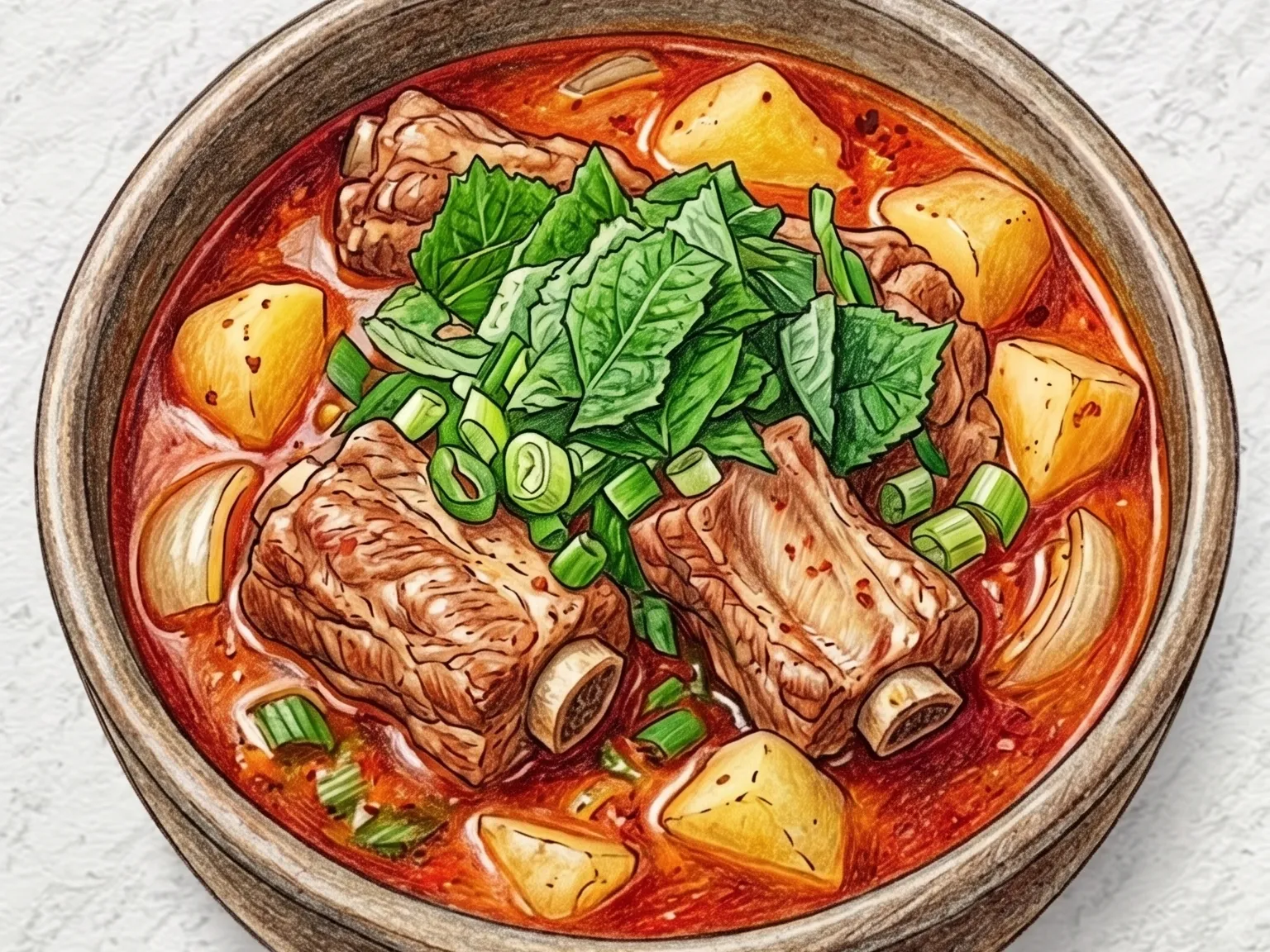
Korean Pork Rib Perilla Leaf Stew

Quick answer

Pork back ribs and perilla leaves come together in this full-flavored, chili-seasoned jjigae.

What makes this special

  • Collagen-heavy pork rib stock forms a rich deunggalbi kkaennip jjigae foundation.
  • Pork ribs simmered 25 minutes build a rich bone stock as the broth's deep foundation
  • Perilla leaves added 2 minutes before finishing keep their herbal scent without astringency
Total time
75 min
Level
Medium
Servings
4 servings
Ingredients
10
Calories
462 kcal
Protein
29 g

Key ingredients

pork back ribsperilla leavespotatooniongreen onion

Core cooking flow

  1. 1 Soak 800g pork ribs in cold water for 20 minutes to draw out blood, then bla...
  2. 2 Combine the blanched ribs, 1.4L water, and 8g sliced ginger in a pot and sim...
  3. 3 Add 250g chunked potatoes and 130g onion, then stir in 2 tbsp gochugaru, 1.5...

Pork back ribs and perilla leaves come together in this full-flavored, chili-seasoned jjigae. The ribs are simmered first to render a rich, collagen-heavy broth, and then potatoes and onion are added to give the liquid body and natural sweetness. Gochugaru and soup soy sauce establish the spicy base. Fresh perilla leaves are added just before the heat is turned off so their herbal fragrance stays intact, since prolonged boiling drives the aroma away. A touch of ginger keeps the pork flavor clean while the collagen-rich broth from the ribs provides substantial body. Picking the meat off the bone at the table is part of the experience, making this a natural fit for late autumn meals or as a communal drinking accompaniment.

Prep 25min Cook 50min 4 servings

Instructions

Read the steps as a cooking flow: prep, heat, seasoning, doneness control, and finish.

6 steps
  1. 1
    Heat

    Soak 800g pork ribs in cold water for 20 minutes to draw out blood, then blanch in rapidly boiling water for 3 minutes to wash away surface impurities and bone debris for a clean broth.

  2. 2
    Control

    Combine the blanched ribs, 1.4L water, and 8g sliced ginger in a pot and simmer for 25 minutes over medium heat until the meat softens and the collagen renders into a rich base stock.

  3. 3
    Control

    Add 250g chunked potatoes and 130g onion, then stir in 2 tbsp gochugaru, 1.5 tbsp minced garlic, and 1.5 tbsp soup soy sauce.

    Simmer for 15 minutes until the starch thickens the spicy soup base.

  4. 4
    Heat

    Once the meat is tender enough to pull from the bone, add 60g sliced green onion and check the liquid volume to ensure the flavors are concentrated and the potato is fully cooked.

  5. 5
    Control

    Reduce heat to low and add 30g fresh perilla leaves.

    Cook for only 2 minutes as prolonged boiling destroys the herbal fragrance. Gentle heating keeps the aroma intact to balance the pork richness.

  6. 6
    Control

    Adjust the final saltiness to your preference, turn off the heat, and let the stew rest covered for 3 minutes.

    This allows the meat juices and seasonings to integrate for a deeper flavor.

After the steps

Pick a recipe that fits this dish.

Continue with shared ingredients, meal pairings, or a similar method.

Recipes That Go Well With This

More Stews →

Based on shared ingredients and meal pairing

Korean Perilla Leaf Beef Stew
Shared ingredient: perilla leaves Stews

Korean Perilla Leaf Beef Stew

Korean perilla leaf beef stew is a savory broth dish that combines thinly sliced beef with perilla leaves. The cooking process starts by marinating the beef with soup soy sauce and minced garlic, then stir-frying it briefly with sliced onions to extract its natural flavors. Anchovy stock is then poured into the pot and brought to a boil. Red pepper flakes, soup soy sauce, and garlic are added to build a spicy broth, followed by cubes of firm tofu that simmer for several minutes to absorb the seasoning. At the very end of cooking, twelve fresh perilla leaves are sliced and added to the pot for just a minute or two along with green onions. This late addition ensures the delicate, herbal aroma of the perilla leaves is preserved, infusing the entire stew. Seasoned primarily with soup soy sauce, the stew highlights the distinct taste of beef and perilla without heavy seasonings.

Korean Perilla Leaf Soft Tofu Stew
Shared ingredient: perilla leaves Stews

Korean Perilla Leaf Soft Tofu Stew

Kkaennip sundubu jjigae is a mild, gently seasoned stew of soft tofu and perilla leaves simmered in a light anchovy broth. The 350g of sundubu goes in as large, rustic pieces that hold their shape while cooking, then collapse into silky, cloud-like curds on the spoon. Twelve perilla leaves added stem-on release their aromatic oils gradually as the broth comes to a boil, giving the stew a distinctly herbal, faintly anise-like character that sets it apart from standard sundubu variations. Gochugaru and soup soy sauce provide just enough background seasoning to keep the perilla fragrance forward rather than overwhelmed by heat, and a drizzle of sesame oil at the finish adds a nutty warmth. Low in spice and gentle on the stomach, this is a practical choice on days when a soothing, unfussy bowl is what is needed.

Korean Grilled Eel Rice Bowl
Serve together Rice

Korean Grilled Eel Rice Bowl

Jangeeo deopbap is a bowl of grilled freshwater eel over steamed rice, where the key technique is building up a thick, lacquered glaze through multiple applications of a sweet-salty sauce reduced from soy sauce, mirin, sugar, and ginger juice. The eel starts skin-side down on the grill over medium heat for around five minutes to crisp the skin, then is flipped and basted repeatedly with the sauce as it finishes cooking. A single coat of sauce produces a pale, thin color, so at least two applications and ideally three or more are needed to build the characteristic glossy surface. With each additional coat, the sugars in the sauce react with heat through both Maillard browning and caramelization, layering flavor with every pass. Because freshwater eel is naturally fatty, fat drips during grilling can cause flare-ups, so heat control is important throughout the process. Sansho pepper dusted on at the end cuts through the eel's inherent richness with a sharp, numbing fragrance that balances the sweet glaze and keeps the dish from feeling heavy.

Korean Pork Gochujang Jjigae
Similar recipe Stews

Korean Pork Gochujang Jjigae

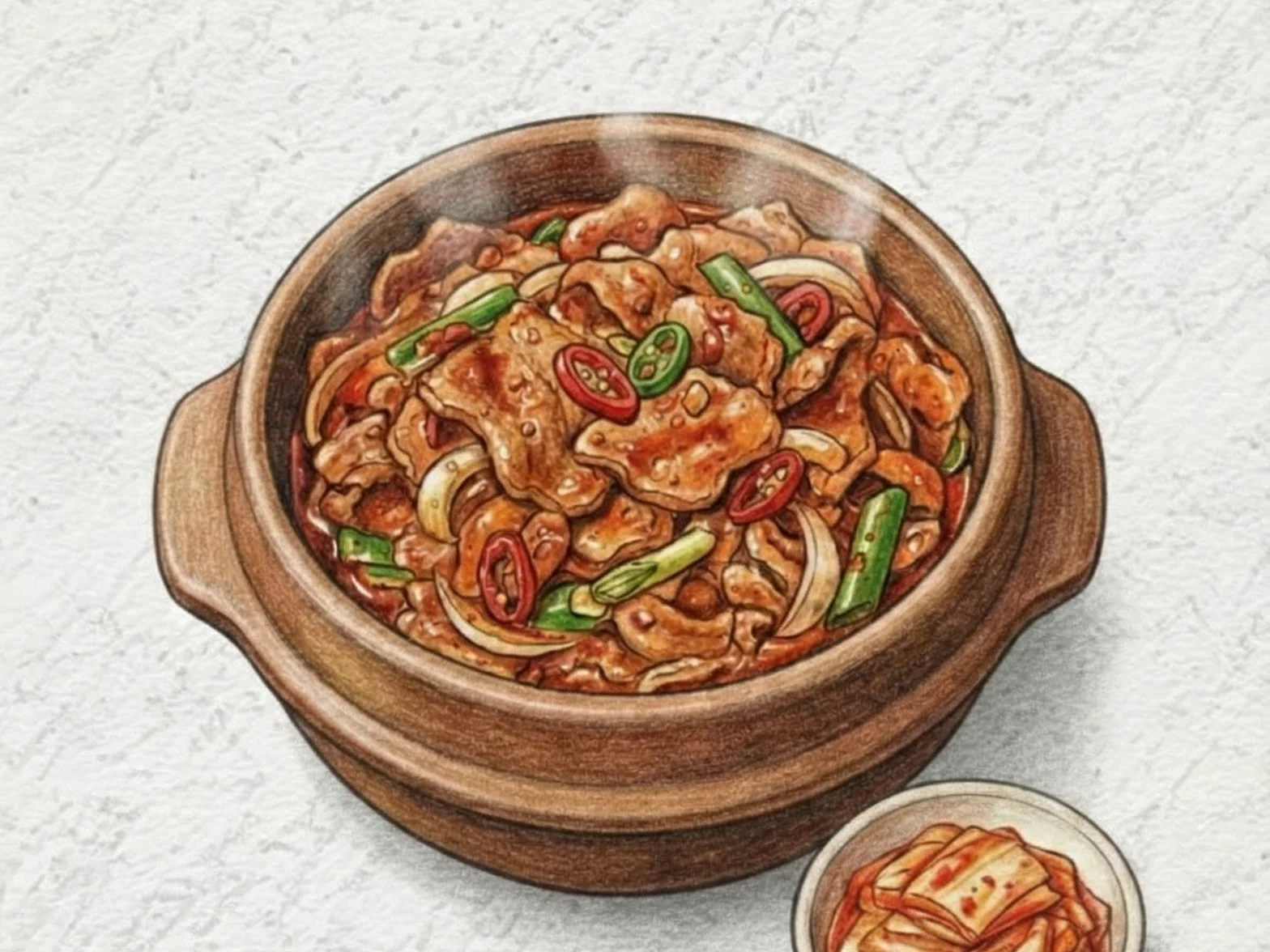
This pork gochujang stew simmers pork shoulder in a sauce of gochujang and doenjang, two fermented pastes that together build a more layered flavor than either would alone. Using gochujang on its own produces a heat that comes across as sharp and one-dimensional, but adding half a tablespoon of doenjang rounds out the fermented soybean depth and gives the broth a fuller, earthier backbone. A full tablespoon of gochugaru deepens the red color and adds texture to the spice rather than just boosting intensity. The 180 grams of pork shoulder render their juices into the 700 milliliters of broth as the stew cooks, gradually enriching the base. Potato, zucchini, onion, and tofu go into the same pot and contribute a range of textures that keep each spoonful varied. The combination of both fermented pastes means this version has noticeably more complexity than a standard gochujang stew, and the finished broth is the kind that makes it difficult to stop eating before the bowl is empty.

Serve with this

Korean Chive Clam Jeon (Garlic Chive and Clam Seafood Pancake)
Pancakes Medium

Korean Chive Clam Jeon (Garlic Chive and Clam Seafood Pancake)

Buchu-bajirak-jeon is a seafood pancake of garlic chives and clam meat, pan-fried in a batter made with a mix of all-purpose pancake flour and rice flour. The rice flour addition increases the chew and gives the finished jeon a slightly more resilient texture than plain flour batters. Clam meat releases a briny, oceanic liquid as it cooks that seeps into the batter and flavors it throughout, while the chives add a sharp, grassy counterpoint. Minced garlic and diagonally sliced cheongyang chili worked into the batter suppress any fishiness and build a layered fragrance. A generous amount of oil in the pan over medium heat produces edges that crisp and brown like the outside of a fritter. Waiting until the bottom is fully set before flipping prevents the pancake from tearing. Served with soy dipping sauce or a seasoned soy mixture, the clean salinity of the clams comes through clearly.

🍺 Bar Snacks 🏠 Everyday
Prep 25min Cook 15min 4 servings
Korean Stir-Fried Taro Stems
Side dishes Medium

Korean Stir-Fried Taro Stems

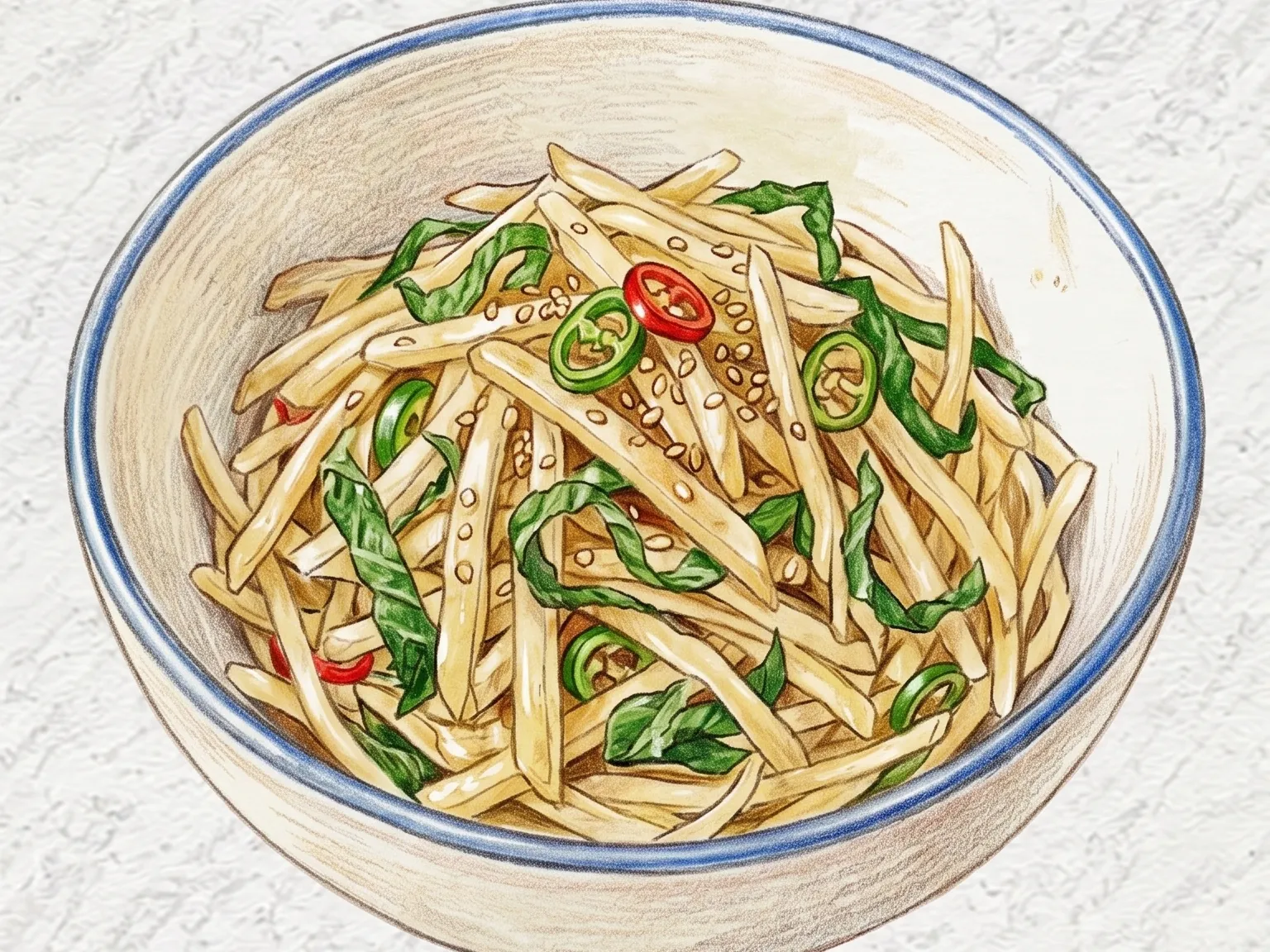
Boiled taro stems are stir-fried in perilla oil with soy sauce and garlic to create a banchan prized for its uniquely chewy texture. Dried taro stems, once soaked and simmered, lose their rawness but retain a springy, almost rubbery bite along the center of each stalk, setting them apart from softer namul greens. Stir-frying in perilla oil first builds a nutty base note, and soy sauce with minced garlic layers savory depth onto the stems' neutral flavor. A splash of stock added mid-cook allows the seasoning to penetrate the fibrous interior during a brief simmer. Sliced green onion introduces a fresh aromatic accent, and a finishing spoonful of ground perilla seeds dissolves into the residual moisture, creating a creamy coating that clings to each piece. Mixed into a bowl of steamed rice, the chewy stems provide satisfying resistance with every bite, and their mild character lets them complement bolder dishes like doenjang jjigae without competing for attention.

🏠 Everyday 🍱 Lunchbox
Prep 15min Cook 12min 4 servings
Korean Salted Pollock Roe Jeotgal
Kimchi Hard

Korean Salted Pollock Roe Jeotgal

Myeongran jeotgal is a Korean salted and fermented pollock roe where fresh roe sacs are meticulously cleaned of blood spots and membranes, brushed with rice wine to suppress fishiness, then packed in a curing blend of coarse sea salt, gochugaru, and minced garlic alongside a piece of kelp. Over three to five days in cold storage, salt draws moisture out of each tiny egg, concentrating their pop-and-burst texture while enzymatic breakdown generates a deep, layered umami that raw roe cannot produce on its own. The chili flakes introduce a gentle warmth that sits behind rather than over the roe's natural salinity. Sliced thin and arranged over hot steamed rice, each piece releases a salty, oceanic intensity with every bite - a condiment that disappears faster than any dish it accompanies.

🎉 Special Occasion 🍱 Lunchbox
Prep 30min 4 servings

Similar recipes

Korean Jjageuli Pork Stew
Stews Easy

Korean Jjageuli Pork Stew

Jjageuli jjigae is a Korean pork and potato stew characterized by its thick, reduced broth and spicy seasoning. The cooking process starts by searing diced pork over high heat to render its fat, then stir-frying it with gochujang, chili flakes, and soy sauce to build a flavorful base. Thickly diced potatoes and water are added to the pot and simmered. As the potatoes cook and break down, their natural starches dissolve into the liquid, thickening it into a rich sauce. Onions are simmered in the pot to add sweetness, and green onions are stirred in during the final minute of cooking to release their aroma. Unlike typical soupy stews, this dish is intentionally reduced to a concentrated consistency. This makes it ideal for spooning over warm rice and mixing together as a hearty meal.

🍺 Bar Snacks 🏠 Everyday
Prep 15min Cook 25min 2 servings
Kimchi Dwaejigogi-guk (Kimchi Pork Tofu Soup)
Soups Easy

Kimchi Dwaejigogi-guk (Kimchi Pork Tofu Soup)

Kimchi-dwaejigogi-guk starts by stir-frying pork shoulder and well-fermented sour kimchi together in perilla oil. The pork is cooked first until its fat renders fully, then chili flakes join the pan for three more minutes of cooking alongside the kimchi. This initial stir-fry step is what gives the soup its depth - the caramelized kimchi acidity and rendered pork fat fuse into a base that a plain simmered broth cannot replicate. Water and sliced onion are added and simmered for fifteen minutes, then blocks of firm tofu go in near the end, soaking up the spicy, ruddy broth and providing a soft contrast to the chewy pork. The soup has considerably more liquid than a jjigae, making it well suited for pouring over rice in a bowl. Kimchi that has fermented longer delivers more lactic tang and a more complex broth. Pork belly can replace shoulder for a richer, fattier result.

🏠 Everyday 🥗 Light & Healthy
Prep 12min Cook 25min 2 servings
Dubu Kkaennip-guk (Tofu Perilla Leaf Soup)
Soups Easy

Dubu Kkaennip-guk (Tofu Perilla Leaf Soup)

Dubu-kkaennip-guk is a Korean tofu and perilla leaf soup in anchovy broth, finished with chiffonaded perilla leaves that release a bright, minty-herbal fragrance into the clear liquid. Zucchini and onion simmer first to build a vegetable-sweetened base, releasing their natural sugars into the anchovy stock. Large scoops of soft tofu - spooned rather than knife-cut, so the rough surfaces trap more broth - warm through over medium heat for five minutes. The perilla leaves must go in during the last thirty seconds before serving: any longer and they turn dark and lose the sharp aromatic freshness that defines the dish. Soup soy sauce and a light dusting of black pepper complete the seasoning, letting the clean anchovy umami and the herbal lift of the kkaennip share the stage without one overpowering the other. Cooking the zucchini fully soft is important - its gentle sweetness needs time to dissolve into the broth, and when the tofu and vegetables together hold the liquid, each spoonful carries varied texture.

🏠 Everyday 🥗 Light & Healthy
Prep 10min Cook 15min 2 servings

Tips

Add perilla leaves at the end to keep a clear aroma without bitterness.
Skipping blanching can make the broth cloudy.

Nutrition (per serving)

Calories
462
kcal
Protein
29
g
Carbs
16
g
Fat
31
g