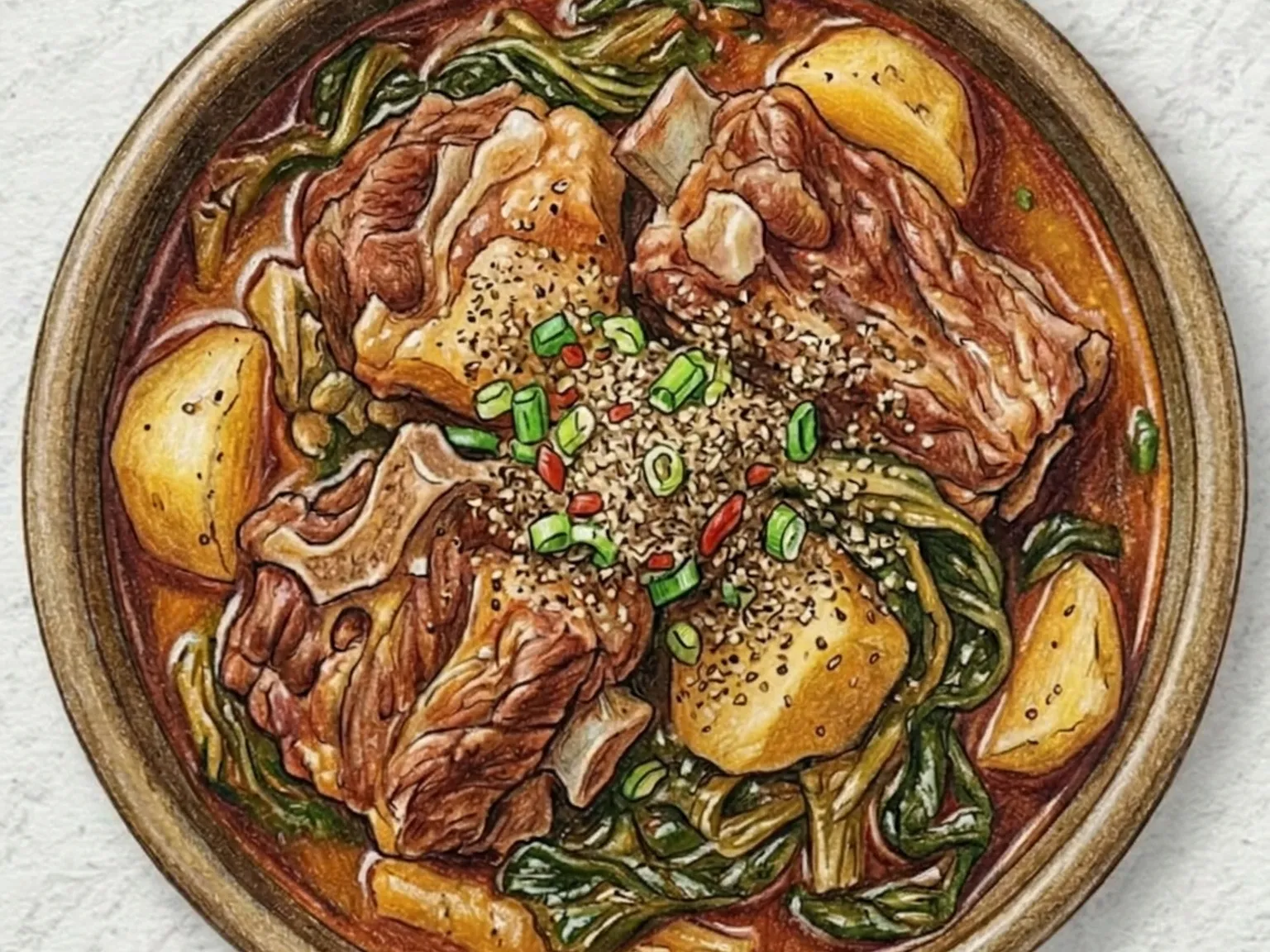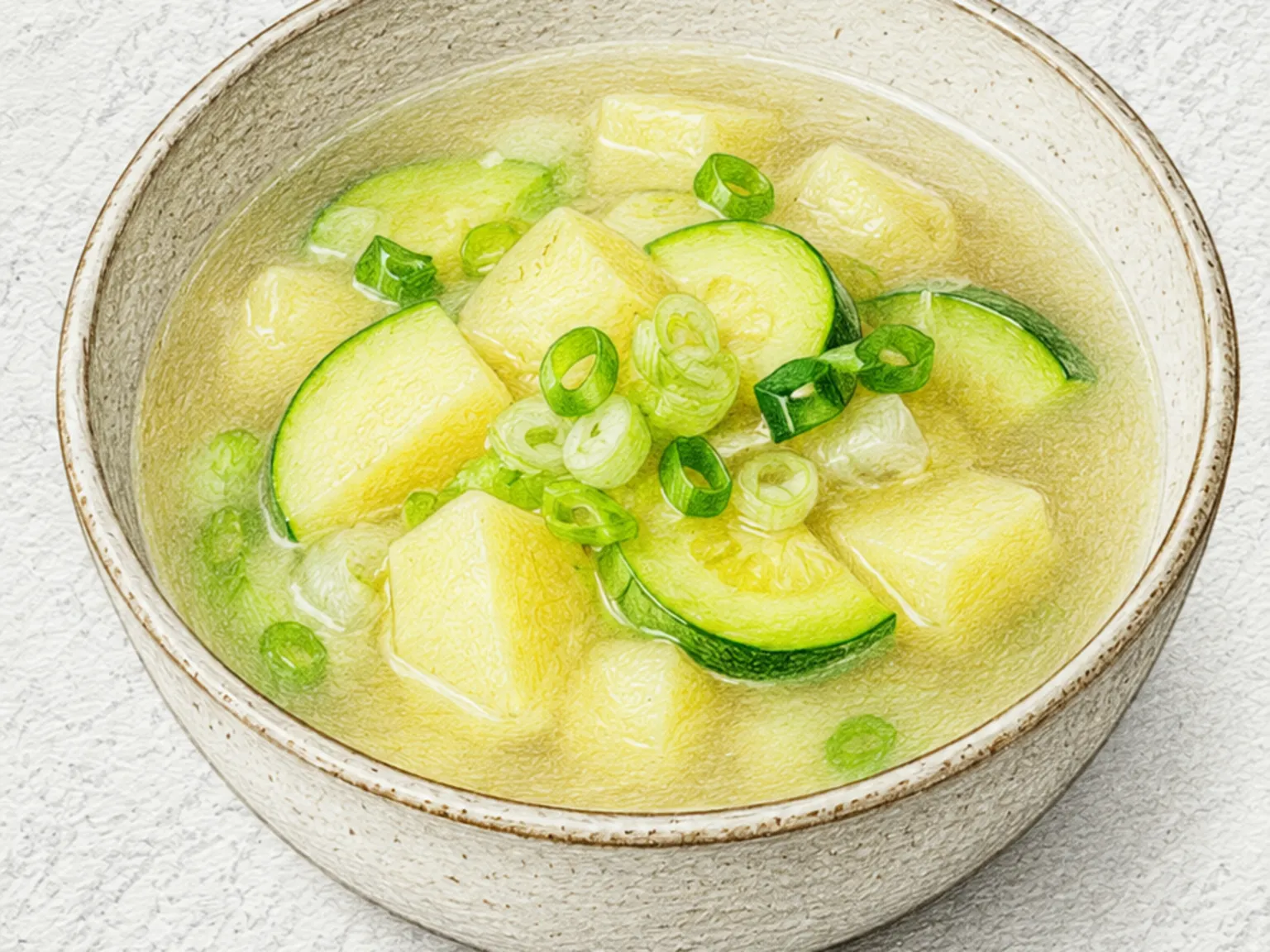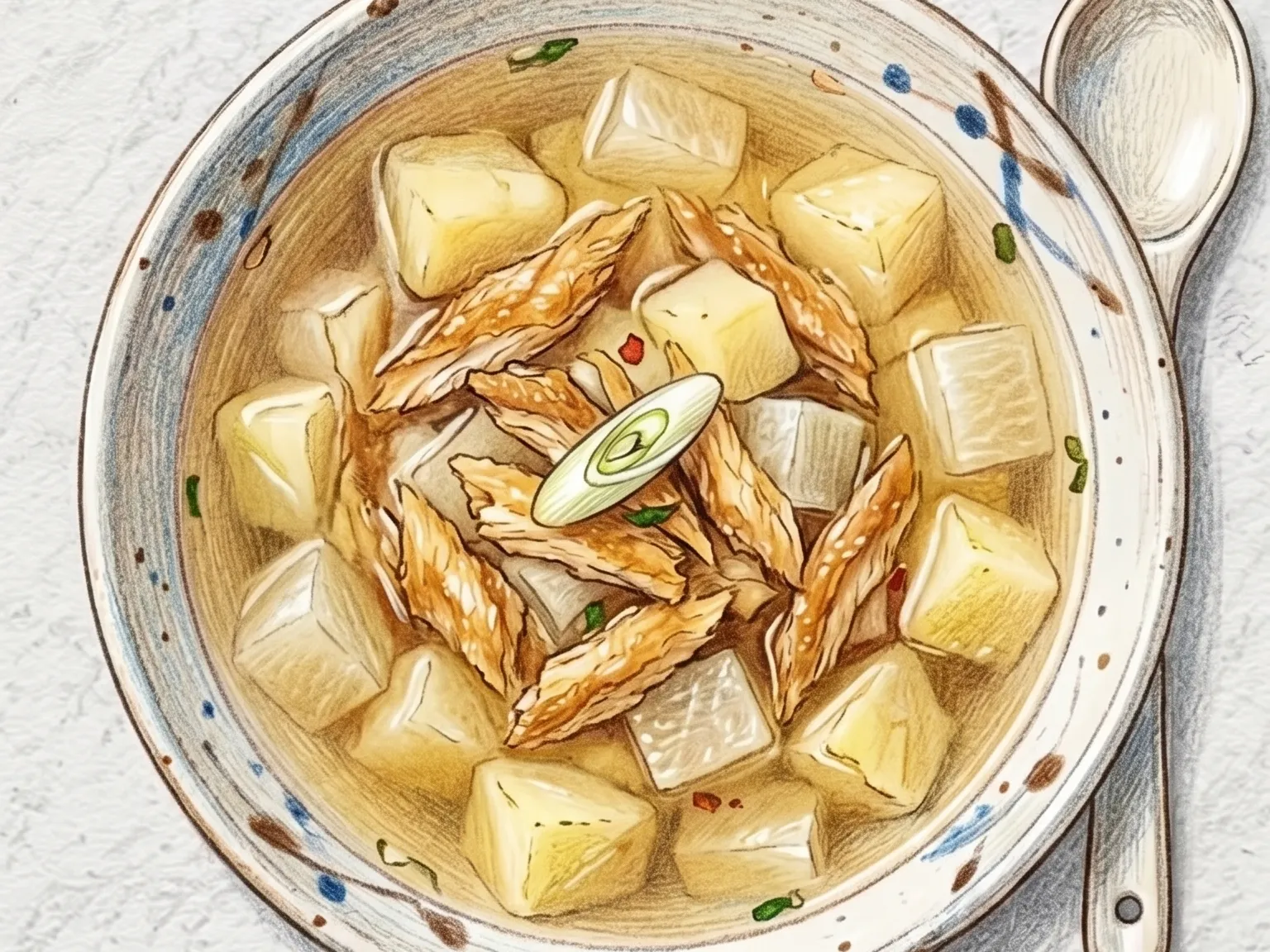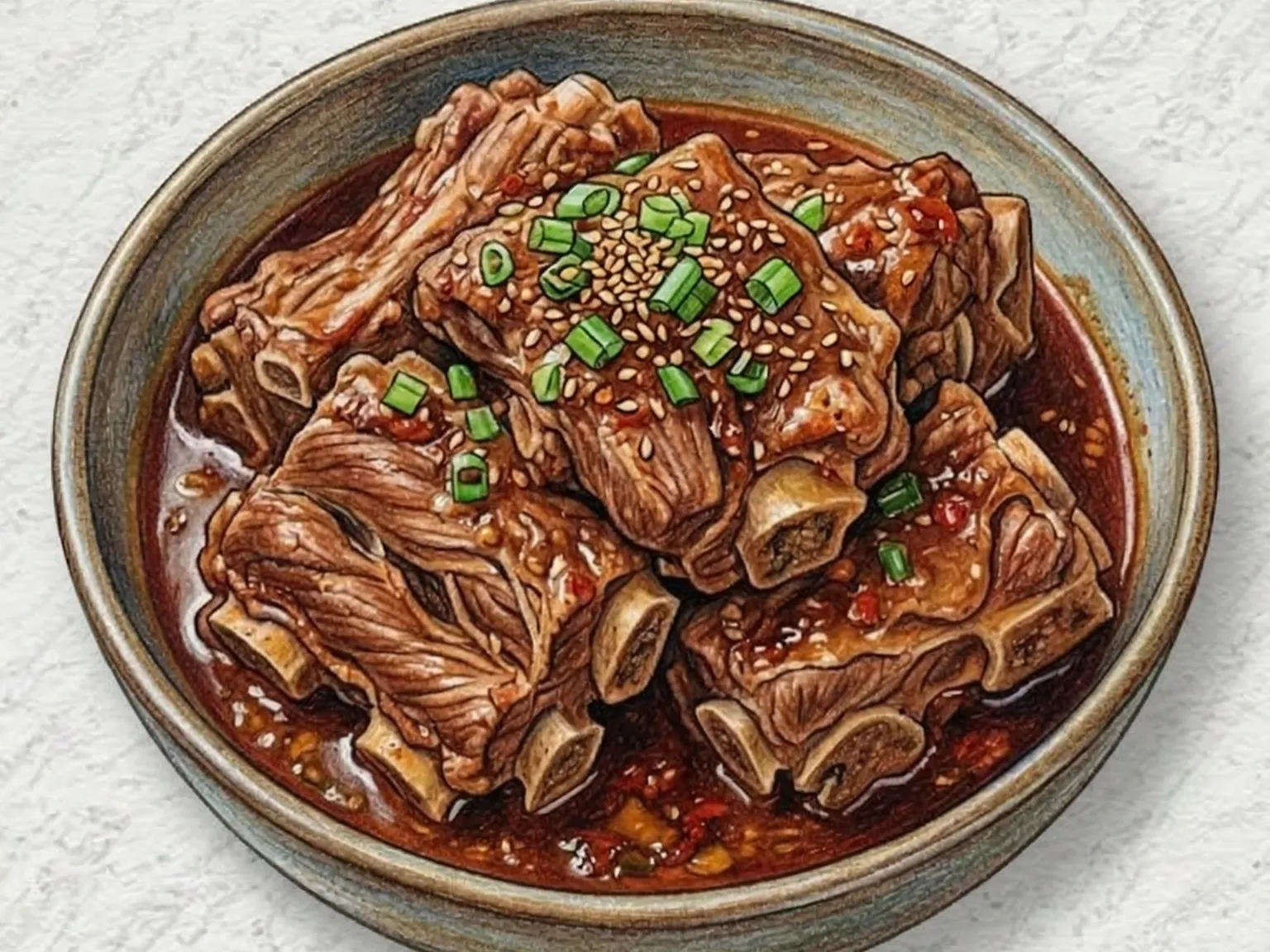
Korean Braised Pork Backbone

Korean Braised Pork Backbone

Quick answer

Deungppyeo-jjim is pork backbone braised with potato and green onion in a sauce built from doenjang, gochugaru, and soy sauce.

What makes this special

  • Deungppyeo-jjim mixes doenjang and gochugaru to season tender pork backbone and potatoes.
  • Doenjang base layered with gochugaru heat creates a two-tone depth
  • 80-minute cook lets bone-end cartilage separate cleanly from the meat
Total time
110 min
Level
Hard
Servings
4 servings
Ingredients
8
Calories
510 kcal
Protein
36 g

Key ingredients

pork backbonepotatogreen onionsoybean pastered pepper flakes

Core cooking flow

  1. 1 Soak 1.2 kg pork backbone in cold water for 30 minutes to draw out blood.
  2. 2 Bring a large pot of water to a strong boil, then blanch the bones for 5 minutes.
  3. 3 Wash the pot, return the pork bones, and add 1200 ml water.

Deungppyeo-jjim is pork backbone braised with potato and green onion in a sauce built from doenjang, gochugaru, and soy sauce. After a long, slow simmer the meat tucked between the vertebrae and the cartilage separates from the bone without effort. Doenjang lays a deep, fermented underpinning to the broth while gochugaru brings a sharp, clean heat on top. The potatoes cook until they soften enough to fall apart at the press of a spoon, absorbing the thick, dark cooking liquid around them. Digging out the meat lodged between the bones is part of the pleasure, which is why the dish has long been a favourite pairing with soju. The rich, dense broth also makes it an easy choice for eating over a bowl of steamed rice.

Prep 30min Cook 80min 4 servings

Instructions

Read the steps as a cooking flow: prep, heat, seasoning, doneness control, and finish.

6 steps
  1. 1
    Finish

    Soak 1.2 kg pork backbone in cold water for 30 minutes to draw out blood.

    If the water turns red, change it once so the finished broth tastes cleaner and less gamey.

  2. 2
    Heat

    Bring a large pot of water to a strong boil, then blanch the bones for 5 minutes.

    Rinse under cold water, rubbing away bone dust, gray foam, and clinging impurities from the surfaces.

  3. 3
    Heat

    Wash the pot, return the pork bones, and add 1200 ml water.

    Dissolve 1 tablespoon doenjang into the liquid before boiling so it spreads evenly and builds the base flavor without lumps.

  4. 4
    Control

    Add 2 tablespoons soy sauce, 1.5 tablespoons minced garlic, and 2 tablespoons gochugaru, then bring to a boil over high heat.

    Once it boils, skim the foam so the broth stays clear.

  5. 5
    Control

    Lower to medium-low heat and simmer for 60 minutes with the lid slightly ajar.

    The liquid should bubble gently, and the meat between the bones should begin to loosen without drying out.

  6. 6
    Heat

    Add 300 g potato in large chunks and cook for 15 minutes, then add diagonally sliced green onion.

    Braise 10 minutes more until the broth thickens and the potato yields to a spoon.

After the steps

Pick a recipe that fits this dish.

Continue with shared ingredients, meal pairings, or a similar method.

Recipes That Go Well With This

More Steamed →

Based on shared ingredients and meal pairing

Korean Soy Braised Chicken
Shared ingredient: potatoes Steamed

Korean Soy Braised Chicken

Dak-jjim is bone-in chicken braised with potato, carrot, and onion in a sauce of soy sauce, sugar, and garlic. Juices released from the bones meld with the soy seasoning to form a glossy, concentrated gravy, and the vegetables absorb this liquid so they are seasoned all the way through. Sugar tempers the saltiness of the soy into a clear sweet-salty balance that coats every piece. Cooking with the lid on over medium heat first, then removing the lid to reduce the sauce, is what creates the glossy coating that defines a well-made dak-jjim. Served in a hot stone pot at the center of the table, it is one of the most familiar home-cooked dishes in Korean cuisine, well-suited for a shared family meal.

Korean Braised Skate Wing with Radish
Shared ingredient: green onion Steamed

Korean Braised Skate Wing with Radish

Gaori jjim is a Korean braised skate dish, slow-cooked with radish in a bold sauce of gochugaru and soy sauce. Skate has a texture unlike most fish: its flesh is lean and mild, but the cartilaginous fibers throughout give it a distinctly chewy, springy quality that absorbs the braising sauce deeply during a long, slow cook. Radish pieces nestle in the pot alongside the fish, soaking up the spiced liquid until they turn sweet-savory and tender all the way through. Mirim and minced garlic work together to suppress the sharper marine smell that skate can carry, and the result is a clean, bold flavor without any fishiness. Green onion scattered over the top adds color and a fresh note at the finish, and the remaining braising sauce spooned over rice is one of the best parts of the dish.

Korean Seafood Hot Pot Soup
Serve together Soups

Korean Seafood Hot Pot Soup

Haemul-tang is a Korean seafood hot pot that throws together crab, shrimp, clams, and squid in a fiery, brick-red broth. The liquid starts with gochugaru and plenty of garlic, building a spicy base that the seafood then amplifies with its own briny juices. Radish chunks soften as the pot bubbles, thickening the broth slightly and adding a cool sweetness behind the heat. Green onions and cheongyang peppers go in toward the end for a sharp, vegetal bite. The magic of haemul-tang lies in the convergence of flavors: crab shells release a sweet, crustacean stock; clams open to spill their liquor; shrimp and squid contribute distinct textures from snappy to chewy. The pot is brought to the table still at a rolling boil, and diners pick through the shells and tentacles while the broth continues to concentrate.

Korean Braised Hairtail Fish
Similar recipe Steamed

Korean Braised Hairtail Fish

Galchi-jjim is a Korean braised hairtail fish dish where sliced hairtail and Korean radish are simmered together in a seasoned broth of gochugaru, soy sauce, garlic, and ginger until the liquid reduces to a concentrated glaze. The fish has a rich, oily white flesh that drinks in the bold seasoning while staying tender and intact. Ginger juice is added specifically to neutralize the oceanic smell that hairtail can carry, keeping the finished dish clean and approachable. The radish cooks down in the braising liquid, becoming deeply seasoned throughout as it absorbs the spiced sauce. The remaining sauce is intentionally left in small quantity so it can be spooned directly over steamed rice, which is considered the most satisfying way to eat this dish. It is a staple Korean fish preparation that appears on home dinner tables across the year.

Serve with this

Korean Grilled Eel Rice Bowl
Rice Medium

Korean Grilled Eel Rice Bowl

Jangeeo deopbap is a bowl of grilled freshwater eel over steamed rice, where the key technique is building up a thick, lacquered glaze through multiple applications of a sweet-salty sauce reduced from soy sauce, mirin, sugar, and ginger juice. The eel starts skin-side down on the grill over medium heat for around five minutes to crisp the skin, then is flipped and basted repeatedly with the sauce as it finishes cooking. A single coat of sauce produces a pale, thin color, so at least two applications and ideally three or more are needed to build the characteristic glossy surface. With each additional coat, the sugars in the sauce react with heat through both Maillard browning and caramelization, layering flavor with every pass. Because freshwater eel is naturally fatty, fat drips during grilling can cause flare-ups, so heat control is important throughout the process. Sansho pepper dusted on at the end cuts through the eel's inherent richness with a sharp, numbing fragrance that balances the sweet glaze and keeps the dish from feeling heavy.

🎉 Special Occasion 🏠 Everyday
Prep 10min Cook 15min 1 servings
Korean Stir-Fried Taro Stems
Side dishes Medium

Korean Stir-Fried Taro Stems

Boiled taro stems are stir-fried in perilla oil with soy sauce and garlic to create a banchan prized for its uniquely chewy texture. Dried taro stems, once soaked and simmered, lose their rawness but retain a springy, almost rubbery bite along the center of each stalk, setting them apart from softer namul greens. Stir-frying in perilla oil first builds a nutty base note, and soy sauce with minced garlic layers savory depth onto the stems' neutral flavor. A splash of stock added mid-cook allows the seasoning to penetrate the fibrous interior during a brief simmer. Sliced green onion introduces a fresh aromatic accent, and a finishing spoonful of ground perilla seeds dissolves into the residual moisture, creating a creamy coating that clings to each piece. Mixed into a bowl of steamed rice, the chewy stems provide satisfying resistance with every bite, and their mild character lets them complement bolder dishes like doenjang jjigae without competing for attention.

🏠 Everyday 🍱 Lunchbox
Prep 15min Cook 12min 4 servings
Korean Spicy Fermented Squid Jeotgal
Kimchi Medium

Korean Spicy Fermented Squid Jeotgal

Ojingeo jeotgal is a Korean fermented squid preserve made by salting cleaned, finely chopped squid for one hour to firm the flesh and extract moisture, then dressing it in a paste of gochugaru, minced garlic, ginger, fish sauce, and corn syrup. The salt cure intensifies the squid's natural chewiness, and cutting the pieces small accelerates seasoning absorption during the two-to-three-day cold fermentation. Chili flakes coat every surface in a deep red layer that delivers steady heat, while corn syrup adds gloss and a mild sweetness that prevents the salt from dominating. Spooned over steamed rice, each piece offers a firm, springy chew followed by a wave of fermented umami. Mixing in a touch of sesame oil before serving softens the saltiness and adds a nutty fragrance that rounds out each mouthful.

🍱 Lunchbox 🏠 Everyday
Prep 30min 4 servings

Similar recipes

Korean Braised Pork Kimchi
Steamed Medium

Korean Braised Pork Kimchi

Pork kimchi jjim is a slow Korean braise where pork shoulder and well-aged kimchi are layered alternately in a pot with gochugaru, soup soy sauce, and minced garlic, then cooked at a low simmer for over fifty minutes. The kimchi's sharp, pungent fermented acidity gradually softens over the long cook but does not disappear; instead, it transforms into a complex, deep flavor that saturates the pork rather than overwhelming it. Pork shoulder is the preferred cut because its layered fat and muscle does not dry out over extended cooking and the rendered fat continuously bastes the braising liquid, enriching it throughout the process. Onion and green onion supply a natural sweetness that moderates the acidity and spice and prevents the dish from tipping into one-dimensional sharpness. Reducing the braise until only a small amount of sauce remains is important for flavor concentration, and lifting the lid periodically to turn the ingredients ensures that the top layers absorb the liquid as thoroughly as the bottom. The pork is done when it pulls apart with chopsticks with almost no resistance. Served over steamed rice with the remaining sauce spooned generously over the top, the soy and kimchi juices soak into the grain and make for a deeply satisfying and complete meal. Refrigerated leftovers eaten the following day taste noticeably better: the acidity stabilizes further overnight and the flavors integrate more fully.

🎉 Special Occasion 🍱 Lunchbox
Prep 20min Cook 70min 4 servings
Korean Soy Braised Chicken Chunks
Stir-fry Easy

Korean Soy Braised Chicken Chunks

Dakganjang-jjim is a Korean soy-braised chicken dish where bone-in thigh pieces are combined with potatoes, carrots, and onion in a seasoned soy sauce base and simmered over low heat until the liquid reduces and the flavors concentrate. As the braising liquid cooks down, the salinity and umami of the soy sauce penetrate through the chicken skin and into the meat, seasoning it throughout rather than just coating the surface. The thigh cut is intentional - the fat and collagen in bone-in thighs keep the meat moist through the extended cooking time, preventing it from drying out the way leaner cuts would. The vegetables absorb the rendered chicken fat and soy-based cooking liquid as they soften, taking on a deep savory-sweet flavor that requires no additional seasoning. Because the dish contains no chili paste or gochugaru, it is mild in heat and broadly accessible, working equally well as a weeknight dinner main, a side dish over rice, or packed into a lunch box where the flavors continue to develop. The ratio of soy sauce to sugar in the braising liquid can be adjusted to suit individual taste - leaning toward saltier or sweeter without fundamentally changing the character of the dish.

🏠 Everyday 🧒 Kid-Friendly
Prep 15min Cook 30min 4 servings
Korean Blood Sausage Hot Pot
Stews Medium

Korean Blood Sausage Hot Pot

Sundae-jeongol is a spicy Korean hot pot built around blood sausage, cooked together with cabbage, perilla leaves, and onion in a gochugaru-seasoned beef bone broth. The collagen-rich broth from ox bones forms the body of the soup, and combining gochugaru with a spoonful of doenjang transforms the base into something both fiery and deeply savory. The sundae heats through fully in the simmering broth, its filling of glass noodles and coagulated blood absorbing the liquid and becoming pleasantly dense and chewy. Doenjang softens the raw sharpness of the chili and adds fermented complexity that bare gochugaru cannot provide alone. Cabbage slowly releases its sweetness into the broth as it cooks down, while perilla leaves should be added just before serving to preserve their herbal aroma. The broth concentrates and deepens the longer the pot simmers, making it a dish that rewards eating slowly over time. A filling and convivial pot suited for cold-weather gatherings around a shared table.

🍺 Bar Snacks 🎉 Special Occasion
Prep 25min Cook 25min 4 servings

Tips

Blanching first gives a cleaner broth.
Flavor improves after resting overnight.

Nutrition (per serving)

Calories
510
kcal
Protein
36
g
Carbs
15
g
Fat
34
g