Doenjang Caramel Apple Galette

Doenjang Caramel Apple Galette

Quick answer

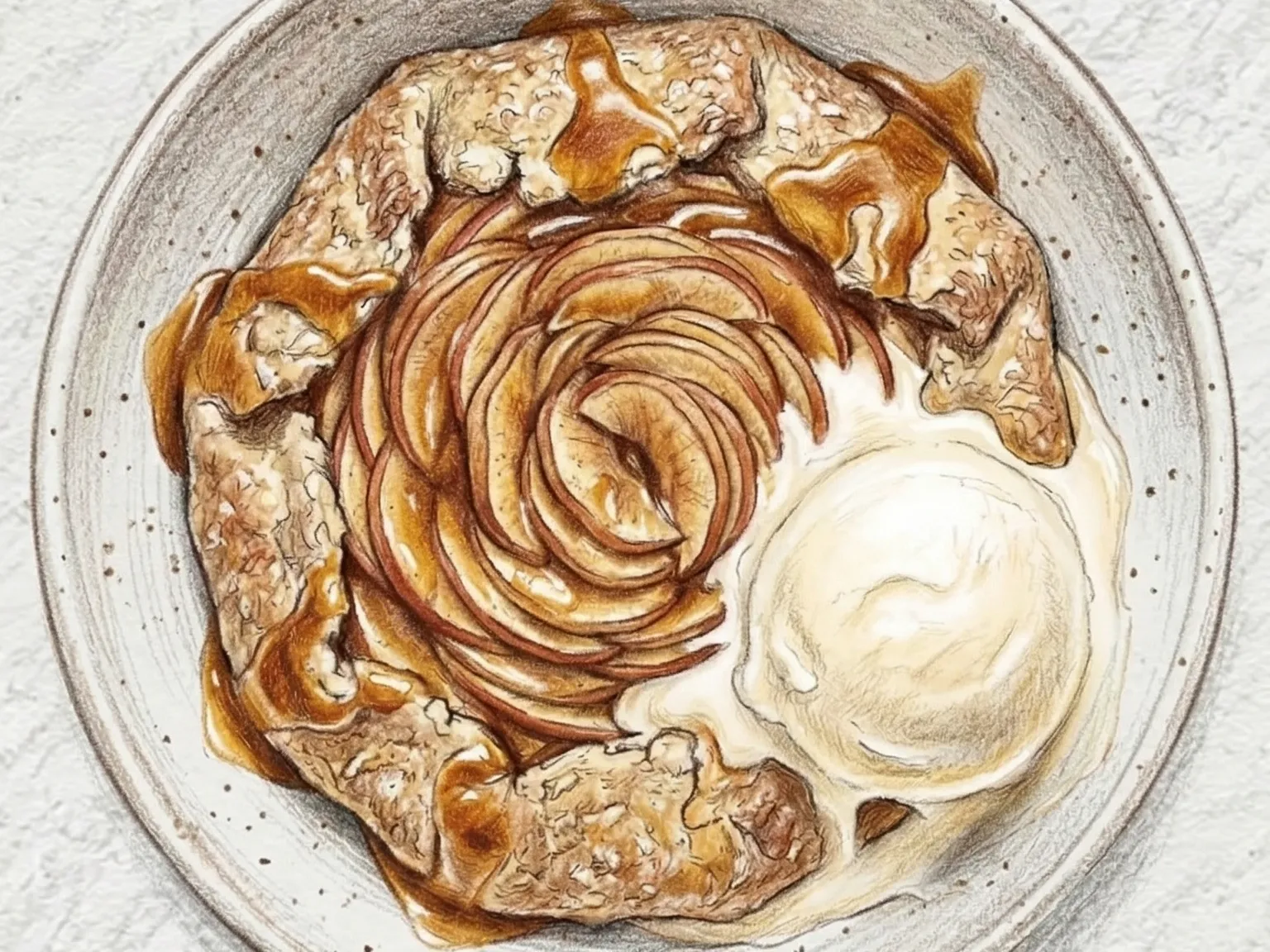
This galette layers a rustic free-form French pastry with a Korean-inflected twist: a doenjang-laced caramel draped over cinnamon apples filling the center.

What makes this special

  • Korean fermented soybean paste adds salty umami to the caramel and cinnamon apple filling.
  • Doenjang's fermented umami adds salty depth behind the caramel sweetness
  • Rustic free-form edges folded over fruit; intentionally imperfect shape
Total time
75 min
Level
Hard
Servings
4 servings
Ingredients
12
Calories
470 kcal
Protein
5 g

Key ingredients

all-purpose flourcold unsalted buttersugarsaltwater

Core cooking flow

  1. 1 Mix 220 g all-purpose flour with part of the sugar and 2 g salt, then rub in 120 g cold butter.
  2. 2 Add the 60 ml water little by little instead of all at once, gathering the d...
  3. 3 Slice the 2 apples thinly and toss with 10 ml lemon juice, 1 tsp cinnamon, and the remaining sugar.

This galette layers a rustic free-form French pastry with a Korean-inflected twist: a doenjang-laced caramel draped over cinnamon apples filling the center. The crust is made by working cold butter into flour and shaping the dough by hand, folding the rough edges over the fruit in an imperfect, irregular way. Apples tossed with brown sugar and cinnamon fill the center, softening in the oven until tender and yielding. The doenjang caramel is made by whisking a small amount of fermented soybean paste into a brown sugar and cream sauce. Keeping the amount deliberately minimal is the whole point: enough to create an ambiguous saltiness and fermented depth, but not enough to register clearly as soybean paste. It is the murkiness of the flavor that lifts the familiar apple-and-cinnamon combination out of predictability. Served warm with a scoop of ice cream, the contrast between the hot pastry and cold cream adds one more layer to an already textured dessert.

Prep 35min Cook 40min 4 servings

Instructions

Read the steps as a cooking flow: prep, heat, seasoning, doneness control, and finish.

6 steps
  1. 1
    Season

    Mix 220 g all-purpose flour with part of the sugar and 2 g salt, then rub in 120 g cold butter.

    Stop when pea-size pieces remain, because fully smearing the butter makes the crust less flaky.

  2. 2
    Control

    Add the 60 ml water little by little instead of all at once, gathering the dough only until it holds when pressed.

    Flatten it into a disk, wrap or cover it, and chill for 30 minutes before rolling.

  3. 3
    Season

    Slice the 2 apples thinly and toss with 10 ml lemon juice, 1 tsp cinnamon, and the remaining sugar.

    If the slices look very wet, blot them before filling so the center does not soak the dough.

  4. 4
    Control

    Melt 45 g brown sugar over low heat until it becomes a deep brown syrup, swirling rather than burning the edges.

    Whisk in 1 tsp doenjang first, then add 40 ml cream and adjust with more doenjang only if needed.

  5. 5
    Prep

    Roll the chilled dough into a rough round and spread a thin layer of caramel in the center, leaving a border.

    Layer the apples slightly overlapping, fold the edges over them, and brush the crust with 1 tbsp egg wash.

  6. 6
    Heat

    Bake at 200°C for 35-40 minutes, until the folded crust is deep golden and the apples look tender, not raw in the center.

    Cool before slicing for cleaner pieces, then warm the remaining caramel and drizzle lightly.

After the steps

Pick a recipe that fits this dish.

Continue with shared ingredients, meal pairings, or a similar method.

Recipes That Go Well With This

More Baking →

Based on shared ingredients and meal pairing

Bae Saenggang Galette (Pear Ginger Galette)
Shared ingredient: all-purpose flour Baking

Bae Saenggang Galette (Pear Ginger Galette)

The construction of this pear and ginger galette involves a roughly shaped circle of buttery pastry dough. Thinly sliced pears are distributed across the surface, after which the outer edges are folded inward to create a rustic, free-form tart. Fresh ginger juice is used to introduce a warm and slightly spicy element that emphasizes the clean sweetness of the fruit without becoming the primary flavor. The addition of brown sugar and ground cinnamon serves to add depth to the fruit filling. To prevent the pastry base from becoming soggy, cornstarch is used to soak up any excess liquid released by the fruit during baking. Throughout the baking process, the visible sections of the crust turn a deep golden brown while the pear slices soften into translucent and jammy layers. If the pears appear to be releasing too much moisture during the preparation phase, the slices can be patted dry before they are arranged on the dough to keep the crust from losing its structure. Maintaining the cold temperature of the butter within the dough is necessary for achieving a flaky texture, so the pastry should be returned to the refrigerator whenever it begins to soften during handling.

Sweet Potato Cream Cheese Galette
Shared ingredient: all-purpose flour Baking

Sweet Potato Cream Cheese Galette

The success of a rustic galette depends on maintaining cold temperatures during the pastry preparation. By rubbing cold butter into flour to create coarse crumbs, the dough bakes into a crisp, laminated shell with distinct layers. This flat pastry base holds a filling of mashed sweet potato combined with cream cheese, honey, and ground cinnamon. The sweet potato offers a mellow sweetness, while the cream cheese introduces a sharp acidity that balances the overall profile. Honey serves as the binding agent that pulls these components into a unified mixture. Cinnamon provides a warm aromatic element that enhances the autumnal quality of the bake. It is essential to handle the dough quickly; if the butter begins to soften, returning the pastry to the refrigerator immediately preserves the flaky texture. When assembling, leaving a clear four-centimeter border around the filling ensures a clean folding process and prevents leakage in the oven. Using a drier variety of sweet potato, such as the chestnut-type, is effective in preventing a soggy bottom as it contains less moisture. For the best experience, the galette should be served while still warm to enjoy the contrast between the brittle crust and the soft, creamy center. Small amounts of ginger or cardamom can be substituted for cinnamon to create different aromatic profiles.

Chocolate Lava Cake
Serve together Western

Chocolate Lava Cake

Chocolate lava cake bakes a batter of melted dark chocolate, butter, whole eggs, egg yolks, sugar, and a small measure of flour in buttered ramekins at 220 degrees Celsius for ten to twelve minutes, producing a set crust and molten center from a single brief baking window. The high oven temperature firms the outside and top of the batter into cake while the core stays liquid, so breaking the surface with a spoon releases a slow pour of concentrated warm chocolate. High-cacao dark chocolate provides a complex, bittersweet depth that pairs with the richness of butter fat, and vanilla extract softens and rounds the overall aroma. Timing controls everything in this recipe: overbaking by even two minutes sets the center solid and destroys the signature flow. The edges of each ramekin should feel just firm when pressed lightly through a towel at the ten-minute mark. Ramekins can be filled ahead and refrigerated, but the baking time then needs an extra one to two minutes to account for the colder starting temperature. Serving with a scoop of vanilla ice cream or a spoonful of cold heavy cream creates a striking contrast between the hot, dense chocolate interior and the chilled, lighter dairy.

Vanilla Honey Madeleines (French Shell Cakes with Honey)
Similar recipe Baking

Vanilla Honey Madeleines (French Shell Cakes with Honey)

Eggs, sugar, and honey are whisked together, then combined with melted butter, cake flour, and vanilla to form a batter that bakes into small, shell-shaped French cakes with a characteristic bump on the back. The honey works alongside sugar to sweeten the madeleine while contributing a floral undertone that plain sugar cannot provide. Melted butter saturates the batter with richness, and vanilla bridges the honey and butter flavors into a cohesive aroma. Chilling the batter for at least thirty minutes is the key to the signature hump - the cold batter hitting the hot oven creates a rapid rise in the center while the edges have already begun to set. Each mold cavity should be well-buttered and filled to eighty percent to ensure clean edges and consistent shape. Baking time is brief, ten to twelve minutes, and the madeleines must be removed as soon as the rims turn golden to preserve the moist, spongy interior. They are best eaten within hours of baking, when the crust is still faintly crisp and the center yields softly.

Serve with this

Beet and Goat Cheese Salad
Salads Medium

Beet and Goat Cheese Salad

Beet and goat cheese salad begins with whole beets wrapped in foil and roasted at 200°C for forty-five to sixty minutes, long enough for their raw, earthy undertone to convert almost entirely into a concentrated, caramel-adjacent sweetness. Peeling the skins while the beets are still warm requires only the pressure of a paper towel - they slip off cleanly - and slicing them before they cool preserves the vivid crimson-purple cross-section that makes the dish visually striking. Crumbled goat cheese placed on the warm slices softens slightly, and its tangy acidity cuts through the dense sweetness of the roasted root rather than competing with it. Walnuts toasted briefly in a dry pan lose much of their raw bitterness, developing a nuttiness that bridges the mineral quality of the beet and the dairy sharpness of the cheese. Balsamic reduction does more than dress the plate: its concentrated sweet-tart intensity ties the separate components into a coherent whole. Arugula underneath the beet slices provides a peppery bitterness that sharpens the contrast against the sweetness, giving the salad a complexity well beyond what its short ingredient list suggests. A simple dressing of extra-virgin olive oil and lemon juice over the greens keeps the balance light and clear.

🥗 Light & Healthy 🎉 Special Occasion
Prep 15min Cook 35min 2 servings
Gaeseong Juak (Honey Fried Rice Cake)
Desserts Medium

Gaeseong Juak (Honey Fried Rice Cake)

Gaeseong juak is a traditional Korean confection made from a dough of glutinous rice flour and wheat flour, fried slowly in oil at a deliberately controlled temperature to cook the interior evenly before the exterior develops color. The two-stage frying process begins at 150 degrees Celsius to set the inside through without burning the outside, then the temperature rises to 170 degrees to develop a light golden crust on the surface. Separating the temperature stages solves a specific frying problem: high heat from the start produces a darkened exterior while the chewy glutinous core remains underdone, while insufficient heat makes the exterior soft and oily. The result is a thin crisp shell surrounding a genuinely chewy, sticky interior. After frying, each piece is rolled through a warm syrup made from honey and rice syrup heated together over low heat, which leaves a glossy, fragrant sweetness coating the surface. A finishing dusting of ground cinnamon and chopped pine nuts adds aromatic spice and contrasting crunch. Historical records trace the confection to the Gaeseong region of the Goryeo dynasty, and it remains a standard presence on Korean ceremonial and holiday tables to this day.

🎉 Special Occasion 🧒 Kid-Friendly
Prep 25min Cook 20min 4 servings
Korean Fish Cake Soup (Clear Anchovy Radish Broth)
Drinks Easy

Korean Fish Cake Soup (Clear Anchovy Radish Broth)

Eomuk-tang is a Korean fish cake soup in which skewered fish cakes and thick radish slices simmer in a clear broth built from dried anchovies and kelp. The kelp must be removed the moment the water begins to boil, otherwise it releases a slimy texture that clouds the broth. Cutting the radish thick allows it to slowly release natural sweetness over the long simmer. Rinsing the fish cakes in hot water before adding them washes away surface oil and keeps the broth clear and clean. Soup soy sauce adjusts the seasoning, and green onion and black pepper finish the pot. Adding the radish before the fish cakes ensures it has enough time to fully soften and sweeten the broth, since it takes longer than the eomuk to cook through.

🍺 Bar Snacks 🥗 Light & Healthy
Prep 15min Cook 25min 4 servings

Similar recipes

Croquembouche (French Caramel-Glazed Cream Puff Tower Centerpiece)
Baking Hard

Croquembouche (French Caramel-Glazed Cream Puff Tower Centerpiece)

Croquembouche is a French celebration centerpiece constructed by dipping cream-filled choux puffs in hot caramel and stacking them into a tall conical tower. Each profiterole is baked until the interior is hollow and dry, filled with vanilla pastry cream, then submerged briefly in caramelized sugar that hardens into a thin shell on contact and bonds each puff to its neighbors. As the tower rises, caramel strands are stretched between the puffs, cooling into a web of spun sugar threads that wrap around the entire structure. A finished tower can stand several feet tall, and guests detach individual puffs from the top downward to eat. Cracking the hardened caramel shell with teeth reveals soft choux pastry underneath and cold cream inside, a progression of textures that plays out in a single bite. The name itself comes from the French for crunching in the mouth. In France the croquembouche is a traditional centrepiece at weddings and christenings, where it stands in place of a tiered cake.

🎉 Special Occasion 🧒 Kid-Friendly
Prep 60min Cook 45min 8 servings
Clafoutis (French Baked Cherry Custard Dessert)
Western Easy

Clafoutis (French Baked Cherry Custard Dessert)

Clafoutis is a traditional French dessert from the Limousin region made by arranging fresh cherries in a buttered baking dish, then pouring over a thin batter of eggs, sugar, milk, and flour and baking at 180 degrees Celsius for thirty to thirty-five minutes. The batter is considerably thinner than pancake batter, and the result when baked is a texture that sits between a creamy custard and a light sponge -- the edges puff and turn golden while the center around the cherries stays moist and yielding. Using unpitted cherries is the traditional method: the pits release a faint almond scent during baking that perfumes the surrounding batter in a way that pitted fruit cannot replicate. The cherries also hold their shape better with the pits in. Vanilla extract deepens the egg-and-milk base, and the cherries' own tart juice seeps into the batter during baking, creating concentrated pockets of fruit flavor that balance the overall sweetness. Clafoutis is served directly from the baking dish, typically dusted with powdered sugar and brought to the table while still warm, because the custard texture softens and loosens slightly as it cools, making the warm version noticeably more appealing. Made with blueberries, plums, or apricots instead of cherries, the dessert takes a different name -- flaugnarde -- though the technique remains identical.

🎉 Special Occasion 🧒 Kid-Friendly
Prep 15min Cook 35min 4 servings

Tips

Start with 1 tsp doenjang and adjust to taste.
Blot apple slices if very juicy to avoid a soggy crust.
Let it cool fully before slicing for cleaner pieces.

Nutrition (per serving)

Calories
470
kcal
Protein
5
g
Carbs
58
g
Fat
24
g