Doenjang Caramel Pecan Tartlets
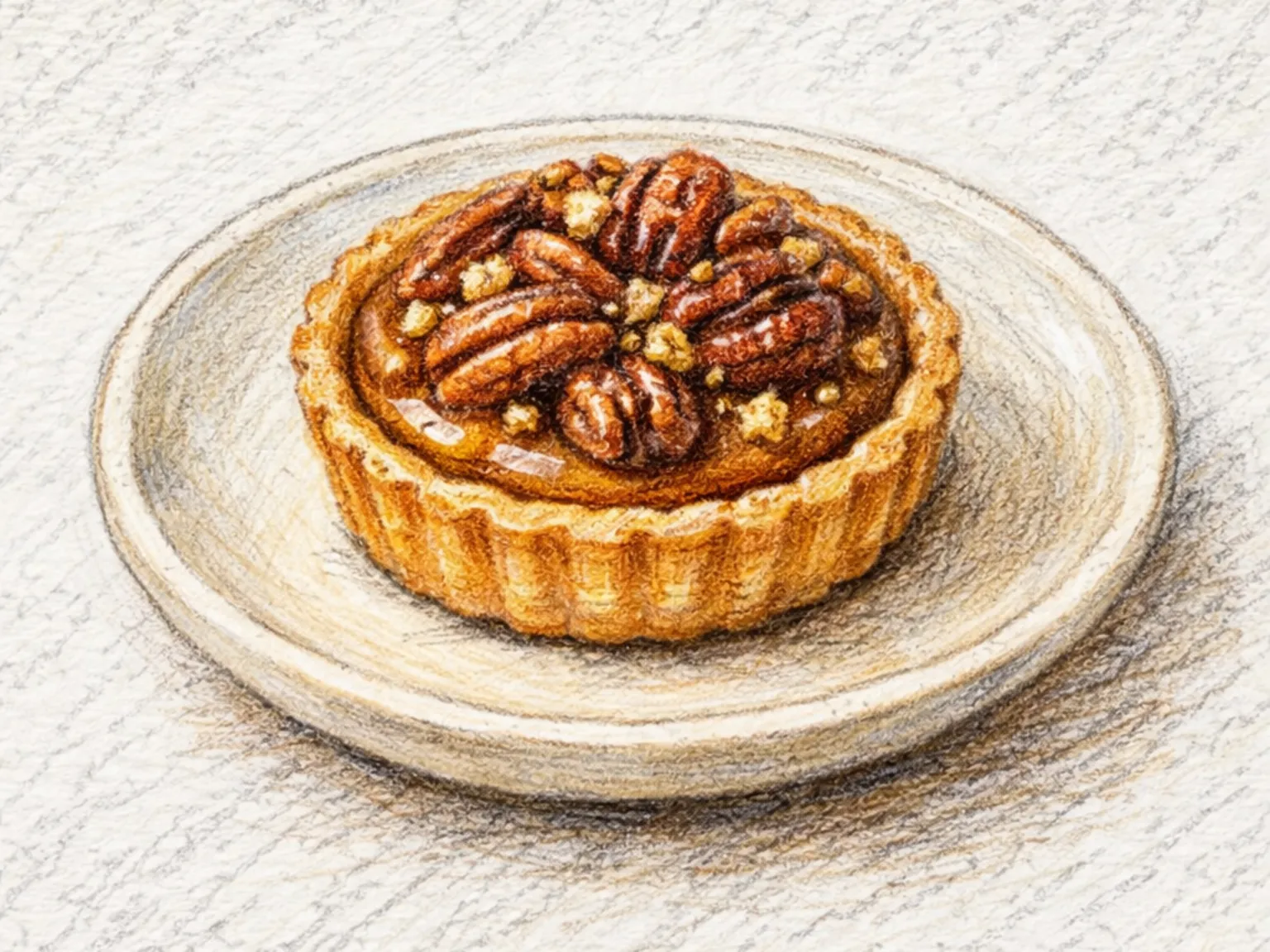
Doenjang caramel pecan tartlets bridge Korean fermented soybean paste with Western pastry technique. Mini tart shells are filled with toasted pecans and topped with caramel into which a small amount of doenjang has been whisked. The doenjang introduces a salty, fermented depth beneath the caramel's sweetness - similar to salted caramel but with an added umami dimension. The caramel is cooked to a deep amber where faint bitterness matches the doenjang's fermented edge. Once cooled, the caramel sets into a glossy layer that cracks under a fork. The overall effect is a dessert that is sweet, salty, umami-rich, and nutty in every bite.
Adjust Servings
Instructions
- 1
Preheat oven to 175C (350F) and toast pecans for 6 minutes.
- 2
Cook sugar and water over medium-low heat, without stirring, to a deep amber.
- 3
Lower heat and carefully add warm cream in parts, stirring as bubbles settle.
- 4
Add butter, doenjang, and salt, then stir until smooth and glossy.
- 5
Fold in toasted pecans and fill tart shells evenly.
- 6
Bake at 160C (320F) for 8-10 more minutes, then cool completely to set.
As an Amazon Associate, we may earn from qualifying purchases.
Tips
Nutrition (per serving)
More Recipes

Salted Doenjang Caramel Cookies
These cookies channel the umami depth of Korean fermented soybean paste into a brown sugar caramel dough. A small amount of doenjang, roughly one to two percent of the total batter weight, adds a savory undercurrent that most people cannot identify but find irresistibly complex. The brown sugar caramelizes at the edges during baking, producing crisp, toffee-like rims around a chewy center. Sea salt flakes pressed into the top before baking amplify both the sweetness and the fermented savoriness. The result tastes neither obviously Korean nor conventionally Western, occupying a unique middle ground that provokes curiosity. They pair exceptionally well with espresso, where the bitterness of coffee draws out the doenjang's deeper notes.

Doenjang Caramel Apple Galette
This galette combines a rustic French free-form pastry with a Korean twist - a drizzle of doenjang-infused caramel over cinnamon-spiced apples. The crust is made by cutting cold butter into flour and shaping it by hand, folding the rough edges over the fruit without fussing over symmetry. Sliced apples tossed with brown sugar and cinnamon fill the center, softening in the oven until tender. The doenjang caramel, made by whisking a small amount of fermented soybean paste into a brown sugar and cream sauce, adds a salty, umami undercurrent that transforms the familiar apple-and-cinnamon combination into something more layered. The doenjang amount is kept deliberately small - enough to create an intriguing depth, not enough to taste overtly of soybean paste.

Black Sesame Miso Cornbread
This fusion cornbread weaves roasted black sesame and doenjang into a classic American quick bread. Folding ground heukimja into the cornmeal batter tints it a striking grey and contributes a deep, toasted-nut richness that ordinary cornbread lacks. A small measure of doenjang dissolved into the wet ingredients spreads a subtle fermented savoriness throughout, adding complexity without making the bread taste overtly like soybean paste. The coarse cornmeal preserves a grainy chew, while butter and buttermilk keep the crumb moist. Doenjang's salt tempers the sugar, landing the flavor in an ambiguous zone between sweet and savory that invites another bite. A drizzle of honey or a pat of butter on a warm slice amplifies the nuttiness. The bread pairs well with soups, stews, and even Korean jjigae, serving as an unexpected but harmonious side.

Yuja Cheesecake Bars (Citron Cheesecake)
Yuja cheesecake bars start with a pressed base of cracker crumbs and melted butter, pre-baked for 8 minutes, then topped with a filling of cream cheese, eggs, sugar, and yuja citron marmalade baked at 170 degrees Celsius. Pre-baking the crust before adding the filling ensures the layers stay distinct, and bringing the cream cheese to room temperature beforehand lets it blend into a completely smooth batter. Seventy grams of yuja marmalade cuts through the dense cheese richness with a sharp citrus fragrance and clean acidity, keeping the aftertaste light. Chilling for two full hours before slicing produces neat, straight edges, and the texture lands between dense and silky, melting slowly on the palate.

Gochujang Chocolate Crinkle Cookies
These crinkle cookies merge the fermented heat of gochujang with deep chocolate flavor in a single bite. The signature cracked surface forms when balls of dough rolled in powdered sugar expand in the oven, splitting the white coating to reveal the dark interior beneath. Gochujang, added in a modest amount, threads a low, lingering warmth and an umami undertone through the chocolate without announcing itself overtly. Most tasters sense something unexpected at the finish but cannot immediately name the source. The exterior sets into a thin, lightly crisp shell while the inside stays dense and fudgy, occupying the space between a brownie and a cookie. Using both cocoa powder and melted chocolate doubles the chocolate intensity, and a pinch of flaky sea salt on top before baking sharpens the boundary between sweet and spicy, making each subsequent bite as interesting as the first.

Red Bean Pastry (Korean Gyeongju Soft Bun with Anko)
Gyeongju-ppang is a baked Korean pastry made from a yeast-leavened dough enriched with milk and butter, wrapped around a generous filling of sweet red bean paste. The dough is rolled thin, sealed around the paste with the seam facing down, and baked at 180 degrees Celsius until the top puffs up with a smooth, light golden surface. Because the filling-to-dough ratio is high, the first flavor in each bite is the dense, sweet red bean, followed by the mild dairy aroma of the thin bread shell. Rooted in the baking traditions of Gyeongju and its famous hwangnam-ppang, this pastry stays moist even after cooling, making it suitable as a packaged gift or an everyday snack.