Doenjang Clam Spinach Orzo
Quick answer
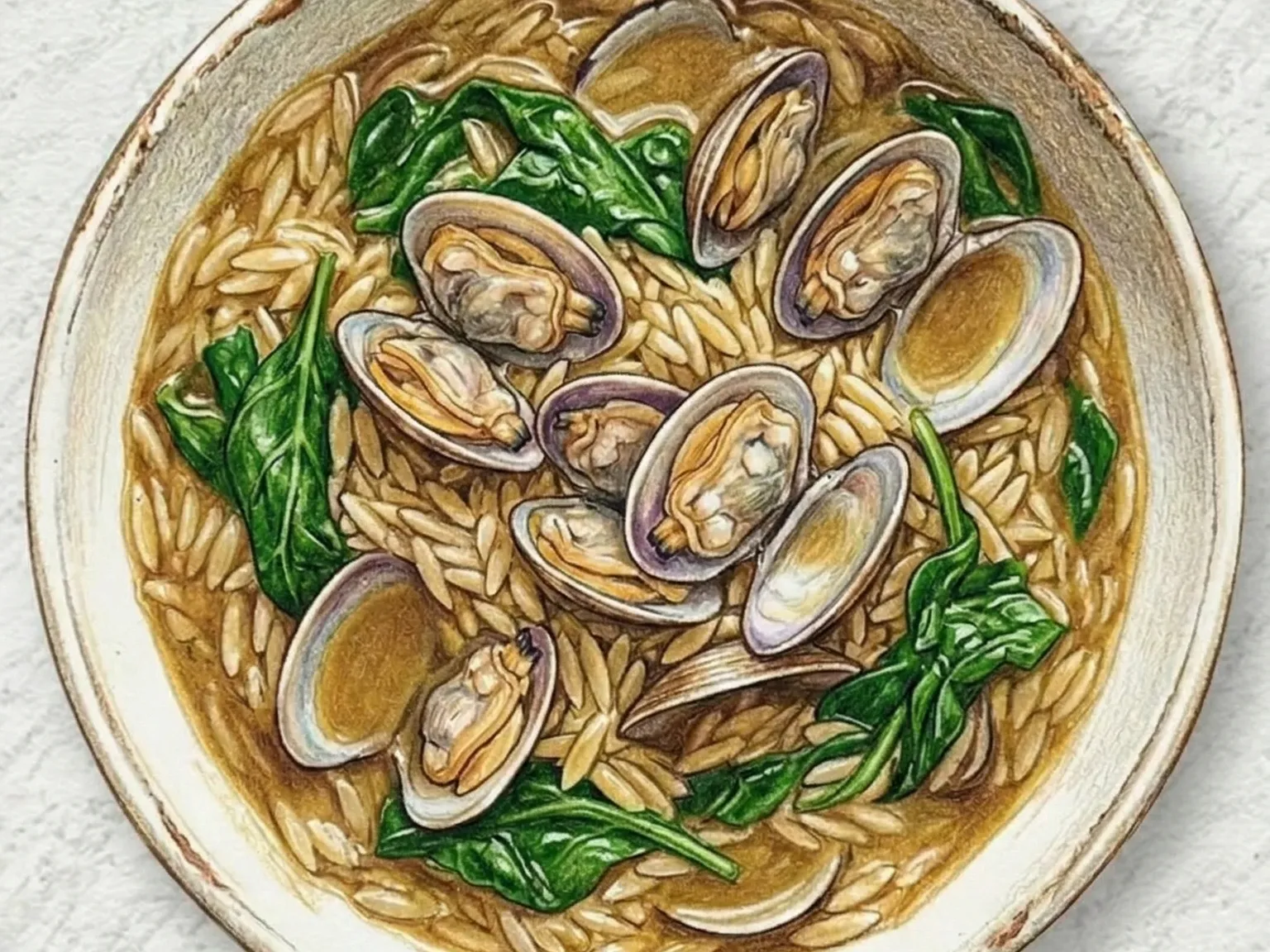
Doenjang clam spinach orzo is a one-bowl pasta built by cooking orzo in doenjang-seasoned vegetable stock alongside clams in a method borrowed directly from risotto technique.
What makes this special
- Orzo cooked in salty doenjang stock with fresh clams mimics a savory risotto technique.
- Clam broth and fermented doenjang merge into a deeply salty-savory base
- Orzo toasted in butter first, then finished risotto-style in broth
Key ingredients
Core cooking flow
- 1 Soak 300g clams in salt water (1L water + 1 tablespoon salt) for 20-30 minutes to purge grit.
- 2 Heat 1 tablespoon olive oil over medium heat.
- 3 Add 180g orzo and stir-fry for 1 minute.
Doenjang clam spinach orzo is a one-bowl pasta built by cooking orzo in doenjang-seasoned vegetable stock alongside clams in a method borrowed directly from risotto technique. The clams are first purged in salt water to remove sand, then steamed open in white wine so they release their briny cooking liquid into the pan. That liquid merges with the already-present fermented depth of doenjang to form a layered savory base that carries the pasta from the very first minute of cooking. Toasting the orzo in butter or oil before adding any liquid coats the starch on each grain, a step that slows its release and produces a consistently creamy sauce by the end rather than a gluey mass or a watery broth. The stock goes in two or three additions rather than all at once, each addition added only once the previous one has been absorbed, and the pasta is stirred throughout so the released starch works into the liquid rather than sinking to the bottom. Spinach added in the final thirty to sixty seconds of cooking wilts just enough to turn tender without losing its bright green color or dissolving into the sauce. A knob of cold butter stirred in off heat as the finishing touch emulsifies into the sauce, adding a glossy sheen and a rounded, buttery richness that ties all the flavors together.
Instructions
Read the steps as a cooking flow: prep, heat, seasoning, doneness control, and finish.
- 1Season
Soak 300g clams in salt water (1L water + 1 tablespoon salt) for 20-30 minutes to purge grit.
Rinse and drain. Cut 80g spinach into 4cm lengths.
- 2Control
Heat 1 tablespoon olive oil over medium heat.
Saute 60g diced onion and 2 sliced garlic cloves for 2 minutes until softened and sweet.
- 3Heat
Add 180g orzo and stir-fry for 1 minute.
Pour in 60ml white wine and stir until fully absorbed.
- 4Step
Add 450ml vegetable stock in 2-3 additions, stirring constantly for 8 minutes until the orzo is tender and creamy like risotto.
- 5Control
Dissolve 1 tablespoon doenjang in 2 tablespoons of the hot cooking liquid and stir into the pan.
Add the clams, cover, and cook for 3 minutes until all open.
- 6Finish
Once the clams open, add 80g spinach and 15g butter and stir for 1 minute.
Adjust salt and serve immediately.
After the steps
Pick a recipe that fits this dish.
Continue with shared ingredients, meal pairings, or a similar method.
Recipes That Go Well With This
More Pasta →Based on shared ingredients and meal pairing
Ssamjang Chicken Spinach Orecchiette (Ssamjang Chicken Pasta)
Ssamjang chicken spinach orecchiette dissolves ssamjang directly in milk rather than frying it first, which softens the fermented paste's sharp edges into a smooth, savory cream sauce without bitterness. Boneless chicken thigh is seared until the skin turns golden and fat renders out, then combined with sauteed onion and garlic that build a sweet aromatic base underneath the fermented sauce. Spinach goes in at the very end to preserve its bright color and slight bite, and the concave, ear-shaped form of orecchiette cups the thick sauce inside each piece so every bite carries a full measure of flavor. Parmesan and black pepper are folded in off the heat so the cheese melts gradually without breaking. Reserving a small amount of pasta cooking water to loosen the sauce at the end helps achieve the right consistency.
Kimchi Lentil Ragu Tagliatelle
Kimchi lentil ragu tagliatelle is a plant-forward pasta where lentils simmer with tomato puree, wine, and finely diced onion, carrot, and celery for 35 minutes, breaking down into a thick sauce with a meaty texture that contains no actual meat. The Korean-inflected soffritto builds the aromatic base, and as the lentils cook through they release starch that naturally thickens the ragu without any additional binder. Fermented kimchi is added late in the process, preserving its sharp acidity and keeping the fermented flavor present and distinct rather than cooked away. A small amount of sugar smooths the combined tartness of tomato and kimchi so neither dominates. The wide, flat tagliatelle ribbons hold the heavy sauce well, and every strand picks up the full depth of the braise. Without a gram of meat, the dish delivers genuine richness and staying power.
Grilled Squid & Bellflower Root Salad
Grilled squid and bellflower root citrus salad combines seared squid with soaked bellflower root, romaine, and orange segments in a yuzu-gochugaru dressing, drawing on classic Korean flavors to build a salad with genuine textural and flavor complexity. The squid tubes are scored in a crosshatch pattern before cooking, which ensures that heat penetrates evenly so the flesh cooks uniformly without curling into a tight coil; limiting each side to one to two minutes over high heat is equally important, as even a minute more will produce a rubbery result. Bellflower root is a traditional Korean ingredient with a pleasantly bitter edge that requires brief preparation: shredded into thin strips and soaked in lightly salted water for five minutes, it releases enough bitterness to become mild and yielding while retaining a satisfying crunch. The dressing is the component that unifies the dish: yuzu marmalade contributes a floral, layered acidity quite different from straightforward lemon or lime juice, while rice vinegar sharpens the finish, olive oil emulsifies and rounds the texture, and gochugaru adds a slow-building warmth that lingers after the citrus flavors fade. This combination bridges the savory, slightly smoky character of the squid and the subtle bitterness of the bellflower root. Fresh orange segments provide the final note, bursting with bright juice on each bite to lift the entire salad. The visual contrast between the ivory bellflower root, the charred squid, and the vivid orange makes the finished plate as attractive to look at as it is to eat.
Doenjang Mushroom Butter Linguine
Doenjang mushroom butter linguine starts with garlic sauteed in butter and olive oil, followed by button mushrooms cooked undisturbed on high heat until moisture fully evaporates and the edges brown. Stirring the mushrooms too frequently steams rather than sears them, producing a soft, wet texture instead of the firm, chewy bite that makes this dish work. Doenjang is dissolved in reserved pasta water before being added to the pan, ensuring even distribution of fermented savoriness across every strand without clumping. The butter's fat emulsifies with the starchy pasta water to form a glossy sauce that clings to the noodles rather than pooling at the bottom of the bowl. Sliced green onion added at the finish brings a sharp, grassy note, and grated Parmesan layers additional salt and umami depth into the final dish. One to two minutes of tossing with pasta water adjustment tightens the sauce around each noodle.
Serve with this
Korean Kiwi Mint Ade
Kiwi mint ade is a sparkling fruit drink built from a base of muddled fresh kiwi, sugar, and lemon juice, finished with well-chilled sparkling water poured in just before serving. The bright, almost tart acidity of ripe kiwi plays against the cool green note of lightly bruised mint leaves, producing a layered freshness that wakes the palate from the first sip. Floating thin rounds of sliced kiwi on top adds a visual element and gives the drink bursts of fruit texture between sips of carbonated liquid. Mint should be pressed gently rather than crushed hard, since breaking the leaves too aggressively extracts bitter compounds that muddy the clean kiwi flavor. Serving over plenty of ice keeps the carbonation lively and the overall impression as crisp as possible.
Yaksik (Korean Royal Sweet Glutinous Rice with Jujube)
Yaksik is a traditional Korean sweet rice dish with roots in royal court cuisine. Glutinous rice is mixed with soy sauce, honey, and sesame oil, then steamed with jujubes and chestnuts until each grain absorbs a deep caramel-brown color and a sweet-salty seasoning. The soy sauce provides savory depth while the honey glazes the rice with a gentle sheen and lingering sweetness. Jujubes burst with natural fruity sweetness when bitten, and chestnuts contribute a crumbly, starchy contrast to the chewy rice. A pinch of cinnamon adds warm spice that ties the elements together. Yaksik holds its texture well at room temperature, making it equally suited for packed lunches or make-ahead desserts.
Grilled Chicken Caesar Salad
Grilled chicken Caesar salad is a classic constructed salad built on pan-seared chicken breast, crisp romaine lettuce, house-made Caesar dressing, croutons, and shaved Parmesan. The chicken breast is seasoned simply with salt and pepper and cooked over medium-high heat until golden on both sides, then left to rest for five minutes before slicing. Resting allows the muscle fibers to relax and the internal juices to redistribute, so each slice stays moist at the center rather than releasing liquid when cut. Slicing too thinly also causes rapid heat loss and results in a dry, mealy texture, so cutting into thicker pieces is preferable. The dressing is made by whisking together mayonnaise, fresh lemon juice, minced garlic, and a small amount of Worcestershire sauce. That combination produces a coating that is creamy and rich but balanced by the sharpness of citrus and the depth of the fermented condiment. Romaine is torn into bite-sized pieces and tossed lightly with dressing before the chicken and croutons are added on top, which prevents the weight of the toppings from bruising the leaves and accelerating wilting. Croutons go on last and should not be tossed through the greens, as contact with dressing causes them to absorb moisture and lose crunch quickly. Parmesan provides the concentrated salty umami of aged hard cheese that ties the neutral lettuce, mild chicken, and tangy dressing into a unified plate. The salad must be assembled immediately before serving to preserve the distinct textures that make it satisfying.
Similar recipes
Kkaennip Mushroom Cream Farfalle
Kkaennip mushroom cream farfalle combines sliced button mushrooms and fresh perilla leaves in a cream sauce over bow-tie pasta. The mushrooms are sauteed in olive oil until their moisture cooks off and their flavor concentrates, with onion and garlic building the aromatic base. Heavy cream is then added to form the sauce, and shredded perilla goes in at the end so the leaves wilt just enough to release their fragrance without losing it to the heat. Parmesan contributes salt and a nutty underpinning, while farfalle's ridged and folded surface holds the sauce across every piece. The defining quality of the dish is the perilla itself, whose scent belongs to the sesame family and sits in entirely different territory from basil or mint - grassy, faintly resinous, and unmistakably Korean. Few other herbs could give a cream pasta this specific character.
Korean Soybean Paste Stew with Clams and Zucchini
Bajirak aehobak doenjang jjigae is a Korean soybean paste stew that draws its distinctive clean depth from littleneck clams cooked alongside zucchini, potato, and tofu in rice-rinse water. As the clams open during cooking, they release their briny, slightly sweet liquor directly into the doenjang broth, deepening the fermented base with a layer of ocean salinity that soybean paste alone cannot produce. Potato breaks down gradually as the stew simmers, adding a subtle body to the broth without turning it starchy. Tofu and zucchini provide contrasting textures, the tofu soft and custardy while the zucchini retains a gentle resistance. Onion and minced garlic supply the sweet, aromatic foundation of the broth, and a Cheongyang chili introduces a clean, sharp heat that prevents the flavors from becoming too heavy. The pairing of the clams' saline, briny character with the earthy fermented depth of doenjang is what gives this particular version of the stew its reputation as one of the most satisfying everyday versions, served with a bowl of plain steamed rice.
Charred Daepa Gamja Doenjang Salad (Charred Leek Potato Salad)
Charred daepa gamja doenjang salad combines boiled potatoes with large green onion segments that have been seared until deeply caramelized and smoky. The high heat strips away the raw onion bite and replaces it with a concentrated sweetness and char aroma. A dressing made from doenjang, lemon juice, honey, and olive oil layers fermented depth with bright acidity and a touch of sweetness, drawing out the mild flavor of the potato. Tossing the potatoes while still warm allows the dressing to absorb into the starchy flesh rather than sitting on the surface. Red chard adds color and a faint bitterness that gives the bowl a sense of direction, while black sesame seeds contribute a final nutty accent.