Tofu Ricotta Spinach Ravioli
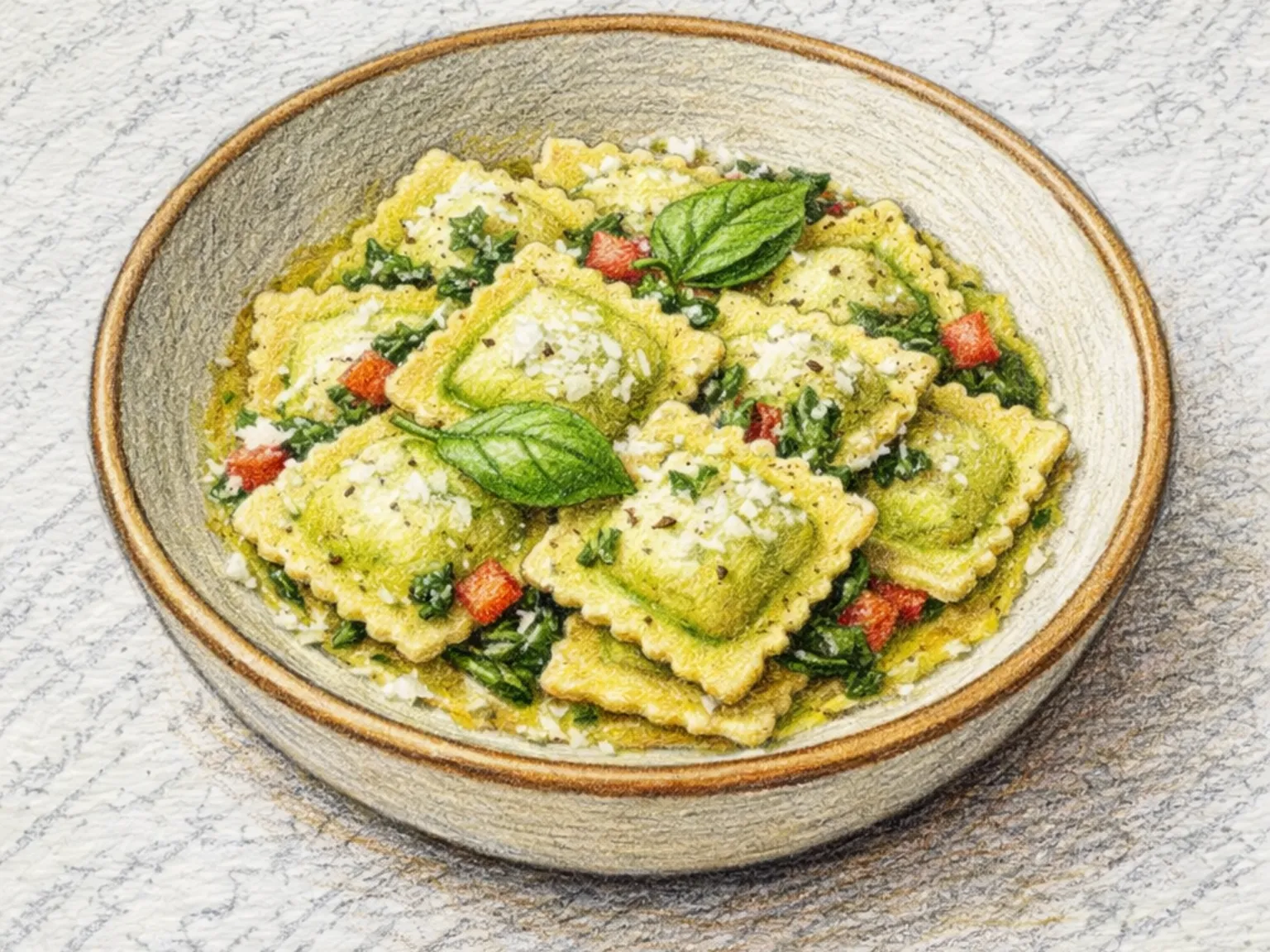
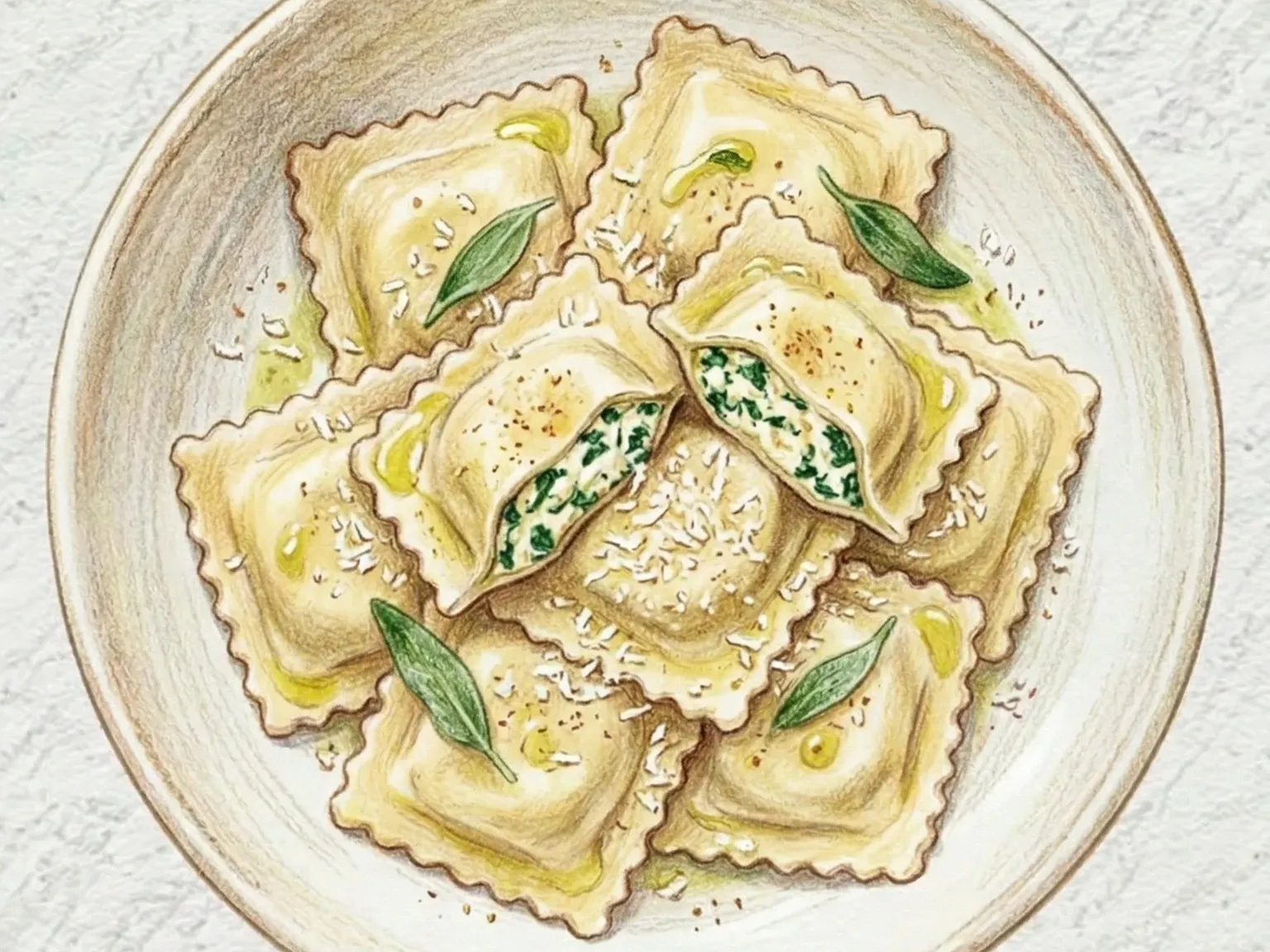
Tofu ricotta spinach ravioli wraps a filling of pressed firm tofu, ricotta, blanched spinach, Parmigiano Reggiano, and nutmeg inside fresh pasta sheets. The tofu lightens the ricotta's richness while maintaining a creamy mouthfeel, and nutmeg adds a warm spice note that complements the earthy spinach. Crimping the edges with a fork before boiling creates a tight seal that holds through 3-4 minutes of cooking, and immediately coating the drained ravioli in sage-infused butter prevents the surface from drying out. The recipe yields enough for four servings, making it well-suited for a sit-down dinner.
Adjust Servings
Instructions
- 1
Press tofu dry, blanch spinach, squeeze out moisture, and finely chop.
- 2
Mix ricotta, tofu, spinach, Parmigiano, egg, nutmeg, salt, and pepper into filling.
- 3
Pipe or spoon filling onto pasta sheets, brush edges with water, and cover with another sheet.
- 4
Press out air pockets, seal firmly, and cut into squares with a ravioli cutter.
- 5
Boil ravioli in salted water for 3-4 minutes until they float, then drain.
- 6
Infuse butter with sage in a pan, then gently coat the ravioli for 30 seconds.
- 7
Plate, then finish with extra pepper and grated cheese.
As an Amazon Associate, we may earn from qualifying purchases.
Tips
Nutrition (per serving)
More Recipes

Spinach Ricotta Ravioli
Spinach ricotta ravioli is made by placing mounds of a filling - ricotta cheese, blanched and squeezed spinach, Parmesan, and egg - onto fresh pasta sheets, then sealing and cutting individual pieces. Squeezing every drop of water from the blanched spinach is non-negotiable; wet filling loosens the seal and causes the ravioli to burst in boiling water. When pressing the top sheet down, working from the filling outward pushes trapped air to the edges, and a firm seal along the border keeps each piece intact during cooking. A quick boil of three to four minutes in salted water is all the thin pasta needs - overcooking turns it mushy. Tossing the cooked ravioli gently in melted butter lets the fat coat each piece without tearing the delicate dough, and the butter's richness rounds out the mild ricotta and earthy spinach.

Sweet Potato Gnocchi with Sage Butter
Sweet potato gnocchi with sage butter starts by steaming sweet potato to drive off moisture, then mashing it warm and gently folding in potato starch, flour, and egg yolk to form a soft dough. Minimal kneading prevents gluten development, keeping each piece fluffy and tender on the inside. The gnocchi are boiled until they float, then tossed in butter that has been cooked with sage leaves over medium heat until it turns hazelnut-brown and nutty. Chopped walnuts add crunch against the pillowy texture, and freshly grated Parmigiano Reggiano finishes the dish with a salty, crystalline accent.

Ricotta Spinach Gnudi (Naked Ricotta Dumplings)
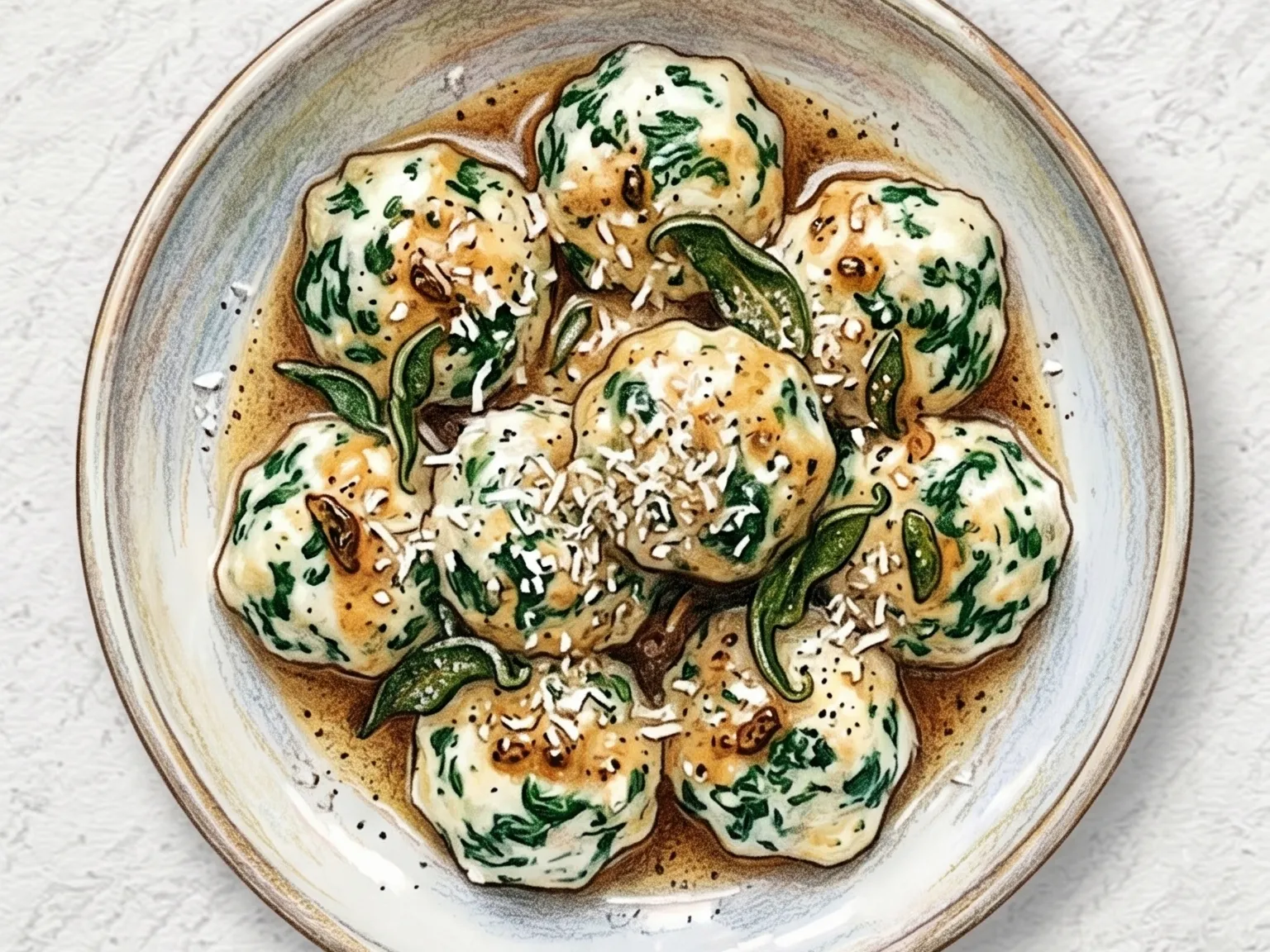
Ricotta spinach gnudi are Italian dumplings made by mixing ricotta cheese with thoroughly squeezed spinach, Parmigiano Reggiano, egg yolks, and a minimal amount of flour, then poaching in salted boiling water. The name 'gnudi' means 'naked' - these are essentially ravioli filling without the pasta shell, so the cheese and spinach flavors come through directly. Removing every bit of moisture from the spinach is the critical step; any residual water weakens the dough and causes the dumplings to fall apart during cooking. Once they float to the surface, one additional minute of poaching yields a pillowy, crumbly texture. A brown butter sauce with sage leaves adds a deep, nutty richness that complements the mild ricotta.

Yuja Chicken Piccata Linguine
Yuja chicken piccata linguine pounds chicken breast thin, dusts it with flour, and pan-sears each side for 3 minutes until a golden crust forms. The same pan is deglazed with chicken stock, lemon juice, yuja marmalade, and capers, then simmered for 3 minutes to concentrate the sauce and lift the fond from the pan bottom. Whisking in butter emulsifies the liquid into a glossy, spoonable consistency. The capers' briny pop pairs with yuja's bittersweet citrus notes to create layered acidity, and the flat surface of linguine picks up the sauce broadly across each strand.

Buchu Vongole Spaghetti (Korean Garlic Chive and Clam Pasta)
Buchu vongole spaghetti steams clams in white wine until they open, then uses their briny liquor as the foundation of the pasta sauce, finishing with a generous handful of Korean garlic chives. Garlic and chili flakes are first infused in olive oil before the wine goes in, and as the alcohol cooks off, only its fruity notes remain in the base. The clam juice is salty enough to season the sauce on its own - no additional salt needed. Emulsifying pasta water with the clam broth and oil creates a light, glossy coating on each strand. The garlic chives go in after the heat is turned off so they stay bright and fragrant rather than wilting into the sauce. Italian parsley adds a final herbal freshness.

Soy-Braised Mushroom Ragu Pappardelle
Soy-braised mushroom ragu pappardelle builds a meat-free ragu from finely chopped shiitake and button mushrooms cooked low and slow with aromatics and soy sauce. Onion and carrot are sweated first to develop sweetness, then the minced mushrooms go in and are cooked until their moisture fully evaporates, creating a dense, chewy texture. Tomato paste adds acidity and color, dry white wine lifts the complexity, and soy sauce provides the fermented backbone that gives this vegetarian ragu its depth. Thyme brings a subtle herbal note, and wide pappardelle ribbons carry the thick, chunky sauce well. The 28-minute cook time is mostly hands-off simmering.