Korean Doenjang Mushroom Udon
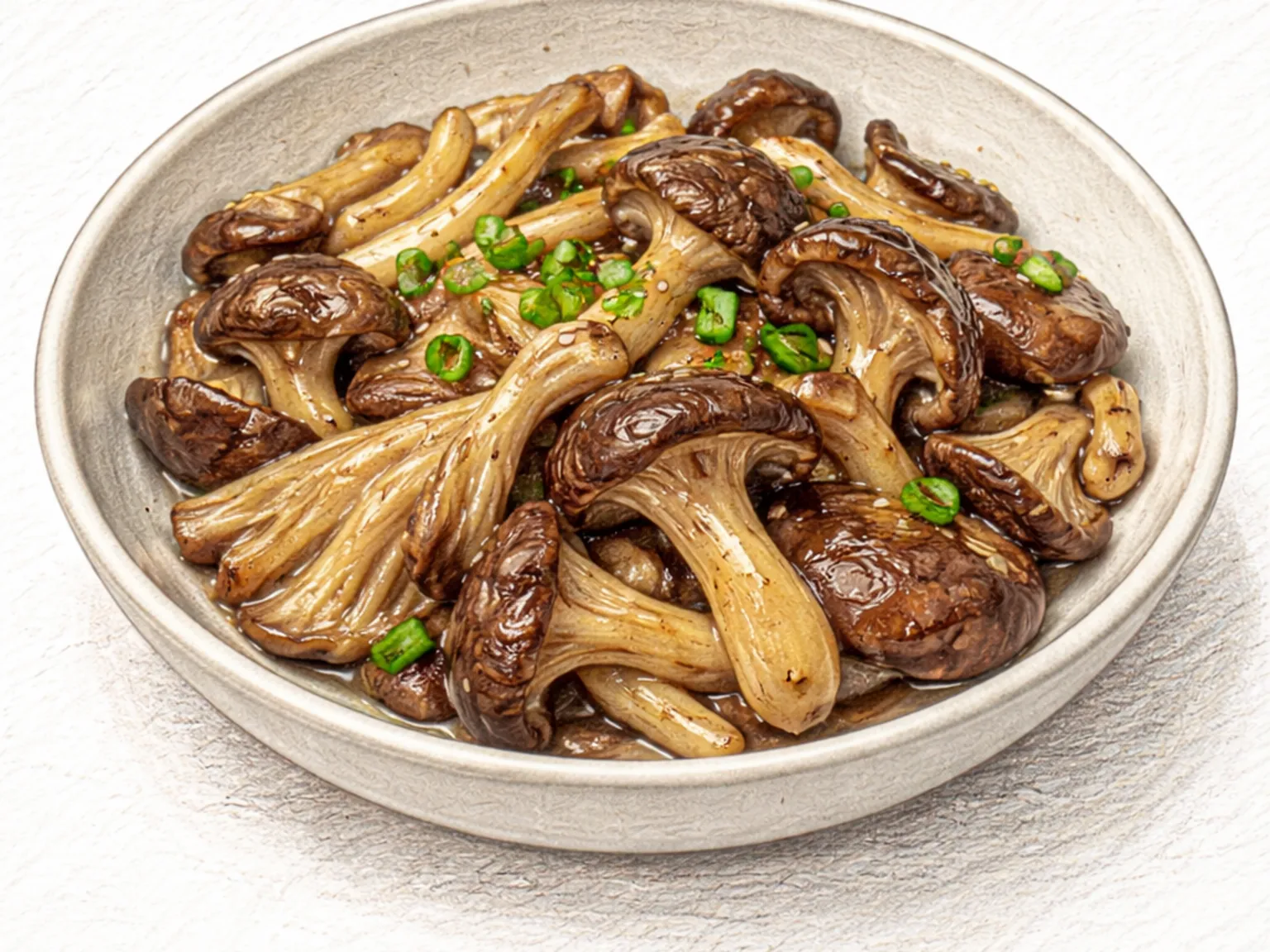
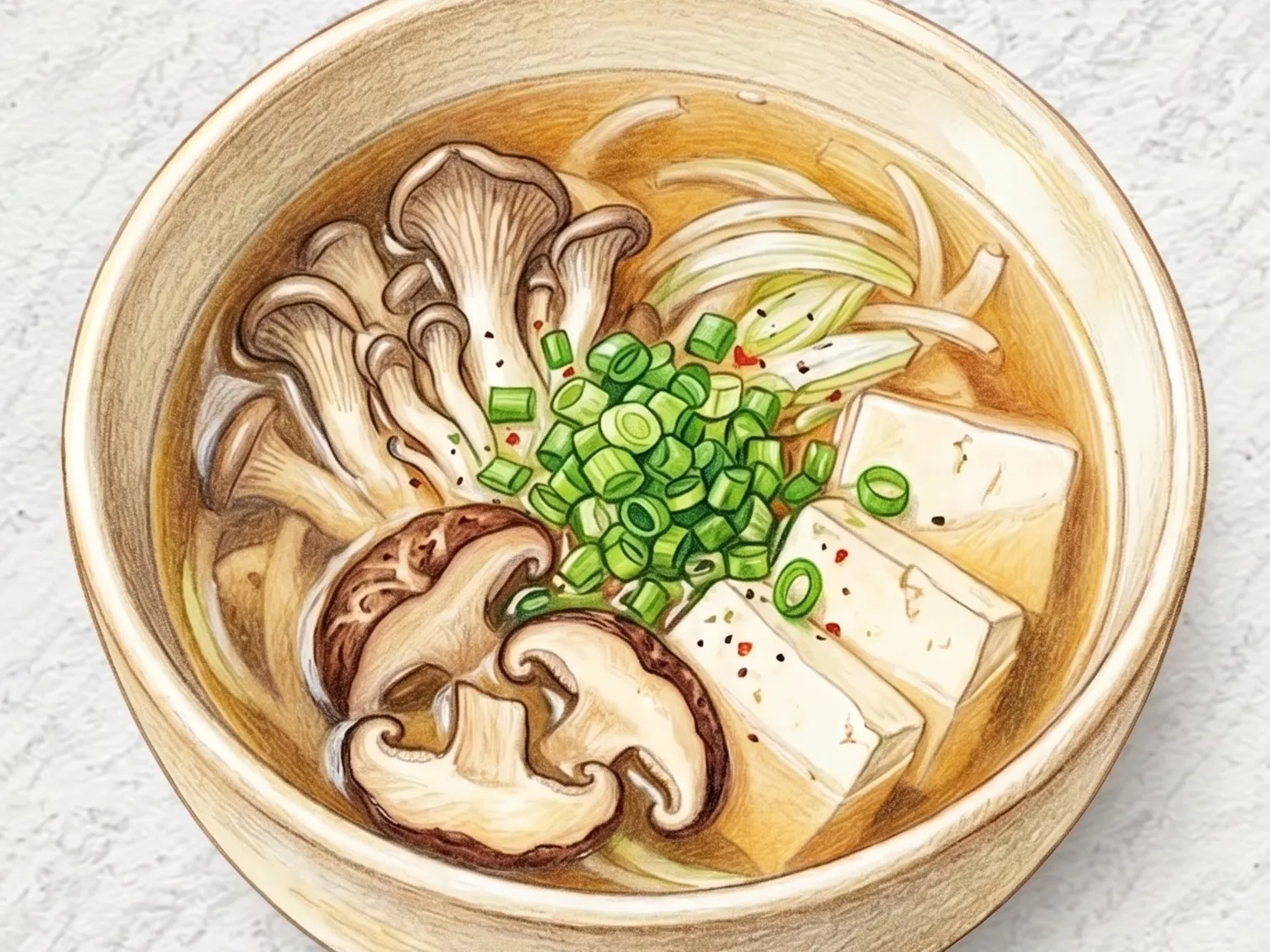
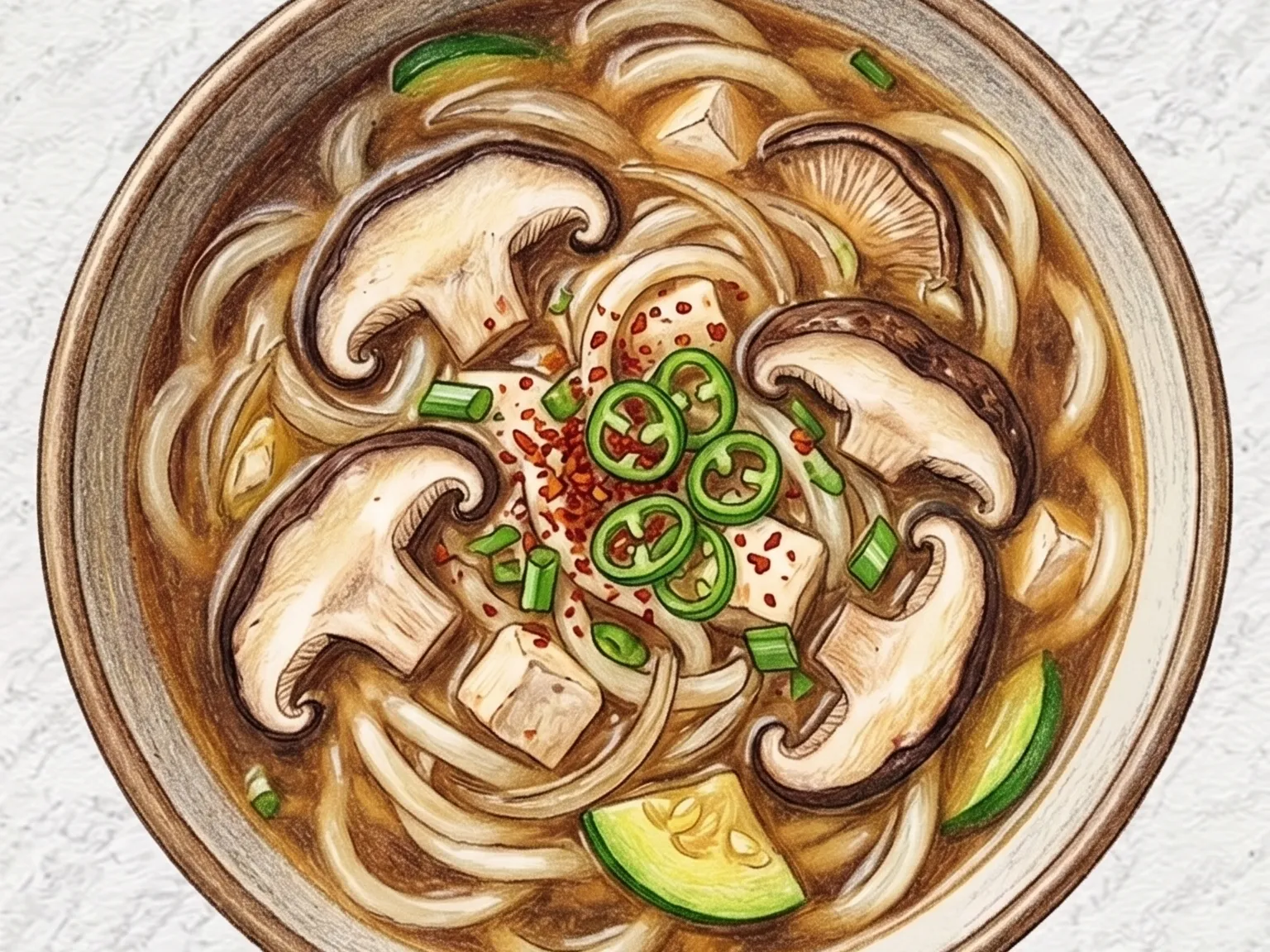
Doenjang mushroom udon is a Korean noodle soup where thick-cut shiitake mushrooms simmer in an anchovy-kelp broth with dissolved soybean paste, building layered depth from two distinct fermented and dried umami sources. The shiitake's aromatic depth stacks on top of the doenjang's fermented, mellow character, while onion adds a quiet sweetness that prevents the broth from tasting one-dimensionally salty. Passing the doenjang through a fine sieve before stirring it into the broth ensures no lumps remain and the paste disperses evenly. Parboiling the udon noodles separately in plain water and rinsing briefly strips away surface starch, keeping the broth clear and clean to the last spoonful. A pinch of gochugaru added during the seasoning stage introduces a faint warmth at the finish that sharpens the overall flavor, and a few thin slices of cheongyang chili on top add color and a sharper bite. Adding silken tofu or sliced zucchini makes the bowl substantial enough to serve as a full meal.
Adjust Servings
Instructions
- 1
Slice shiitake thickly, julienne onion, and diagonally slice green onion.
- 2
Bring stock to a boil and dissolve doenjang through a strainer to avoid lumps.
- 3
Add onion and shiitake, simmer 6 minutes over medium heat to build sweetness and umami.
- 4
Add soup soy sauce, minced garlic, and chili flakes, then simmer 2 more minutes.
- 5
Parboil udon for 2 minutes and rinse briefly to remove surface starch.
- 6
Place noodles in bowls, pour over hot broth, and finish with green onion.
As an Amazon Associate, we may earn from qualifying purchases.
Tips
Nutrition (per serving)
Goes Well With

Korean Blanched Young Napa with Doenjang
Eolgari is young napa cabbage cut before the head has formed a tight ball, leaving it with thinner leaves and more tender ribs than fully mature baechu. A quick blanch of about one minute wilts the leaf while the pale ribs retain a gentle crunch that holds even after seasoning. After blanching, the cabbage is squeezed firmly to remove water, then dressed with doenjang, soup soy sauce, minced garlic, and sesame oil. The fermented paste penetrates the tender leaves quickly, spreading a salty, earthy coating evenly through each piece. The flavor profile is mild and round with no sharp edges, making it one of the most approachable doenjang-based namul dishes for people who are new to Korean fermented seasonings. The dish comes from the Korean countryside tradition of turning whatever young greens were growing between major kimchi-making seasons into simple dressed vegetables. Eolgari is a seasonal green, available at Korean markets from late spring through early autumn.

Korean Shiitake Tofu Pancake
Shiitake-tofu jeon is a savory Korean pancake made by finely chopping fresh shiitake mushrooms and firm tofu, then mixing them into a batter of pancake mix, egg, and a touch of sesame oil before pan-frying. The shiitakes contribute a meaty chew and pronounced umami depth, while the tofu lightens the texture and keeps the interior moist. Carrot and chives are added for color contrast and a fresh, slightly pungent bite. The egg binds everything together, and the sesame oil in the batter gives a nutty fragrance. Cooked uncovered over medium-low heat until both sides are golden, the exterior crisps up while the inside stays tender. When using dried shiitakes, soaking them in water first is worthwhile because the soaking liquid can be reserved for use in soups or braising liquid. Served with a dipping sauce of soy sauce and vinegar, the salty acidity sharpens the overall savory flavor.

Korean Pickled Shishito Peppers
Kkwarigochu jangajji is a Korean pickled shishito pepper side dish made by pricking each pepper all over with a toothpick, blanching briefly in salted boiling water for thirty to sixty seconds, and submerging them with sliced garlic and optional cheongyang chili in a brine of soy sauce, vinegar, and sugar brought to a boil. Pricking the peppers before blanching ensures the brine penetrates evenly through the hollow interior, eliminating any difference in seasoning between the skin and the flesh inside. Blanching for only thirty seconds to one minute wilts the peppers just enough to make them pliable while keeping a firm, springy bite and their natural mild heat. Pouring the brine hot, then letting the jar cool before refrigerating, helps the peppers hold their green color rather than browning. Vinegar cuts through the saltiness of the soy sauce and prevents the pickle from tasting heavy, while sugar smooths the sharpness into a balanced, clean finish. Ready after at least one day of refrigeration and keeps well for over a week, making it a reliable banchan to have on hand when the weeknight table needs one more dish.

Water Parsley & Beef Salad
Beef marinated in soy sauce and pear juice is seared over high heat just long enough to develop a caramelized, deeply savory crust on the outside while the interior stays moist and tender. The cooked bulgogi is laid over a bed of fragrant minari and crisp lettuce, so each forkful carries both the warm, rich meat and the cool, crunchy vegetables. Thinly sliced red onion soaked in cold water to tame its bite then scattered through the bowl melds smoothly with the sweet-savory marinade coating the beef. A light toss of the remaining sesame oil from the pan coats the greens with a round, nutty aroma, and toasted sesame seeds sprinkled generously over the top complete the plate. Minari wilts quickly and loses its herbal fragrance once it is dressed, so it should only be combined with the other ingredients moments before the dish reaches the table. The warm meat against the cold greens creates a temperature contrast that makes each bite more dynamic. A spoonful of ssamjang dressing or a splash of yuzu vinegar can shift the flavor profile when variety is wanted.
More Recipes

Korean Anchovy Broth Thin Noodle Soup
Anchovy somyeon is the noodle soup Korean families fall back on when the kitchen offers little to work with - dried anchovies, a strip of dashima kelp, and a bundle of thin wheat noodles are enough. The broth starts with dried anchovies soaked briefly to cut any bitterness, then simmered with dashima for fifteen minutes before being strained to produce a clear liquid with a faint oceanic sweetness and deep umami. Somyeon - hair-thin wheat noodles - are cooked in a separate pot to keep their starch from clouding the broth, then rinsed repeatedly under cold water until every strand separates cleanly. The noodles go into a bowl of hot broth and are finished with sliced scallion, a small drop of sesame oil, and often a sheet of toasted gim. A few drops of soy sauce tune the salt level, and a soft-boiled egg or a few slices of tofu can round it into a full meal. The appeal of the dish is its restraint: no chili paste, no fermented base, just the clean savor of anchovy stock meeting springy noodles. Korean mothers have served this as a quick midday meal for generations, and it endures as comfort food in its most unadorned form.

Korean Doenjang Thin Noodle Soup
Doenjang somyeon is a Korean noodle soup of thin wheat noodles in a fermented soybean paste broth built on anchovy stock. Potato, zucchini, and onion - or whatever vegetables are available - go into the broth first, simmering until they release their moisture and natural sugars into the liquid, which rounds out the earthy doenjang base. The somyeon noodles take only three to four minutes to cook, so they go in last to stay firm. Sliced green onion scattered on top adds a clean, bright note against the fermented broth. The ingredient list is short and adaptable, but the doenjang delivers enough layered depth to make this a satisfying weeknight dinner without any complex technique.

Korean Fermented Soybean Paste Noodle Soup
Doenjang kalguksu is a Korean noodle soup of knife-cut wheat noodles in an anchovy broth enriched with fermented soybean paste. Straining the doenjang through a fine-mesh sieve before adding it to the broth serves a specific purpose: it prevents uneven lumps and ensures the paste dissolves uniformly, which keeps any bitter notes from concentrating in spots. The fermentation depth of the doenjang and the glutamate-rich anchovy stock reinforce each other without needing added seasoning. Zucchini cut into half-moons and sliced shiitake mushrooms contribute sweetness and aroma as the broth simmers; cubed tofu adds a soft, yielding contrast to the chewy noodles. Timing dictates quality here: the final salt adjustment goes in right before the noodles, because doenjang pushed through extended boiling develops a pronounced bitterness that is difficult to correct. Once the noodles go in, the soup should be finished within two minutes to preserve their elasticity.

Korean Knife-cut Noodle Soup
Kalguksu is a Korean noodle soup made with hand-cut wheat noodles simmered in anchovy-kelp broth. The noodles are rolled flat and sliced with a knife, giving them a rough surface that absorbs broth and a satisfying chew distinct from machine-made pasta. Sliced potato, half-moon zucchini, and onion go into the pot, with the potato releasing starch that naturally thickens the broth as it cooks. Seasoning stays minimal - soup soy sauce, salt, minced garlic, and green onion added at the end - so the clean, savory depth of the stock comes through clearly. The dish is traditionally associated with rainy days in Korea, and adding clams turns it into a popular seafood variation.

Korean Napa Cabbage Doenjang Soup
Baechu doenjang guk is a foundational Korean soup built on anchovy-kelp stock seasoned with fermented soybean paste and napa cabbage. Straining the doenjang through a fine sieve as it dissolves into the hot stock keeps the broth visually clear while extracting the full depth of its fermented, earthy flavor. The cabbage stalks go into the pot first and simmer for five minutes alone, drawing out their inherent sweetness before the leaf sections and cubed tofu are added. A small spoonful of gochujang introduced at this point gives the broth a gentle heat and a reddish cast that adds both visual contrast and flavor complexity beyond doenjang alone. Sliced cheongyang chili and scallion are stirred in during the final two minutes, contributing sharpness and aroma without turning limp. Doenjang saltiness varies significantly between brands and aged batches, so starting with a conservative amount and adjusting by taste prevents over-salting. As the cabbage softens fully, its natural sweetness seeps gradually into the broth, where it finds a natural balance with the deep fermented character of the paste. It is among the most accessible soups in Korean home cooking, requiring only the most common pantry and refrigerator ingredients.

Korean Radish Greens Perilla Soup
Mucheong-deulkkae-guk is a Korean soup that brings together two of the cuisine's most deeply comforting flavors - fermented soybean paste and ground perilla seeds - building them over a base of dried radish greens. The greens are boiled until fully tender, then worked with doenjang until the paste clings to every fiber, allowing the fermented soy flavor to penetrate thoroughly before the soup is even assembled. Simmered in a stock made from dried anchovies and kelp and enriched with a generous scoop of perilla seed powder, the broth shifts from translucent to an opaque, creamy white as the powder disperses. That transformation signals the moment when the soup reaches its characteristic nutty density - a flavor that sits somewhere between roasted sesame and warm earth. Garlic and green onion establish the aromatic structure, while the chewy resistance of the radish greens provides a textural contrast that distinguishes this soup from smoother versions made with tofu or mushrooms. The broth is substantial enough to pour directly over steamed rice, where the perilla richness coats each grain and becomes a natural base for mixing. This is a dish rooted in the practical food culture of Korean rural households, where radish greens harvested in autumn were dried and kept through winter as a pantry staple. The combination of doenjang and perilla creates an umami depth that is quietly compelling - the kind of soup that rarely appears on restaurant menus but occupies a permanent place in the memory of anyone who grew up eating it.