Korean Ox Knee Cartilage Soup
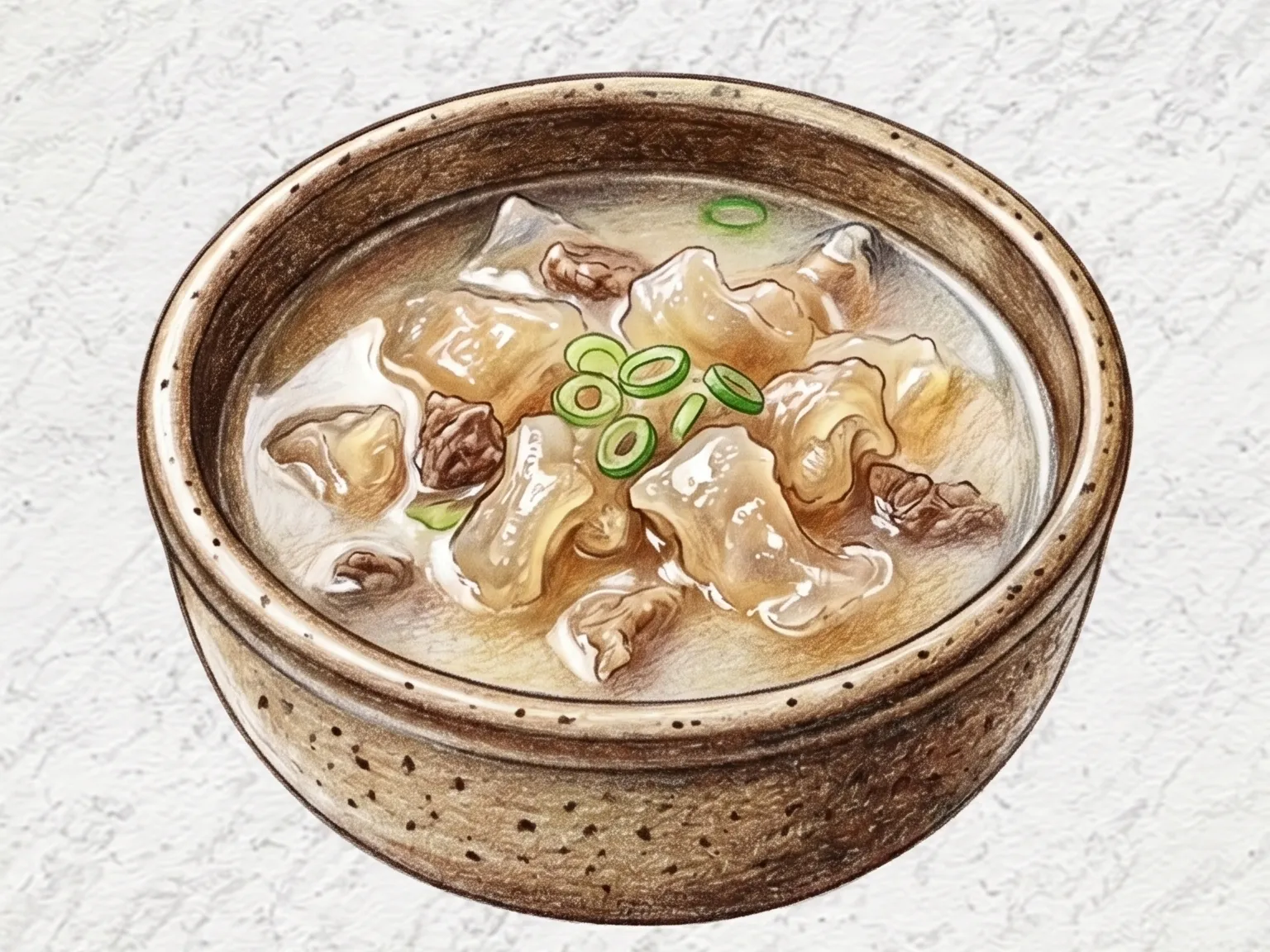
Dogani-tang is a Korean ox knee cartilage soup simmered for over two and a half hours on low heat, extracting collagen into a broth that appears clear but coats the lips with a rich gelatin film. Soaking the cartilage in cold water for an hour and blanching for ten minutes before the main cook are non-negotiable steps - they draw out blood and impurities that would otherwise cloud the broth and leave an off-taste. The cartilage pieces, once cooked, have a uniquely bouncy, chewy texture that differs from both muscle meat and organ - each bite springs back before yielding. Seasoned with just soup soy sauce, salt, and pepper, the soup relies entirely on the depth built through its extended simmer.
Adjust Servings
Instructions
- 1
Soak the cartilage in cold water for 1 hour to remove blood.
- 2
Blanch for 10 minutes, then rinse thoroughly.
- 3
Add cartilage, water, green onion, garlic, and ginger to a pot and bring to a boil.
- 4
Reduce to medium-low and simmer for at least 2.5 hours.
- 5
Slice the cooked cartilage and return it to the broth, then season with soup soy sauce and salt.
As an Amazon Associate, we may earn from qualifying purchases.
Tips
Nutrition (per serving)
More Recipes

Gomtang (Slow-Simmered Ox Bone Beef Soup)
Gomtang is a quintessential Korean bone soup made by simmering beef leg bones and brisket in water for five to six hours or longer until the broth turns opaque and milky white. The prolonged cooking extracts collagen, marrow, and fat from the bones, giving the liquid a luxuriously creamy texture and a deep beefy flavor that needs only salt and pepper to taste complete. The brisket is removed partway through, sliced thin against the grain, and placed back atop the steaming broth for serving. Green onion and a generous shake of black pepper cut through the richness. The most common way to eat gomtang is with a bowl of rice submerged directly into the soup, letting the grains soak up the milky broth. This is slow food in the truest sense - the hours of effort yield a pot that can feed a family for two days - and remains one of the dishes Koreans crave most when the temperature drops.

Korean Ox Bone Soup (Milky Slow-Simmered Beef Bone Broth)
Seolleongtang is one of Korea's oldest and most revered soups, made by boiling ox bones and beef brisket for six to eight hours until the broth turns opaque, milky white. The bones are soaked for at least two hours and blanched once to purge impurities before the real simmering begins. Over the course of half a day at a gentle boil, marrow and collagen dissolve into the water, creating a broth with a heavy, almost creamy mouthfeel and a deep, bovine savoriness that no shortcut can replicate. The brisket is pulled out after two hours, sliced thin, and placed on top of the soup as garnish. By tradition, the broth arrives at the table unseasoned - each diner adds salt, pepper, and sliced green onion to taste, a custom that underscores how the flavor of the broth itself is expected to carry the bowl. Rice or thin wheat noodles are added directly to the soup, soaking up the rich liquid.

Galbitang (Clear Korean Beef Short Rib Soup)
Galbitang is a clear Korean soup made by simmering beef short ribs in water with radish, garlic, and green onion until the broth develops a deep, beefy depth without becoming cloudy. Unlike the milky-white seolleongtang, galbitang keeps its broth relatively translucent, letting the natural fat from the ribs contribute a subtle richness rather than heavy opacity. The radish cooks down and sweetens the liquid, and the rib meat turns so soft it falls away from the bone with gentle pressure from chopsticks. Seasoning is traditionally minimal - salt and black pepper at the table - so the honest flavor of the beef stands front and center. A garnish of egg strip and sliced green onion adds color and freshness. Galbitang is comfort food for cold evenings and a staple in Korean restaurants year-round, served steaming hot with a bowl of rice on the side.

Jangeo-tang (Spicy Freshwater Eel Soup)
Jangeo-tang is a nourishing Korean eel soup in which freshwater eel is first boiled, deboned, and then simmered in a bold seasoning of doenjang and gochugaru. Dried radish greens (sirae-gi) are added to the pot, contributing an earthy, slightly bitter depth that grounds the richness of the eel. Garlic and green onion temper any fishiness, leaving behind only the eel's clean, fatty savoriness. The broth develops a dark, spicy intensity while the eel meat remains soft and oil-rich, dissolving into each spoonful. High in protein and healthy fats, jangeo-tang has long been considered a stamina-building dish in Korea, traditionally eaten during the hottest days of summer or whenever energy reserves run low. The combination of fermented soybean paste and chili gives the soup a complexity that distinguishes it from milder restorative broths.

Korean Braised Beef Knee Cartilage
Dogani-jjim is beef knee cartilage slow-braised with soy sauce, cooking wine, garlic, and ginger until the connective tissue turns soft and gelatinous. Hours of simmering dissolve the collagen so the cartilage becomes jiggly and yielding, while the broth grows so rich it sets into a jelly when cooled. Onion and green onion mellow any off-flavors and contribute a quiet sweetness, and ginger cleans up the finish. Traditionally valued as a nourishing food believed to support joint health, it is especially popular among older generations in Korea.

Korean Pork Soup with Rice
Dwaeji gukbap is Busan's signature pork soup with rice, built on a broth that simmers pork shoulder in bone stock for over an hour until the liquid turns milky-white and deeply flavored. The pork is blanched first to remove impurities, then transferred to the main pot where it cooks low and slow until fork-tender. Sliced thinly against the grain, the meat is arranged over a bowl of rice and doused with the steaming broth, which carries the richness of rendered collagen and the depth of long-simmered bones. Green onion and garlic chives added on top provide freshness, while diners season to taste at the table with fermented shrimp paste or minced chili. The broth is hearty enough to serve as a full meal at any hour - breakfast hangover cure, midday refuel, or late-night comfort. In Busan, gukbap restaurants that have been ladling from the same stockpot for decades are a point of neighborhood pride.