Korean Jeju Style Pork Suyuk

Korean Jeju Style Pork Suyuk

Quick answer

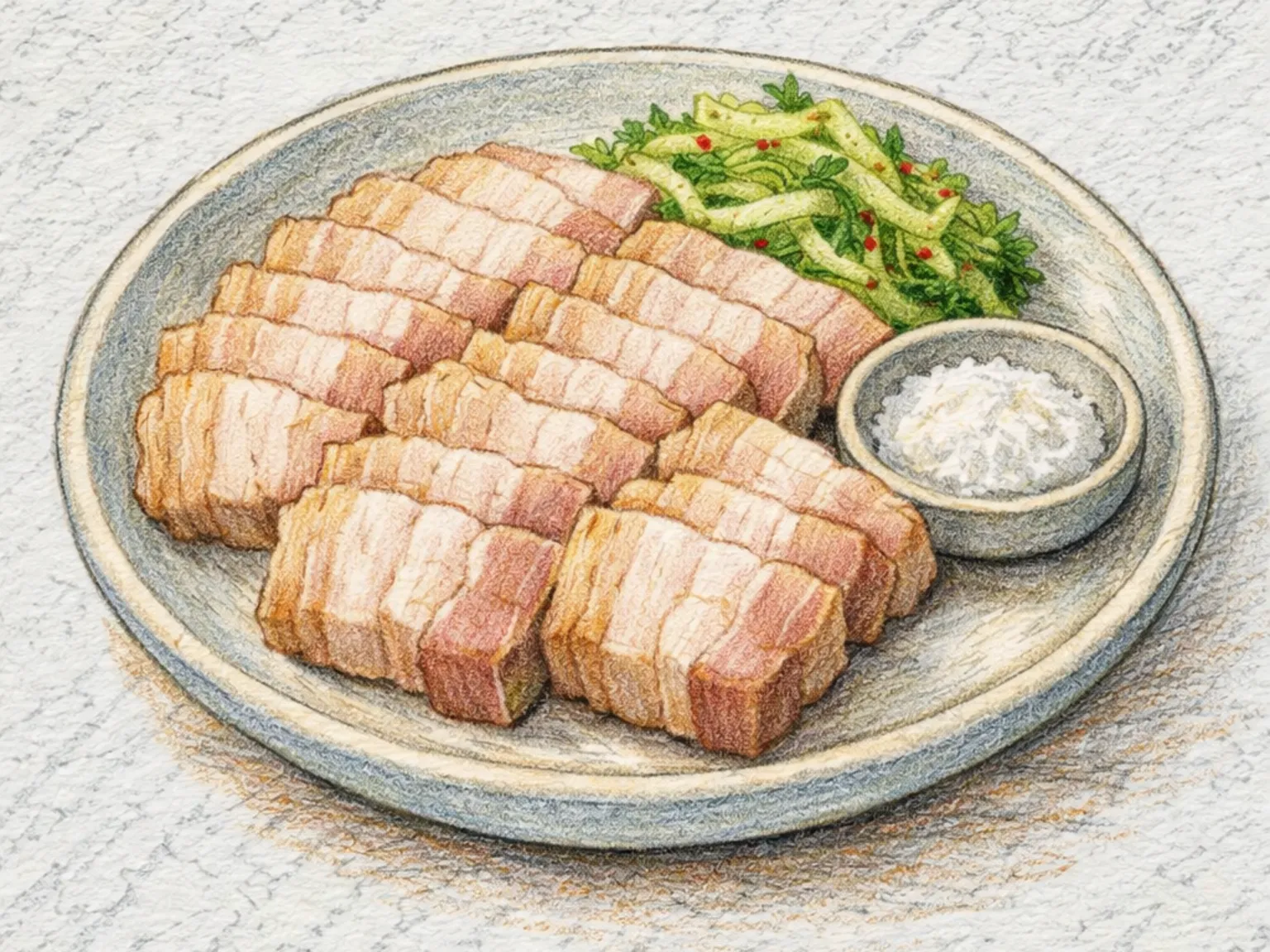
Dombae-suyuk is a Jeju-style boiled pork dish made by simmering skin-on pork belly low and slow with doenjang, green onion, garlic, and ginger.

What makes this special

  • Dombae-suyuk prepares Jeju-style pork belly boiled with doenjang for a clean, mild flavor.
  • Doenjang dissolved in the poaching water draws out porky off-aromas
  • Skin turns translucent, developing that signature chewy gelatin bite
Total time
70 min
Level
Easy
Servings
4 servings
Ingredients
7
Calories
560 kcal
Protein
31 g

Key ingredients

pork belly with skinsaltdoenjanggreen oniongarlic

Core cooking flow

  1. 1 Rinse the 1 kg skin-on pork belly as one whole piece under running water, re...
  2. 2 Pour 1800 ml water into a large pot and dissolve 1 tbsp doenjang first so it disperses evenly.
  3. 3 Bring the broth to a full boil over high heat until the aroma of doenjang ri...

Dombae-suyuk is a Jeju-style boiled pork dish made by simmering skin-on pork belly low and slow with doenjang, green onion, garlic, and ginger. The doenjang in the cooking water draws out the gamey odor specific to pork, leaving the meat clean and mild. A long, gentle boil renders the skin translucent and gives it a gelatinous, bouncy bite, while the interior fat layers become soft enough to melt against the tongue. Sliced thick and laid out at room temperature, each piece offers a layered contrast between the springy rind, the fatty middle, and the lean inner meat. Salted anchovy sauce or fermented shrimp paste served alongside is the traditional accompaniment -- the briny, fermented condiments cut through the richness and define the eating rhythm. The name comes from dombae, the Jeju word for cutting board, referring to the old practice of serving the meat directly sliced on the board.

Prep 10min Cook 60min 4 servings

Instructions

Read the steps as a cooking flow: prep, heat, seasoning, doneness control, and finish.

6 steps
  1. 1
    Step

    Rinse the 1 kg skin-on pork belly as one whole piece under running water, removing any grit from the surface.

    Pull out remaining bristles with tweezers, then pat the meat dry so loose moisture does not cloud the broth too quickly.

  2. 2
    Season

    Pour 1800 ml water into a large pot and dissolve 1 tbsp doenjang first so it disperses evenly.

    Add 60 g green onion, 6 garlic cloves, 12 g ginger, and 1 tbsp salt before the pork goes in.

  3. 3
    Finish

    Bring the broth to a full boil over high heat until the aroma of doenjang rises, then lower in the pork belly.

    Wait about 5 minutes for it to return to a boil, skimming off foam so the finished slices taste cleaner.

  4. 4
    Control

    Reduce to medium heat and simmer gently for about 50 minutes, keeping the liquid moving without a violent boil.

    The broth should turn milky, and the skin should look translucent and soft when the pork is properly cooked through.

  5. 5
    Finish

    Turn off the heat and let the pork rest in the hot broth for 5 minutes.

    Do not slice it immediately, because the juices can run out quickly; let the surface heat settle while the inside finishes evenly.

  6. 6
    Finish

    Lift out the pork and slice it thickly, about 1 cm, following the grain enough to keep the skin and fat layers attached.

    Arrange the slices without crushing the gelatinous rind, then serve with salt or ssamjang.

After the steps

Pick a recipe that fits this dish.

Continue with shared ingredients, meal pairings, or a similar method.

Recipes That Go Well With This

More Steamed →

Based on shared ingredients and meal pairing

Korean Pressed Boiled Pork Slices
Shared ingredient: green onion Steamed

Korean Pressed Boiled Pork Slices

Pyeonyuk is a Korean chilled pork dish made by boiling pork shank with garlic, ginger, green onion, whole peppercorns, and salt for nearly an hour, then wrapping the meat tightly and refrigerating it until firm. The aromatics in the cooking water neutralize off-flavors from the pork, and the salt seasons the meat evenly throughout during the long simmer. Slicing after thorough chilling produces neat, thin pieces with a uniform grain, and the cold temperature sharpens the meat's clean, lean flavor in a way that serving it warm cannot replicate. Traditionally served with salted shrimp or anchovy paste for dipping, pyeonyuk is a staple on Korean holiday tables and a common appetizer when hosting guests. Wrapping the pork tightly while it is still hot is essential so that the shape sets as it cools, and refrigerating for at least two hours before slicing prevents the meat from crumbling under the knife.

Korean Braised Pork Backbone
Shared ingredient: green onion Steamed

Korean Braised Pork Backbone

Deungppyeo-jjim is pork backbone braised with potato and green onion in a sauce built from doenjang, gochugaru, and soy sauce. After a long, slow simmer the meat tucked between the vertebrae and the cartilage separates from the bone without effort. Doenjang lays a deep, fermented underpinning to the broth while gochugaru brings a sharp, clean heat on top. The potatoes cook until they soften enough to fall apart at the press of a spoon, absorbing the thick, dark cooking liquid around them. Digging out the meat lodged between the bones is part of the pleasure, which is why the dish has long been a favourite pairing with soju. The rich, dense broth also makes it an easy choice for eating over a bowl of steamed rice.

Korean Namdo-Style Loach Soup
Serve together Soups

Korean Namdo-Style Loach Soup

Namdo-chueotang is the southern Korean take on loach soup, distinguished from other regional versions by grinding the entire loach - bones and all - into a thick, porridge-like broth. The loaches are first boiled until completely soft, then blended and strained to produce a dense, opaque base packed with protein and calcium. Dried radish greens simmer in this liquid, contributing a rustic, earthy backbone. Doenjang and gochujang season the soup with fermented depth and moderate heat, while a generous addition of perilla seed powder lends a nutty richness that rounds out the heavy flavors. A final dusting of sancho pepper tames any lingering fishiness and adds a tingling, aromatic kick. This is restorative cooking at its most direct - a thick, warming bowl meant to rebuild energy during the colder months.

Korean Samgyeopsal Ganjang Jorim (Soy-Braised Pork Belly)
Similar recipe Steamed

Korean Samgyeopsal Ganjang Jorim (Soy-Braised Pork Belly)

Samgyeopsal ganjang jorim is a Korean soy-braised pork belly dish where blanched pork belly is simmered with radish and onion in a soy sauce base for over forty-five minutes. Blanching first removes impurities and excess fat, leaving a clean-tasting braise. The long simmer allows soy sauce to penetrate the layered pork, building a deep flavor that is savory without being greasy. Radish chunks absorb the pork-enriched liquid and develop a richness of their own, while oligosaccharide syrup lends a natural sheen. Cooling and reheating concentrates the seasoning further, making this a strong choice for gatherings or holiday meals.

Serve with this

Korean Mushroom Japchae (Shiitake Glass Noodle Stir-Fry)
Side dishes Medium

Korean Mushroom Japchae (Shiitake Glass Noodle Stir-Fry)

Beoseot japchae replaces beef with shiitake mushrooms as the primary source of savory depth, making it a staple of Buddhist temple cuisine and vegetarian tables alike. Sweet potato noodles are soaked and boiled, then rinsed in cold water immediately to lock in a firm, springy texture. Shiitake, spinach, carrot, and onion are each cooked separately - their moisture levels and heat tolerances differ enough that combining them prematurely flattens every component. Soy sauce, sugar, minced garlic, and sesame oil bring the noodles and vegetables together, and the finished dish rests for ten minutes so the seasoning penetrates the noodles evenly. The result is a japchae where the mushroom carries genuine umami weight without any meat.

🏠 Everyday 🎉 Special Occasion
Prep 20min Cook 15min 4 servings
Korean Mushroom Perilla Seed Risotto
Rice Medium

Korean Mushroom Perilla Seed Risotto

King oyster and button mushrooms are sauteed with onion and garlic, then Arborio rice is slowly cooked in warm vegetable stock, one ladle at a time, until the grains release their starch into a creamy consistency. Perilla seed powder and grated Parmesan are folded in at the very end, merging Italian creaminess with the distinctive roasted-nut flavor of Korean perilla. The key is keeping the stock warm throughout so the rice cooks evenly without seizing, and adding perilla powder last to preserve its volatile aroma. Even without meat, the mushrooms provide substantial umami depth and the perilla adds a rich, nutty finish.

🎉 Special Occasion 🏠 Everyday
Prep 15min Cook 28min 2 servings
Korean Salted Pollock Roe Jeotgal
Kimchi Hard

Korean Salted Pollock Roe Jeotgal

Myeongran jeotgal is a Korean salted and fermented pollock roe where fresh roe sacs are meticulously cleaned of blood spots and membranes, brushed with rice wine to suppress fishiness, then packed in a curing blend of coarse sea salt, gochugaru, and minced garlic alongside a piece of kelp. Over three to five days in cold storage, salt draws moisture out of each tiny egg, concentrating their pop-and-burst texture while enzymatic breakdown generates a deep, layered umami that raw roe cannot produce on its own. The chili flakes introduce a gentle warmth that sits behind rather than over the roe's natural salinity. Sliced thin and arranged over hot steamed rice, each piece releases a salty, oceanic intensity with every bite - a condiment that disappears faster than any dish it accompanies.

🎉 Special Occasion 🍱 Lunchbox
Prep 30min 4 servings

Similar recipes

Tonkatsu Korean Style (Panko-Breaded Pork Cutlet with Sweet Sauce)
Street food Easy

Tonkatsu Korean Style (Panko-Breaded Pork Cutlet with Sweet Sauce)

Donkatsu is Korean-style breaded pork cutlet, made by dredging pork loin through flour, egg, and panko breadcrumbs in sequence before deep-frying in hot oil. Pounding the loin with a meat mallet to an even thickness ensures uniform heat transfer so the interior cooks through while staying moist, and the panko shell turns golden and audibly crunchy. Korean donkatsu sauce blends ketchup, Worcestershire sauce, and sugar into a sweet-salty condiment that is noticeably sweeter than Japanese tonkatsu's demi-glace-based sauce. Shredded raw cabbage served alongside provides a crisp, refreshing contrast to the fried cutlet and cuts through the richness. In Korean bunsik restaurants, donkatsu typically arrives as a set with rice and soup.

🧒 Kid-Friendly 🌙 Late Night
Prep 20min Cook 15min 2 servings
Korean Soy Braised Chicken
Steamed Medium

Korean Soy Braised Chicken

Dak-jjim is bone-in chicken braised with potato, carrot, and onion in a sauce of soy sauce, sugar, and garlic. Juices released from the bones meld with the soy seasoning to form a glossy, concentrated gravy, and the vegetables absorb this liquid so they are seasoned all the way through. Sugar tempers the saltiness of the soy into a clear sweet-salty balance that coats every piece. Cooking with the lid on over medium heat first, then removing the lid to reduce the sauce, is what creates the glossy coating that defines a well-made dak-jjim. Served in a hot stone pot at the center of the table, it is one of the most familiar home-cooked dishes in Korean cuisine, well-suited for a shared family meal.

🎉 Special Occasion
Prep 20min Cook 40min 4 servings
Korean Salt-Grilled Pork (Pork Belly and Neck BBQ)
Grilled Easy

Korean Salt-Grilled Pork (Pork Belly and Neck BBQ)

Doejigogi-gui is Korea's salt-grilled pork, made by seasoning thick-cut pork belly or pork neck with nothing but coarse salt and grilling over charcoal or on a cast iron pan. Because no marinade masks the flavor, the quality of the pork itself determines the outcome, and thick-cut belly requires patient cooking over medium heat so the fat layers render fully before the exterior chars -- rushing over high flame leaves the fat chewy and greasy rather than crisp. Blotting excess rendered fat from the pan with paper towels during cooking keeps the meat grilling rather than deep-frying and preserves the smoky char that defines the dish. Garlic slices cooked on the same pan alongside the pork add a mellow roasted note. The classic accompaniments -- sesame oil and salt for dipping, fresh lettuce or perilla leaves for wrapping, a dab of doenjang, and a sliver of cheongyang chili -- create the complete Korean barbecue experience, where a bite of rich pork, crunchy greens, and pungent condiments come together in one mouthful.

🍺 Bar Snacks ⚡ Quick
Prep 5min Cook 15min 2 servings

Tips

Skin-on cuts give the signature chewy Jeju texture.
Thicker slices preserve better bite.

Nutrition (per serving)

Calories
560
kcal
Protein
31
g
Carbs
1
g
Fat
47
g