Korean Steamed Sea Bream (Whole Fish with Soy Ginger Rice Wine)
Steamed Medium

Korean Steamed Sea Bream (Whole Fish with Soy Ginger Rice Wine)

Quick answer

Domi-jjim is a whole sea bream steamed with soy sauce, rice wine, and ginger.

What makes this special

  • Domi-jjim pairs cheongju and ginger to highlight the mild umami of steamed whole sea bream.
  • Cheongju and ginger strip fishiness, leaving only clean white-fish umami
  • Steam preserves moist, delicate flesh better than dry-heat methods
Total time
45 min
Level
Medium
Servings
4 servings
Ingredients
7
Calories
340 kcal
Protein
40 g

Key ingredients

sea breamgreen oniononiongingersoy sauce

Core cooking flow

  1. 1 Scale and gut the 1 kg sea bream, rinse it under running water, and pat it dry.
  2. 2 Slice the 100 g onion thinly and cut the 80 g green onion on a diagonal.
  3. 3 Place the sea bream on the vegetables.

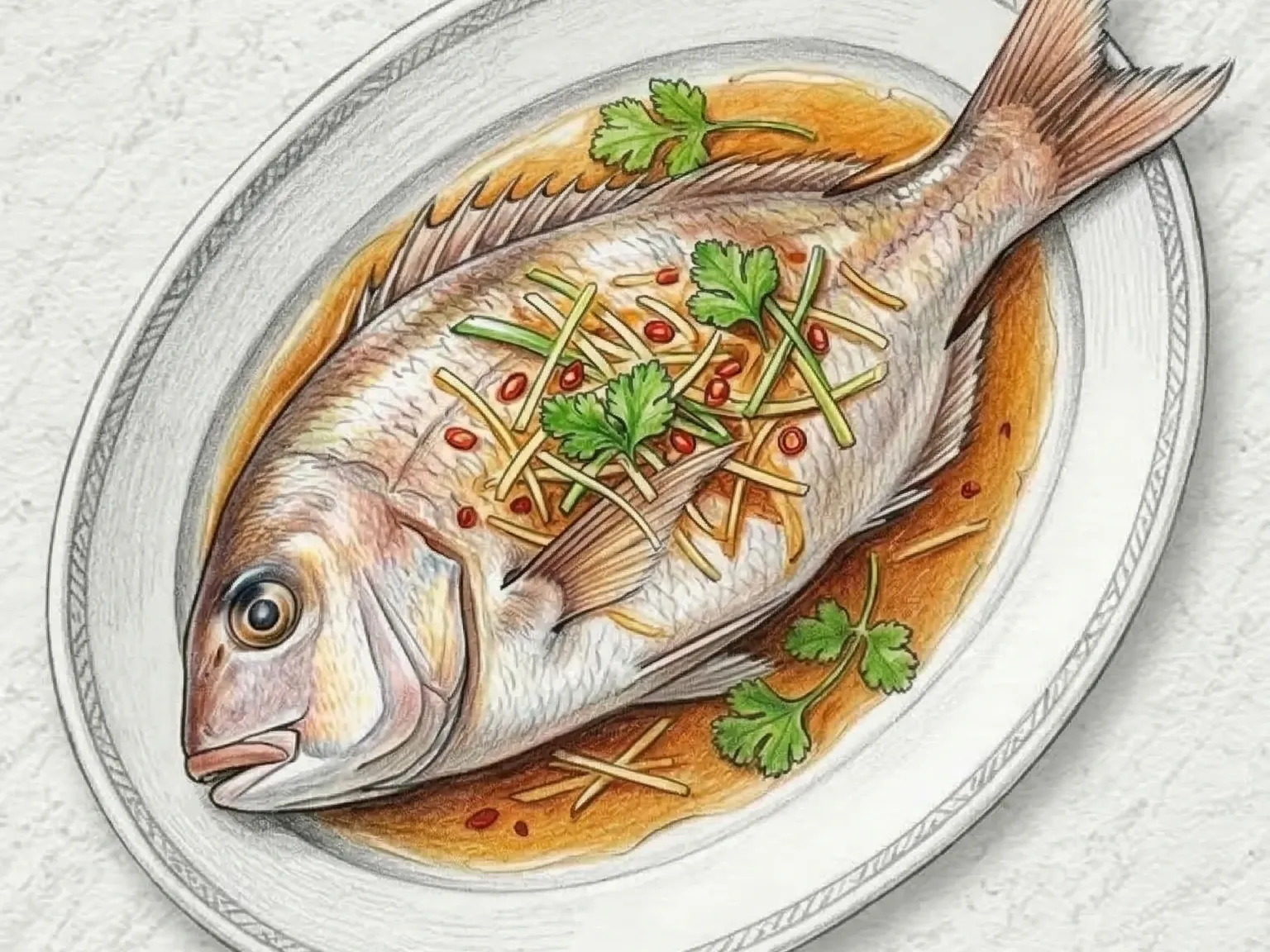
Domi-jjim is a whole sea bream steamed with soy sauce, rice wine, and ginger. Sea bream is a firm-fleshed white fish with a naturally mild, clean taste, and steaming preserves its moisture and delicate texture far better than dry-heat methods. Rice wine and ginger remove any remaining fishiness from the flesh, leaving only a refined umami that speaks to the quality of the fish itself. Soy sauce is used sparingly as an understated seasoning that enhances without overpowering. Because the fish is steamed rather than roasted or pan-fried, the flesh stays supple and springs back with each bite. Bringing a whole fish to the table makes a strong visual impression, which explains its frequent appearance at holiday meals and formal gatherings. The finished dish is typically garnished with julienned scallion and red chili before a final drizzle of hot sesame oil.

Prep 20min Cook 25min 4 servings

Instructions

Read the steps as a cooking flow: prep, heat, seasoning, doneness control, and finish.

6 steps
  1. 1
    Season

    Scale and gut the 1 kg sea bream, rinse it under running water, and pat it dry.

    Score both sides every 2-3 cm with fairly deep cuts so steam and seasoning can reach the thick flesh evenly.

  2. 2
    Finish

    Slice the 100 g onion thinly and cut the 80 g green onion on a diagonal.

    Spread the onion on the steaming plate first, then add the green onion so the fish sits above the plate, not directly on it.

  3. 3
    Control

    Place the sea bream on the vegetables.

    Julienne the 15 g ginger finely and tuck some into the cuts and belly cavity, then sprinkle 1 tbsp rice wine evenly over the whole fish to reduce any fishy smell.

  4. 4
    Finish

    Bring the steamer water to a full boil until strong steam rises, then set the plate inside.

    Keep the heat high, cover tightly, and steam for 15 minutes, adding 2-3 minutes if the fish is especially large.

  5. 5
    Prep

    Check the thickest back flesh.

    It should look opaque white, and a chopstick should slide in without resistance. If the flakes begin to separate, stop steaming right away so the lean flesh does not dry out.

  6. 6
    Finish

    In a small pot, heat 2 tbsp soy sauce with 400 ml water over medium heat until hot, not reduced.

    Mix it with the juices collected on the steaming plate, spoon the sauce over the sea bream, and serve while hot.

After the steps

Pick a recipe that fits this dish.

Continue with shared ingredients, meal pairings, or a similar method.

Recipes That Go Well With This

More Steamed →

Based on shared ingredients and meal pairing

Korean Steamed Yellow Croaker
Shared ingredient: green onion Steamed

Korean Steamed Yellow Croaker

Jogi-jjim is a steamed Korean yellow croaker banchan built around a two-stage cooking method that drives soy sauce, cooking wine, garlic, and ginger deep into the flesh. Scoring the fish on both sides before cooking is essential: the cuts open channels so the marinade reaches the interior rather than sitting on the surface. Half the sauce goes in first, and the fish steams until nearly done; then the remaining sauce and sliced green onion are added for a second round. Cooking wine and ginger together strip away fishiness, leaving the croaker clean and mild on the palate. The flesh is fine-grained and firm enough to pull apart in neat flakes with chopsticks without falling apart. Any sauce that collects in the pan spooned over rice makes the dish a complete meal without needing a separate soup.

Korean Steamed Flounder (Whole Flatfish with Soy Garlic Sauce)
Shared ingredient: green onion Steamed

Korean Steamed Flounder (Whole Flatfish with Soy Garlic Sauce)

Korean steamed flounder, called gajami-jjim, is a fish dish prepared by cooking whole flatfish over a bed of vegetables with a light soy garlic sauce. The process starts by layering sliced onions at the bottom of the steamer to prevent the delicate white flesh from sticking or breaking apart during cooking. A seasoning mixture of soy sauce, minced garlic, and rice wine is spooned over the cleaned fish. The rice wine and garlic neutralize fishy notes while keeping the flounder moist. Steaming takes about twelve minutes over medium-high heat, followed by an additional two minutes after scattering sliced green onions on top. The cooking time must be monitored closely to prevent the tender fish from drying out. The resulting dish features a clean, savory taste highlighting the natural flavor of the flounder. The light sauce left in the dish can be mixed with cooked rice.

Galbitang (Clear Korean Beef Short Rib Soup)
Serve together Soups

Galbitang (Clear Korean Beef Short Rib Soup)

Galbitang is a clear Korean soup built from long-simmered beef short ribs, extracting a deep, clean beef flavor without the milky opacity of seolleongtang or gomtang. Before cooking, the ribs are soaked in cold water for one to two hours to draw out blood, which is what allows the finished broth to stay clear and free of off-flavors. The radish goes in from the beginning, slowly releasing a gentle sweetness as it absorbs the surrounding broth and becomes fully saturated with beef flavor. The ribs need time - the measure of doneness is the meat sliding cleanly off the bone with minimal pressure from chopsticks. Unlike bone-based broths that turn white from emulsified collagen and fat, galbitang remains translucent because the fat from the rib meat dissolves more gently, leaving a subtle richness rather than heaviness. Seasoning is deliberately restrained, using only salt and white pepper at the table so nothing interferes with the honest taste of the beef. Garnishes of sliced egg crepe and green onion add color and a fresh note. The soup is served year-round in Korean restaurants, always arriving steaming hot alongside a bowl of plain rice.

Korean Stuffed Fish Steam
Similar recipe Steamed

Korean Stuffed Fish Steam

Eoseon-jjim is a traditional Korean court dish in which sea bream fillet is topped with julienned oyster mushrooms, cucumber, and carrot, then wrapped in a thin egg crepe and steamed. Steaming keeps the fish flesh moist throughout while the vegetables hold a slight bite. A light seasoning of soy sauce and vinegar accents the mild sea bream with delicate acidity without overpowering it. Sesame oil is brushed on at the end for fragrance. The cross-section, when cut, reveals layered colors of vegetable and egg, making this dish as visually deliberate as it is carefully seasoned.

Serve with this

Korean Seasoned Bracken Fern
Side dishes Easy

Korean Seasoned Bracken Fern

Gosari, the Korean name for bracken fern, is one of the oldest foraged vegetables in Korean cooking, with consumption records tracing back to the Three Kingdoms period. It is a mandatory component of bibimbap and a required dish on jesa, the ancestral rite table set for ceremonies honoring the dead. Dried gosari must soak overnight in cold water and then boil until the tough, wiry fibers relax into a distinctively springy, almost elastic chew that no fresh vegetable can replicate. The rehydrated fern is stir-fried in perilla oil with minced garlic until fragrant, then a small amount of soup soy sauce and water goes in and the pan is covered to let the liquid absorb and the fern braise briefly. This short braising step is what rounds the flavor and ensures the seasoning penetrates the fibrous strands rather than sitting only on the surface. Perilla oil is the traditional fat of choice rather than sesame oil because its green, herbal quality pairs more naturally with the woodsy, forest-floor flavor of gosari, amplifying rather than competing with it. Large batches are typically made during Chuseok or Seollal and eaten over several days, as the flavor improves and deepens as the dish sits.

🏠 Everyday 🎉 Special Occasion
Prep 15min Cook 15min 4 servings
Korean Grilled Eel Rice Bowl
Rice Medium

Korean Grilled Eel Rice Bowl

Jangeeo deopbap is a bowl of grilled freshwater eel over steamed rice, where the key technique is building up a thick, lacquered glaze through multiple applications of a sweet-salty sauce reduced from soy sauce, mirin, sugar, and ginger juice. The eel starts skin-side down on the grill over medium heat for around five minutes to crisp the skin, then is flipped and basted repeatedly with the sauce as it finishes cooking. A single coat of sauce produces a pale, thin color, so at least two applications and ideally three or more are needed to build the characteristic glossy surface. With each additional coat, the sugars in the sauce react with heat through both Maillard browning and caramelization, layering flavor with every pass. Because freshwater eel is naturally fatty, fat drips during grilling can cause flare-ups, so heat control is important throughout the process. Sansho pepper dusted on at the end cuts through the eel's inherent richness with a sharp, numbing fragrance that balances the sweet glaze and keeps the dish from feeling heavy.

🎉 Special Occasion 🏠 Everyday
Prep 10min Cook 15min 1 servings
Korean Soy Pickled Beet (Vinegar Soy Brine Jangajji)
Kimchi Easy

Korean Soy Pickled Beet (Vinegar Soy Brine Jangajji)

Beet jangajji is a Korean soy-pickled beet prepared by slicing beets thin and submerging them in a cooled brine of soy sauce, vinegar, and sugar. The vinegar cuts through the beet's earthy undertone, leaving a clean sweetness sharpened by acidity, and onion adds a mellow depth to the pickling liquid. As the brine cools, the beet's vivid red pigment bleeds into the liquid, creating a visually striking jar that stands out on the table. After at least a day of pickling, the flavor penetrates fully, producing a crisp, refreshing side dish suited to rice or grilled meats. Julienned beets pickle faster and are ready within a day, while thicker slices need two days or more for the brine to reach the center. Stored in the refrigerator, the pickles keep well for over two weeks, making a large batch practical.

🍱 Lunchbox 🏠 Everyday
Prep 20min Cook 10min 2 servings

Similar recipes

Korean Steamed Whole Garlic
Steamed Easy

Korean Steamed Whole Garlic

Maneul-jjim is a Korean steamed whole garlic dish where cloves are slowly braised in soy sauce, oligosaccharide syrup, and sesame oil until completely tender. The raw garlic's sharp bite disappears entirely with heat, transforming into a mellow sweetness with a creamy, almost buttery texture. The syrup creates a glossy coating on each clove, and the sesame oil wraps everything in a nutty fragrance. This banchan works as a side to grilled meats or as a drinking snack, offering all of garlic's depth without any of its usual pungency. Placing a softened clove on a spoonful of rice is the simplest and most satisfying way to enjoy it.

🍱 Lunchbox 🏠 Everyday
Prep 10min Cook 20min 2 servings
Korean Domi Sogeum Gui (Salt-Grilled Sea Bream)
Grilled Easy

Korean Domi Sogeum Gui (Salt-Grilled Sea Bream)

Domi-sogeum-gui is a Korean pan-grilled sea bream dish where fillets are seasoned with nothing more than coarse salt and black pepper, then cooked skin-side down for the majority of the cooking time. Sea bream sits at a favorable point among white fish varieties, carrying enough natural fat to produce a clean, rounded umami from salt alone without needing additional marinades or sauces. Patting the surface completely dry with paper towels before the fish goes into the pan is essential, as any surface moisture will cause the skin to steam rather than crisp. Placing the fillet skin-side down first and keeping it there for roughly seventy percent of the total cooking time allows the skin to turn crackling and golden while the heat travels up through the flesh from below. A brief flip to finish the flesh side is all that is needed, since overcooking removes moisture from the delicate meat quickly. Minced garlic and chopped scallions placed on top after cooking add a fresh, pungent note, and a squeeze of lemon from the side wedge sharpens the bream's mild, clean sweetness by cutting through any lingering fish aroma.

🍺 Bar Snacks 🏠 Everyday
Prep 15min Cook 16min 2 servings
Korean Braised Butterfish
Stir-fry Medium

Korean Braised Butterfish

Byeongeo jorim is a Korean braised fish dish in which scored butterfish is set on a bed of sliced radish and slowly cooked in a soy-gochugaru braising liquid with garlic and ginger. Scoring the fish allows the seasoning to penetrate to the center of each fillet. The radish layer on the pot bottom serves two purposes: it cushions the delicate fish to prevent it from sticking and breaking apart, and it absorbs the braising liquid as it cooks, becoming a deeply savory, slightly sweet side dish on its own. Butterfish flesh is exceptionally fragile, so the fillets are never flipped during cooking. Instead, the braising liquid is spooned continuously over the surface to ensure even heat and even seasoning on top. Ginger added at the start neutralizes any fishiness, and gochugaru provides a mild, building heat that adds complexity to the clean flavor of the fish without masking it. Scallion pieces dropped in during the final two minutes release fragrance into the steam, rounding out the aromatic profile of the finished dish. At 330 calories and 31 grams of protein per serving, byeongeo jorim is a lean, nutritionally complete main course that pairs naturally with steamed rice.

🏠 Everyday 🍱 Lunchbox
Prep 15min Cook 20min 2 servings

Tips

Adjust steaming time by 2-3 minutes depending on fish size.
Deeper scoring helps seasoning penetrate better.

Nutrition (per serving)

Calories
340
kcal
Protein
40
g
Carbs
5
g
Fat
17
g