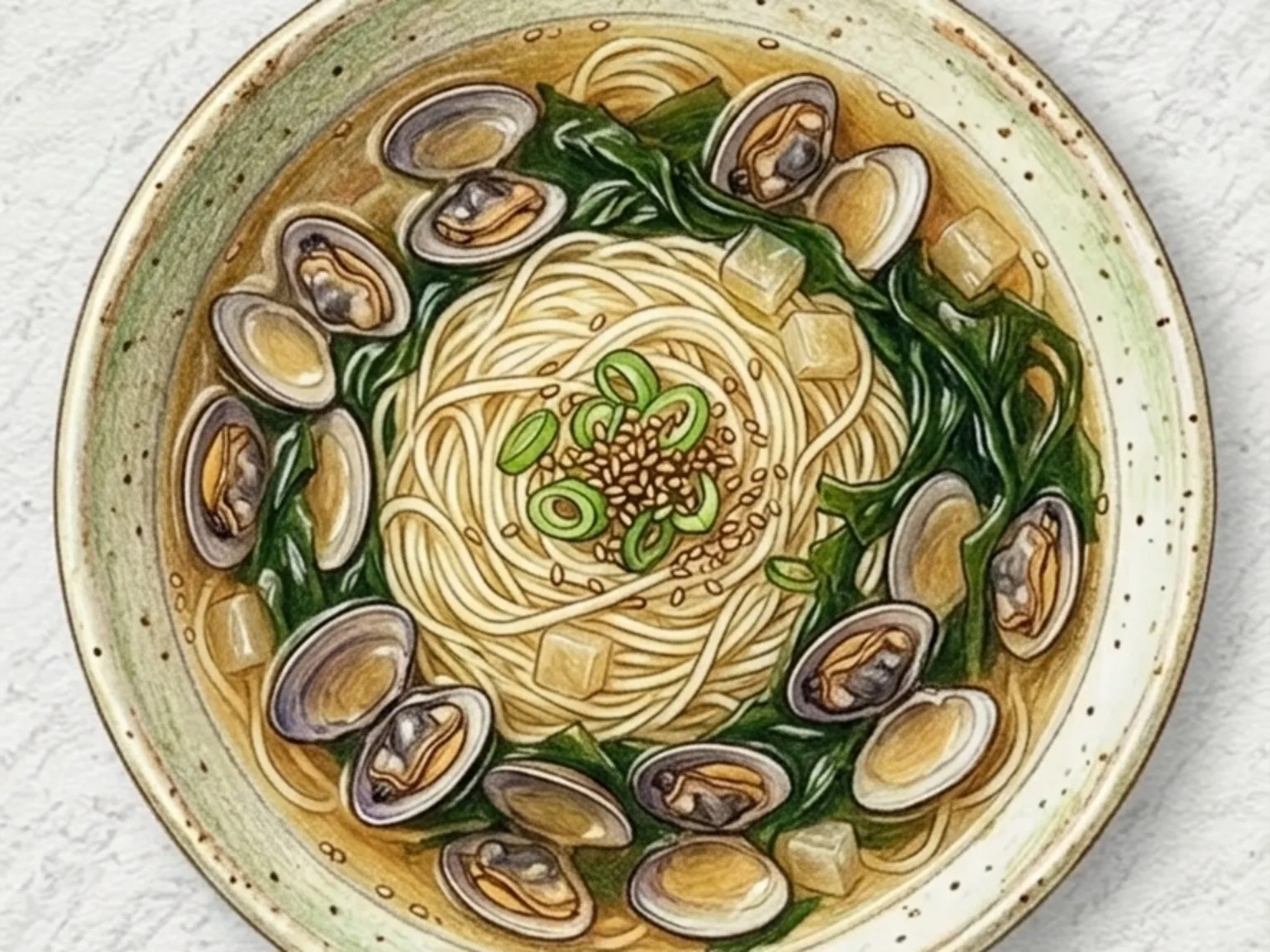
Korean Clam Seaweed Onmyeon (Warm Noodle Soup)
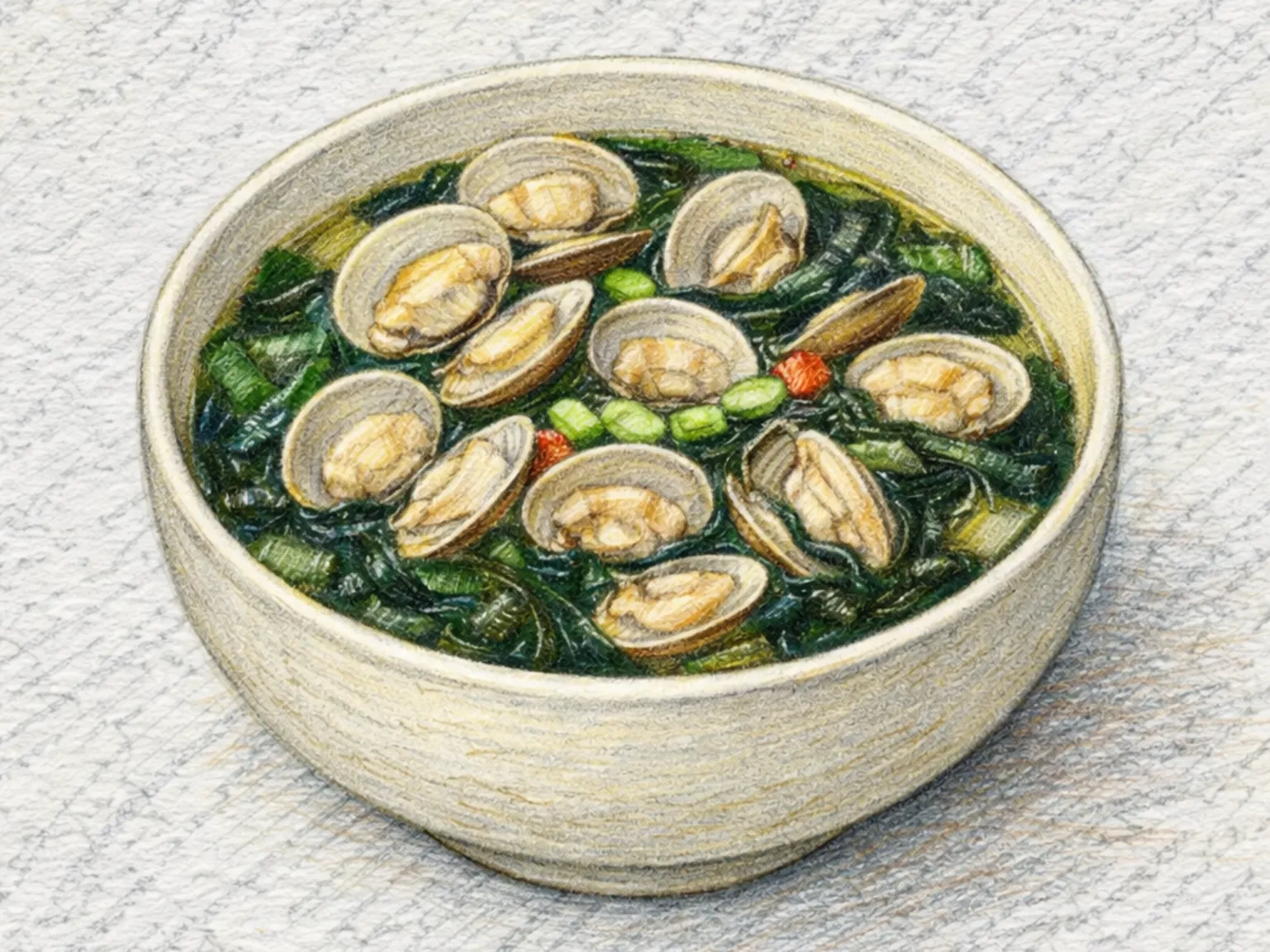
A soothing bowl of thin noodles in clear clam broth with soft seaweed - Korea's go-to comfort soup for cold mornings and recovery days. The clams release a clean, briny stock that forms the backbone of the dish, and simmering radish alongside softens the saltiness into something refreshing. The seaweed unfurls in the hot broth, contributing its own quiet marine umami. Seasoning stays minimal - soup soy sauce and salt only - so nothing masks the natural flavor of the shellfish. This is a light, restorative bowl often eaten for morning recovery or when a gentle, clear-tasting meal is preferred.
Adjust Servings
Instructions
- 1
Purge clams in salted water for 20 minutes, then rinse well.
- 2
Boil water with radish for 8 minutes to build a clean broth base.
- 3
Add clams, cook until they open, and skim any foam.
- 4
Add seaweed, garlic, and soup soy sauce, then simmer 3 minutes.
- 5
Boil somyeon separately for 3 minutes, then rinse to remove starch.
- 6
Place noodles in bowls, ladle over hot broth, and finish with green onion.
As an Amazon Associate, we may earn from qualifying purchases.
Tips
Nutrition (per serving)
More Recipes

Onmyeon (Korean Warm Somyeon in Beef Brisket Broth)
Onmyeon is a Korean warm noodle soup built on a clear beef brisket broth served over thin somyeon noodles. The brisket simmers in water for about twenty-five minutes to produce a light yet flavorful stock, which is then strained to remove fat and sediment for clarity. Soup soy sauce seasons the broth gradually so its color stays pale, preserving the clean appearance that defines this dish. The noodles are cooked separately and rinsed in cold water to wash away surface starch before being placed in bowls, which keeps the broth from turning cloudy. Shredded brisket, thin egg garnish, and sliced scallion are arranged on top, and hot broth poured over them releases gentle waves of beef aroma and egg richness.

Korean Seafood Knife-Cut Noodle Soup
Haemul kalguksu simmers knife-cut wheat noodles in a broth built from clams, shrimp, and squid. Dried kelp forms the stock's foundation, and as Manila clams open they release a briny liquor that deepens the base considerably. Zucchini adds mild sweetness, green onion brings fragrance, and soup soy sauce with minced garlic rounds out the seasoning into a clean yet umami-rich broth. The wide, flat kalguksu noodles have a distinctive chewy bite and absorb the seafood broth with each slurp.

Korean Knife-cut Noodle Soup
Kalguksu is a Korean noodle soup made with hand-cut wheat noodles simmered in anchovy-kelp broth. The noodles are rolled flat and sliced with a knife, giving them a rough surface that absorbs broth and a satisfying chew distinct from machine-made pasta. Sliced potato, half-moon zucchini, and onion go into the pot, with the potato releasing starch that naturally thickens the broth as it cooks. Seasoning stays minimal - soup soy sauce, salt, minced garlic, and green onion added at the end - so the clean, savory depth of the stock comes through clearly. The dish is traditionally associated with rainy days in Korea, and adding clams turns it into a popular seafood variation.

Korean Spicy Beef Soup Noodles
Yukgaejang guksu starts with a deep broth made by simmering beef brisket until the liquid turns rich and full-bodied. The meat is shredded along the grain and returned to the pot alongside fernbrake, bean sprouts, and green onion that have been seasoned with gochugaru, sesame oil, and garlic before a brief stir-fry. This pre-seasoning step lets the chili heat dissolve into the oil, producing a rounded spiciness rather than raw powder burn. Korean soup soy sauce adjusts the salt level without clouding the broth's color. Thin wheat somyeon noodles are boiled separately and added at the end so they absorb the broth without turning mushy. Swapping in glass noodles changes the texture to a chewier, more slippery bite that holds onto the soup longer.

Korean Oyster Seaweed Soup
Gul-miyeok-guk is a Korean seaweed soup enriched with fresh oysters, traditionally eaten for postpartum recovery and birthday celebrations. The cooking begins by sautéing rehydrated seaweed and oysters together in sesame oil, a step that coats every strand and shell in a nutty fragrance before water is added. As the soup simmers, the seaweed releases minerals and a subtle brininess that merges with the oysters' own ocean flavor. Soup soy sauce and garlic keep the seasoning grounded. The winter months, when oysters are at their fattest, are the prime season for this version, and the contrast between the slippery seaweed and the firm oyster gives each spoonful a shifting texture.

Korean Chilled Seaweed Soup
Miyeok-naengguk is a Korean chilled seaweed soup designed for the hottest days of summer, when the idea of a boiling pot feels intolerable. Rehydrated sea mustard and thinly sliced cucumber are bathed in a cold broth made from soy sauce, rice vinegar, sugar, and iced water, producing a tangy, lightly sweet liquid that hits the palate with immediate refreshment. The seaweed contributes a slippery, marine texture while the cucumber provides a sharp crunch, and together they give the soup a satisfying range of mouthfeel in each spoonful. Preparation requires no cooking at all - the ingredients are simply mixed, seasoned, and chilled - making it one of the fastest dishes in the Korean repertoire. A generous sprinkle of toasted sesame seeds adds nuttiness on top, and an optional pinch of gochugaru turns the broth a vivid red while contributing gentle heat. The soup pairs naturally with cold noodle dishes like naengmyeon or bibim-guksu, and it improves after an hour in the refrigerator as the seasoning penetrates the seaweed. In many Korean homes, a bowl of miyeok-naengguk is the unofficial signal that summer has arrived.