Dongpo Pork (Chinese Soy-Braised Melt-in-Mouth Pork Belly)
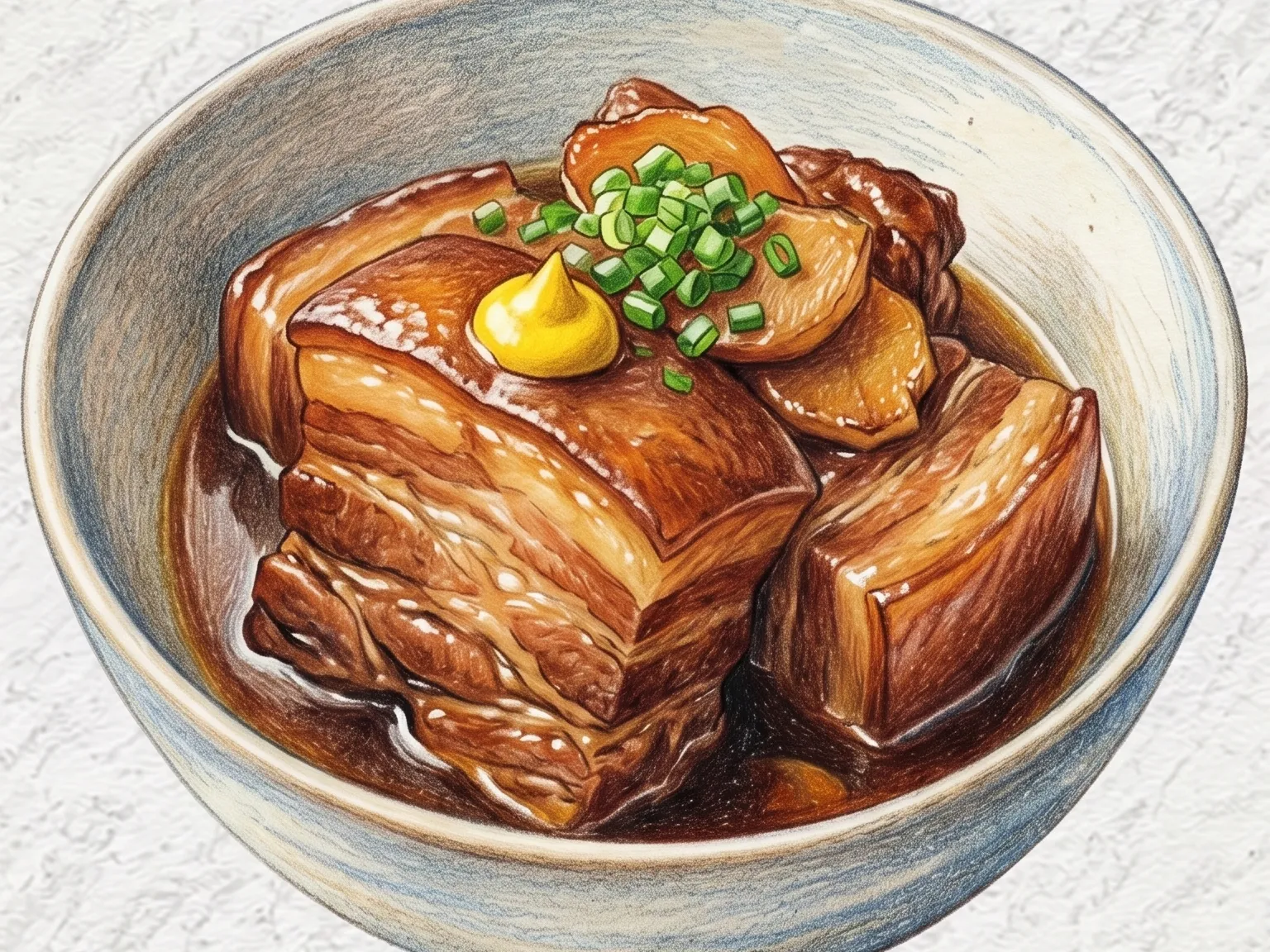
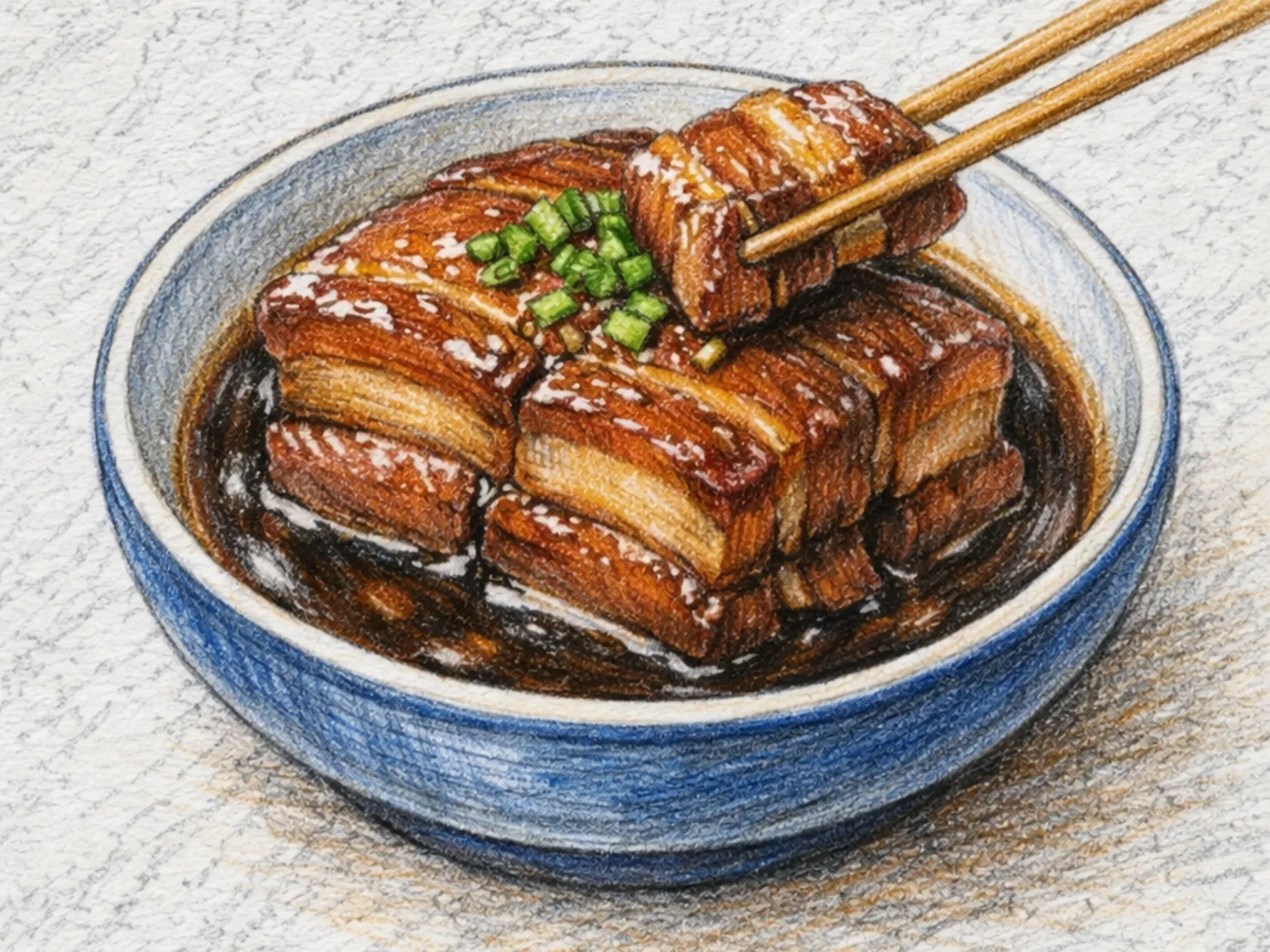
Dongpo rou is a Chinese-style pork belly braised slowly in soy sauce, rice wine, sugar, ginger, and green onion. Long cooking over low heat renders the fat layers translucent and meltingly soft, while the lean portions turn a deep mahogany from the soy and sugar. Rice wine drives off any porkiness and ginger sharpens the finish, though the dominant impression is a sweet, deeply savory richness. Named after the Song dynasty poet Su Dongpo, the dish is meant to be appreciated for the luxurious texture of the rendered fat as much as for its flavor.
Adjust Servings
Instructions
- 1
Cut pork belly into large blocks, blanch, then sear skin side.
- 2
Line the pot with green onion and ginger.
- 3
Place pork on top and add soy sauce, rice wine, sugar, and water.
- 4
Braise gently for 2 hours on low heat.
- 5
Reduce the sauce until glossy, then slice and serve.
As an Amazon Associate, we may earn from qualifying purchases.
Tips
Nutrition (per serving)
More Recipes

Chinese Red-braised Pork Belly
Hongshao rou is a traditional Chinese red-braised pork belly dish where thick-cut pork is slowly simmered in soy sauce, sugar, cooking wine, ginger, and scallion. The meat is first seared to render excess fat, then braised on low heat until the seasoning penetrates deeply. As it cooks, the pork becomes fork-tender and the sauce reduces into a thick, glossy glaze with a deep reddish hue. It is one of the most beloved home-cooked dishes across China, served simply over steamed rice.

Chinese Red-Braised Pork Belly
Hong shao rou is a classic Chinese red-braised pork belly in which cubed pork is first coated in a caramel made from melted sugar, then simmered for over an hour with dark soy sauce, regular soy sauce, rice wine, and sliced ginger. The extended braising melts the fat layers into the surrounding sauce, leaving meat that falls apart at the touch of chopsticks and a thick, mahogany glaze. Ginger cuts through the richness of the pork fat, keeping each bite from feeling heavy despite the long cooking. Served over plain steamed rice, the reduced sauce alone is enough to carry the meal.

Chinese Soy-Braised Beef Shank
Jiang niu rou is Chinese soy-braised beef shank simmered for at least 90 minutes with soy sauce, dark soy sauce, star anise, ginger, green onion, and sugar. The long, gentle braise breaks down the connective tissue in the shank while keeping the meat intact enough to slice cleanly against the grain once cooled. Star anise lends a distinctive warm, licorice-like aroma that penetrates deep into the beef. The dish is commonly served cold in thin slices as an appetizer, and the leftover braising liquid is traditionally repurposed for cooking soy-braised eggs.

Chinese Red-Braised Fish (Hong Shao Yu)
Golden pan-seared white fish glazed in a glossy, caramelized soy-sugar sauce with ginger and green onion -- a Chinese home-cooking classic ready in under 30 minutes. Searing creates a firm exterior that holds the fish together throughout braising, while ginger and green onion infuse the sauce with fragrance and neutralize any fishiness. The sauce reduces into a glossy, dark glaze that coats each piece of fish. With a cooking time under 30 minutes, this is a practical weeknight dish that delivers the deep, caramelized soy flavors of long-braised Chinese cooking in a fraction of the time.

Braised Pork Belly with Preserved Mustard Greens
Meicai kourou is a Hakka Chinese dish of parboiled pork belly that is seared with soy sauce for color, then layered with preserved mustard greens and steamed for over an hour. The prolonged steaming renders the fat translucent and meltingly soft, while the fermented, salty greens infuse the meat with their concentrated flavor. When inverted onto a plate, the neatly stacked slices glisten under the braising sauce. It is a centerpiece dish meant for sharing, with the sauce spooned over steamed rice to capture every layer of richness.

Hui Guo Rou (Twice-Cooked Pork)
Hui guo rou, literally 'twice-cooked pork,' is a cornerstone of Sichuan cuisine where pork belly is first simmered whole until cooked through, then cooled and sliced thin before returning to the wok. The initial boiling renders some fat and firms the meat so it can be cut into uniform slices. In the wok, these slices fry until their edges curl and crisp slightly while the fat layers turn chewy rather than flabby. Doubanjiang, the fermented chili bean paste central to Sichuan cooking, goes in next along with fermented black beans, and together they create the dish's signature salty-spicy backbone. Soy sauce and a pinch of sugar round out the seasoning. Diagonally sliced leek and green bell pepper are added only in the final one to two minutes over high heat, keeping their crunch and fresh color against the deeply flavored pork.