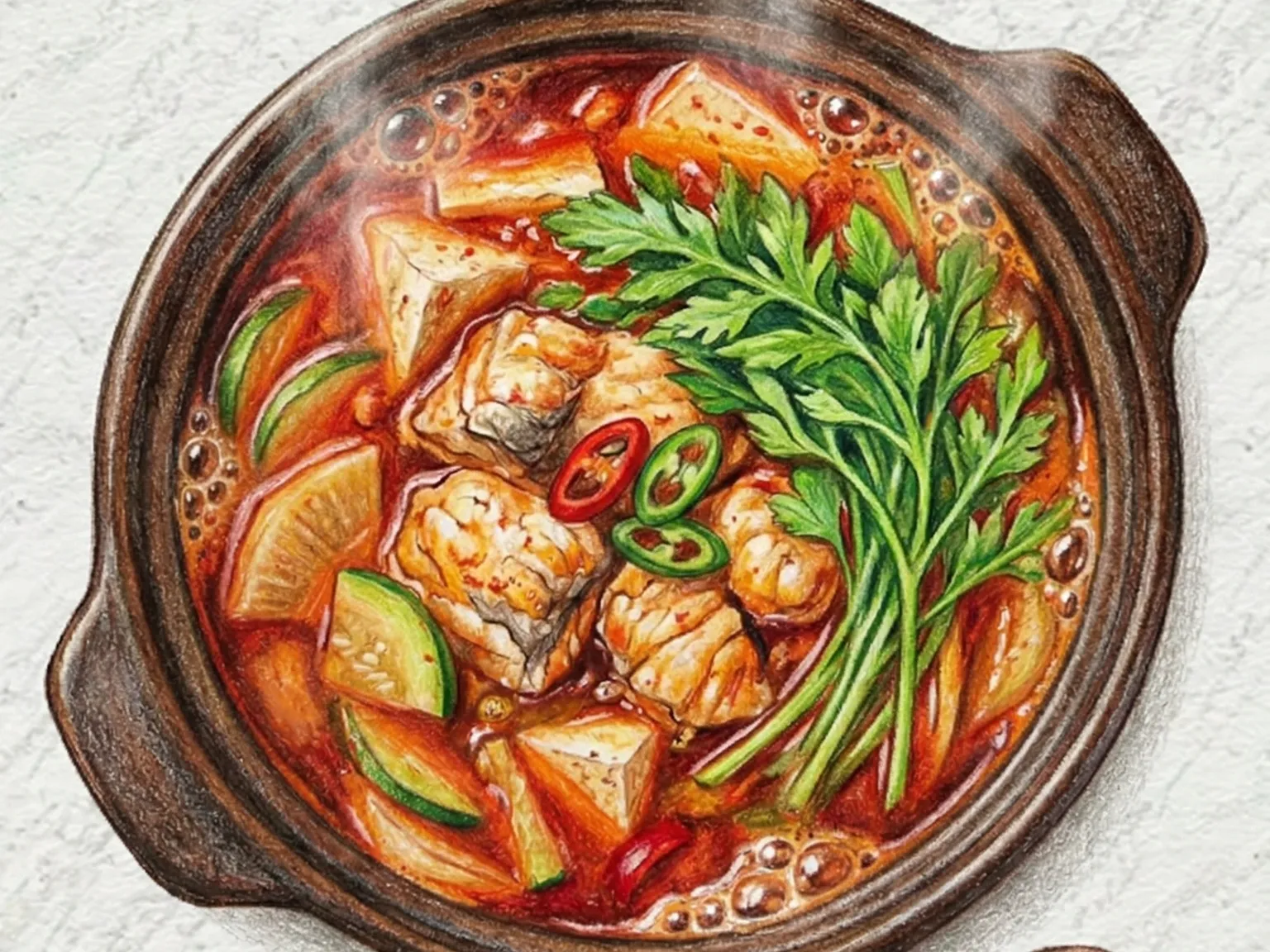
Korean Frozen Pollack Stew
Quick answer
- Total time
- 40 min
- Level
- Medium
- Servings
- 4 servings
- Ingredients
- 11
About this dish
A tablespoon of doenjang is stirred into the red chili broth to tame the fishiness.
Read more
The frozen pollock is thawed only partly, just enough for a knife to get through the bone, and cut while still firm; fully thawed, the flesh crumbles.
Ingredients
Instructions
- 1
Partially thaw the 500 g pollock only until the bones can be cut, then cut it into 5 cm pieces.
Remove the black membrane and blot the surface dry so the flesh is less likely to break.
- 2
Slice 200g of radish into 3cm squares with 0.5cm thickness.
Cut one block of tofu into 1cm slices and slice the zucchini into bite-sized half-moons of 0.8cm to ensure they all cook at an even rate.
- 3
Pour 1.2L of water and the radish into a large pot and boil over high heat.
Cook for about 5 minutes until the radish edges turn translucent and the broth releases its natural sweetness.
- 4
Stir in 2 tbsp gochugaru, 1 tbsp doenjang, 1 tbsp soup soy sauce, and 1.5 tbsp minced garlic.
The doenjang is crucial for neutralizing any fishy odors and creating a deep, savory foundation for the spicy broth.
- 5
Add the pollack and tofu, then simmer for 10 minutes over medium heat.
To prevent the delicate fish from breaking apart, do not flip the pieces: instead, repeatedly spoon the hot broth over the fish.
- 6
Add the zucchini, two sliced green onions, and three chopped chilies.
Simmer for a final 5 minutes until the zucchini is soft and the spicy vegetable aromas have fully infused the broth before serving hot.
Use-up ingredient planner
Turn these ingredients into two more meals
The overlap excludes basic seasonings. Open the next recipe and your selected dishes will stay with you.
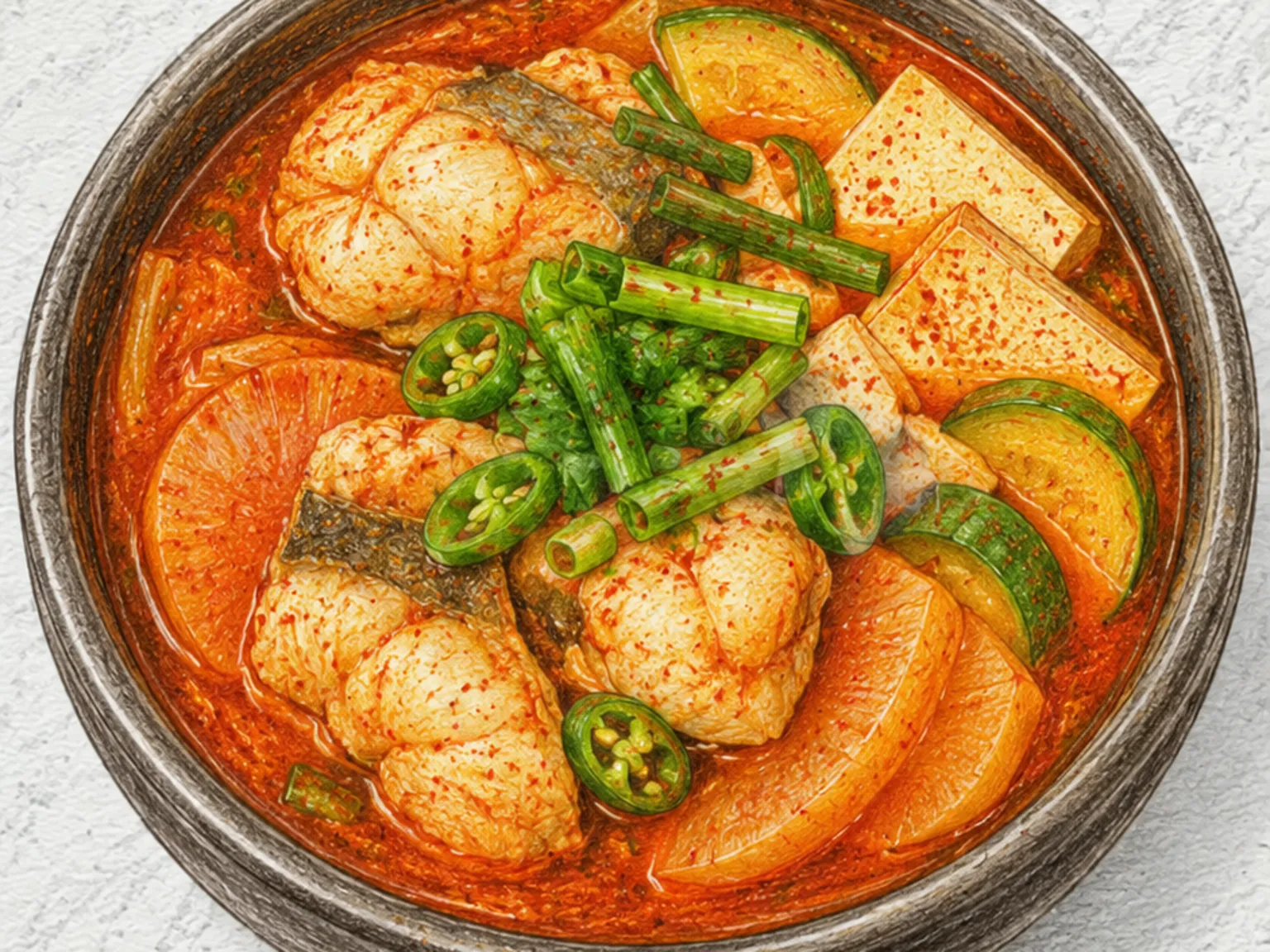
Maeuntang (Spicy White Fish Radish Stew)
Korean radish, Tofu
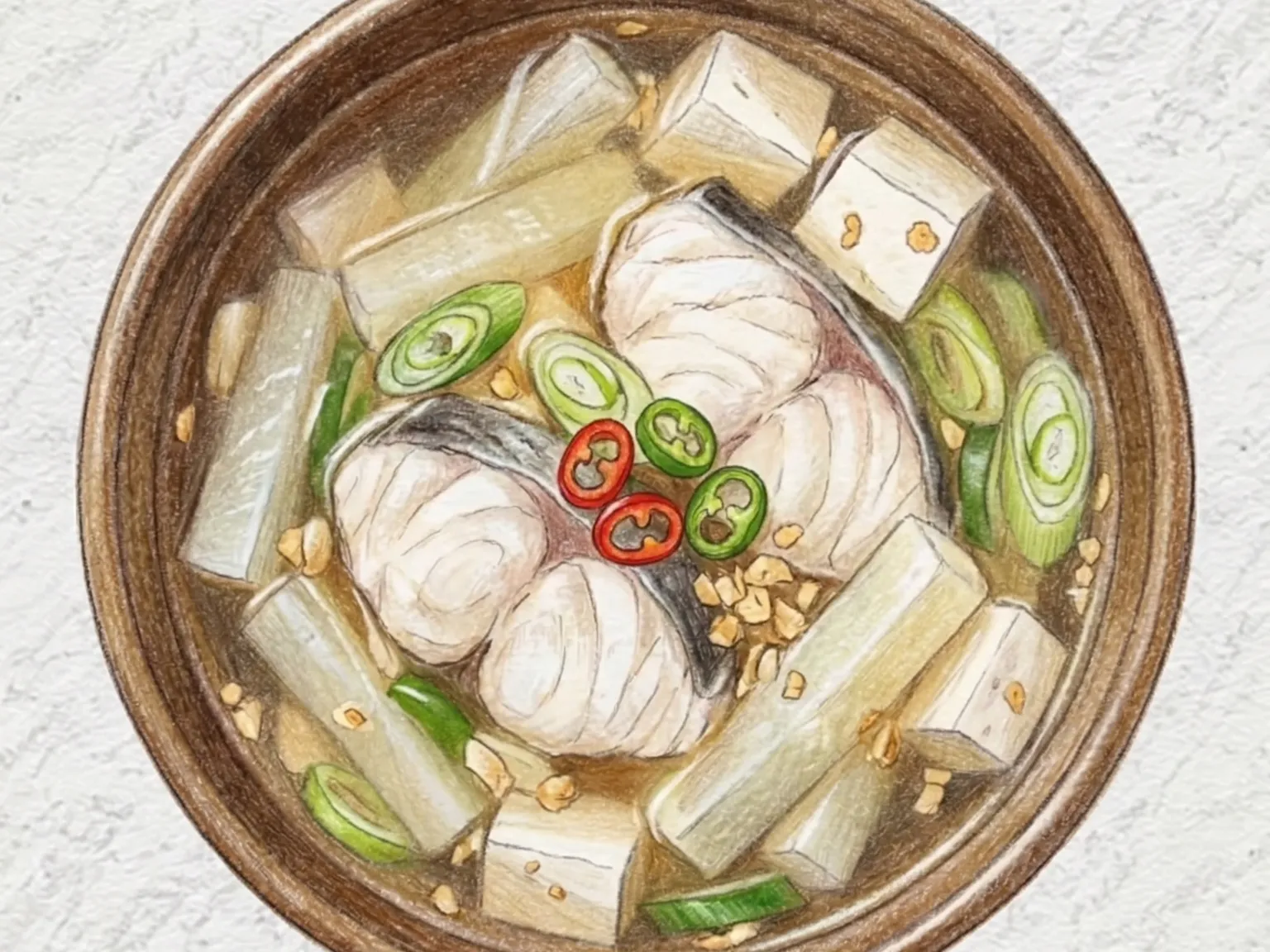
Korean Fish Soup (White Fish and Radish Clear Broth)
Korean radish, Tofu

Korean Spicy Pollock Stew
Korean radish, Tofu
Tips
Variations
Pollock Stew with Korean Radish
This pollack stew uses plenty of radish for natural sweetness and clarity. Lean fish and spicy seasoning stay in balanced harmony.
Gangwon-Style Pollock Stew
Gangwon-style pollack stew focuses on fish and radish for a clear, refreshing broth. The heat is present but not overwhelming.