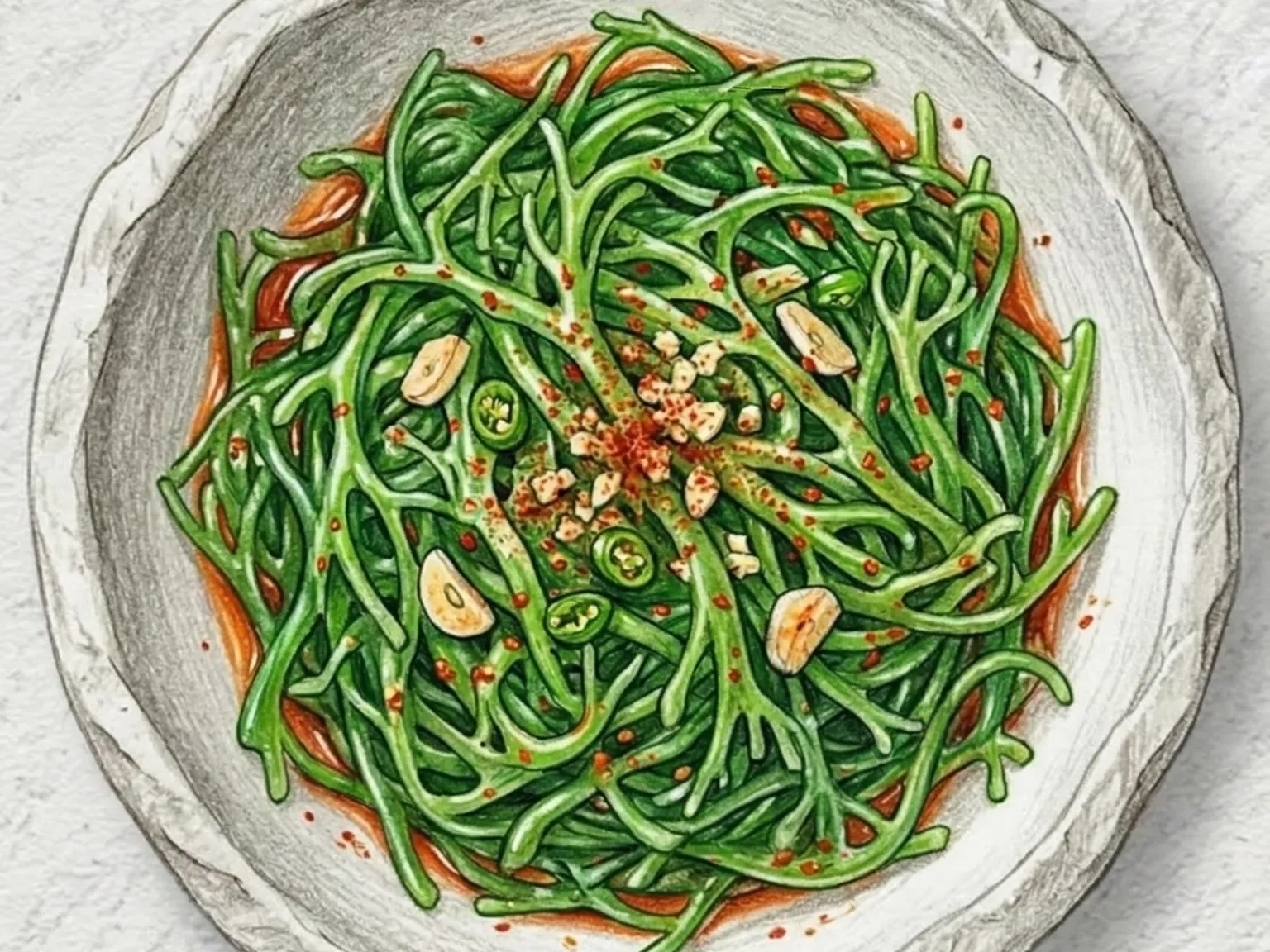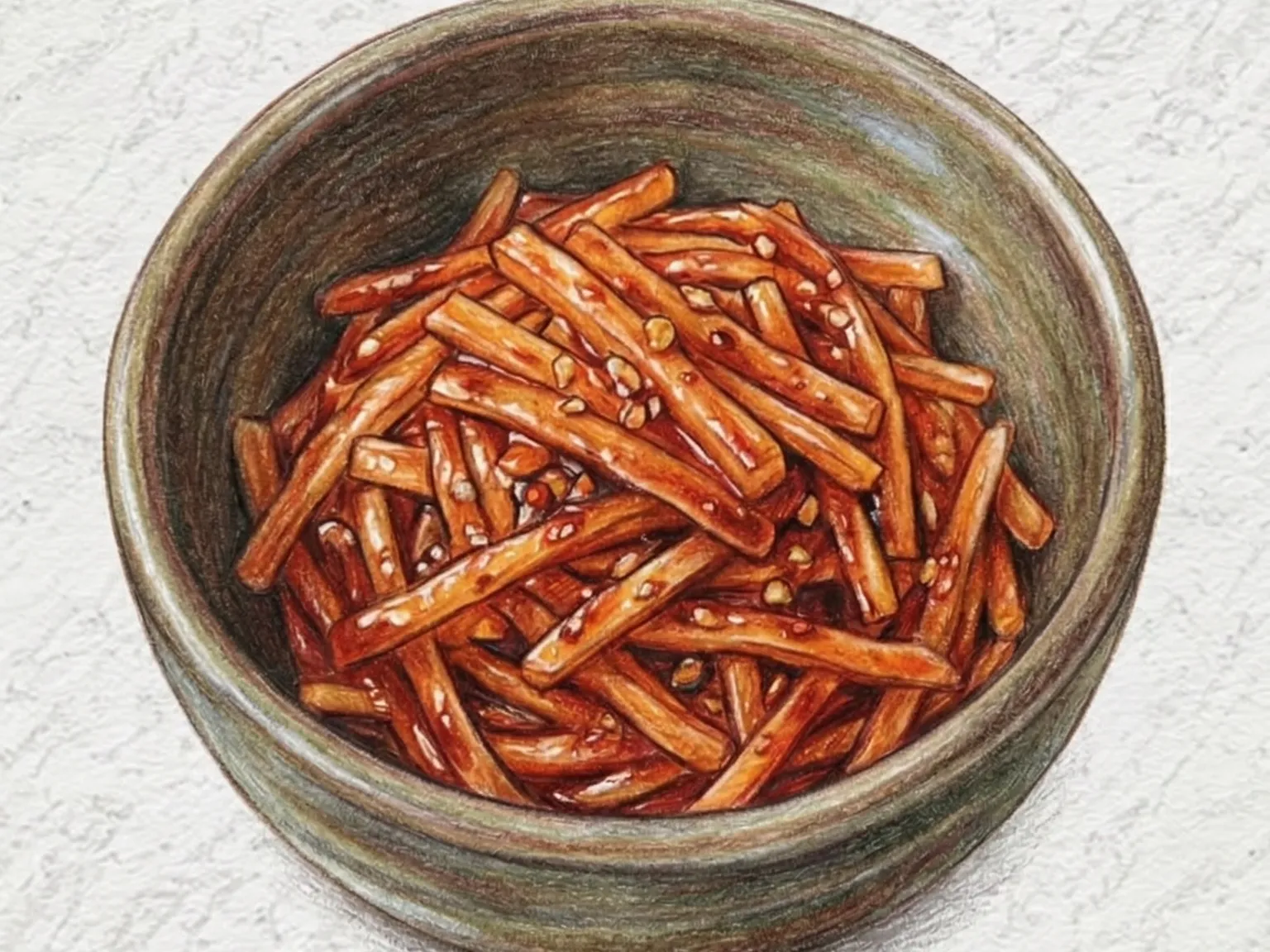
Korean Stir-fried Balloon Flower Root
Doraji - balloon flower root - has been cultivated in Korea for centuries, valued in cooking and herbal medicine. The raw root is bracingly bitter, so it must be shredded, rubbed vigorously with salt, and rinsed twice. This salt-scrub extracts saponins while preserving the root's signature crunch. Stir-fried with green onion, then glazed in gochujang, soy sauce, and oligosaccharide syrup, the strips turn glossy and slightly sticky with a sweet-spicy coating.
Adjust Servings
Instructions
- 1
Shred root, rub with salt, and rest 10 minutes.
- 2
Rinse twice in cold water and squeeze dry.
- 3
Mix gochujang, chili flakes, soy sauce, syrup, and garlic.
- 4
Heat oil and sauté green onion first for aroma.
- 5
Add root, stir-fry 2 minutes, then add sauce.
- 6
Cook 3 more minutes over medium heat until glossy.
As an Amazon Associate, we may earn from qualifying purchases.
Tips
Nutrition (per serving)
More Recipes

Korean Stir-Fried Kimchi (Caramelized Aged Kimchi Banchan)
Kimchi-bokkeum is the default way Korean households use up kimchi that has fermented past its fresh prime. Stir-frying tempers the sharp lactic acidity that over-ripe kimchi develops - the heat transforms the sourness into something mellower, sweeter, and more rounded. Onion goes in first and cooks until translucent, laying a sweet foundation before the kimchi and garlic join. Medium heat is essential: it drives off moisture gradually, yielding a thick, concentrated sauce rather than a watery stew. A small addition of gochugaru brightens the color, and a pinch of sugar balances the fermented tang. One tablespoon of kimchi brine amplifies the umami from the lactobacillus culture itself. The finished banchan is versatile enough to eat straight over rice, fold into fried rice, or pile on top of ramyeon.

Korean Stir-fried Bottle Gourd Namul
Bottle gourd - bak - is a summer vegetable Koreans have stir-fried as namul for centuries. Peeled, seeded, and sliced thin, it is salted briefly to draw out excess liquid. Stir-frying with garlic and green onion concentrates its mild, melon-like sweetness. A splash of water steams the slices until nearly translucent. Ground perilla seed stirred in last thickens the remaining liquid into a nutty glaze, yielding a soft texture that highlights the ingredient's gentle flavor.

Stir-fried Korean Radish Namul
Mu-namul-bokkeum is a foundational Korean namul made by stir-frying julienned daikon radish in perilla oil until the root's natural sweetness emerges. Cutting the radish into matchstick-sized strips and salting for five minutes draws out excess moisture, which is essential - without this step, the pan steams rather than sears, and the namul turns watery. Garlic goes into the perilla oil first to build an aromatic base, then the radish strips are tossed over medium heat for three to four minutes. During this process, heat converts the radish's starch into sugars, replacing the raw pungency with a mellow sweetness. Soup soy sauce seasons without muddying the color the way regular soy sauce would. A brief two-minute rest with the lid on finishes softening the radish while keeping moisture in check. This namul serves as one of the five-color toppings in bibimbap and is a required dish on ancestral rite tables (jesa). A final sprinkle of sesame seeds adds a toasted nuttiness.

Korean Stir-Fried Burdock Root
Burdock root is julienned into thin strips and stir-fried with soy sauce and Korean grain syrup until each piece is coated in a glossy, sweet-salty glaze. Burdock carries an earthy, almost woody flavor unique among root vegetables, and soaking the cut strips in vinegared water before cooking prevents oxidation and keeps the color clean. A quick initial fry in oil seals the surface and drives off moisture, preserving the root's natural crunch. Adding soy sauce and grain syrup transforms the pan into a bubbling reduction that clings to every strand as it thickens. The grain syrup's gentle sweetness softens the soy sauce's salinity into a balanced, caramelized coating, while the heat converts burdock's raw earthiness into a toasted, nutty aroma. Reducing the sauce completely yields a chewy, almost candy-like texture; leaving a trace of moisture produces a crunchier, more succulent result. The finished banchan stores well under refrigeration for a week or more, making it a practical side to prepare in bulk.

Korean Grilled Bellflower Root
Bellflower root is shredded lengthwise, soaked in salted water, and blanched for one minute to draw out its characteristic bitterness without eliminating it entirely. A ten-minute soak in a sauce of gochujang, gochugaru, soy sauce, oligosaccharide syrup, garlic, and sesame oil seasons the root before it hits a medium-heat pan for three to four minutes per side. The result has a crisp, crunchy bite - distinct from any other vegetable - with a red-glazed surface that carries moderate heat. Open-flame grilling adds a smoky dimension that pairs well with the spicy coating, and sesame seeds provide a finishing touch.

Korean Stir-fried Dried Pollock Strips
Hwangtae-chae-bokkeum is a Korean side dish of shredded dried pollock strips soaked until soft, then stir-fried in a gochujang, oligosaccharide syrup, and soy sauce glaze. The pollock absorbs the seasoning as it cooks, turning chewy and moist with a balanced spicy-sweet coating. Once prepared, it keeps well in the refrigerator for several days, making it a practical banchan to have on hand. It works equally well in lunchboxes and as a casual snack with drinks.