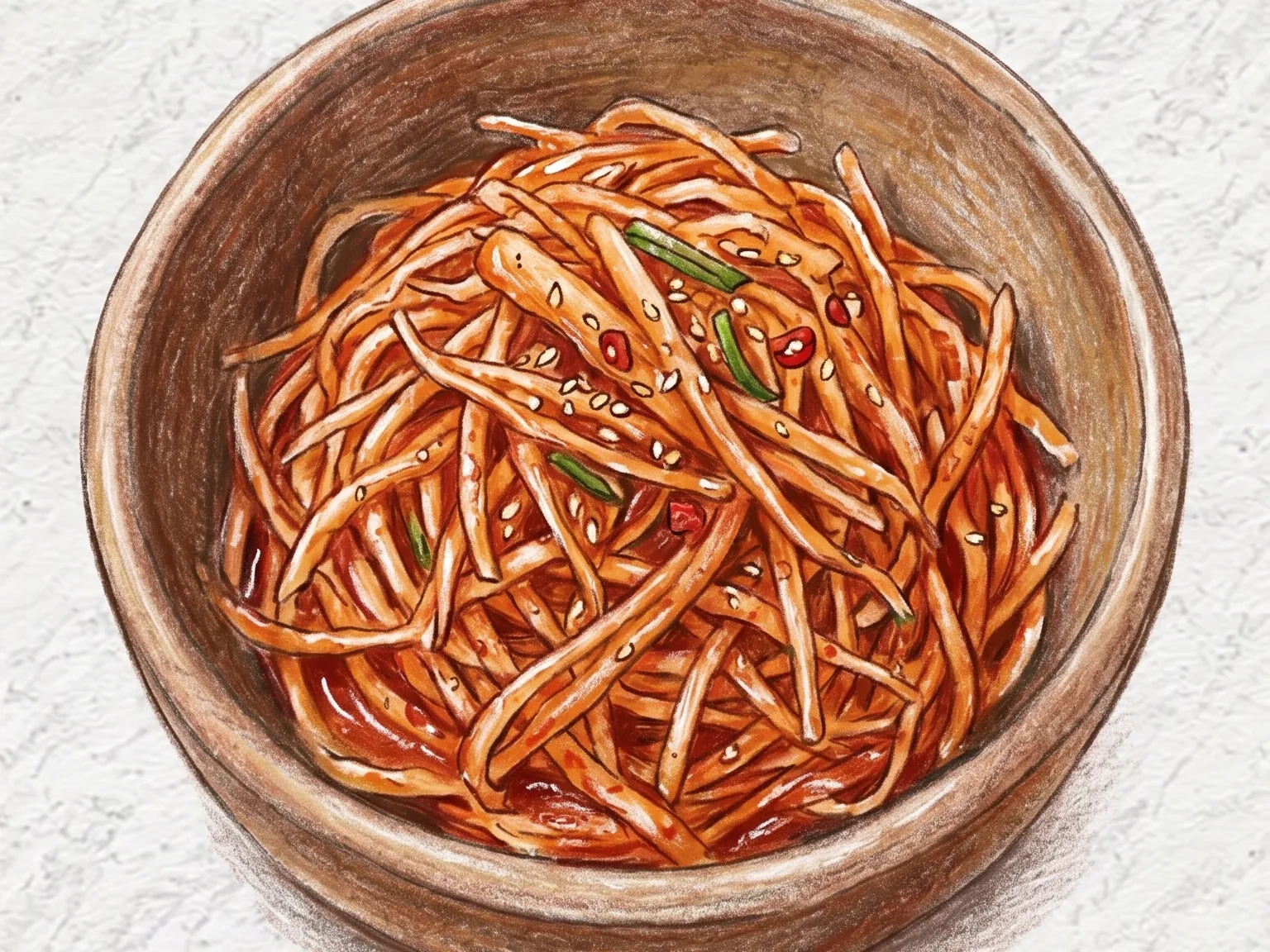
Korean Seasoned Bellflower Root
Doraji - balloon flower root - has been a staple of Korean herbal cooking since the Goryeo dynasty, valued both as medicine and food. Unlike the stir-fried doraji-bokkeum that uses gochujang and heat, this raw muchim preserves the root's firm, crunchy snap by dressing it cold. The roots must be shredded along the grain and vigorously rubbed with salt to extract the saponins responsible for their sharp bitterness, then rinsed repeatedly until the water runs clear. A gochujang-vinegar dressing with sugar and sesame oil wraps around each fibrous strand, balancing the root's residual earthiness with a bright, sweet-sour-spicy glaze. This banchan appears on Korean holiday tables - Chuseok and Seollal - as one of the five-color namul, where its white color represents metal in the five elements.
Adjust Servings
Instructions
- 1
Tear bellflower root into thin strips, rub with salt for 10 minutes to remove bitterness.
- 2
Rinse under running water 3-4 times and squeeze out moisture.
- 3
Mix gochujang, sugar, vinegar, minced garlic, and sesame oil to make the sauce.
- 4
Toss the bellflower root with the sauce until evenly coated.
- 5
Sprinkle sesame seeds on top before serving.
As an Amazon Associate, we may earn from qualifying purchases.
Tips
Nutrition (per serving)
More Recipes

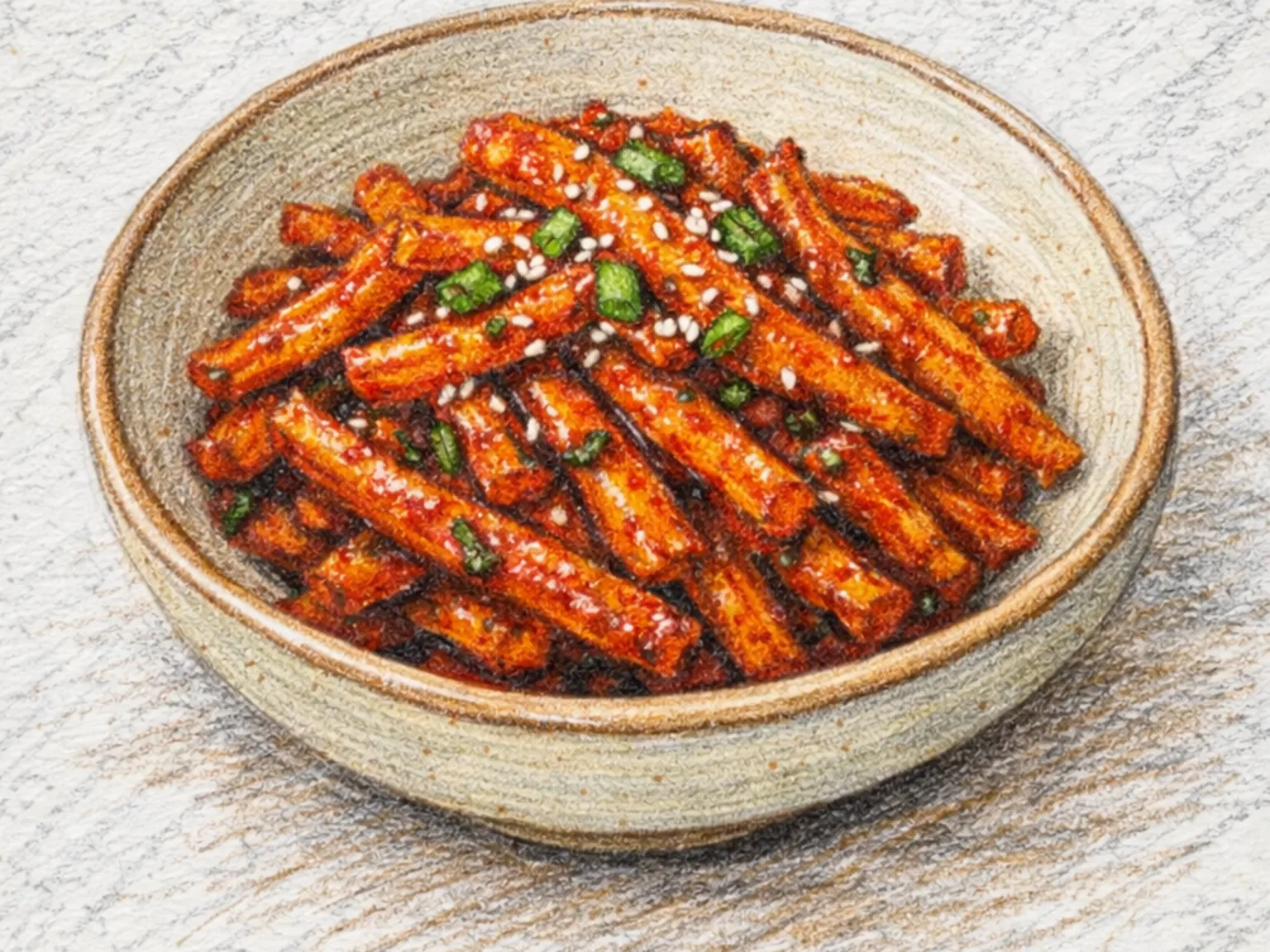
Korean Grilled Bellflower Root
Bellflower root is shredded lengthwise, soaked in salted water, and blanched for one minute to draw out its characteristic bitterness without eliminating it entirely. A ten-minute soak in a sauce of gochujang, gochugaru, soy sauce, oligosaccharide syrup, garlic, and sesame oil seasons the root before it hits a medium-heat pan for three to four minutes per side. The result has a crisp, crunchy bite - distinct from any other vegetable - with a red-glazed surface that carries moderate heat. Open-flame grilling adds a smoky dimension that pairs well with the spicy coating, and sesame seeds provide a finishing touch.

Korean Spicy Seasoned Deodeok
Deodeok - Codonopsis lanceolata - is a mountain root used in Korean cooking and folk medicine for centuries. Its flesh is fibrous and sticky, with a ginseng-like bitterness. Peeled and pounded with a mallet to split fibers into ribbon-like shreds, then soaked in cold water to draw out bitterness. A gochujang-vinegar dressing with garlic, sugar, and gochugaru clings to each strand's rough surface. The finished dish is chewy and resinous, with a sweet-sour-spicy glaze.

Korean Seasoned Garlic Chives
Unlike buchu kimchi, this raw chive muchim uses soy sauce and vinegar rather than fish sauce, producing a brighter, acidic result. The chives stay raw, tossed by hand under twenty seconds - longer and they bruise, releasing liquid. Gochugaru adds color and heat, while vinegar and sugar create a sweet-tart dressing contrasting with natural pungency. Must be eaten the same day before the chives wilt. A sharp, punchy side that cuts through oily main dishes.

Korean Seasoned Cockle Salad
Kkomak-muchim is a seasoned cockle banchan synonymous with Beolgyo in Jeollanam-do, a town known for Korea's finest cham-kkomak (true cockles) harvested from its nutrient-rich tidal flats from November through March. Cooking technique matters enormously: once the water begins to boil, stirring in one direction only ensures the shells open evenly, and the cockles must be pulled at the four-minute mark before the meat contracts and toughens. Shells are pried open immediately, the meat collected and drained. The dressing - gochugaru, soy sauce, vinegar, sugar, and garlic - adds a tangy-spicy layer over the cockle's naturally briny, springy flesh. Chopped green onion goes in for freshness, followed by sesame oil and seeds. A ten-minute rest after dressing allows the sauce to penetrate the dense cockle meat. This is one of the most sought-after seasonal banchan in Korean cuisine.

Korean Stir-fried Balloon Flower Root
Doraji - balloon flower root - has been cultivated in Korea for centuries, valued in cooking and herbal medicine. The raw root is bracingly bitter, so it must be shredded, rubbed vigorously with salt, and rinsed twice. This salt-scrub extracts saponins while preserving the root's signature crunch. Stir-fried with green onion, then glazed in gochujang, soy sauce, and oligosaccharide syrup, the strips turn glossy and slightly sticky with a sweet-spicy coating.

Korean Bellflower Root Pickles
Doraji jangajji is a Korean soy-pickled bellflower root dish made by peeling and salting the roots to draw out bitterness, then submerging them in a boiled brine of soy sauce, vinegar, and sugar. The bellflower's characteristic bitter-herbal note softens as it meets the brine's acidity, revealing a fragrant, almost floral flavor that builds with each chew. Ginger in the brine neutralizes any earthy undertone, and the seasoning penetrates the root's fibrous structure as the liquid cools. After two or more days of curing, the pickle reaches a balanced sweet-sour-salty profile that makes it a reliable banchan to keep on hand.