Dorayaki (Sweet Red Bean Pancake Sandwich)
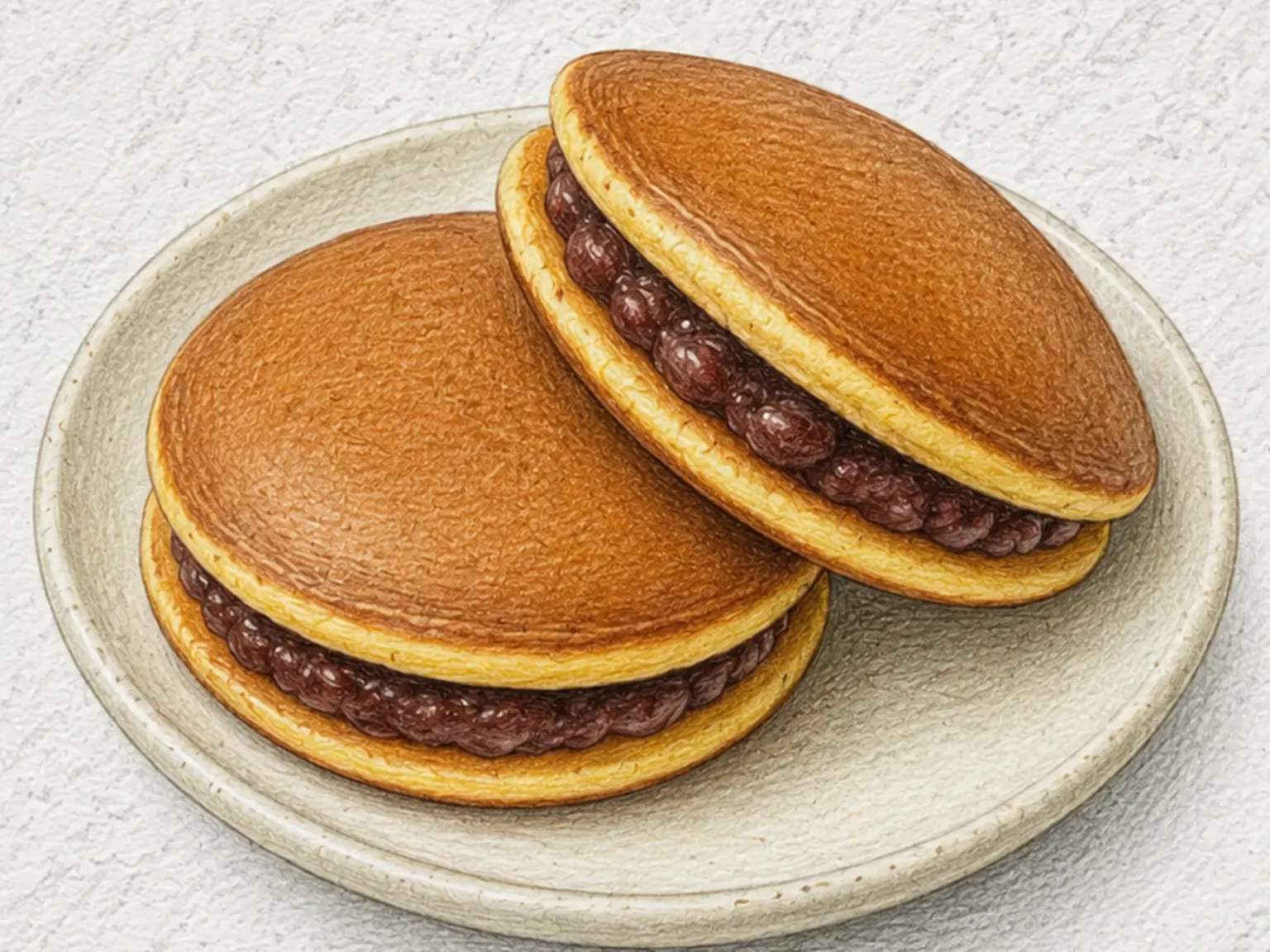
Dorayaki is a Japanese confection consisting of two small, round pancakes sandwiching a filling of sweet red bean paste. The batter is made from eggs, sugar, honey, and flour, then cooked on a griddle over low heat on one side only, producing pancakes with a smooth top surface and an evenly browned underside. Honey in the batter adds moisture retention, keeping the pancakes soft and springy even after cooling, and lending a subtle floral sweetness that complements the red bean filling. The sweetness of the pancakes themselves is deliberately modest, allowing the dense, earthy sweetness of the anko to take center stage. Each dorayaki is palm-sized, making it a convenient handheld snack.
Adjust Servings
Instructions
- 1
Whisk eggs and sugar, then add honey and milk.
- 2
Sift in flour and baking powder, then mix until smooth.
- 3
Rest the batter for 10 minutes.
- 4
Cook small rounds on low heat until golden on both sides.
- 5
Cool pancakes and sandwich with red bean paste.
As an Amazon Associate, we may earn from qualifying purchases.
Tips
Nutrition (per serving)
More Recipes

Mochi Daifuku (Soft Rice Cake Stuffed with Red Bean Paste)
Glutinous rice flour is mixed with water and sugar, steamed or microwaved until it becomes a translucent, stretchy mass, then dusted with starch and wrapped around a ball of sweet red bean paste. The outer mochi shell is soft and pliable, yielding to the teeth with a slow, elastic pull before giving way to the dense sweetness of the filling inside. Because the dough begins to firm and lose its characteristic chew within hours, daifuku is best eaten the day it is made. Swapping the red bean for fresh strawberry or ice cream produces popular seasonal and modern variations. The starch coating - typically potato or cornstarch - serves a dual purpose: preventing the pieces from sticking to each other and adding a dry, powdery contrast to the otherwise tacky surface.

Anmitsu (Japanese Agar Jelly Red Bean Fruit Dessert)
Anmitsu is a Japanese dessert with roots in the Meiji era, evolving from mitsumame - a simpler dish of agar cubes and boiled peas - when sweet azuki bean paste was added to create a more substantial treat. The base is kanten jelly, made from agar-agar dissolved in water, set into a firm, translucent block, and cut into cubes that have a clean snap unlike gelatin's wobble. Around the jelly, the bowl is arranged with seasonal fruits - mandarin segments, peach slices, cherries - alongside a mound of tsubuan (coarsely mashed sweet red beans) and small balls of shiratama mochi that are chewy and glutinous. A separate pitcher of kuromitsu - dark brown sugar syrup from Okinawa - is poured over at the table, its deep molasses-like sweetness tying the disparate elements together. Each spoonful brings a different combination of textures: crisp jelly, soft fruit, sticky mochi, and grainy bean paste.

Anpan (Japanese Sweet Red Bean Filled Soft Milk Bun)
Anpan was created in 1874 by Kimuraya bakery in Tokyo's Ginza district, making it one of Japan's first fusion foods - Western bread technique meeting Japanese bean-paste confection. The dough is enriched with milk, butter, and egg, producing a soft, pillowy crumb that tears apart in cottony layers. Inside, a generous ball of anko - sweet red bean paste made by simmering azuki beans with sugar until they collapse into a smooth or chunky filling - provides a concentrated sweetness with an earthy, bean-forward taste. A single pickled cherry blossom petal pressed into the top of the bun before baking is the traditional Kimuraya signature, adding a faint saltiness and floral note. The bun became so popular that it was presented to Emperor Meiji in 1875, cementing its status as a national snack. Today it is found in every Japanese convenience store and bakery, unchanged in concept for over 150 years.

Matcha Roll Cake (Green Tea Chiffon Sponge with Cream)
A Japanese-style roll cake built on a matcha chiffon sponge and filled with softly whipped cream. Sifting matcha powder into the egg yolk batter distributes the vivid green color evenly, while a stiff meringue folded in three additions preserves the air bubbles that give the sheet its light, springy structure. Baking at 180 degrees Celsius for 12 to 15 minutes, just until the surface springs back to the touch, keeps the sponge pliable enough to roll without cracking. After inverting and cooling, cream whipped to about 80 percent stiffness is spread across the sheet, thinner at the edges and thicker down the center so the finished cross-section shows a uniform spiral. Rolling tightly in plastic wrap and refrigerating for at least two hours sets the shape and allows the matcha flavor to meld with the cream. Slicing with a hot, damp knife produces clean edges. The matcha's gentle bitterness lingers after the cream's sweetness fades, leaving a layered aftertaste that distinguishes this roll from vanilla or chocolate versions.

Pork Cutlet Sandwich
Katsu sando is a sandwich of breaded pork loin cutlet deep-fried at 170C until golden, layered with shredded cabbage dressed in mayonnaise between slices of soft milk bread spread with tonkatsu sauce. The contrast between the cutlet's crunchy panko crust and the pillowy bread defines the eating experience, while the dressed cabbage cuts through the richness. Wrapping the sandwich tightly in plastic and resting it for three minutes bonds bread and sauce together for a clean cross-section when sliced in half. Standing the cutlet upright for a minute after frying drains excess oil and prevents sogginess.

Katsu Sando (Japanese Crispy Pork Cutlet Sandwich)
Katsu sando is a Japanese sandwich built around a thick, crispy pork cutlet pressed between slices of soft milk bread. The pork loin is pounded thin, seasoned, then coated in flour, egg, and panko breadcrumbs before being deep-fried to a deep golden crust. Tonkatsu sauce - a thick, fruity condiment similar to Worcestershire - is spread on one side of the bread, while the other gets a thin layer of mayonnaise. Finely shredded cabbage sits beneath the cutlet, adding a fresh crunch that offsets the richness of the fried meat. The crusts are trimmed and the sandwich is pressed gently before being sliced in half, revealing the clean cross-section of bread, cabbage, and cutlet that defines the dish. Katsu sando works equally well as a quick lunch, a picnic item, or late-night comfort food.