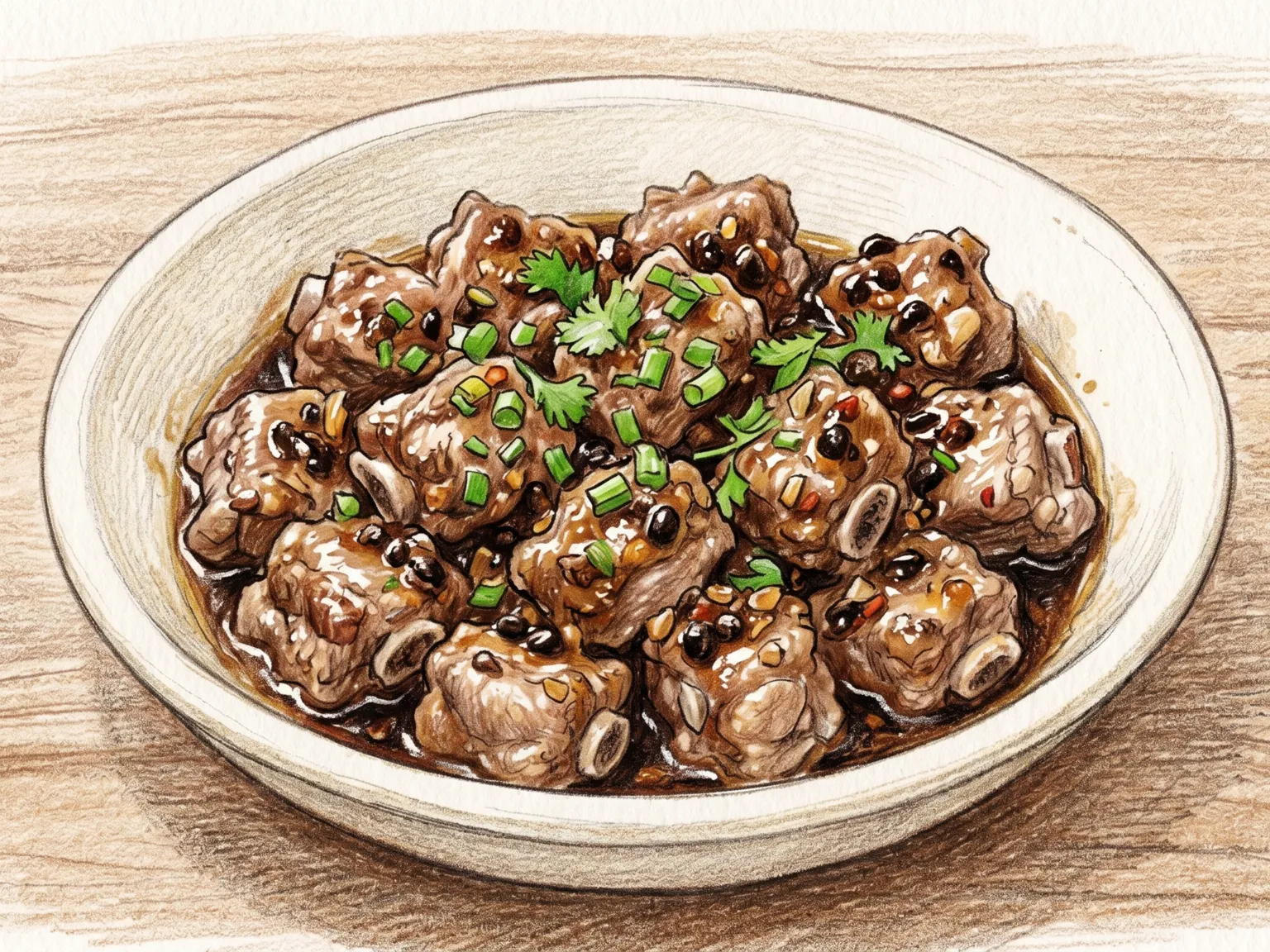
Steamed Pork Ribs with Black Bean Sauce
Douchi paigu is a Chinese-style steamed pork rib dish marinated with fermented black beans, soy sauce, garlic, and cooking wine, then dusted with starch before steaming. The fermented black beans bring a salty, deeply savory funk that permeates the meat during cooking. A thin layer of starch seals the surface, trapping the juices inside so each piece stays moist. A touch of sesame oil adds fragrance at the end. Steaming rather than frying keeps the dish light, and it is one of the most recognizable items on a dim sum menu.
Adjust Servings
Instructions
- 1
Soak ribs in cold water for 20 minutes to remove blood.
- 2
Chop black beans and mix with soy sauce, wine, garlic, starch, and sesame oil.
- 3
Coat ribs with marinade and rest for 15 minutes.
- 4
Place in a heatproof dish and steam over high heat for 18 minutes.
- 5
Rest for 3 minutes and serve with the sauce.
As an Amazon Associate, we may earn from qualifying purchases.
Tips
Nutrition (per serving)
More Recipes

Siu Mai (Cantonese Open-Top Steamed Pork and Shrimp Dumpling)
Siu mai is a Cantonese dim sum dumpling that wraps a seasoned filling of ground pork and chopped shrimp inside a thin wheat wrapper left open at the top. The filling is mixed vigorously with soy sauce, sesame oil, minced ginger, and cornstarch until it develops a sticky, springy texture that holds together when steamed. Shaped into small cylinders with the tops exposed, each dumpling reveals its filling like a tiny cup. A ten-to-twelve-minute stint in a bamboo steamer turns the wrappers translucent and lets the pork and shrimp meld their flavors-earthy pork fat meeting clean, briny sweetness. The cornstarch traps the juices inside so each bite releases a burst of savory liquid. Siu mai is a cornerstone of the yum cha table, eaten alongside tea and other small plates in an unhurried, communal style of dining.

Braised Pork Belly with Preserved Mustard Greens
Meicai kourou is a Hakka Chinese dish of parboiled pork belly that is seared with soy sauce for color, then layered with preserved mustard greens and steamed for over an hour. The prolonged steaming renders the fat translucent and meltingly soft, while the fermented, salty greens infuse the meat with their concentrated flavor. When inverted onto a plate, the neatly stacked slices glisten under the braising sauce. It is a centerpiece dish meant for sharing, with the sauce spooned over steamed rice to capture every layer of richness.

Cheung Fun (Cantonese Steamed Rice Noodle Rolls with Shrimp)
Cheung fun - rice noodle rolls - are a cornerstone of Cantonese dim sum, present on every yum cha table from Hong Kong's tea houses to Guangzhou's morning restaurants. A thin batter of rice flour and tapioca starch is poured onto an oiled steel plate, steamed for under a minute, then peeled off as a translucent, trembling sheet. The sheet is rolled around fillings - shrimp, char siu, or beef - or served plain, its own silky texture being the point. The ratio of rice flour to starch determines everything: too much rice flour and the sheet is stiff; too much starch and it becomes gummy. A lightly sweetened soy sauce is poured over the rolls at the table, pooling in the plate and coating each piece as it is lifted with chopsticks. Street vendors in Hong Kong steam cheung fun on pushcarts, peeling each sheet from a metal drawer with a flat scraper in a motion that draws onlookers. For many dim sum regulars, it is the first dish ordered and the benchmark by which a restaurant is judged.

Cantonese Har Gow Dumplings
Har gow is the benchmark dumpling of Cantonese dim sum, wrapped in a translucent skin made from wheat starch and tapioca starch mixed with boiling water. The boiling water instantly gelatinizes the starch, producing a pliable, slightly chewy dough unlike anything wheat flour alone can achieve. A small amount of oil kneaded into the dough ensures a smooth, workable surface. The shrimp filling is intentionally chopped coarsely rather than minced fine, so each bite yields a springy, snappy texture. Finely diced bamboo shoots add a subtle crunch that contrasts with the soft shrimp. Seasoning stays minimal, just sesame oil, salt, and white pepper, to foreground the natural sweetness of the shrimp. The dough stiffens quickly as it cools, requiring small-batch work, and the dumplings steam for only six to seven minutes until the wrappers turn glassy and the pink shrimp shows through.

Cantonese Steamed Seabass
Qingzheng seabass is a Cantonese steamed fish dish where a scored seabass is rubbed with julienned ginger and rice wine, then steamed on high heat for ten to twelve minutes. A light sauce of soy and sugar is poured over the cooked fish, shredded scallions are piled on top, and sizzling hot oil is drizzled over everything to release an intense burst of allium fragrance. The fish flesh stays moist with its flaky grain intact, and the soy dressing is deliberately restrained so the seabass's own mild, clean taste remains the focus. The simplicity of the preparation and the dramatic finish of hot oil over scallions represent the Cantonese philosophy of letting quality ingredients speak for themselves.

Dongpo Pork (Chinese Soy-Braised Melt-in-Mouth Pork Belly)
Dongpo rou is a Chinese-style pork belly braised slowly in soy sauce, rice wine, sugar, ginger, and green onion. Long cooking over low heat renders the fat layers translucent and meltingly soft, while the lean portions turn a deep mahogany from the soy and sugar. Rice wine drives off any porkiness and ginger sharpens the finish, though the dominant impression is a sweet, deeply savory richness. Named after the Song dynasty poet Su Dongpo, the dish is meant to be appreciated for the luxurious texture of the rendered fat as much as for its flavor.