Drunken Noodles
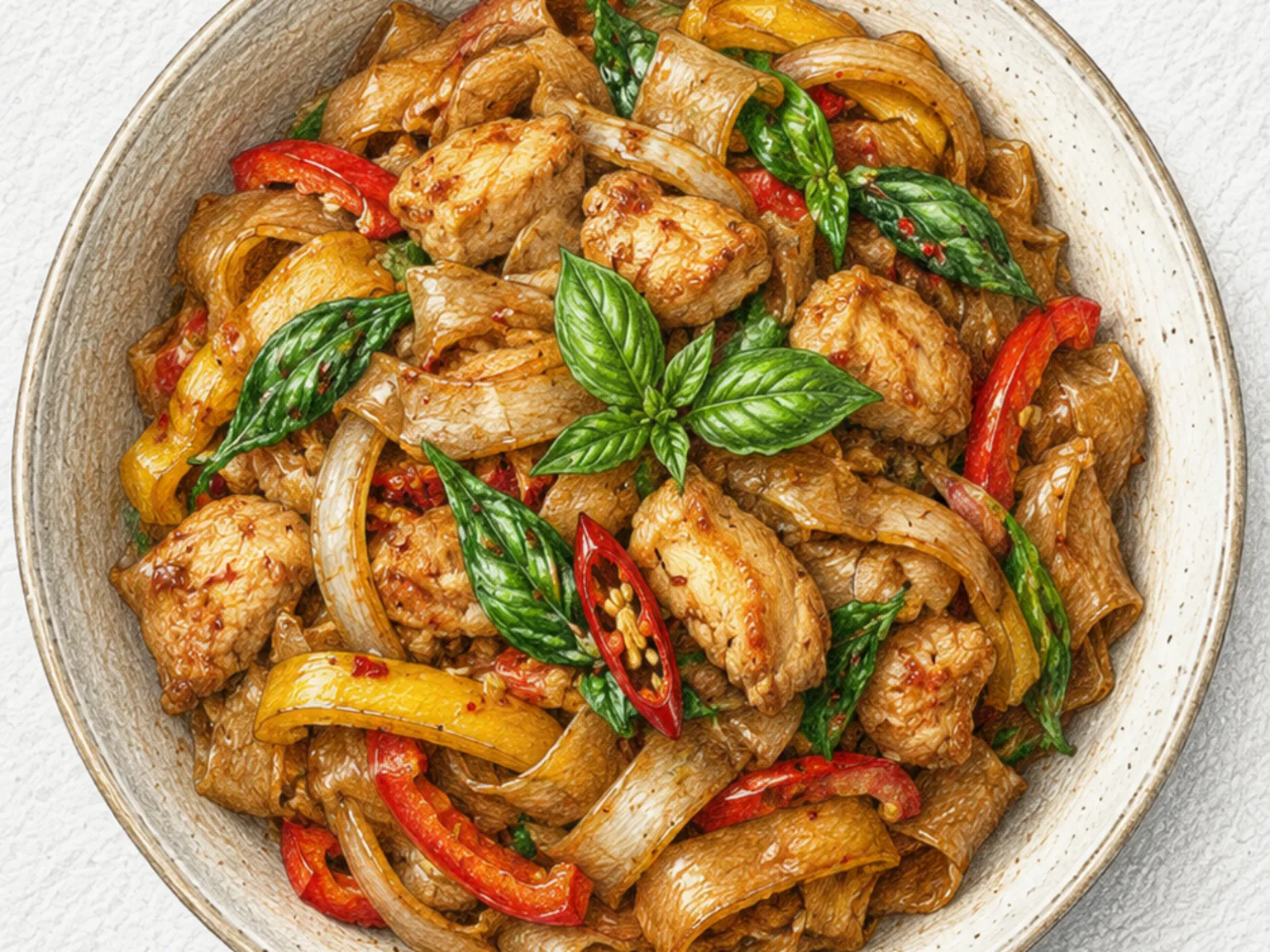
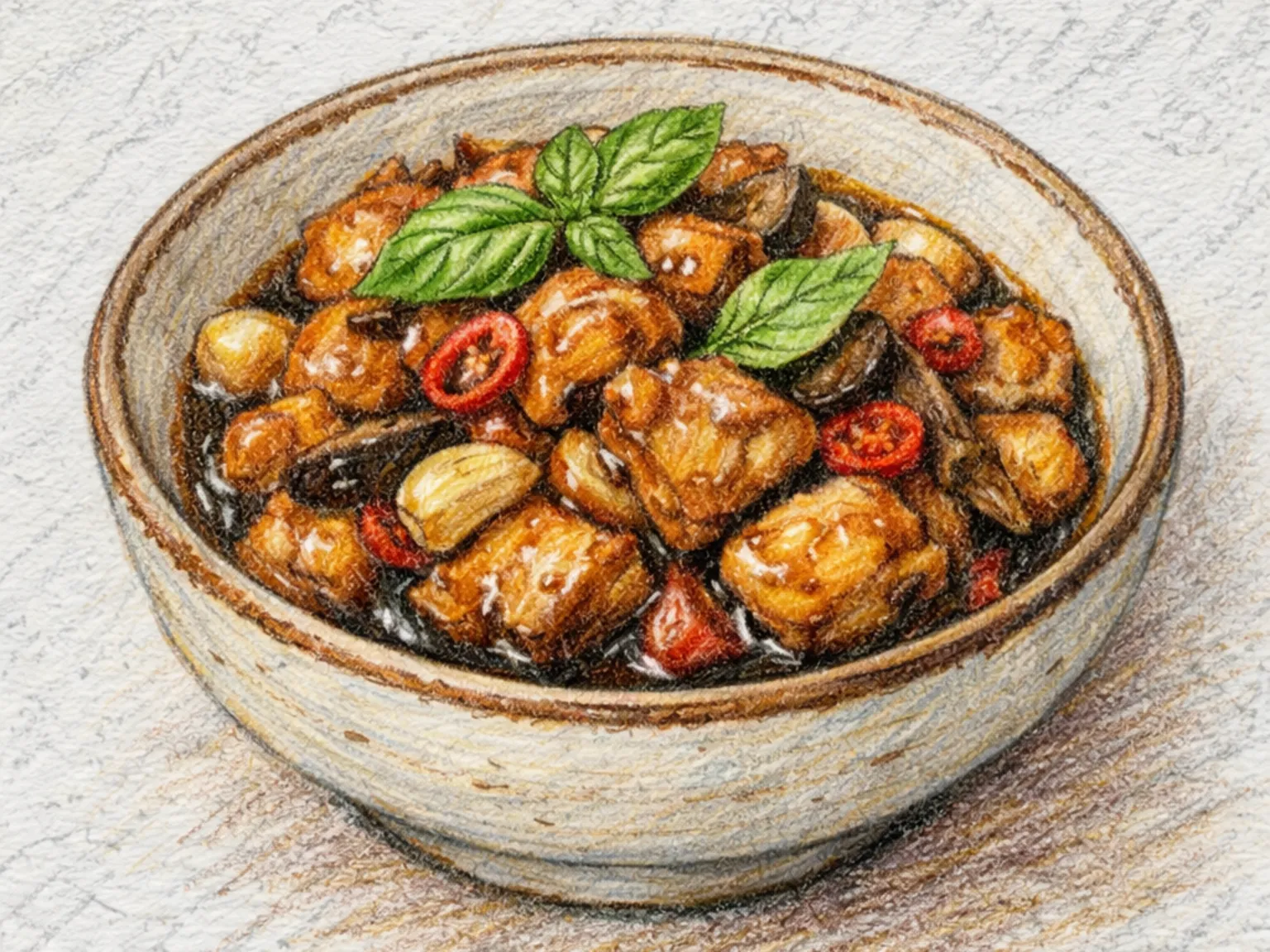
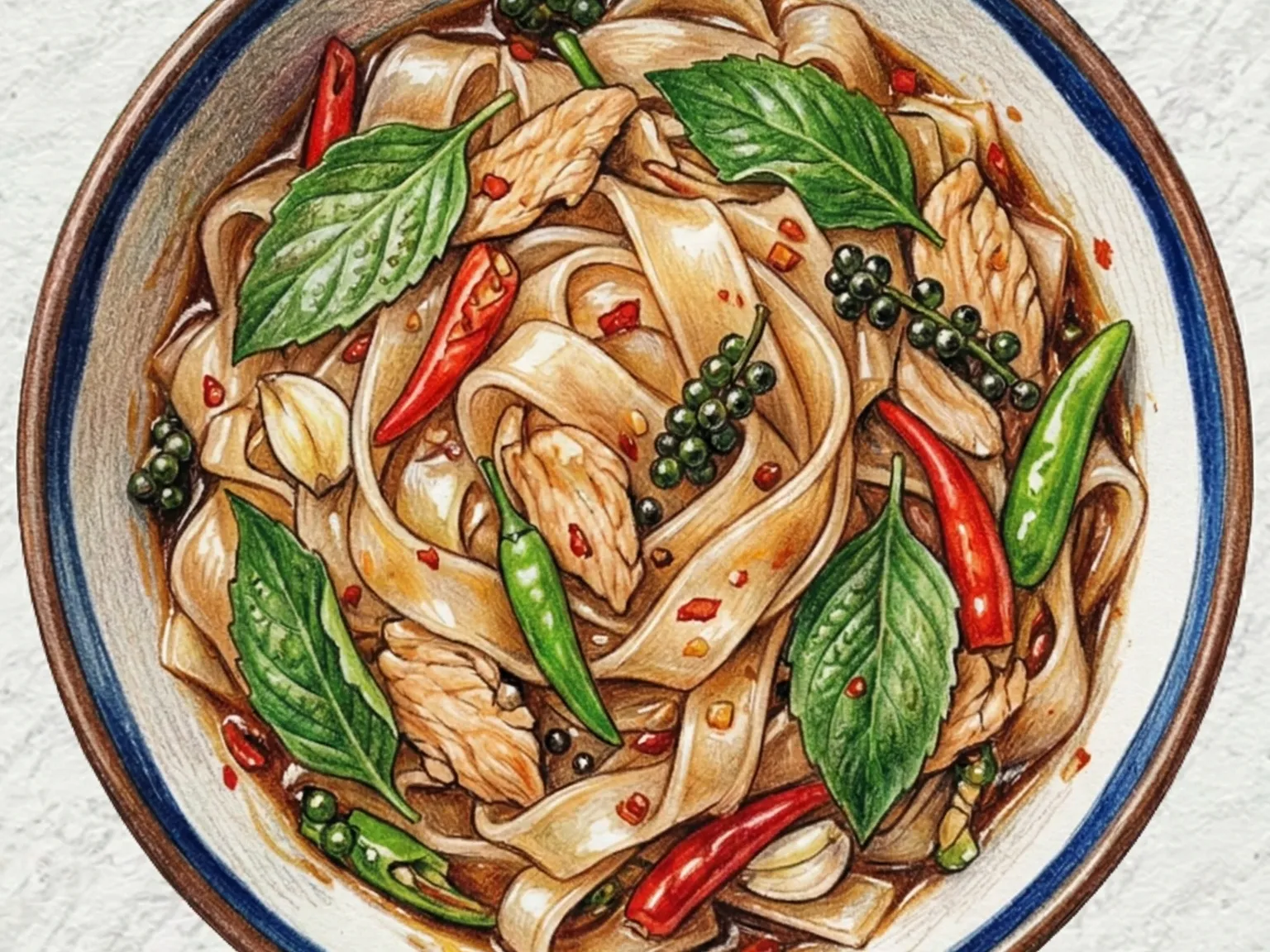
Pad kee mao - drunken noodles - is a Thai stir-fried noodle dish whose name sparks competing origin stories: some say it was designed as drinking food, others that the chili heat itself is intoxicating. Wide sen lek rice noodles hit a smoking-hot wok with holy basil, fresh chilies, and garlic, and the key is letting the noodles char slightly where they press against the wok surface, developing a smoky sear that defines the dish. Thai holy basil (krapao) differs sharply from Italian basil - it carries a peppery, almost clove-like bite and a faint heat that blooms instantly when it meets the wok's flame. A dark sauce of oyster sauce, soy sauce, fish sauce, and sugar stains the noodles nearly black, layering salt, sweetness, and umami in every strand. In Thailand, the dish is typically made with seafood or pork and crowned with a crispy fried egg whose runny yolk is broken and mixed through the noodles at the table.
Adjust Servings
Instructions
- 1
Soak rice noodles in lukewarm water until pliable.
- 2
Stir-fry minced garlic and chilies over high heat until fragrant.
- 3
Add chicken and cook through, then add all sauces.
- 4
Add noodles and toss rapidly on high heat.
- 5
Add basil at the end and wilt briefly before serving.
As an Amazon Associate, we may earn from qualifying purchases.
Tips
Nutrition (per serving)
More Recipes

Thai Drunken Noodles
Pad kee mao, or drunken noodles, is a Thai stir-fried noodle dish where wide rice noodles are wok-tossed with chicken, garlic, fresh chili, and Thai basil over very high heat. The noodles are soaked briefly in lukewarm water until pliable but not soft. Garlic and chili go into the smoking-hot wok first to release their aroma, followed by sliced chicken thigh. Onion and bell pepper are added next and stir-fried quickly to keep them crisp. Fish sauce delivers briny umami while dark soy sauce darkens the noodles and adds a subtle sweetness. Thai basil is folded in only after the heat is turned off, so its anise-like fragrance stays intact rather than cooking away. Maintaining intense wok heat throughout is critical - too low and the noodles steam instead of sear.

Pad Woon Sen (Thai Stir-Fried Glass Noodles with Shrimp and Egg)
Pad woon sen is a Thai stir-fried glass noodle dish that comes together in minutes. The noodles, made from mung bean starch, turn translucent when soaked and have a springy, slippery texture that absorbs sauce without becoming mushy. Shrimp is cooked first until just pink, then vegetables - typically cabbage and carrot - are tossed in over high heat to keep their crunch. Eggs are scrambled to one side of the wok and folded into the noodles along with soy sauce and oyster sauce. The seasoning is deliberately simple, allowing the natural sweetness of the shrimp and the clean bite of the vegetables to come through.

Thai Soy Sauce Noodles (Wide Rice Noodles with Beef and Chinese Broccoli)
Pad see ew is a Thai stir-fried noodle dish where wide rice noodles are tossed with beef, Chinese broccoli, and egg in a sweet soy-based sauce. The key to the dish is extremely high wok heat, which caramelizes the soy sauce and oyster sauce mixture on the noodle surface, creating a smoky-sweet char that defines its flavor. Beef goes into the hot pan first, followed by gai lan and egg scrambled alongside. The pre-mixed sauce of soy sauce, oyster sauce, and brown sugar is added with the soaked noodles and tossed rapidly so the noodles absorb the sauce and develop dark color without sticking. The thick stems of Chinese broccoli retain a pleasant crunch and slight bitterness that offset the sweet sauce, while bits of scrambled egg distributed throughout add a soft, creamy texture.

Pad Thai
Pad thai is Thailand's iconic stir-fried rice noodle dish, built on a sauce of tamarind paste, fish sauce, and sugar that balances sweet, sour, and salty in every bite. The rice noodles are soaked in warm water for twenty minutes until pliable but still firm. Firm tofu is pan-fried until golden before shrimp is added, establishing a savory base. Eggs are scrambled in the center of the pan while other ingredients are pushed aside, then everything is tossed together with the soaked noodles and sauce over high heat. The noodles absorb the sauce quickly and develop a glossy sheen. Bean sprouts add crunch, crushed peanuts bring a roasted nuttiness, and a squeeze of lime just before eating sharpens the acidity. The interplay of these toppings gives each forkful a different combination of textures and flavors.

Beef Pad See Ew (Thai Wok-Fried Wide Rice Noodles in Dark Soy)
Beef pad see ew is a Thai wok-fried noodle dish built around wide rice noodles and dark soy sauce. The name translates to 'fried with soy sauce,' and broad, silky noodles are stained deep brown by dark soy, balanced with light soy and oyster sauce for a sweet-savory glaze. Thinly sliced beef is seared first in a blazing wok, then noodles go in to absorb the sauce and char slightly against the hot metal. Chinese broccoli or kale adds crunch from its stems and softness from its leaves. The defining element is wok hei - the smoky flavor that only comes from letting noodles sit against the wok until they pick up toasted spots.

Khua Kling (Southern Thai Dry-Fried Spiced Minced Pork Curry)
Khua kling is a dry-fried curry from southern Thailand, where minced meat is stir-fried with an intense curry paste until no liquid remains. The red curry paste hits the hot oil first, frying until its raw edge disappears and the kitchen fills with its aroma. Ground pork is added and cooked vigorously, the constant stirring driving off all moisture until the meat is dry and coated in a concentrated layer of spice. Fish sauce provides salt, a small amount of sugar tempers the heat, and finely shredded kaffir lime leaves release a citrus fragrance that weaves through the chili burn. Extra sliced red chilies are standard in the southern tradition, pushing the heat well beyond what most central Thai dishes offer. The finished dish has a crumbly, almost granular texture with no sauce at all, designed to be eaten in small portions alongside plain steamed rice. A single spoonful delivers enough flavor to carry several bites of rice.